REVIEW · ATHENS
Athens: Women in Ancient Greece
Book on GetYourGuide →Operated by Culture Hunters · Bookable on GetYourGuide
Women change how you read ancient Athens. This tour flips the usual script by looking at iconic places like the Agora and the Acropolis through the lived experience of Greek women. You’ll hear stories where mythology isn’t just decoration, but a reason society worked the way it did, and where women sometimes broke the rules anyway.
What I love most is the way the guide connects daily life to the big names you half-remember from school. You’ll walk past major landmarks and still keep the focus on ordinary routines, expectations, and limits—plus the shock of seeing how women could be thinkers, teachers, and even controversial trailblazers. The second standout is the tone: it’s not a lecture. You’re encouraged to ask questions, and the pacing keeps things moving while still letting the stories land.
One thing to consider before you book: it’s a walking tour with steps, and it’s not suitable for wheelchair users or people with mobility or heart issues. Also, you’ll get exterior views of archaeological sites rather than paid entry, so this is best if you want context and storytelling more than ticking off museum rooms.
In This Review
- Key highlights you won’t forget
- Where you start: Monastiraki Square and the Church Pantanassa
- Hadrian’s Library to Plaka: seeing Athens as daily life, not just monuments
- Gate of Athena Archegetis and the idea of power you can’t always see
- Ancient Agora: myth, women, and the public world
- Pnyx and the first votes: democracy through a gender lens
- The Acropolis view and the stories the city repeats
- Filopappou Hill: closing the loop with views and reflection
- What makes the storytelling strong (and why it’s worth the price)
- Who this tour is best for (and who should think twice)
- Should you book Athens: Women in Ancient Greece?
- FAQ
- How long is the Athens Women in Ancient Greece tour?
- Where do I meet the guide?
- Does the tour include tickets to archaeological sites?
- What should I bring for the walk?
- Is this tour suitable for everyone?
- What languages are available?
Key highlights you won’t forget
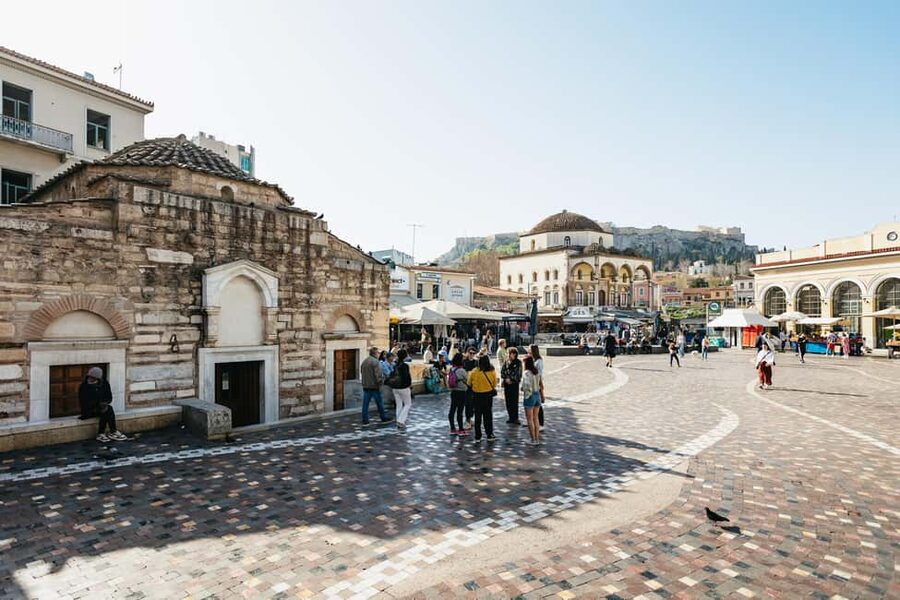
- A female lens on Athens’ core sites like the Ancient Agora, the Gate of Athena, and Pnyx
- Mythology with real social meaning, from Athena and Penelope to Demeter and Pandora
- Women who challenged expectations, including Sappho, Aspasia, and Agnodice
- Stories beyond the usual Athens route, with a secret stop and tales like the kidnapped Spartan girls
- A democracy stop with a gender angle, at Pnyx where early votes were cast
- A scenic finish at Filopappou Hill, for a final look over the city’s ancient spine
Where you start: Monastiraki Square and the Church Pantanassa
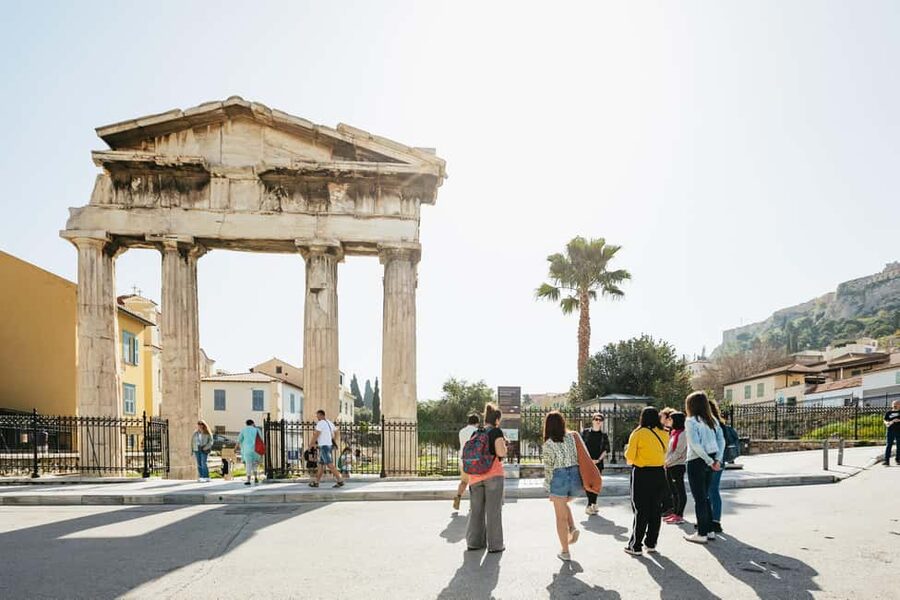
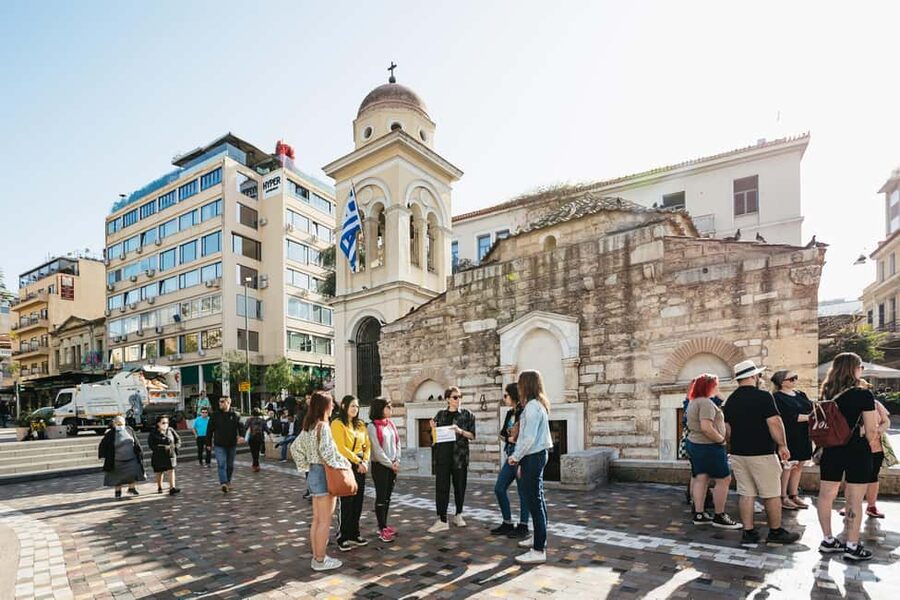
Meet your guide at Monastiraki Square, in front of the Holy Church of the Virgin Mary Pantanassa. This is a smart start point. Monastiraki sits right in the mix of Athens old-and-new, so you get that immediate sense that ancient history isn’t sealed off behind glass. It’s in the streets you’re walking right now.
From the first minutes, the tour’s concept clicks: instead of treating ancient Athens like a story told mostly by men, you treat it like a society with half its population living inside the same walls—sometimes limited by law and custom, sometimes shaping culture from the margins. If you usually do Athens by monument count, this tour gives you a different measuring stick: who had power, who had access, and who got believed?
Also, this isn’t an overly long walk. At 2 hours, it’s short enough to do early in your trip (when the city still feels confusing), or as a focused change of pace after you’ve already planned the Acropolis day.
Practical tip: you’re walking under the Greek sun. Bring water, sunscreen, and a sun hat, and you’ll thank yourself later.
You can also read our reviews of more tours and experiences in Athens.



Hadrian’s Library to Plaka: seeing Athens as daily life, not just monuments
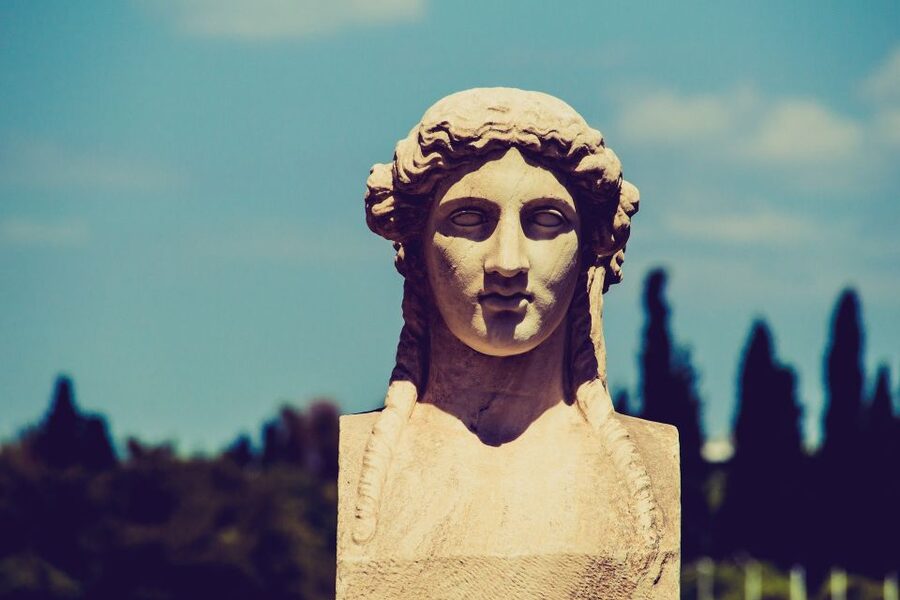
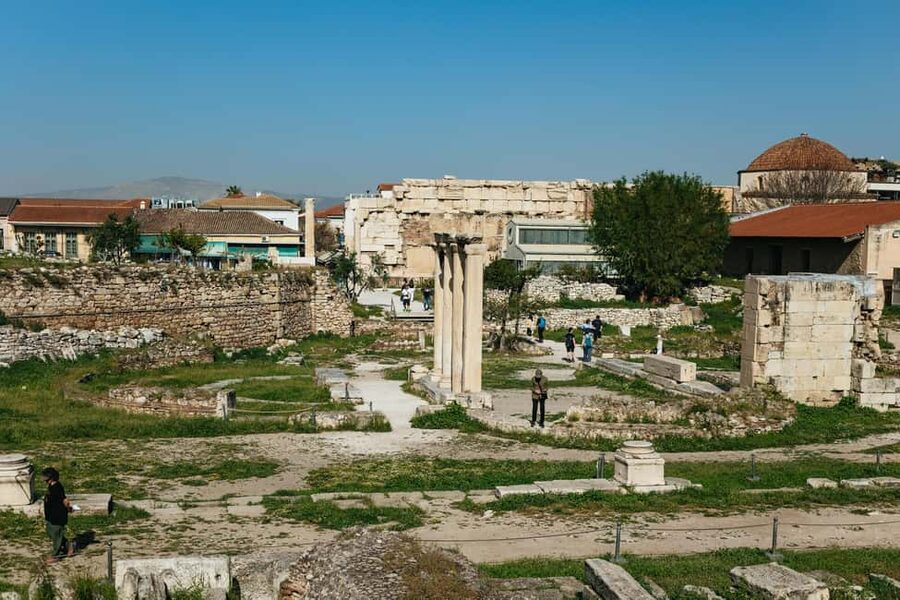
After Monastiraki, you pass through Hadrian’s Library. Even without paid site entry, you get the context of why this area mattered and how knowledge, public space, and status worked in Greek society. The female perspective matters here because it changes the questions you ask: it’s not just what the buildings were for, but who could actually use those spaces and who had to stand on the outside of them.
Then you head toward Plaka, the postcard district where Athens feels friendly and walkable. Here’s where this tour does something subtle: it treats Plaka like more than scenery. The guide uses the setting to explain social expectations for women, and how mythology reinforced them. In other words, you’re not just learning facts—you’re learning the logic behind the facts.
This stretch also helps you get comfortable with the walking rhythm. It’s not constant sprinting between stops. The guide uses brief moments—standing still, looking at a structure, then stepping onward—to keep the stories clear.
If you like your history grounded in everyday life (food, household roles, public behavior, education), you’ll feel right at home. If you want heavy archaeology and long site visits, you might wish the tour included more ticketed entry. That said, the focus here is perspective, not endurance.
Gate of Athena Archegetis and the idea of power you can’t always see

One of the most interesting stops is the Gate of Athena Archegetis. Athena isn’t just a famous goddess name. On this tour, she becomes a tool for understanding how women and power were imagined in ancient Athens.
Why is that useful? Because myths often act like social instruction manuals. They teach what’s admired, what’s feared, what’s considered proper, and what happens when someone steps out of bounds. So when you look at this gate, you’re not only seeing architecture—you’re reading an attitude built into the city’s storytelling.
The guide also weaves in how women could hold symbolic or cultural influence, even when legal or political influence was restricted. That contrast is one of the tour’s biggest payoffs. You start noticing the difference between revered and empowered.
You’ll also hit a secret stop—small, quick, and designed for the story. These are the moments that make this tour feel different from the standard highlights loop, because you’re not just absorbing what’s famous. You’re catching the “why” behind it.
Ancient Agora: myth, women, and the public world
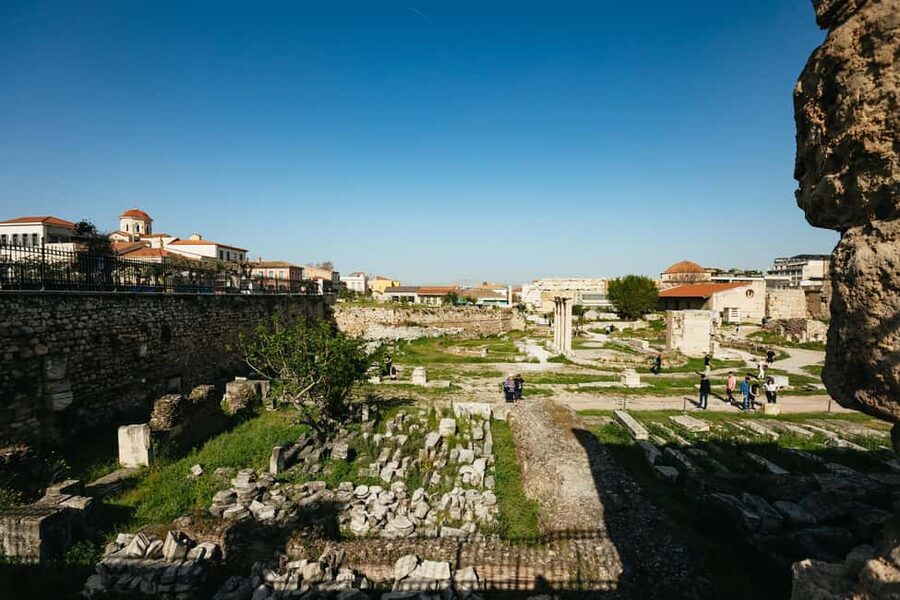
The Ancient Agora of Athens is where the tour really earns its theme. The Agora is often explained as the heart of civic life. But this tour asks a sharper question: what did civic life mean for women, and what did it cost them to be excluded from it?
You’ll get the classic Agora landmarks in the distance, but the real emphasis is on perspective—how ordinary female roles sat beside male political and legal power. It’s the kind of storytelling that helps you understand why women were both essential to the functioning of households and yet sidelined from the public institutions that shaped the city.
This is also where the mythology part starts to feel less like a separate “story time” and more like a lens for behavior. You hear about goddesses such as Penelope and Demeter, and how their myths shaped expectations around patience, household duty, fertility, and survival. You’re still learning history—but you’re also learning the cultural pressure women lived under.
If you’re the sort of visitor who hates history that feels like a list, you’ll appreciate how the guide connects the dots. The tour keeps moving, but it never feels random.
Pnyx and the first votes: democracy through a gender lens
At Pnyx, you’ll get a view of where early democratic votes were cast. This stop can be uncomfortable in a thought-provoking way—in a good way. Democracy, here, isn’t a universal setting. You learn quickly that ancient political participation didn’t mean equal membership in the civic story.
And that’s exactly why this tour is so effective. It forces you to hold two ideas at once:
1) Athens built institutions that still shape how we think about government.
2) The people living under those institutions didn’t share power the same way.
The guide uses this area to connect myth to social roles, and social roles to real constraints. So instead of treating women as footnotes, the tour frames them as part of the system—sometimes negotiating within it, sometimes pushed against it.
The atmosphere also helps. This is an open-feeling area, good for letting the conversation slow down for a minute. Then you move on before the tour loses momentum.






The Acropolis view and the stories the city repeats
You’ll get a gaze up at the Acropolis as you continue. This tour doesn’t position itself as a ticketed Acropolis day, and it won’t claim you’ll tour every temple interior. Instead, it gives you the most valuable thing a guided thematic walk can offer: context for what you’re looking at and why it matters.
From this perspective, the Acropolis doesn’t feel like just a skyline object. It becomes a backdrop for power—built, defended, celebrated—and tied to the city’s myths about order, virtue, and authority.
You’ll also hear about more surprising, darker tales, including the kidnapped Spartan girls and a mysterious women’s festival in Athens. These stories add tension and texture. They show you that women’s lives weren’t only gentle or domestic in the way modern stereotypes might suggest.
If you’re worried this could feel grim, don’t be. The guide keeps it human and readable, not sensational.
Filopappou Hill: closing the loop with views and reflection
The tour ends at Filopappou Hill, with a final guided look that lets the city spread out. This last stretch is the “remember this” part. You’ve spent the day training your eyes to connect ancient places with the roles women played, and now you get to take in Athens as a whole.
Even in a short walk, finishing with a viewpoint matters. It gives you a mental photo that you’ll carry into your self-guided wandering later. You start spotting the geography of the ancient city and linking it to the stories you just heard.
There’s also a practical win: the tour wraps up at a clear drop-off point (listed as Rovertou Galli 69, Kiosk), so you’re not left trying to decode where you are when your feet are tired.
What makes the storytelling strong (and why it’s worth the price)
The price is $88 per person for a 2-hour small-group walking experience. Is that a bargain? It’s not the cheapest way to spend two hours in Athens. But for this specific topic, it’s strong value because you’re paying for specialized interpretation, not just movement between monuments.
Here’s what you’re getting for that money:
- A tight route that hits core Athens landmarks while keeping the theme consistent
- A guide who can explain both the mythology and what it meant for real social life
- Stories that include famous and overlooked women—so you don’t just get one narrow angle
- The tour is structured enough to feel complete, but short enough that you’re not wrecked afterward
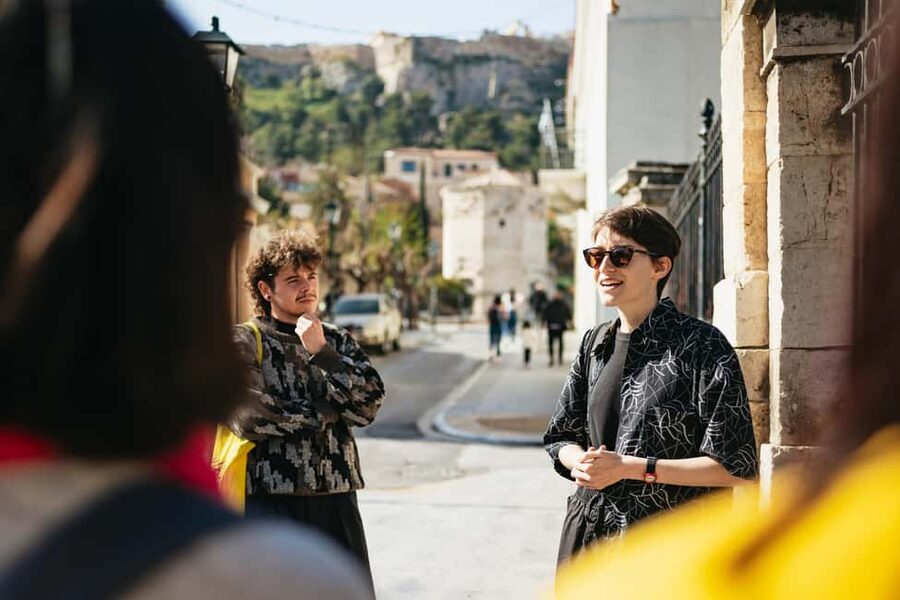
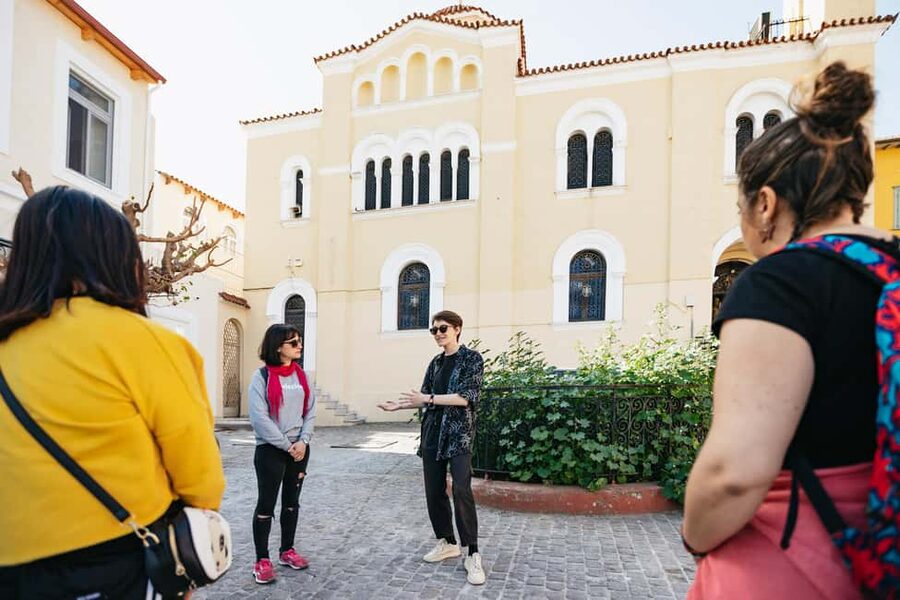
One big reason this works so well: the guide’s style. People highlight how it feels interactive, not preachy, and how questions get welcomed. That matters. When you’re dealing with a topic that can feel political or personal, a conversational tone keeps it grounded.
Also, the tour includes a small gift. It’s not the reason to book, but it adds that extra sense of being taken care of.
Who this tour is best for (and who should think twice)
This tour is a great match if you want:
- A new angle on Athens beyond the standard Acropolis-and-temples plan
- Mythology explained as social thinking, not just character names
- A focused walk that you can layer onto the rest of your trip without blocking your whole day
It may not be the best match if you:
- Need wheelchair access or have significant mobility limitations (steps are part of the deal)
- Have heart problems and want to avoid strenuous walking
- Expect paid archaeological site entry beyond exterior views
If you’re traveling with friends, a partner, or even with a teen who usually tunes out lectures, the “human stories” approach tends to win them over fast.
Should you book Athens: Women in Ancient Greece?
Yes—if you want Athens to feel personal and coherent instead of just impressive. This tour is built around a viewpoint most visitors never hear: women in ancient Greece as real actors living inside a society shaped by myth, custom, and institutions.
Book it if you love thoughtful history, good conversation, and a walk you can finish without feeling like you sacrificed your whole day. Skip it if your top goal is museum-ticket entry and long stays at archaeological sites. For everything else, this is the kind of guided experience that changes how you look at the same ruins the next day.
FAQ
How long is the Athens Women in Ancient Greece tour?
It lasts about 2 hours.
Where do I meet the guide?
Meet your guide on Monastiraki Square in front of the Church Pantanassa. The guide holds a sign that says Women in Ancient Greece.
Does the tour include tickets to archaeological sites?
No. Tickets to archaeological sites aren’t included. You’ll get exterior views rather than full site entry.
What should I bring for the walk?
Bring a sun hat, sunscreen, and water.
Is this tour suitable for everyone?
No. It includes steps and may not be suitable for people with health or mobility difficulties. It’s not suitable for people with mobility impairments, people with heart problems, or wheelchair users.
What languages are available?
The live guide offers English and French.