REVIEW · VALENCIA
Essentials of Valencia and its World Heritage Sites
Book on Viator →Operated by Turiart · Bookable on Viator
Valencia’s UNESCO hits fast on foot. I like that you skip the map work and still get a guided sweep through the historic center, and I especially like that you can enter La Lonja de la Seda for real. The main catch is timing: it’s about 2 hours, so you’ll see a lot, but you won’t have hours to linger in each place.
This is a smart first-day add-on when you want context quickly. A professional guide keeps the group moving between squares and landmark buildings, then ties it all together with the stories behind Valencia’s UNESCO listings: the Silk Exchange, the Water Tribunal, and the Fallas.
One more thing to keep in mind: the walk is designed for most people, but it’s still a city-center circuit with a maximum group size of 25, so if you hate crowds, arrive early and plan to stay patient at photo stops.
In This Review
- Key things that make this tour worth your time
- Why this 2-hour UNESCO walk works in Valencia
- Start at Estació del Nord: getting your bearings before the stories
- Plaça de l’Ajuntament and the Fallas link to UNESCO (2016)
- City Hall at Ajuntament de Valencia: what you should watch for
- Mercat Central de València: how the Mediterranean diet fits the building
- La Lonja de la Seda: the Silk Exchange stop that makes the price make sense
- Plaza de la Virgen and the Tribunal de les Aigües (Water Tribunal)
- What the guide adds: pacing, questions, and local recommendations
- Price and value: what $20.85 buys you in real terms
- Practical tips to get more out of the walk
- Should you book Essentials of Valencia and its World Heritage Sites?
- FAQ
- How long is the tour?
- What UNESCO sites are included in the experience?
- Is entry to La Lonja de la Seda included?
- Where does the tour start and end?
- Does the Central Market include entrance for every departure time?
- When does the Tribunal of the Waters take place?
Key things that make this tour worth your time
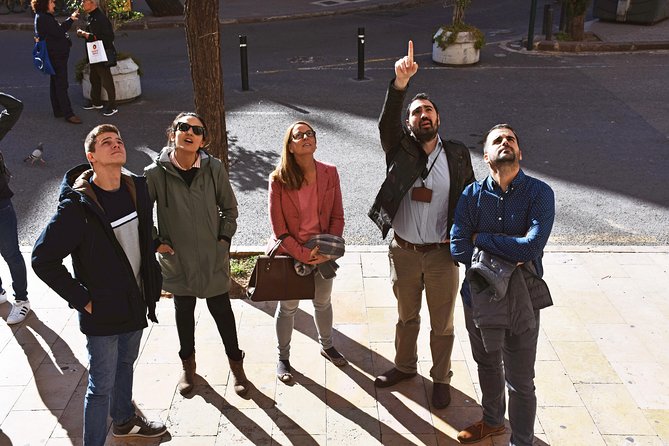
- Three UNESCO moments in one compact route, including the Silk Exchange you can actually go inside
- Lonja de la Seda entrance included (the big value point on this walk)
- No navigation headaches, because you follow the guide between key plazas
- Fallas explained clearly, including why the festival became a UNESCO listing in 2016
- Water Tribunal timing and location shared, so you know what you’re looking for on Thursdays
- Friendly, Q-and-A friendly guides are common, with solid recommendations for what to do next
Why this 2-hour UNESCO walk works in Valencia
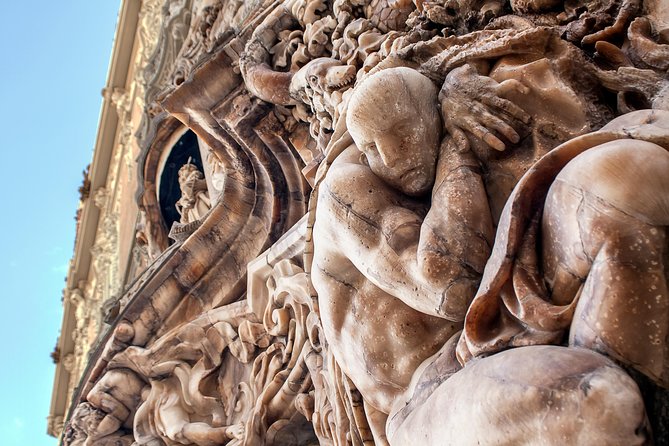
If Valencia is your first stop in Spain, this kind of guided loop is gold. The historic center can feel like it’s made of tight lanes and sudden squares. A guided flow helps you connect the dots fast, so later, when you’re walking on your own, you actually know where you are and why it matters.
The tour is also built around “high signal” stops. Instead of spreading your time thin, it focuses on UNESCO-linked places that explain how Valencia worked: trade, water management, and civic identity. At the end of the 2 hours, you should walk away with a mental map, not just photos.
You can also read our reviews of more tours and experiences in Valencia.
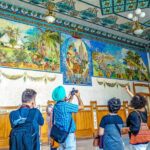

Start at Estació del Nord: getting your bearings before the stories
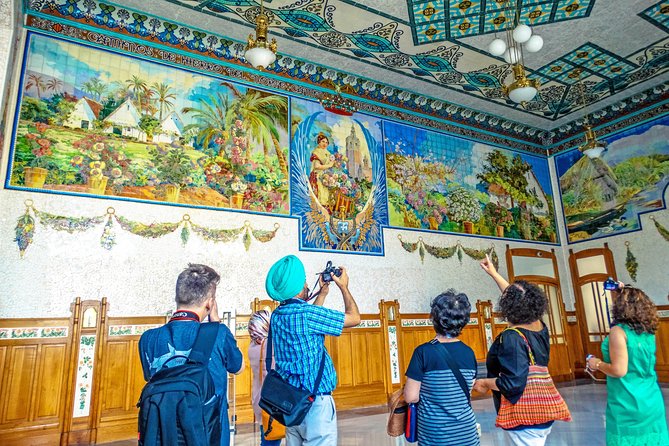
You begin at Bailén – Estació del Nord, and the guide takes you through a visit of the station. That first stop matters more than it sounds. It sets the tone for the city: Valencia isn’t only old churches and old walls. It also has a modern transportation backbone, and the station is an easy anchor point to start from.
Practically, it also keeps the logistics simple. If you’re arriving from elsewhere in the city, you have a clear starting spot, and the tour route then flows into the historic core.
Plaça de l’Ajuntament and the Fallas link to UNESCO (2016)
Plaça de l’Ajuntament is where the city’s civic power shows up in stone and ceremony. Here, the guide focuses on Fallas, Valencia’s festival that became part of the UNESCO World Heritage list in 2016.
You’ll hear what makes Fallas special beyond the spectacle: it’s an open-air museum of temporary monuments, with music, traditional costumes, and that unmistakable smell of gunpowder during the main stretch from March 15 to 19. The guide’s job is to translate the festival into an easy-to-understand cultural system, not just a calendar event.
The real payoff for you is that the guide helps you see why this matters to Valencia’s identity. If your trip overlaps March 15–19, you’ll recognize the festival patterns immediately. If it doesn’t, you’ll still understand what you’re missing and where it comes from.
City Hall at Ajuntament de Valencia: what you should watch for
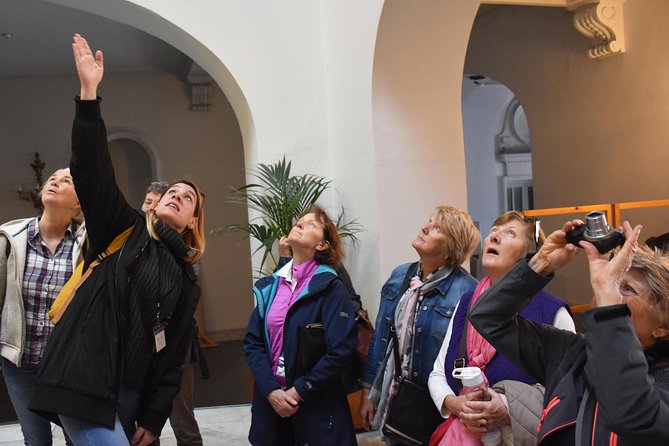
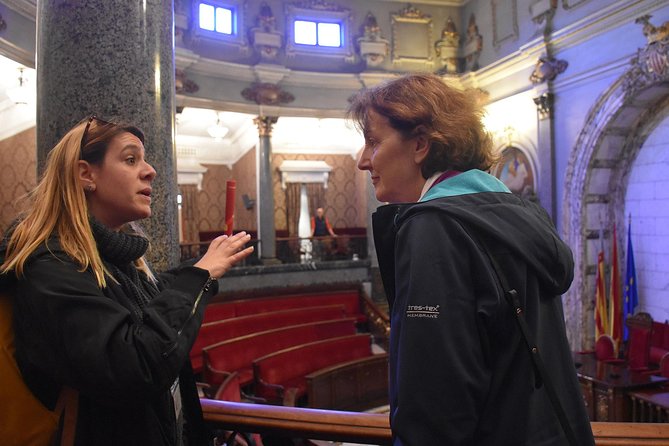
Next is Ajuntament de Valencia, the seat of local government. The tour keeps this stop around 20 minutes, with entry described as free under normal working conditions.
A key consideration is access. The tour info notes that working days apply, with exceptions for official events or holidays. That means your experience here can vary by the day. If the building is open, you’ll get a closer look and the guide will connect the architecture and the building’s role to Valencia’s civic life. If it’s not open, you’ll still get the context, but expect more of an exterior emphasis.
Either way, this is one of the stops that helps you stop treating Valencia like a museum city and start treating it like a living place with traditions that still operate.
Mercat Central de València: how the Mediterranean diet fits the building
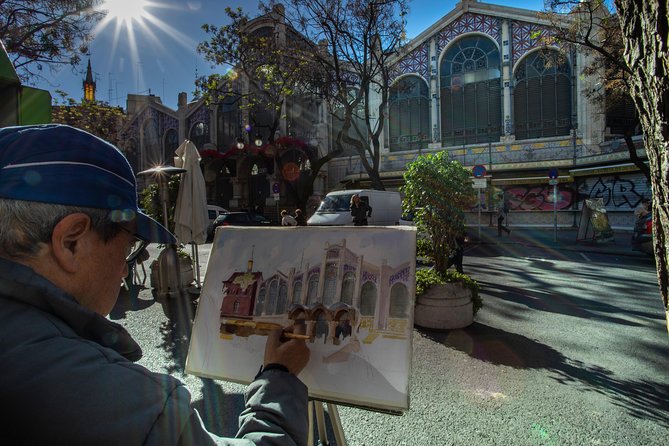
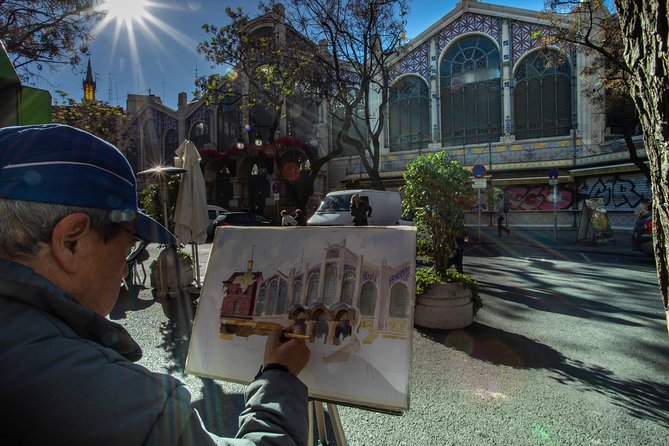
Then you reach Mercat Central de València, the Central Market. This is where the tour shifts from civic identity into daily life.
The guide explains the market and the Mediterranean diet, which is a useful framing. You’re not just seeing a pretty hall. You’re learning why this type of marketplace culture matters: local staples, food traditions, and a system that historically connected producers and buyers in one place.
Timing can change what you get. For evening tours in August and September at 6:30pm, the information states that entrance to the market is not included. If you care about being inside the market itself, plan your day for a time that includes that access.

La Lonja de la Seda: the Silk Exchange stop that makes the price make sense
This is the centerpiece. You enter La Lonja de la Seda, the Silk Exchange, a civil Gothic masterpiece declared a World Heritage Site in 1996. The guide focuses on the Sala de Contratación and the dramatic structure: columns, vaults, and ribs that give the room its scale and energy.
Even if you’re not a hard-core architecture person, this stop is worth it because it explains what power looked like in Valencia during the Golden Age of trade. You can feel the ambition in the space. More important, the guide helps you connect the building to the trade networks it supported.
Value note for you: the tour lists admission for this stop as included. That’s the cost-saving engine here. You’re paying a modest per-person rate, and you’re also getting entry to the one place that’s specifically called out as included.
One more timing wrinkle: evening tours in August and September at 6:30pm do not include entrance to La Lonja de la Seda. If this is your top priority, choose a tour time that includes the visit inside.
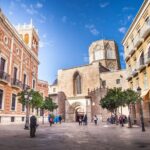
Plaza de la Virgen and the Tribunal de les Aigües (Water Tribunal)
The final major stop is Plaza de la Virgen. Here, the guide brings in another UNESCO angle, one that’s not about buildings at all: the Water Tribunal.
The key detail you’ll want to remember is the schedule and location. The Tribunal of the Waters is an Intangible Heritage of Humanity listing since 2008, and it takes place every Thursday at 12:00 noon at the Apostles’ Gate of the Cathedral. The tour points you to where that happens, so you understand what to look for if you’re in Valencia on a Thursday around midday.
This stop is also a smart “why Valencia” moment. It shows that the city’s heritage isn’t only art and architecture. Valencia’s water system and fairness traditions are part of what UNESCO recognizes.
What the guide adds: pacing, questions, and local recommendations
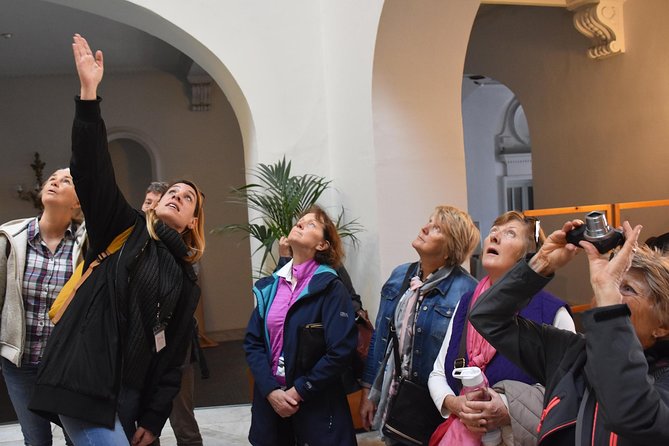
This kind of tour lives or dies by the guide. The consistent pattern in the guide feedback is that people like the energy and the Q-and-A time. Names that come up often include Maria and Sara, and the common thread is that they’re friendly, they answer questions well, and they explain how the places connect.
You’ll also benefit from the guide’s practical side. Some guides are known for sharing food and cultural ideas after the walk, which is perfect if you’re trying to decide what to do next without guessing.
There’s one small caution worth mentioning. One person reported that the audio through the radios/headsets wasn’t great and suggested a slower, clearer pace. If you’re sensitive to audio quality, stand a bit closer to the guide so you catch the main points.
Price and value: what $20.85 buys you in real terms
Let’s talk about value in a non-mathy way. At $20.85 per person, you’re paying for three main things:
- A guided storyline that links UNESCO sites to how Valencia functions
- Time saved by not figuring out routes and connections yourself
- Included entry to La Lonja de la Seda, the one stop where access is specifically built into the price
Most other stops are listed as free admission. That means your money mostly goes toward explanation and the one included interior visit. For a 2-hour format, that’s a good trade if you want a strong overview plus one “must-see” interior site.
Also, the tour averages booking about 21 days in advance, which usually indicates it’s a popular, easy add-on for people arriving with a tight schedule. If you have a specific day in mind, it’s worth booking ahead rather than waiting.
Practical tips to get more out of the walk
A few things will make this feel smoother and more personal:
- Wear comfortable shoes. You’re in the historic center and the walk is paced for sight stops, not marathon speed.
- Bring a phone for photos, but also bring questions. The guide’s explanations are most useful when you ask follow-ups.
- If you want the inside access at both the market and La Lonja, avoid the August and September 6:30pm timing mentioned as having entrance excluded for those stops.
- If you care about the Water Tribunal, check the Thursday timing in your schedule so the UNESCO detail can land in a real-world way.
Should you book Essentials of Valencia and its World Heritage Sites?
Book it if you want a fast, organized introduction to Valencia’s UNESCO-linked highlights, especially if La Lonja de la Seda is on your list. The mix of trade heritage (Silk Exchange), civic identity (Fallas and City Hall area), and living tradition (Water Tribunal) gives you a rounded picture without needing a full day.
Skip it or look for another option if you’re the type who likes to linger for long periods inside major monuments. This tour is efficient, not slow. Also, if you’re visiting in August or September and you want maximum interior time at both La Lonja and Mercat Central, you’ll want to pay attention to the evening timing note where entrance isn’t included for those stops.
If you want a clean starting point for the rest of your Valencia days, this is a solid choice.
FAQ
How long is the tour?
It runs for about 2 hours.
What UNESCO sites are included in the experience?
You’ll see and learn about Valencia’s World Heritage listings tied to the Silk Exchange (La Lonja de la Seda), the Water Tribunal (Tribunal of the Waters), and Fallas.
Is entry to La Lonja de la Seda included?
Yes. Entry to La Lonja de la Seda is included, with a note that evening tours in August and September at 6:30pm do not include entrance.
Where does the tour start and end?
It starts at Bailén – Estació del Nord (46007 Valencia) and ends at Carrer del Micalet, 7 (Ciutat Vella, 46001 València).
Does the Central Market include entrance for every departure time?
Not for evening tours in August and September at 6:30pm. For those departures, entrance to the market is not included.
When does the Tribunal of the Waters take place?
It takes place every Thursday at 12:00 noon at the Apostles’ Gate of the Cathedral.