REVIEW · NEW ORLEANS
Dark History Tour In New Orleans
Book on Viator →Operated by Jonathan Weiss Tours · Bookable on Viator
New Orleans has a darker side. This Dark History Tour turns the French Quarter into a living classroom, with real events and real people behind the postcard facades. I like that guides like Jonathan Weiss and long-time local Doug keep the tone human, not gimmicky, while you learn how the city got shaped.
You’ll also appreciate the smart pacing: a two-hour loop with quick stops, free admission for the listed sights, and time for a mid-walk break at Lafitte’s Blacksmith Shop Bar. One thing to consider is the theme itself: this is serious history, so if you want light and fluffy sightseeing, the “dark” framing may feel heavy.
In This Review
- Key things to know before you go
- Dark History Tour in New Orleans: what you’re really signing up for
- Price and value: how $30 holds up in the Quarter
- Where you meet at 5:00 pm and how the route feels
- Stop 1: St. Louis Cathedral—old walls, big meaning, quick visit
- Stop 2: Lafitte’s Blacksmith Shop Bar—mid-tour break with history in the walls
- Stop 3: Madame John’s Legacy—French architecture you can actually spot
- Stop 4 (City Hall area): Spanish to American rule and the power shift behind the facade
- Jackson Square: a pretty stage built for uncomfortable truths
- Guides, tone, and why the best storytelling feels human
- A heads-up on pace and story style
- The walking reality: timing, weather, and how to plan your evening
- Group size and how it affects your experience
- Is this the right dark history tour for you?
- Should you book the Dark History Tour in New Orleans?
- FAQ
- How much is the Dark History Tour in New Orleans?
- How long is the tour and what time does it start?
- What language is the tour offered in?
- Where do I meet the guide, and where does the tour end?
- Is there a mobile ticket?
- Are service animals allowed?
- What is the cancellation and weather policy?
Key things to know before you go
- Licensed, long-time guidance: guides were licensed before Hurricane Katrina
- French Quarter loop, low stress timing: about 2 hours with short stop windows
- Free entry at several stops: listed sights have free admission tickets
- Small-group feel: maximum 28 people
- On-the-ground storytelling: true stories with a compassionate, not showy tone
Dark History Tour in New Orleans: what you’re really signing up for
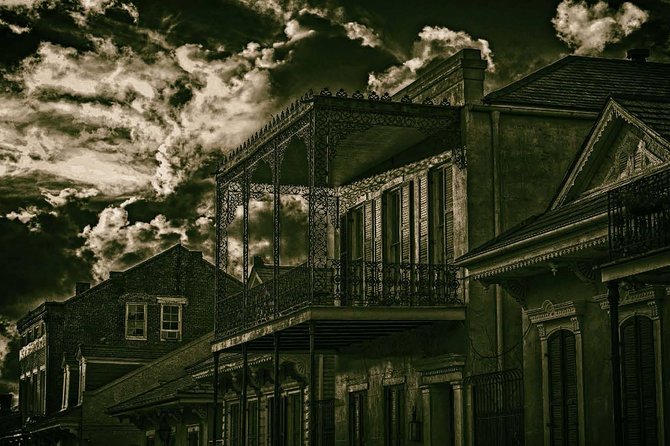
A walk through the French Quarter can be pretty. This tour makes it honest.
You’re not just hearing crime trivia or spooky anecdotes. The point is context—how politics, neighborhoods, religion, and power moved through New Orleans over time. The “dark history” label fits, but the best part is the way guides connect those events to the lived reality of people, not just shock value.
At $30 for about two hours, you’re paying for a guided route and a guide who can explain why places matter. If you’re the type who likes your sightseeing with facts and character, this is a solid use of your limited time in town.
You can also read our reviews of more tours and experiences in New Orleans.



Price and value: how $30 holds up in the Quarter
$30 per person for a 2-hour walking tour is fair, especially because several stops are listed with free admission. Even without turning it into a math exercise, you’re getting more than “watching a guide point at buildings.”
This format also gives you value in how you experience New Orleans. You’ll spend the evening outside, moving from landmark to landmark, instead of paying for entry fees and then hoping you understand what you’re looking at. A good guide can turn a street corner into a story you’ll actually remember.
The max group size is 28, which usually keeps things from getting chaotic. It’s not private, but it’s still small enough for questions—if you ask them.
Where you meet at 5:00 pm and how the route feels
The tour starts at Pirate’s Alley Cafe, 622 Pirates Alley, New Orleans, LA 70116. Start time is 5:00 pm, and it ends at 1035 Chartres St, New Orleans, LA 70116, at the corner of Ursulines and Chartres St.
That timing matters. Late afternoon light looks great in photos, and it also helps when you’re walking through areas that can feel busy. Since it’s a night-in-the-making tour, wear shoes you don’t mind getting walked in.
Also, this is a real city sidewalk situation. The more space you keep, the smoother the walk. If you stop suddenly in the middle of foot traffic, you’ll slow everyone down, including the guide’s rhythm.
Stop 1: St. Louis Cathedral—old walls, big meaning, quick visit
The first stop is St. Louis Cathedral, billed as the oldest cathedral of the United States. You’ll have about 8 minutes here, and the listed admission is free.
Even in a short window, you can get something useful: a sense of how religious authority and community life anchored the Quarter. A cathedral like this isn’t just a pretty facade. It’s a landmark that helped shape the social geography of New Orleans—who belonged, who had influence, and how order was supposed to be maintained.
Practical tip: if you’re standing and listening, keep your body angled so others can pass. You don’t need to stare straight up the whole time. Look at the building, then look back at what’s happening around it—your brain will start connecting the story to the street.
Stop 2: Lafitte’s Blacksmith Shop Bar—mid-tour break with history in the walls
Next up is Lafitte’s Blacksmith Shop Bar, with about 10 minutes on the stop. It’s listed as free admission, and it’s a great place to reset because it’s a natural pause point during a walking tour.
This stop works because it’s both social and historical. A bar doesn’t have to be treated like a museum. You get a breather while still staying in the flow of the “dark” narrative, and the guide can connect the city’s undercurrents—who moved where, how unofficial life fit alongside official rules.
If you want a practical moment: this is where you can mentally check in. Are you following the thread? Do you have a question? Ten minutes is enough to ask one good follow-up.






Stop 3: Madame John’s Legacy—French architecture you can actually spot
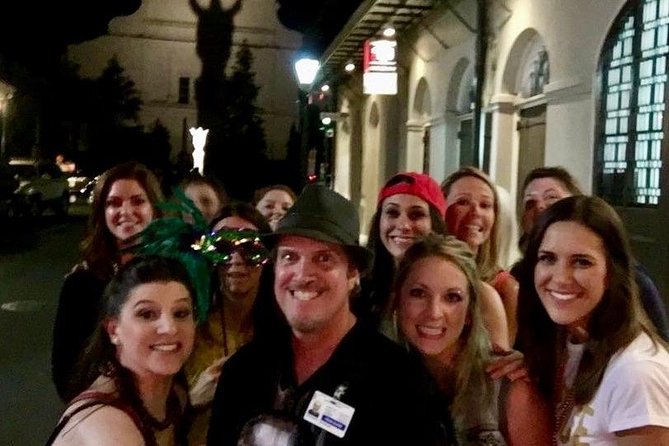
The third stop is Madame John’s Legacy, one of the only French buildings in the Quarter, and described as the only residence of the French period. You’ll get about 10 minutes, with free admission listed.
This is where the tour becomes more visual. When a guide talks about the French period, you’ll have a building in front of you that helps you picture the past instead of just imagining it. Even if you’re not an architecture person, you’ll likely notice the difference between styles and understand why certain neighborhoods evolved differently.
A small-time commitment here is smart too. Ten minutes doesn’t turn this into a long museum detour. You learn enough to recognize what you’re looking at later, when you walk on your own.
Stop 4 (City Hall area): Spanish to American rule and the power shift behind the facade
After Madame John’s Legacy, the route includes the City Hall of the Spanish and Americans until the Civil War. The way this stop is framed is the point: it connects buildings to changing rule.
Think of it like this. When political control shifts, the city’s story shifts. Laws change. Language changes. Who gets protected changes. The guide’s job here is to help you see how official power affects real people—even when all you see is stone, doors, and a street name.
This stop also helps balance the tour. Earlier stops lean religious and social. Here you get a governance angle, and the tour becomes more than spooky—more like a map of influence.
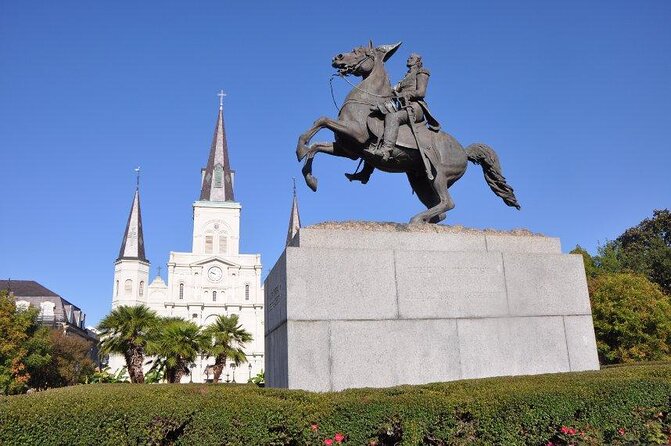
Jackson Square: a pretty stage built for uncomfortable truths
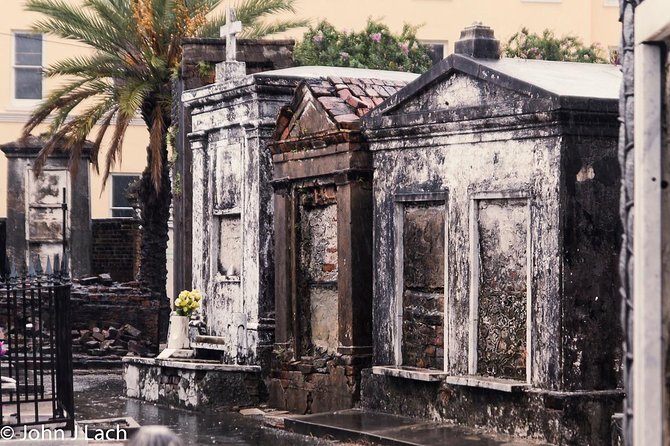
The final major stop is Jackson Square, with about 8 minutes. It’s listed as free admission, and it’s described as a place of absolute horror.
That phrase isn’t meant to make you panic. It’s meant to challenge how easy it is to romanticize a famous public space. Jackson Square can look ideal for photos and easy strolling, but that’s exactly why the guide’s framing matters. You’ll look at the square and think about what happened around it, not just who poses there.
Unique to this tour is how you’re guided to hold two ideas at once: beauty and harm, ceremony and consequence. That mental shift is part of why the tour is remembered as a strong experience, even by people who’ve been to the Quarter before.
Guides, tone, and why the best storytelling feels human
What makes this tour work is the guiding style.
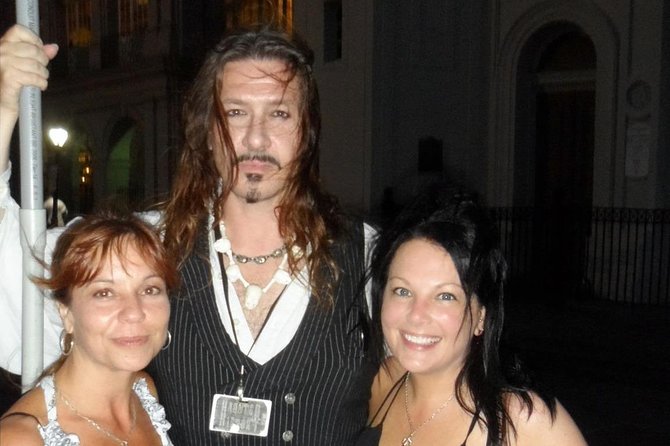
I’ve seen a pattern in the way people talk about it: the guides are friendly, and they focus on facts without turning the whole thing into theatrics. Some guides highlighted by name include Jonathan Weiss, with others like Doug and Jonathon also coming up for their enthusiasm and ability to make history feel alive.
One detail you should care about: the guides were licensed before Hurricane Katrina. That isn’t just a brag line—it suggests experience and familiarity with the city’s rhythms, the real geography of the Quarter, and how to keep the walk flowing even when streets get crowded.
The pace is a big deal here too. A good guide keeps you moving through the story, while still creating space for questions. When the group stays on track, you’ll finish the loop feeling like you learned something specific—not just that you heard a lot of words.
A heads-up on pace and story style
Not every guide is equally tight and short. There’s at least one note that a guide can run long or wander off the core topic. If you’re the kind of person who wants sharp, fast answers, bring that energy: ask one clarifying question early, and keep your expectations realistic for a walking conversation.
Also, the tour is compassionate. That’s a plus for many people, but if you’re looking for nonstop shock, you might prefer a different kind of dark-tour style.
The walking reality: timing, weather, and how to plan your evening
The tour runs about 2 hours, and it’s offered in English. It begins at 5:00 pm, which is ideal if you want an early evening activity before dinner ramps up.
This experience also depends on good weather. If weather turns, you’ll be offered a different date or a full refund. So if you’re mapping out your schedule, keep one evening flexible.
In terms of how “active” it is: most people can participate, and it’s set up as a short-stop walking route rather than a long hike. Still, you’ll be on your feet on city sidewalks, so comfortable shoes are a must.
Group size and how it affects your experience
The tour caps at 28 people, which usually helps with questions and keeps the guide from talking into a void.
In small groups, you can also get a more personal explanation of what you’re seeing. If you’re traveling with family, or you want a structured way to learn without crowd-wandering, this size is a good middle ground.
If you’re sensitive to noise or prefer quiet, plan on that French Quarter energy. The tour itself is guided, but the neighborhood is always alive.
Is this the right dark history tour for you?
You should seriously consider booking if:
- you want an evening walk that connects places to stories
- you like guides who treat heavy topics with care
- you’d rather learn from a route and a narrator than from a self-guided app
You might skip it if:
- you want mostly light entertainment and minimal sadness
- you prefer very short, strictly timed stops with no conversational drift
- you’re looking for a tour that leans harder on shock than context
My take: for the price, the combination of a tight route, free-listed admissions, and a guide-driven narrative makes it good value—especially if you’re already planning to spend time in the French Quarter anyway.
Should you book the Dark History Tour in New Orleans?
Yes, if you’re in the French Quarter and you want a story-driven alternative to the usual sightseeing pattern. The stop selection is smart, the stops are short enough to keep energy up, and the guide approach described by people who rate it highly is exactly what you hope for: clear facts, real people, and a tone that doesn’t turn suffering into a gimmick.
If your ideal vacation is all laughs and bright postcards, then the “dark” framing may not match your mood. But if you can handle serious history and you want to understand why this city looks the way it does, this tour is a strong fit.
FAQ
How much is the Dark History Tour in New Orleans?
The tour costs $30.00 per person.
How long is the tour and what time does it start?
The tour lasts about 2 hours and starts at 5:00 pm.
What language is the tour offered in?
The tour is offered in English.
Where do I meet the guide, and where does the tour end?
You meet at Pirate’s Alley Cafe, 622 Pirates Alley, New Orleans. The tour ends at 1035 Chartres St at the corner of Ursulines and Chartres St.
Is there a mobile ticket?
Yes. The tour uses a mobile ticket.
Are service animals allowed?
Yes, service animals are allowed.
What is the cancellation and weather policy?
You can cancel for a full refund up to 24 hours in advance. If the tour is canceled due to poor weather, you’ll be offered a different date or a full refund.