REVIEW · ANTALYA
From Antalya: Roman Ancient Sites & Manavgat Waterfall Tour
Book on GetYourGuide →Operated by Payless Turizm · Bookable on GetYourGuide
Most days in Antalya blur fast; this one stays sharp. You’ll roll from Perge to Aspendos, then finish with Side and Kursunlu Waterfall—so the ruins don’t feel like just photos, they feel like a story.
I especially like the way the guide turns each stop into something you can picture right away—whether it’s why Perge mattered or how Aspendos’ theatre is still alive. The second thing I love is the pacing: you get real time to walk and look, not constant rushing. The only snag to plan for is that the big ticket items (entrance fees) aren’t included, so your final total may climb.
If you end up with a guide like Fatma, Kerem, or Cengiz (names I’ve seen tied to this tour), expect clear explanations and good energy—often funny, sometimes very personal in how they connect the sites to modern life. This is a great day if you want “greatest hits” near Antalya without driving yourself.
In This Review
- Key highlights worth your attention
- A 9-hour Roman sites-and-waterfall route that works
- Perge: Roman city streets with museum-level backstory
- What to watch for (and why it matters)
- A realistic consideration
- Aspendos theatre: the ancient show still running
- Why this stop is a highlight for most people
- Time and comfort notes
- Lunch in the middle: how to recharge without wasting time
- Side: Apollo temple vibes, a theatre, and the coast view
- Make Side feel worth it
- Kursunlu Waterfall: 18 meters of cool air after the ruins
- Photo reality check
- Price and logistics: what $77 really buys you
- My practical take on value
- Walking comfort, heat, and what to bring
- Guides can make or break the day: Fatma, Kerem, Cengiz
- Who should book this tour (and who might skip it)
- Should you book the Perge, Aspendos, Side, and Kursunlu Waterfall day trip?
- FAQ
- How long is the tour from Antalya?
- What’s included in the price?
- Are entrance fees included?
- Are drinks included with lunch?
- What languages are offered for the live guide?
- Is the tour suitable for everyone with mobility needs?
Key highlights worth your attention
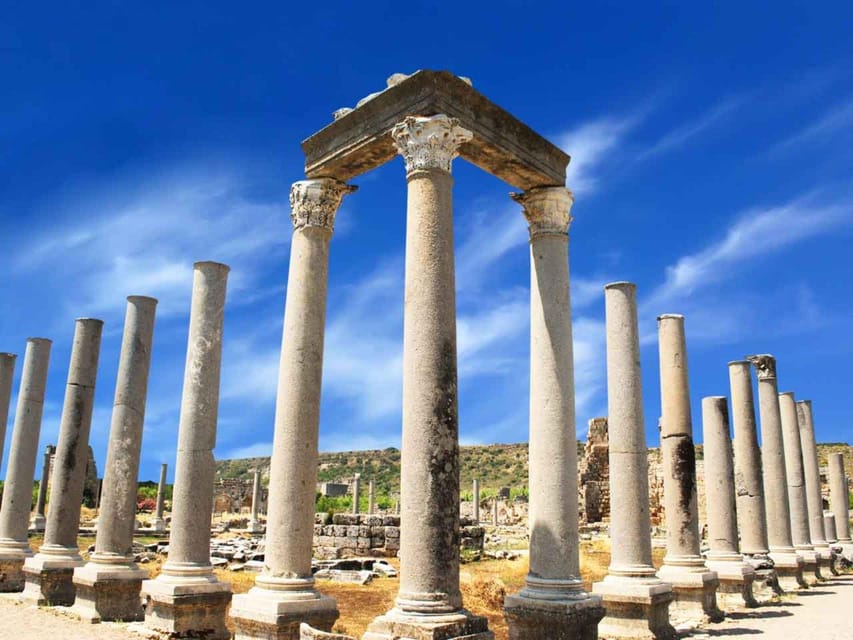
- Perge’s link to Antalya Museum: many statues found here ended up in the museum, and that context helps the ruins feel real.
- Aspendos’ working theatre: one of Anatolia’s best-preserved theatres, and it’s still used for shows.
- Side’s dramatic mix: temple ruins, a theatre, marble columns, and Mediterranean views.
- Kursunlu Waterfall timing: an 18-meter drop in a national park gives you a breather and strong photo moments.
- Open buffet lunch included: you’re fed at a local restaurant so you’re not hunting food between sites.
A 9-hour Roman sites-and-waterfall route that works
This tour is built for one goal: see a lot of “Roman Anatolia” without the hassle of figuring out transport, tickets, and where to stand for the best views. You start with morning pick-up from your Antalya hotel area, then spend the day moving between four main stops: Perge, Aspendos, Side, and Kursunlu Waterfall. You’ll be back at your hotel in the afternoon, which matters if you don’t want to lose your whole day.
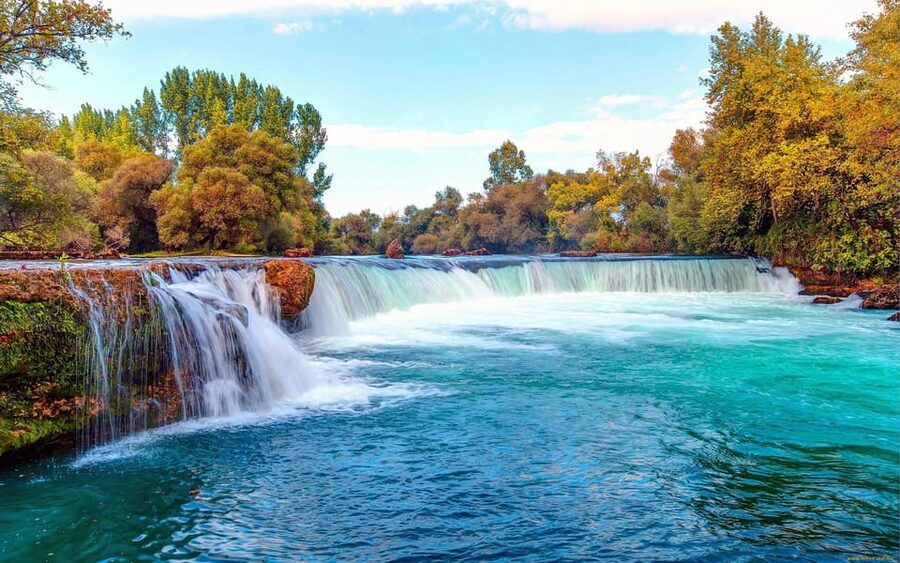
For me, the value is in how the stops connect. Perge gives you the sense of a planned Roman city with deep roots. Aspendos gives you architecture that still functions. Side adds coastal power and religious life. Then the waterfall resets your eyes and your mood—cool air, emerald-looking water, and a sound track of splashing.
One more practical point: Antalya traffic and hotel location can affect the ride length back. Some people have noted that the return drive can feel long depending on where they’re staying, but the tour’s structure still keeps the day manageable.
You can also read our reviews of more tours and experiences in Antalya.
Perge: Roman city streets with museum-level backstory
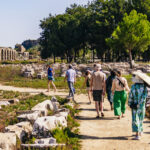
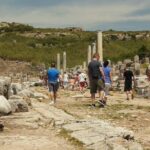
Perge is the kind of place where you can feel the city’s organization as you walk. It’s famous because many statues found here were later displayed in the Antalya Museum. That means you’re not just looking at broken columns; you’re seeing fragments of a bigger story that survived long enough to be collected and studied.
The guide’s job here is important. Perge isn’t just Roman by label—its identity stretches further back in time. You’ll hear how the settlement was founded after the Trojan War, which helps turn a site from a grid of ruins into something with mythic roots. Even if that “Trojan War” connection is the kind of story that lives between history and legend, it still gives you a mental map for what people meant when they built and named places.
What to watch for (and why it matters)
At Perge, I like to think of your time as two parts:
1) Orientation time: get your bearings fast so the street layout makes sense.
2) Detail time: then slow down for sculptures, architectural pieces, and the way the ruins frame the sky.
If you like archaeological context, Perge is the most intellectually satisfying stop on the route. If you’re more into big visuals, it’s still worth it, but it helps to go in ready to look rather than only to pose.
A realistic consideration
Perge is a large site, and a common mistake is planning to see everything in a sprint. If your schedule feels tight, prioritize the areas your guide points out most clearly, then save a little time to wander. Some guides also seem willing to give a touch more breathing room if the group pace allows.
Aspendos theatre: the ancient show still running
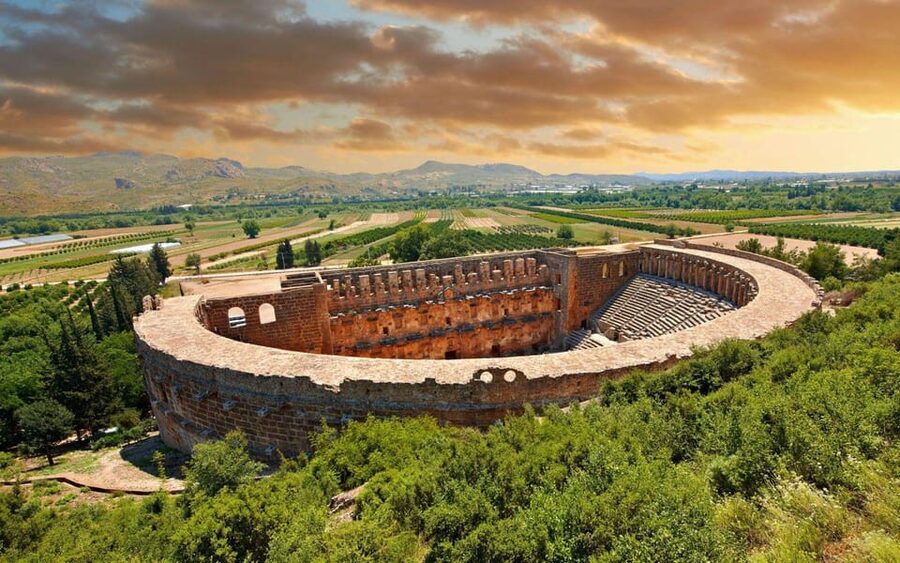
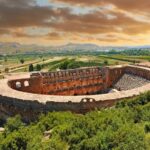
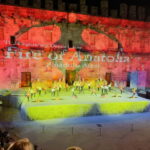
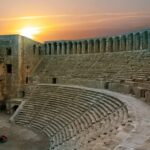
Aspendos is where the day gets cinematic. This is one of the best-preserved ancient theatres of Anatolia, and the key difference is that it’s still used for shows and concerts. That doesn’t just sound impressive—it changes how you experience the space. You start to picture performances with sound bouncing off stone instead of imagining a silent ruin.
The theatre’s condition makes it easier to understand how ancient builders solved practical problems: sightlines, crowd flow, and acoustics. And since you’re at a working venue (at least in the sense that it still hosts events), the architecture doesn’t feel frozen. It feels functional—like it was built to keep doing its job.
Why this stop is a highlight for most people
Even if you’re not a theatre person, Aspendos has that rare combo: strong atmosphere and clear structure. The semicircle shape pulls your eyes, and when the guide explains what you’re looking at, the place turns from “cool old stones” into a real engineering achievement.
Time and comfort notes
The theatre itself is open-air, so expect sun. If you’re sensitive to heat, bring sunglasses and sunscreen early. Your best photos often come from stepping back to catch the full theatre bowl rather than focusing only on close-up seating rows.
Lunch in the middle: how to recharge without wasting time
Lunch is included as an open buffet at a local restaurant. This matters more than it sounds. With a day this full, “included lunch” usually means you can eat without losing hours to searching or waiting. And because it’s a buffet, you don’t have to match pace with everyone else to get fed.
What I recommend: treat lunch as a reset, not a long sit-down. Eat, hydrate, use the restroom, and then get back to your group quickly so the afternoon doesn’t feel rushed. People have noted that lunch can be decent and even pleasant with a nice view, so take that as a signal to choose a spot that feels comfortable if you can.
Also, drinks aren’t included. If you’re thirsty often, having cash or a plan to buy water can save you stress later. (You’ll be walking under sun for much of the day.)
Side: Apollo temple vibes, a theatre, and the coast view
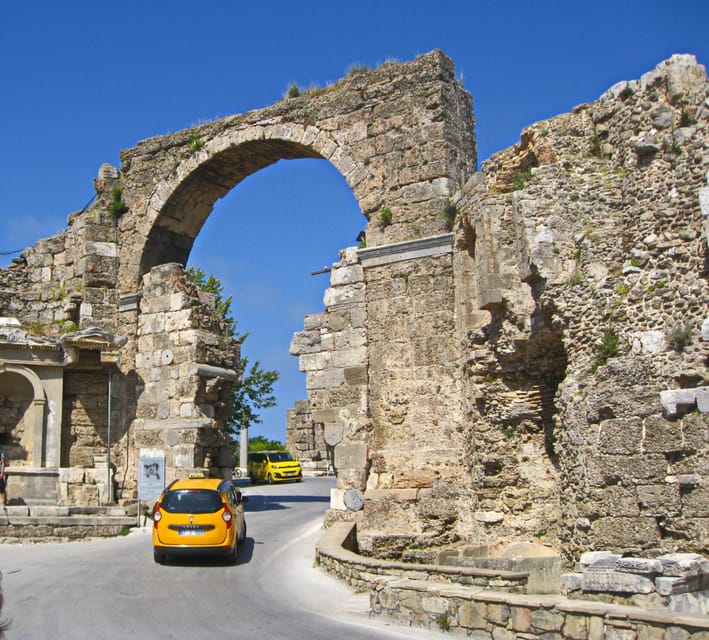
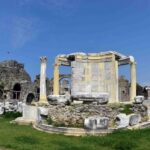
Side is your “Roman coastal city” stop. You’ll walk through a mix of structures: an ancient temple associated with Apollo, a theatre, marble columns, and Mediterranean views that make the ruins feel bigger than they would inland.
Side is also one of those places where you can get more out of your time by not staying only in the most obvious zones. One smart suggestion from what you’ll likely hear at the site: wander a bit off the main path. There are older bath structures that can feel tucked in behind newer buildings—almost like a time capsule. That kind of contrast is a big part of why Side is fun: it shows how cities layer over centuries.
Make Side feel worth it
Here’s how you can make your Side visit count:
- Look up at the columns and temple lines; they’re the best way to grasp scale.
- Switch to viewpoints: the coast view helps you understand why this city mattered.
- Keep an eye out for quiet corners: side streets can feel less rushed than the headline spots.
If you’re short on energy, Side still delivers. Even a slower walk around the theatre and temple area can be rewarding because the sea air helps you enjoy it rather than just endure it.
Kursunlu Waterfall: 18 meters of cool air after the ruins
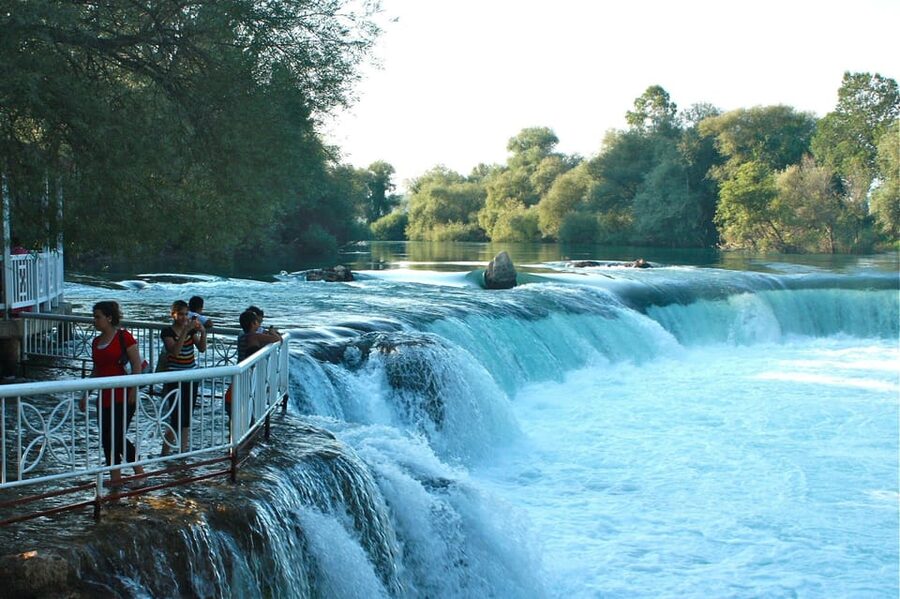
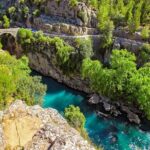
The last stop is Kursunlu Waterfall, located in a national park. The water falls about 18 meters, and the vibe is very different from the Roman stones you’ve been walking among. Reviews and descriptions put emphasis on the emerald look of the water, plus the sound and photo backdrop.
This stop is your mental gear shift. You can stand, breathe, take pictures, and let your feet cool down. If your camera is waterproof, use it freely—water spray is part of the fun here. And if you’re carrying a standard phone, keep it protected just in case.
Photo reality check
Waterfall photography can be tricky when you’re rushing. Instead of chasing every angle, pick one solid spot to frame the full drop, then spend a few minutes watching how the light hits the water. You’ll usually get better results than by constantly moving.
The day ends after this, with the bus driving you back to Antalya in the afternoon. You’ll likely feel tired—but in a good way, because you’re ending with nature rather than another museum-like stop.
Price and logistics: what $77 really buys you
At about $77 per person for a 9-hour guided day trip, the price starts to make sense when you look at what’s included:
- Hotel pick-up and drop-off
- Air-conditioned bus
- Open buffet lunch
- Guided tour
That’s a lot of “time cost” saved versus doing it independently. The hidden variable is entrance fees and drinks. Entrance fees are not included, and they can add up fast when you’re paying for multiple sites. One traveler noted around 26 euros each as an added cost at the attractions, which gives you a reasonable expectation that you should budget extra cash.
My practical take on value
If you’re staying in or near Antalya and you want Perge + Aspendos + Side without the driving hassle, this is good value. You’re paying for organization and a guide to connect the dots—especially at Aspendos and Perge, where commentary can turn ruins into understanding.
If you already love self-guided sites and don’t care about guided explanations, you might find doing everything on your own can be cheaper. But you’ll trade convenience and context for that savings.
Walking comfort, heat, and what to bring
This is not a sit-everywhere tour. You’ll walk through ancient sites that can involve uneven ground and plenty of sun exposure.
Bring:
- sunglasses
- a sun hat
- sunscreen
- camera (and waterproof camera if you’ve got one)
- cash for entrance fees and drinks
Note on strollers and age/mobility limits
Baby strollers aren’t allowed. The tour also isn’t suitable for people with mobility impairments and for people over 70. If you’re in either of those groups, I’d strongly consider a different style of tour with shorter walking and fewer stairs.
One more detail that matters for families: children will be asked to present valid passports at museum entrances to validate their age. If you’re traveling with kids, keep passports accessible.
Guides can make or break the day: Fatma, Kerem, Cengiz
For tours like this, the sites are fixed, but the experience level can swing a lot depending on the guide. This one stands out because multiple named guides—Fatma, Kerem, and Cengiz—have been praised for making history understandable, speaking clearly, and keeping the group engaged.
So here’s what to watch for during the day:
- Do you get time to ask questions?
- Does the guide explain what you’re looking at before you rush past it?
- Do they keep a good group rhythm so you’re not waiting around?
The best guides do something subtle: they make connections to today without turning the facts into a lecture. That’s what helps Aspendos feel alive and Side feel like more than scenic ruins.
Who should book this tour (and who might skip it)
I’d book this if:
- you want major ancient sites near Antalya in one day
- you like guided storytelling more than solo roaming
- you enjoy a “ruins in the morning, waterfall at the end” format
- you want lunch and transport handled
I’d skip it (or choose another option) if:
- you hate walking in sun and uneven ground
- you don’t want any extra spending for entrance fees and drinks
- you want a slower, single-site day instead of multiple stops
It’s also a good pick for people who want a mixed group experience. Some groups may be mixed by nationality, which can keep the day lively without turning it into chaos.
Should you book the Perge, Aspendos, Side, and Kursunlu Waterfall day trip?
Yes—if you’re looking for an efficient, guided route that combines Roman highlights with a real nature finish. The included lunch, the air-conditioned transport, and the fact that Aspendos is still a working venue make the day feel worth the time.
My advice: budget for entrance fees, pack sunscreen and a hat, and treat Perge as the stop where you should slow down and actually look. If you do that, you’ll come away with more than memories of stone—you’ll have a better sense of why these places shaped the region.
If you want, tell me your travel dates and where in Antalya you’re staying (for example, Konyaaltı, Lara, Kaleiçi). I can suggest what to prioritize first so your day feels comfortable, not rushed.
FAQ
How long is the tour from Antalya?
The tour lasts 9 hours, with morning pick-up and a return to your hotel in the afternoon.
What’s included in the price?
Hotel pick-up and drop-off, an open buffet lunch, an air-conditioned bus, and a guided tour are included.
Are entrance fees included?
No. Entrance fees are not included, so you should plan extra budget for tickets at the sites.
Are drinks included with lunch?
No. Drinks are not included.
What languages are offered for the live guide?
The live tour guide is available in English, German, Russian, and Italian.
Is the tour suitable for everyone with mobility needs?
It is not suitable for people with mobility impairments, and baby strollers are not allowed.