REVIEW · BANGALORE
Bangalore Heritage and Cultural Walking Tour
Book on Viator →Operated by Yo Tours · Bookable on Viator
Old Bangalore tells stories on your feet. This Bangalore heritage walking tour mixes landmark stops with street-level details and guided “infotainment,” so you’re not just hearing dates and names. I like that it pairs big, recognizable sights with hidden lanes and less-obvious places, plus practical tips you can use after the walk.
Two things I really enjoy here: first, the guide format (English and Hindi) is designed to keep the pace fun, even if history isn’t your main hobby. Second, the route threads together cultural and civic Bangalore—from museums and colonial-era architecture to parks and government buildings—so the city starts making sense fast.
One possible drawback: the experience can be hit-or-miss depending on whether your guide shows up and how the tour is paced. There are reports of guides not arriving on time, and one case mentioned a guide named Yashis/Yashas where the guest left after about 15 minutes. I’d plan to arrive a few minutes early and keep your booking details handy.
In This Review
- Key highlights worth your time
- Why this 2-hour heritage walk is such a smart starter
- Meeting at Golden Square: what to know before you start
- Stop 1: Venkatappa Art Gallery and the Department of Archaeology & Museums
- Stop 2: Visvesvaraya Industrial and Technological Museum (and why it’s a big deal)
- UB City and the modern skyline detour: how the tour compares eras
- St. Mark’s Cathedral and Mahatma Gandhi Park: calm architecture in the middle of the city
- Through old markets, heritage buildings, and centuries-old temples
- Cubbon Park, M Chinnaswamy Stadium, and Minsk Square: a green-and-civic reset
- Attara Kacheri (High Court of Karnataka): rules, power, and architecture
- Vidhana Soudha and the Gandhi statue/press area: the symbolic center
- What the price really covers (and where you’ll spend extra)
- The mixed feedback you should take seriously
- Who this tour suits best
- Should you book this Bangalore heritage walking tour?
- FAQ
- How long is the Bangalore Heritage and Cultural Walking Tour?
- What does the tour cost?
- How many people are in the group?
- Where does the tour start?
- Does the tour include a guide?
- Is water included?
- Is hotel pickup or drop included?
- Is the tour near public transportation?
- What if I cancel?
Key highlights worth your time
- Story-first “infotainment” style that keeps the walk moving and the facts stickier
- Old town lanes plus major landmarks in one short 2-hour loop
- Museums and architecture stops, including Visvesvaraya’s museum area and St. Mark’s Cathedral
- Small group size (max 15), which makes Q&A easier and the walk feel personal
- Local money-saving tips and recommendations you can use the same day
Why this 2-hour heritage walk is such a smart starter
If Bangalore is new to you, this is the kind of tour that helps you stop feeling lost. You get an orientation of central areas while walking at an easy enough pace to actually notice what’s around you.
The best part is the balance. The tour doesn’t just point at famous buildings. It connects them with stories—colonial-era influences, how neighborhoods developed, and how everyday street life fits into the city’s bigger picture. That’s where “infotainment” works: you’re entertained, but you also leave with mental maps and context.
At $12.46 for about 2 hours, the value is strong on paper: you’re paying for a trained storyteller, not a museum ticket or a taxi. It’s also small-group by design (up to 15 people), so you’re not stuck in a giant blob of people getting one sentence per stop.
You can also read our reviews of more tours and experiences in Bangalore.


Meeting at Golden Square: what to know before you start
The meeting point is Golden Square Business Centre, Vittal Mallya Road (102 Eden Park, 20 Vittal Mallya Rd, D’ Souza Layout, Ashok Nagar), Bengaluru 560001. The tour ends back at the same place, so you’re not left wondering how to get home.
Two practical notes:
- It’s near public transportation, which is helpful if you don’t want to plan a complicated commute.
- No hotel pickup, so you’ll need to get yourself there.
Also, the tour doesn’t include a water bottle. I’d bring your own, especially because you’ll be walking and listening for the full 2 hours.
Stop 1: Venkatappa Art Gallery and the Department of Archaeology & Museums
This first stop sets the tone. Rather than starting with a temple or a street market, it begins with a museum/arts side of Bangalore. That choice matters because it gives you a framework: this city isn’t only modern tech and malls; it has institutions that preserve culture and explain it.
What you can expect here is a mix of storytelling and visual context—why these kinds of places exist, how they relate to Bangalore’s identity, and what to look for as you move through the city. If you like museums but dislike “stand silently and read every plaque,” the tour style is meant to fix that with a guide’s spoken narrative.
Possible drawback? Museums can slow the group if people ask a lot of questions or if the guide has to keep redirecting attention. Since the tour is only around 2 hours, the guide likely won’t linger too long at any single building.
Stop 2: Visvesvaraya Industrial and Technological Museum (and why it’s a big deal)
Next comes the Visvesvaraya Industrial and Technological Museum area. This is where you’ll see how Bangalore’s image as an innovation hub has roots beyond today’s startups.
Even if your interest in engineering is only moderate, this stop helps. It shows the city’s pride in invention and public learning. In plain terms: it gives you a reason why Bangalore people talk the way they do about industry, skills, and progress.
This stop also works well for groups with mixed interests. Someone who came for architecture will enjoy the institutional setting. Someone who came for culture will enjoy the story around how education and “making” became part of local identity.
UB City and the modern skyline detour: how the tour compares eras
After the museum-heavy start, you’ll pass through UB City Mall and nearby modern buildings, including towers and an aquarium-like complex on the way.
I like this contrast because it prevents a common tourist trap: thinking you’re only seeing old Bangalore. Instead, you get a quick lesson in how central Bangalore mixes old and new. It also helps you read the city later on your own. You learn what “this area” looks like today, then you understand how you got there from older streets.
If you don’t enjoy modern malls, you won’t be forced to spend long inside. This part functions more like a viewpoint moment and route context than a shopping stop.


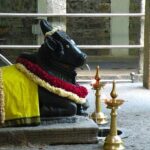
St. Mark’s Cathedral and Mahatma Gandhi Park: calm architecture in the middle of the city
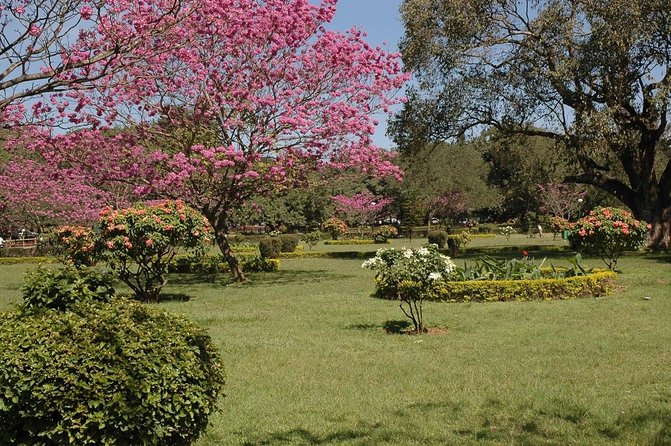
Then the tour shifts toward St. Mark’s Cathedral and Mahatma Gandhi Park. These stops tend to be crowd-friendly: cathedrals invite a slower look, and parks give you a breath before you head back into denser lanes.
Here’s what makes the pairing smart: it connects formal architecture with the idea of public space. You’re not just admiring a building—you’re learning how civic life and identity show up around religious and public landmarks.
This is also a good moment to grab quick photos and to note what direction you’re walking in. In 2 hours, navigation skills matter, and this stop helps your brain lock onto the route.
Through old markets, heritage buildings, and centuries-old temples
Now you move into the older street fabric. The route goes through the old market area, heritage buildings, and centuries-old temples—plus older lanes you might not find on your own.
This is usually where a walking tour earns its name. The guide’s job here is to explain what you’re seeing at street level. Why these lanes matter. How the area’s layout reflects community life. How temples and markets shape daily movement.
One reason I’d recommend this section especially: it’s the kind of city texture that’s hard to capture from a car window. On foot, you notice small rhythms—entryways, shop fronts, and the way people use space.
A practical tip: be ready for moments where the group stops. Keep your phone quiet so you’re listening when the guide is explaining.
Cubbon Park, M Chinnaswamy Stadium, and Minsk Square: a green-and-civic reset
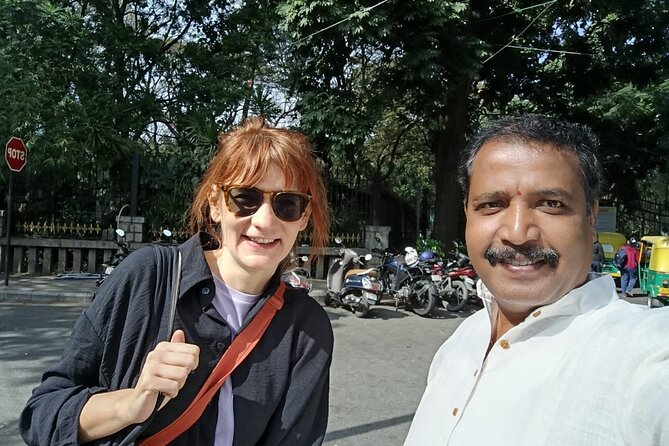
Next you hit Cubbon Park, plus M Chinnaswamy Stadium and Minsk Square. Even if you’re not a sports fan, the stadium stop signals how this city organizes big public venues near central neighborhoods.
Cubbon Park adds another layer. Parks are where you learn the city’s “off-rush hour” temperament. They also give the tour a chance to slow the pace slightly after the denser lane and temple section.
This part is helpful for orientation. By now, you should be able to picture where the center sits and how major areas connect. If you came for photo ops, you’ll also find solid backgrounds here.
Attara Kacheri (High Court of Karnataka): rules, power, and architecture
Then comes the High Court of Karnataka, locally known as Attara Kacheri. This stop is interesting because courts are where you see how a city expresses authority through physical space.
The guide’s story focus here matters. Without context, it’s just another government building. With it, you’ll likely connect legal and political systems to the way the city developed.
If you’re into civic history, this is one of the more satisfying stops. If you’re not, it still helps you understand Bangalore’s layout: where law and governance cluster, and how those buildings relate to nearby institutions.
Vidhana Soudha and the Gandhi statue/press area: the symbolic center
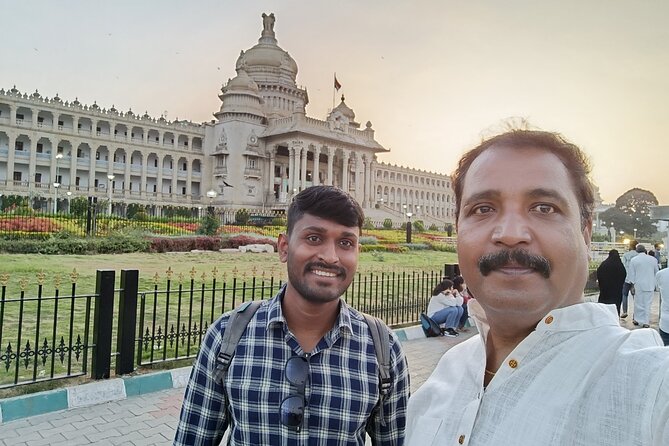
Finally, the tour heads toward Vidhana Soudha, plus the Mahatma Gandhi statue, Press Club, and nearby buildings.
This is the kind of “big end” finish that leaves you feeling like you’ve reached the core. Vidhana Soudha is a signature structure, and the Gandhi statue/press-adjacent area keeps the focus on public messaging and civic identity.
Why this ending works: you close the loop. You started with museums and cultural preservation, walked through older lanes and places of worship, and then you end at civic and public institutions. It’s a narrative arc, not just a list of sights.
What the price really covers (and where you’ll spend extra)
At $12.46, you’re paying for:
- a trained storyteller/guide who speaks English & Hindi
- guided access to hidden lanes and lesser-known places
- conversation-style storytelling and local recommendations
- a mobile ticket
You’ll likely pay nothing extra for most stops. But keep two realistic add-ons in mind:
- No water bottle is included, so bring or buy your own.
- No hotel pickup/drop, so you’ll need transport to the meeting point.
Given the number of major areas touched in about 2 hours, the overall value is pretty good—when the tour runs as planned.
The mixed feedback you should take seriously
This is the part I’d treat like travel insurance: ignore it and you risk a bad day. The overall rating is 3.7 out of 5 from 21 reviews, which screams mixed experiences.
There are a few themes worth noting:
- Reports of no guide showing up and tours not being able to run as scheduled.
- A complaint about a guide being disinterested and the tour ending quickly (one review named Yashis/Yashas).
- Positive feedback calling out strong storytelling and information about the British legacy in the city, plus a guide described as kind and worth the price.
So here’s my practical advice if you book:
- Arrive a few minutes early at the meeting point.
- Keep your confirmation ready on your phone.
- If something feels off, contact the operator promptly rather than waiting around too long.
Walking tours depend on timing. A great route can still fail if the guide doesn’t show.
Who this tour suits best
This walk is a strong fit for:
- first-time visitors who want fast orientation in central Bangalore
- people who like stories more than strict museum schedules
- anyone who wants a mix of older lanes + civic architecture in one outing
It might be less ideal if:
- you need long indoor time at a specific site
- you hate group pacing or you’re sensitive to delays
- you’re planning a tight schedule right after the tour (since timing issues have been reported)
Should you book this Bangalore heritage walking tour?
I’d book it if you want a short, guided “how the city fits together” experience at a very low price, and you’re comfortable with the walking-tour format. The route hits museums, colonial-era architecture like St. Mark’s Cathedral, parks, and government buildings, so you’ll get variety in a compact time window.
I wouldn’t book it blindly. Check your details, show up early, and be prepared for the small chance the guide doesn’t arrive. If that happens, you’ll want to act quickly so you can get your plan back on track.
If everything runs smoothly, this is exactly the kind of tour that helps Bangalore click—one story, one lane, one landmark at a time.
FAQ
How long is the Bangalore Heritage and Cultural Walking Tour?
It runs for about 2 hours.
What does the tour cost?
The price is listed as $12.46 per person.
How many people are in the group?
The tour has a maximum of 15 travelers.
Where does the tour start?
It starts at Golden Square Business Centre, Vittal Mallya Road (102 Eden Park, 20 Vittal Mallya Rd, D’ Souza Layout, Ashok Nagar), Bengaluru 560001.
Does the tour include a guide?
Yes. You get a storyteller/guide who can speak English and Hindi.
Is water included?
No. A water bottle is not included.
Is hotel pickup or drop included?
No. You’ll need to get to the meeting point on your own.
Is the tour near public transportation?
Yes, the meeting area is near public transportation.
What if I cancel?
Free cancellation is available up to 24 hours in advance for a full refund. Confirmation is received at booking.