REVIEW · BANGALORE
Cubbon Park Walking Tour and Explore Bangalore’s Heritage
Book on Viator →Operated by 5 Senses Walks · Bookable on Viator
Two hours can feel like a time machine. This Cubbon Park heritage walk uses story-driven guiding to connect the park’s big buildings—like the State Central Library, Attara Kacheri, and Vidhana Soudha—to how Bangalore grew from colonial power into Indian democracy.
I like the mix of green park space and major architecture, because you get breaks for photos and people-watching between serious history stops. I also like that the timing is tight and manageable at about 2 hours, so it fits neatly into a first day in the city.
One consideration: it’s a paced group walk, with a maximum group size of 15, so if you want long, unstructured park wandering, this format may feel a bit scheduled.
In This Review
- Key highlights before you go
- Entering Cubbon Park’s Walking Timeline in Just 2 Hours
- Meeting at Main Gate and Ending at Vidhana Soudha
- Stop 1: Cubbon Park Main Gate to the Park’s Big Architectural Anchor
- Stop 2: Seshadari Iyer Memorial and the State Central Library
- Stop 3: Karnataka High Court and Attara Kacheri’s Eighteen Offices
- Stop 4: Vidhana Soudha and Attara Kacheri Across the Avenue
- What the Guide Brings to the Story (Including British and Mysore Threads)
- Time on Your Feet: Pacing, Comfort, and Photo Strategy
- Price and Value: What $55 Buys in Real Terms
- Should You Book the Cubbon Park Heritage Walk?
- FAQ
- How long is the Cubbon Park heritage walk?
- How much does it cost?
- What sites will the tour stop at?
- Where does the tour start and end?
- Is admission included?
- What’s the group size limit?
- Can I cancel for free?
Key highlights before you go
- A quick heritage orientation through Cubbon Park’s most important buildings
- State Central Library inside the Seshadari Iyer Memorial, including details on its large collection
- Attara Kacheri (Eighteen Offices) and the Karnataka High Court in a historic administrative building
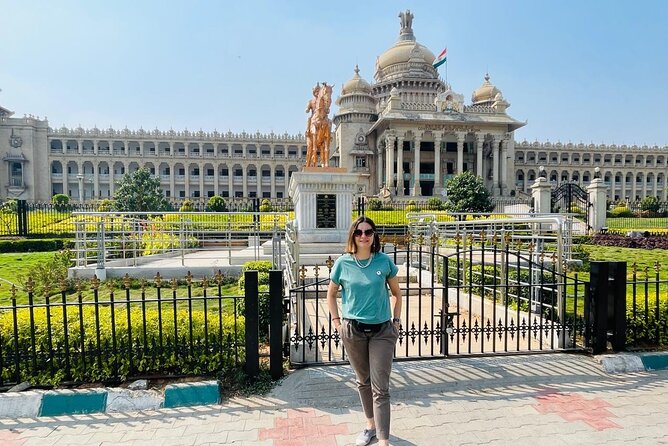
- Vidhana Soudha’s Neo-Dravidian design, completed in 1956 and tied to independence-era confidence
- Small group feel with a maximum of 15 travelers and a mobile ticket
Entering Cubbon Park’s Walking Timeline in Just 2 Hours
Cubbon Park is one of those places where Bangalore slows down. You get greenery, wide paths, and big, formal architecture all in the same loop, which makes it ideal if you want history without feeling stuck in a museum. The goal of the walk is simple: take the buildings you see around the park and explain what they meant—who built them, what they were used for, and how they connect to Bangalore’s shift from British administration to modern Indian governance.
What I like about this format is that it’s not just name-dropping. The route is designed around major landmarks, so you naturally see a timeline. You’ll pass the State Central Library, then the red-toned administrative court building called Attara Kacheri, and finally the sweeping legislative presence of Vidhana Soudha. Each stop helps you understand the layers of power and culture in the city—colonial-era structures side by side with post-independence symbolism.
If you’re a first-time visitor, this kind of focused route is a fast way to understand the city’s geography too. You’re not guessing where things are; the walk physically links them. And if you like buildings that have stories in the details—statues, facades, and the way institutions announce themselves in stone—this is built for you.
You can also read our reviews of more tours and experiences in Bangalore.


Meeting at Main Gate and Ending at Vidhana Soudha
The tour starts at the main gate near St. Andrew’s Church in Tasker Town, Shivaji Nagar (Cubbon Rd, 27). It ends at Vidhana Soudha on Ambedkar Veedhi in Sampangi Rama Nagar. That end point matters. Vidhana Soudha is a natural “landmark finish,” so you can continue exploring without backtracking through the city.
The meeting is also described as near public transportation, which is practical in Bangalore. I’d still suggest arriving a few minutes early so you can find your group and settle before walking starts. With a start-and-finish spread like this, being on time keeps the group from compressing the route.
This experience is listed with a maximum of 15 travelers, so expect a group size that stays conversational rather than chaotic. Also, you’ll use a mobile ticket, which cuts down on last-minute paperwork stress.
Stop 1: Cubbon Park Main Gate to the Park’s Big Architectural Anchor
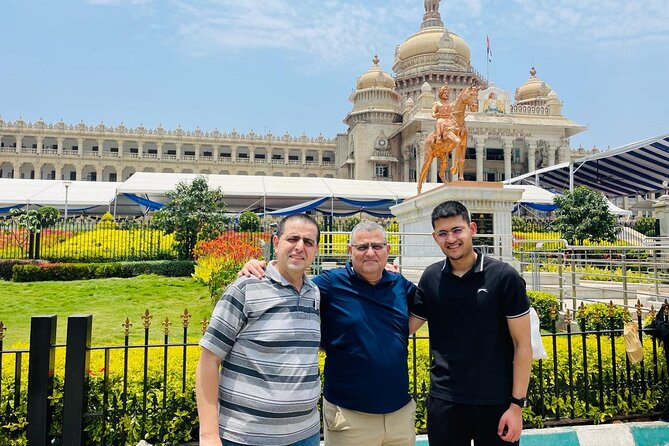
Your first stop is Cubbon Park itself, and the walk portion is about 45 minutes. This is the time where you get your bearings fast. You’ll move through the greenery while your guide sets the context: Cubbon Park isn’t just a nice pause in the city—it’s tied into how governance and public life developed around it.
The park also acts like a stage. From here, the buildings feel less random. As you walk, you can start spotting how the park framing connects to the nearby institutions. Even if you’re not the type to read plaques, a guided route helps you notice what you might otherwise miss: the scale, the symbolism, and the way the architecture is meant to project authority.
A small caution: since this is a scheduled walk, plan to stay with the group rather than drifting off for extra photos every minute. You’ll have photo moments later too, and keeping the pace helps you see all the key sites in the full 2-hour window.
Stop 2: Seshadari Iyer Memorial and the State Central Library
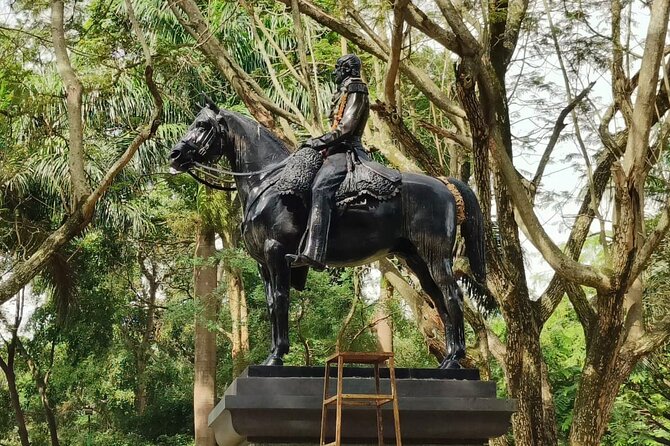
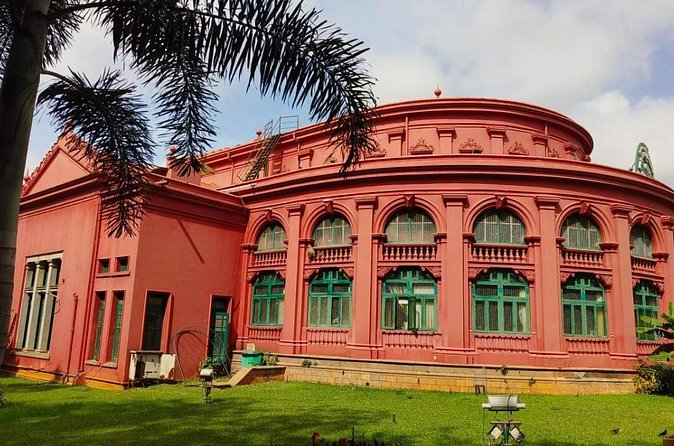
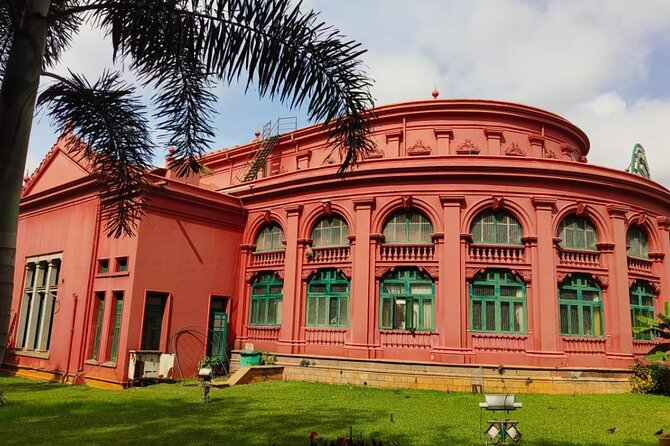
Next comes one of the most striking sights in the park: the Seshadari Iyer Memorial, the setting for the State Central Library. The walk includes about 15 minutes here, and the admission ticket is included.
This stop is worth it because it’s not just about admiring a building from the outside. The library is described as having over 300,000 books and rare manuscripts—that’s the kind of detail that turns a landmark into a living cultural resource. It also gives you an angle on public life in Bangalore: knowledge institutions weren’t treated as afterthoughts; they were part of how the city presented itself.
Visually, the memorial is known for its dramatic red Gothic look. That matters because Gothic elements signal a strong, formal tone—very different from the Neo-Dravidian style you’ll see at Vidhana Soudha later. So even without getting technical, you’ll feel the contrast. The guide helps connect these styles to their periods and purposes, which makes your photos more meaningful afterward.
A practical note: since the library time is short, treat this as a focused viewing stop. Don’t expect long browsing. You’re here to understand the place and absorb the context quickly.
Stop 3: Karnataka High Court and Attara Kacheri’s Eighteen Offices
Then you’ll shift to legal history at Karnataka High Court, housed in the historic building called Attara Kacheri. This portion runs about 30 minutes, with admission included.
Attara Kacheri is a name that already tells a story. It literally means eighteen offices, and the building originally housed administrative departments. Today, it’s still a court—so it’s a great example of how power structures can evolve in function while keeping their physical presence.
The building is described as having been built in 1868. That date helps you “place” it. It’s firmly in the era of British administrative expansion in India, and it also shows how the city’s institutions matured over time rather than switching overnight. If you’re the kind of traveler who likes to connect dots, this is where that habit pays off.
One advantage of doing Attara Kacheri on a guided walk: you don’t just see a court building. You learn how it used to operate, why such buildings were constructed, and why the design still carries authority.
A consideration: courts and historic administrative buildings can have security rules and quiet areas. Since the time window is fixed, move with the group and follow any instructions on-site.



Stop 4: Vidhana Soudha and Attara Kacheri Across the Avenue
The final major stop is Vidhana Soudha, and you’ll also get perspective on Attara Kacheri across the avenue. This is the longest segment at about 30 minutes, with admission included.
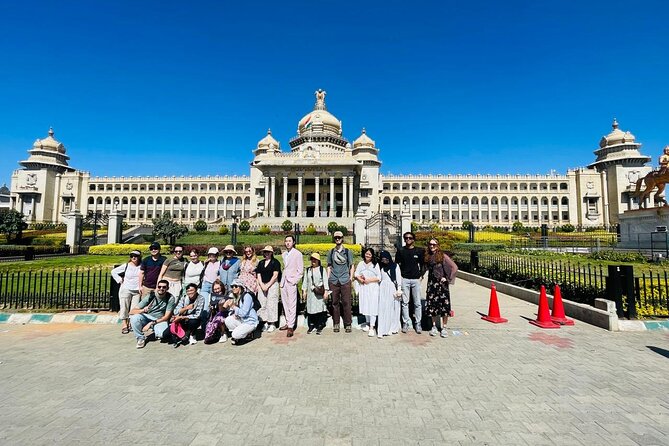
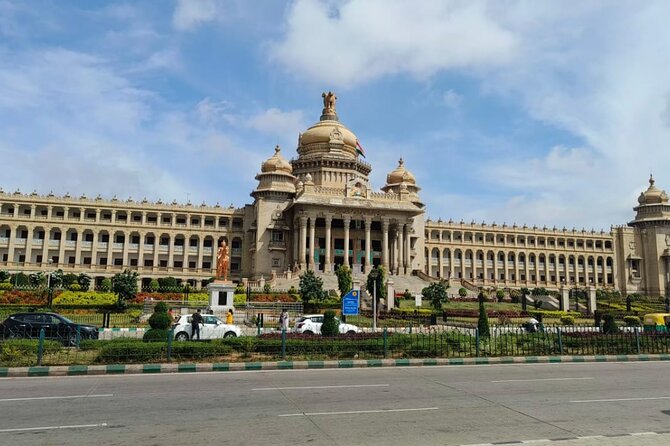
Vidhana Soudha is described as India’s largest legislative building, completed in 1956 and built in a Neo-Dravidian style. That combination is key for understanding why this stop feels like a new chapter rather than a continuation of the old. Neo-Dravidian architecture is often used to express regional identity and post-independence ambition, and the date anchors it to a young India building its democratic institutions.
The guide’s job here is to connect what you see—its monumental mass, its design language—to what it represents. In a two-hour tour, this is the moment where the walk becomes more than architecture appreciation. You start seeing governance as something designed, displayed, and symbolically protected through the way buildings look and how they’re positioned in the city.
And the setting helps. Because the route includes seeing Attara Kacheri and Vidhana Soudha in relation to each other, you get contrast: colonial-era administration on one side of the story, independence-era legislative confidence on the other.
If you like taking photos, this is likely your best chance. Just be respectful of space, since legislative buildings aren’t photo studios.
What the Guide Brings to the Story (Including British and Mysore Threads)
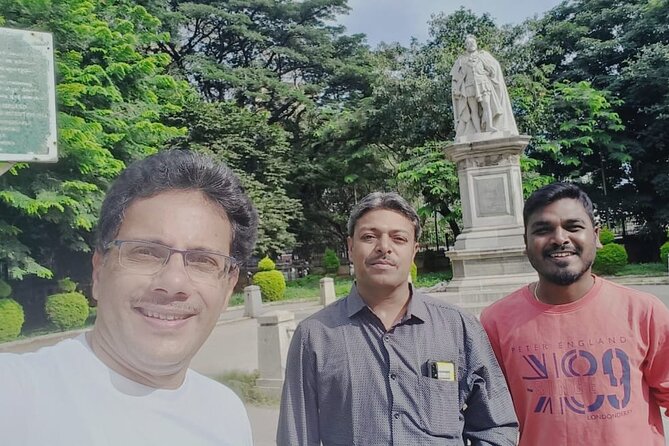
A big part of the value here is the guide’s storytelling. This walk is explicitly built around explaining the tales behind statues and buildings, so you’re not just collecting facts. You’re learning how the city’s identity is stitched together.
The experience is described as having a cultural evangelist style guide, and the stories reported include connections to the British and the Mysore Kingdom and how those threads link back to Cubbon Park. That’s the kind of detail that helps Bangalore feel less like a stop on a map and more like a place with continuity—layers that overlap instead of replacing each other cleanly.
One named example from the experience: a guide called Vignesh is specifically noted for keeping people engaged with those British-and-Mysore connections and for being friendly. Even if your guide isn’t the same person, the format suggests you’ll get active explanations, not a quiet walk.
I’d also pay attention to how your guide explains the park’s layout. Good guides help you understand why the landmarks appear where they do, and how the park functions as both a green public area and an official stage for major institutions.
Time on Your Feet: Pacing, Comfort, and Photo Strategy
This is a 2-hour guided walk, with short, efficient segments at each stop. That’s good news for energy planning. You’re not committing to a half-day expedition.
Still, it’s time you spend walking and standing. So I recommend simple preparation:
- Wear comfortable shoes (you’ll likely be on pathways for the full route)
- Bring water if you’re sensitive to warm weather
- Keep your phone ready for quick building photos, but stay aware of where the group moves next
Photo advice from how these sites work: in parks and around government buildings, you often get your best shots from where the guide stops the group. Don’t wander far ahead. The route is designed so each stop gives you a visual story—library to court to legislative hall.
If you’re sensitive to crowds, the max 15 travelers size helps. It’s small enough that the group doesn’t dissolve into a swarm.
Price and Value: What $55 Buys in Real Terms
At $55 per person for about 2 hours, you’re paying for three things: structured guiding, a tight route through major landmarks, and admission where it counts.
Here’s how that value stacks up:
- The walk covers multiple key sites rather than one building.
- Admission is included for the Seshadari Iyer Memorial/State Central Library, Attara Kacheri/Karnataka High Court, and Vidhana Soudha. Cubbon Park itself is listed with free admission.
- You get a mobile ticket, which keeps your day moving.
- There’s mention of group discounts, which can make the price even easier to justify if you’re traveling with others.
If you were to do these stops independently, you’d still need to spend time figuring out what each building was, why it matters, and how it connects to other landmarks. This tour saves you that research time by packaging the context into a walk you can handle in a morning or afternoon.
Is it worth it? For me, it is when you want an efficient first look at Bangalore’s institutional heart. If your schedule is tight and you care about meaning behind architecture, $55 for a guided orientation is a fair deal.
Should You Book the Cubbon Park Heritage Walk?
Book it if:
- You’re in Bangalore for the first time and want a focused, walkable way to understand the city’s evolution
- You enjoy architecture with explanations, not just sightseeing
- You want a guided route that ties together British-era and independence-era institutions in a readable way
You might skip it if:
- You want a long, quiet, do-anything park day with no structure
- You’re not interested in government and landmark buildings, even if they’re historic
If your goal is to get oriented and learn quickly, this is one of the best ways to spend a couple of hours in Bangalore.
FAQ
How long is the Cubbon Park heritage walk?
It’s listed as approximately 2 hours.
How much does it cost?
The price is $55.00 per person.
What sites will the tour stop at?
The walk includes Cubbon Park plus key landmarks including the State Central Library at the Seshadari Iyer Memorial, Karnataka High Court / Attara Kacheri, and Vidhana Soudha.
Where does the tour start and end?
Start: Main gate, 27 Cubbon Rd, near St. Andrew’s Church, Tasker Town, Shivaji Nagar.
End: Vidhana Soudha, Ambedkar Veedhi, Sampangi Rama Nagar.
Is admission included?
Cubbon Park is listed as free admission. Admission is included for the stops at the Seshadari Iyer Memorial/State Central Library, Karnataka High Court/Attara Kacheri, and Vidhana Soudha.
What’s the group size limit?
The tour has a maximum of 15 travelers.
Can I cancel for free?
Yes. Free cancellation is available up to 24 hours in advance for a full refund.