REVIEW · LIVERPOOL
Liverpool Heritage, History, Culture Walking Tour-Shore Excursion
Book on Viator →Operated by Liverpool Famous Walking Tours · Bookable on Viator
Liverpool hits fast when you start at the port. I love how this tour begins right at the cruise terminal (less waiting, more seeing) and how the guide turns brick-and-stone into stories you can actually picture, from the docks to the city’s music streets. The big downside: it’s still a street-level walk with cobbles, so wear proper shoes and expect some uneven ground.
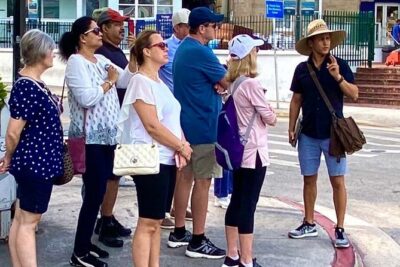
I also like that you get a guided path that mixes big-name sights with quieter, meaningful corners—so you don’t just “check boxes,” you learn why Liverpool grew the way it did. The group stays small (up to 20), and guides I’ve seen praised—Pam, Peter, Michael, and Carl—bring that local, story-first approach that makes the walk feel tight and on purpose.
In This Review
- Key highlights that make this tour a strong shore day
- Starting at the cruise terminal beats the usual street-rush
- The waterfront route: Titanic memorial to the Royal Albert Dock
- What I’d watch for during this dock-and-water section
- Three Graces: Cunard, Port of Liverpool, and the Liver Building
- Beatles statue and Mathew Street: music in the middle of city life
- Royal Albert Dock to Thomas Steers Way: engineering, water, and photos
- Sailors Home Gateway and the “golden Liver bird” moment
- Derby Square, Queen Victoria, and where a castle used to be
- Castle Street and the Town Hall: from medieval clues to 18th-century grandeur
- Exchange Flags: WWII-era history plus Nelson’s monuments
- The ending at Our Lady and St Nicholas: where the story turns personal
- Price and value: $37.10 for a tight, high-signal route
- Who this tour suits best
- Tips to make your walk smoother
- Should you book this Liverpool Heritage, History, Culture tour?
- FAQ
- How long is the Liverpool Heritage, History, Culture Walking Tour shore excursion?
- Where do I meet the guide, and where does the tour end?
- Is the tour in English?
- Is there food included during the tour?
- Will I definitely see the Beatles statue?
- How much walking should I expect?
Key highlights that make this tour a strong shore day
- Starts inside the Liverpool Cruise Terminal so you skip a stressed scramble right after arrival
- Titanic links and dock history at the waterfront, with stops tied to how the city developed
- The Three Graces lineup of iconic buildings—Cunard, Port of Liverpool, and the Liver Building area
- Beatles moments without turning into a full Beatles-only tour (you’ll get statue and Mathew Street stops)
- Royal Albert Dock through Thomas Steers Way: maritime heritage plus photo-friendly details
- Ends near the terminal at Our Lady and St Nicholas, so getting back is simple
Starting at the cruise terminal beats the usual street-rush
Liverpool shore days can be chaos: signage, crowds, and that sinking feeling you’re going to miss the meetup. Here, the plan is straightforward. You meet your guide at the Liverpool Cruise Terminal, then head off after a quick intro, which helps you get your bearings fast.
The tour is designed for cruise timing too. It runs about 2 hours 15 minutes, and the route is paced for moderate street-level walking. You’ll move through busy areas at times, but you’re also not spending your whole time in one long transit grind.
You can also read our reviews of more tours and experiences in Liverpool.


The waterfront route: Titanic memorial to the Royal Albert Dock
Right away, you’re in the thick of Liverpool’s maritime identity. The first true history stop is at the Memorial to the Marine Engine Room Heroes, where the guide connects Liverpool’s role to the story of the Titanic. Even if you’re not a Titanic superfan, it helps you understand how deeply ships and shipping shaped this city’s identity.
From there, the walk naturally leads into the Three Graces area. You’ll also get that “wait, I’ve seen this before” feeling. Liverpool’s waterfront and surrounding streets have been used in films and TV, and your guide points out familiar-looking corners and the way the city has been used as a stand-in for other places.
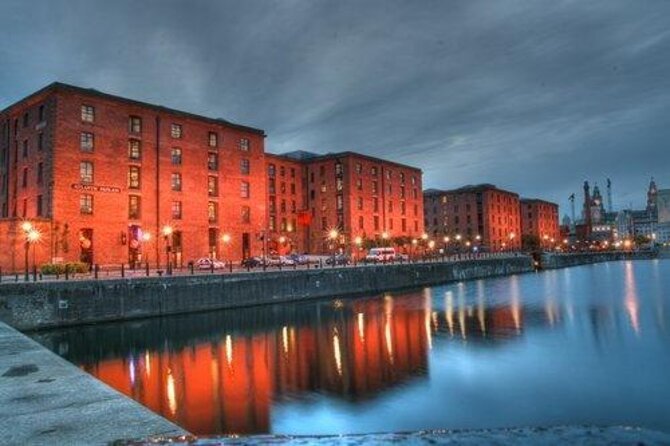
Then comes Royal Albert Dock Liverpool. This is one of the best parts of the itinerary because the guide links the Titanic story to Liverpool’s broader dock history and shows how the docks helped drive the city’s growth. You’ll also spot standout architecture that mixes older and newer styles, plus the bronze statue to Bill Fury, a kind of fan landmark tied to the city’s music scene.
What I’d watch for during this dock-and-water section
Bring an eye for details. The best dock stories aren’t just “ships were here.” They’re about industry, jobs, engineering, and the city’s relationship with the sea. If you’re the kind of traveler who likes to understand how a place works, this portion delivers.
Also, take your photos efficiently. Some spots are naturally photo magnets, especially near the dockfront, and you don’t want to get separated while you’re fiddling with your camera settings.
Three Graces: Cunard, Port of Liverpool, and the Liver Building
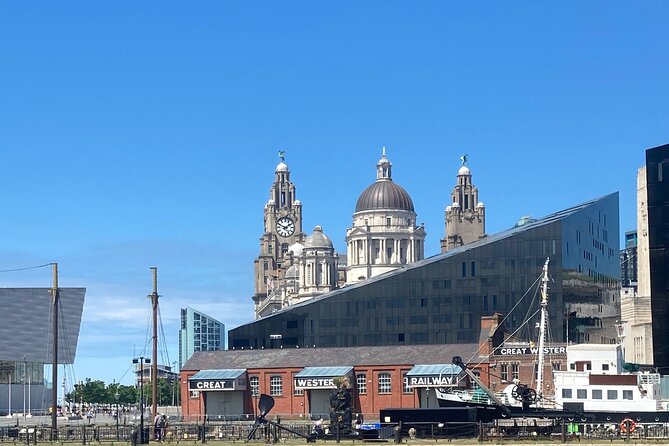
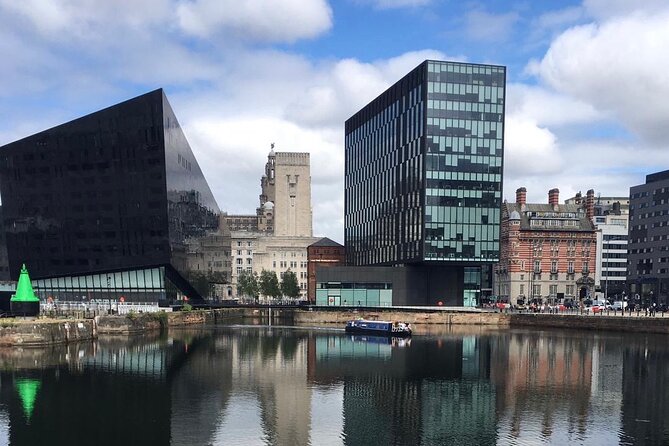
The Three Graces are basically Liverpool’s architectural handshake: you see them and instantly understand why people call this part of town iconic. You’ll learn the history behind the Grade II listed Cunard Building, the Port of Liverpool Building, and the Liver Building itself.
What makes this stop valuable isn’t just the exterior look. It’s the way the guide explains how these buildings reflect different eras of Liverpool’s identity—from prestige and commerce to the city’s port power. If you care about architecture, you’ll likely enjoy the contrast between what was built for shipping greatness and what the waterfront has become over time.
Practical note: this is a short stop, so don’t expect a long photo session every time. Instead, use it as a “get oriented” moment and keep your camera ready for the next turns.
Beatles statue and Mathew Street: music in the middle of city life
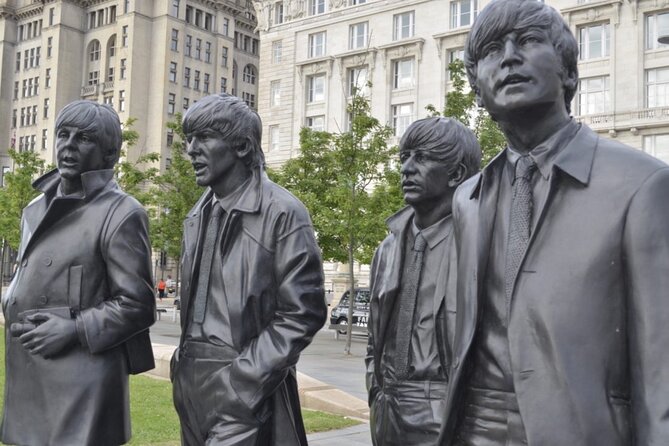
You don’t have to be a lifelong Beatles fan to enjoy this tour, but if you are, you’ll feel the payoff. You’ll pass by a Beatles Statue sculpted by Andrew Edwards, with a chance for a selfie. On occasion, access to the statue can be restricted, and in that case you’ll visit alternate statues—so you still get Beatles visuals even when the main spot isn’t available.
Then you head to Mathew Street. This is where Liverpool’s music reputation becomes real in your feet. You’ll learn about the links between the street, the Cavern Club, and the musical icons tied to Liverpool’s story. You also get a photo moment in front of the Cavern Club, which is perfect if you want a souvenir that actually matches the city’s famous sound.
One thing to calibrate before you go: this isn’t a full Beatles-only tour. It gives you Beatles moments inside a wider heritage route. If you want hours of Beatles deep-study, you might prefer a dedicated Beatles-focused walk instead.


Royal Albert Dock to Thomas Steers Way: engineering, water, and photos
After you’ve absorbed the docks, the route keeps moving with purpose. You’ll walk to Thomas Steers Way, located on the site of Liverpool’s first dry dock. The guide points out how the area captures maritime history through design, including a large water fountain.
There’s also a fun detail that’s more than just “look at this.” You’ll be able to have a quick look down through a port hole. It’s one of those small moments that makes a historic place feel physical instead of abstract.
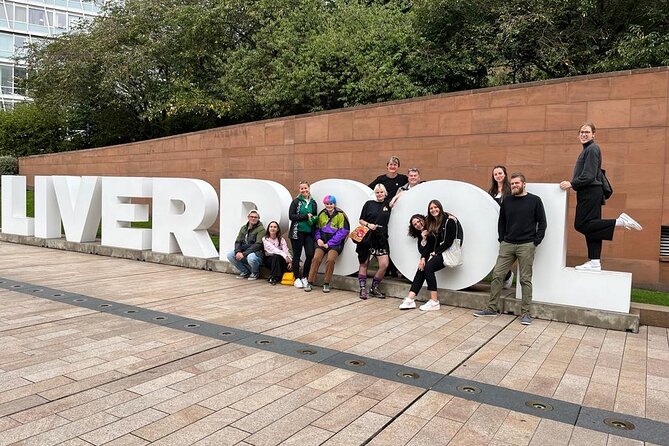
And yes, there’s a big photo stop here too: the oversized LIVERPOOL selfie sign. The colors change based on the season or events, so it feels like you’re seeing the city in real time rather than a static landmark.
Sailors Home Gateway and the “golden Liver bird” moment
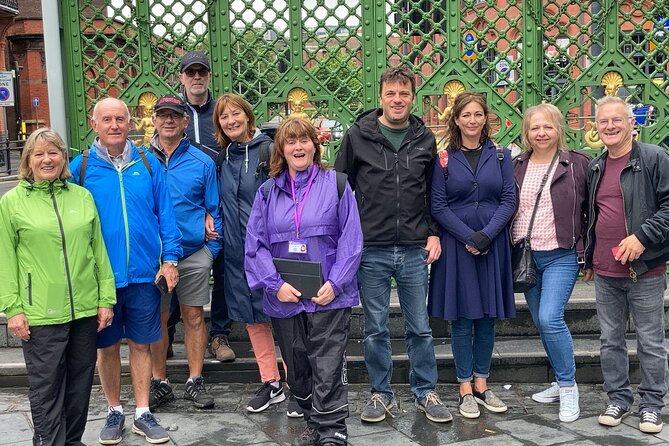
If the docks are the engine room of Liverpool’s story, this stop is one way the city humanizes that history. You’ll visit the Liverpool Sailors Home Gateway, a monument honoring the Sailors Home that served the maritime community.
This is a quick stop, but it’s a meaningful one. You’ll get a great chance for a photo with the golden Liver bird, which is iconic enough that even non-fans recognize it instantly. It’s also a nice change of pace: after architecture and music streets, you get something more ceremonial and monument-like.
Derby Square, Queen Victoria, and where a castle used to be
The walk continues into Derby Square. Your guide talks about the history of Liverpool Castle, which once stood in this area, and then you’ll see the imposingly placed monument to Queen Victoria.
This section matters because it widens the story beyond the waterfront. Liverpool wasn’t only ships and songs; it also had political and civic weight. Derby Square gives you a quick “city center” feel without breaking the rhythm of the tour.
Castle Street and the Town Hall: from medieval clues to 18th-century grandeur
Next up is Castle Street, where the guide points out connections to medieval times. You’ll be walking through a street framed by older buildings and architecture, and it helps you realize how much of Liverpool’s identity is layered in plain sight.
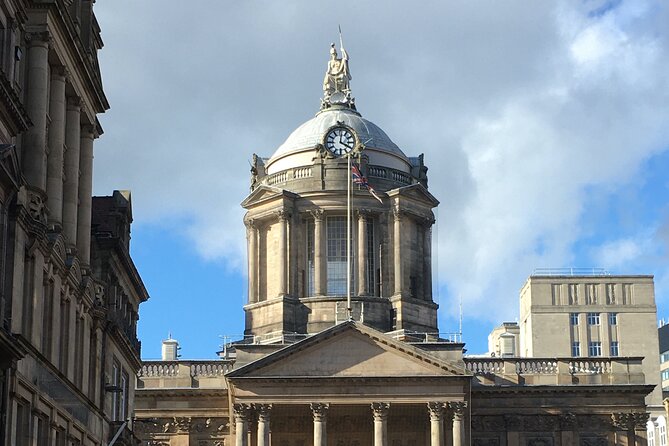
Then you head toward Liverpool Town Hall, a Grade I listed building recognized as one of the finest surviving 18th-century town halls in England. You’ll hear about its predecessors too, dating back to the 1500s. That time jump is the kind of mental link that makes a place feel bigger than its current look.
Exchange Flags: WWII-era history plus Nelson’s monuments
The tour includes Exchange Flags, a Grade II listed courtyard area that faces the Town Hall. The guide explains the space’s historical role that includes an important part during the Second World War.
You’ll also spot the Nelson-related monuments here, including the bronze monument to Nelson dating to the early 1800s. This stop is a good example of why having a guide helps: it’s easy to walk past a courtyard like this and miss how many layers of meaning are tied to it.
The ending at Our Lady and St Nicholas: where the story turns personal
Your walk finishes at the Church of Our Lady and Saint Nicholas. This isn’t just a “last stop for photos.” The guide explains that the site has been a place of worship for over 750 years, and you’ll see tombstones and sculptures in the surrounding gardens.
This is also where the tour tackles some heavier themes. You’ll learn about Liverpool’s links to the slave trade and North American history. If you like a tour that doesn’t only stay cheerful, this is the part that gives the walk real weight.
From there, you’re only a couple minutes from the cruise terminal. Your guide can escort you back, or you can keep going on your own and do some shopping around the waterfront before getting back to the ship.
Price and value: $37.10 for a tight, high-signal route
At $37.10 per person for about 2 hours 15 minutes, the value comes from three things.
First, the route is built for shore time. You’re not spending long stretches trying to find places on your own while your ship-time clock ticks.
Second, many of the stops are free to visit. The itinerary lists admission tickets as free for the sites you’ll cover, so your money goes to the guide and the storytelling—not to fees.
Third, you’re getting a guided route that covers both “big recognizable Liverpool” and the context that makes those landmarks matter. That balance is a big part of why people rate this so highly.
One small caution: because it’s a walking tour and the duration is fixed, you won’t have unlimited time at each stop. If you’re the type who wants to linger for museum-level reading, you’ll still enjoy it—you just might want to plan extra time on your own after the tour ends.
Who this tour suits best
This is a strong pick if you’re in Liverpool for a day and you want a guided, well-paced overview of the city’s identity. It works especially well if you’re interested in maritime history, architecture, and cultural landmarks tied to the Beatles.
It’s also a good choice for first-timers who want structure. Even if you’ve seen photos of the waterfront or the Cavern Club before, the route helps you understand how the dots connect.
If your priority is a pure Beatles deep dive with maximum time at music locations, this route may feel like it includes Beatles rather than focusing fully on Beatles. But if you want music plus city context, you’re in the right place.
Tips to make your walk smoother
Comfort matters here. The tour is described as easy to moderate street level walking, but you’ll pass through uneven surfaces like cobbles. Wear comfortable no-slip shoes, and don’t rely on fancy footwear.
Bring a bottle of water or a drink. There’s no food or drink included, and on a long shore day, hydration is not optional—especially if you’re walking in warm weather.
Finally, plan your photo strategy. Hits like the Beatles statue selfie, the Cavern Club photo, and the Liver bird/golden moments can make you pause at the wrong time. Keep a relaxed pace, stay with the group, and capture photos fast.
Should you book this Liverpool Heritage, History, Culture tour?
I’d book it if you want a guided Liverpool day that makes the city’s waterfront, buildings, and music streets click into place. The start at the cruise terminal helps a lot, and the mix of maritime history plus culture gives you more than the usual “photo stops only” experience.
Skip it only if you strongly dislike walking on uneven streets or if you want a fully Beatles-only itinerary. Otherwise, this tour is one of the best ways to make a cruise day feel like you actually learned something, not just walked around.
FAQ
How long is the Liverpool Heritage, History, Culture Walking Tour shore excursion?
It runs about 2 hours 15 minutes.
Where do I meet the guide, and where does the tour end?
You meet at the Liverpool Cruise Terminal, Gate 2 Princes Parade (Liverpool L3 1DL, UK). The tour ends at the Church of Our Lady and St Nicholas, which is a short walk back to the cruise terminal.
Is the tour in English?
Yes, the tour is offered in English.
Is there food included during the tour?
No. There’s no food or drink included, so it helps to bring a bottle of water.
Will I definitely see the Beatles statue?
You’ll pass by the Beatles Statue for a selfie chance, but access can be restricted on occasion. When that happens, the tour visits alternate statues instead.
How much walking should I expect?
Expect an easy to moderate street-level walking tour with some uneven surfaces like cobbles. Comfortable no-slip shoes are recommended, and a moderate physical fitness level helps.