REVIEW · BOLOGNA
Bologna’s Ancient and Recent History: A Self-Guided Audio Tour
Book on Viator →Bookable on Viator
Bologna history, delivered by GPS. This self-guided audio tour turns major sights into an easy walk, with turn-by-turn directions and automatic playback through the VoiceMap app. I like that you can start and stop when you want, and that you get offline access to the audio and maps so you’re not stuck hunting for signal in narrow streets.
Two more strong reasons it works: you can replay the tour with lifetime access, and you’re not locked into a tour-group clock. One caution, though: some segments feel more like quick story prompts than deep, site-by-site fact dumps, and the narrator’s personal university memories can eat a bit of time while you’re standing around at viewpoints.
If you’re the type who enjoys walking, looking up at architecture, and learning the why behind what you see, this is a great way to connect Bologna’s layers in about one to one and a half hours.
In This Review
- Key things I’d bet you’ll notice
- Why a self-guided Bologna history walk beats a group tour
- Setup and gear: what you need before you press play
- Piazza del Nettuno and Piazza Maggiore: where the story starts
- San Petronio Basilica and the world’s largest sundial
- Roxy Bar and Vasco Rossi: pop culture on a serious street
- The Two Towers, Dante’s Inferno, and UNESCO porticos
- Santo Stefano’s Seven Churches and Santa Maria della Vita
- Portici di Bologna and the University of Bologna’s beginnings
- Piazza Galvani and the electrified frogs story
- Time, route flow, and when to take this walk
- Price and value: $7.99 is a fair trade here
- One thing to consider before you book
- Who should book this self-guided Bologna audio tour?
- Should you book this tour?
- FAQ
- What does the tour cost?
- Where does the audio tour start?
- How do I use it once I book?
- Can I use the audio offline?
- What sights are included along the route?
- Is it refundable if I cancel?
Key things I’d bet you’ll notice
- VoiceMap GPS playback: automatic audio as you walk, plus turn-by-turn directions
- Unlimited use: you can use it before your booking date and after, not just once
- Start in Piazza del Nettuno: an instantly recognizable anchor point for your Bologna loop
- Big-sight highlights in a short walk: San Petronio, the Two Towers, UNESCO porticos
- Historic-to-science storytelling: from the oldest university’s beginnings to Galvani’s experiments
- No museum escort: you’ll hear about places, but you’ll decide if you want to enter and pay separately
Why a self-guided Bologna history walk beats a group tour
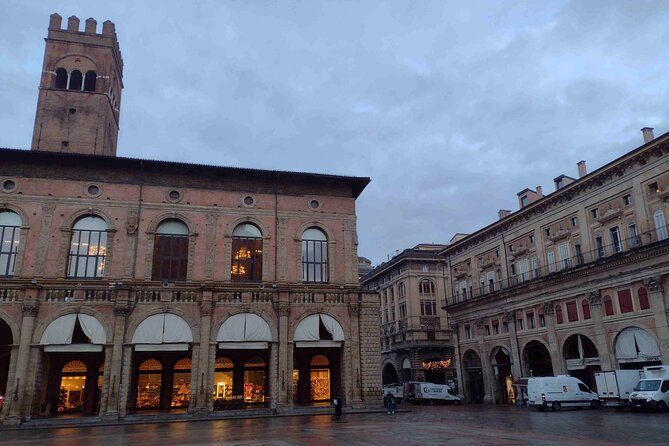
Bologna can feel complicated at first because it’s so walkable, but it’s also busy. A guided group tour can be fun, yet it often means you’re watching the back of someone else’s head while you’re trying to read carvings and admire porticos. This audio tour flips that. You move at your pace, linger when a detail catches your eye, and skip ahead if you’re just trying to cover ground.
Another advantage is control over timing. You’re not forced to rush between Piazza Maggiore and the Two Towers. If the lighting is good, you can pause. If it’s hot or rainy, you can stay under the porticos and keep going. The tour is set up for walking in a logical loop, and VoiceMap handles the directions so you’re not constantly checking your phone screen.
Finally, it’s priced to feel practical. At $7.99 per person, you’re paying for a focused route and a story guide in your pocket, not for a long, expensive “bus + museum + lunch” package. For many independent travelers, that’s the sweet spot.
You can also read our reviews of more tours and experiences in Bologna.
Setup and gear: what you need before you press play
This tour depends on the VoiceMap app. After booking, you get a ticket with a unique code. In VoiceMap (Android or iOS), you enter that code, and the app shows directions to the starting point. Once you’re there, you put on headphones and tap start.
Two things matter for a smooth experience:
- You provide your own smartphone and headphones (they are not included).
- You should plan to keep your phone charged. Even though you get offline audio, your GPS/route guidance is still a phone task.
The good news: VoiceMap includes offline access to audio, maps, and geodata. So you’re not scrambling for signal between sights. If you’ll be walking near the porticos, that’s especially helpful, since city streets can be spotty.
The meeting point is easy to find on the map: Neptune’s Fountain (Piazza del Nettuno). The tour ends back at the meeting point area via Via d’Azeglio, so you’re not stranded on the far side of the center.
Piazza del Nettuno and Piazza Maggiore: where the story starts
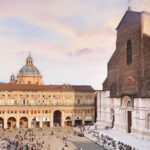
Your walk begins at Neptune’s Fountain, which is a natural kickoff because it’s central and visually strong. From there, the audio leads you through Piazza Maggiore, Bologna’s big public room. This is where you get your bearings fast: wide space, major buildings, and a feel for how the city organizes itself around plazas.
One reason this opening is useful is that it sets context before you hit the “wow” sights. You’re not just walking from landmark to landmark. You’re building the mental map: how Bologna developed, why certain monuments matter, and how the city’s art and civic life connect.
If you like to photograph, Piazza Maggiore is also a good place to take a minute. You can capture the scale, then settle into the walk with your headphones still on and your brain tuned to history.
San Petronio Basilica and the world’s largest sundial
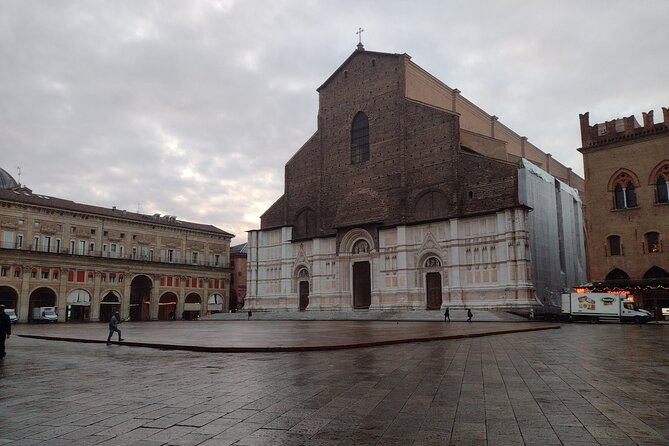
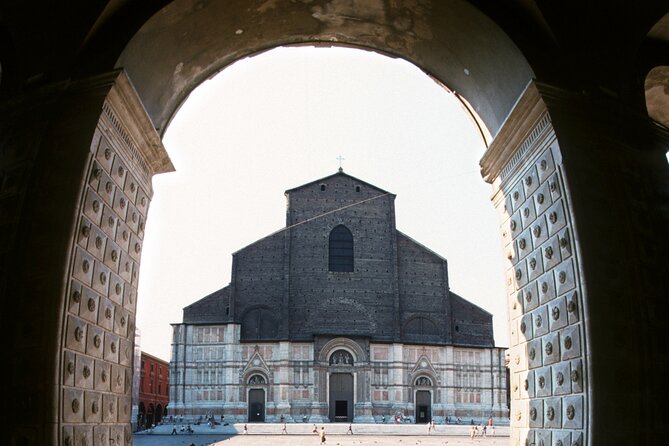
Next comes San Petronio Basilica, and the big specific highlight here is the world’s largest sundial. Even if you’re not a “stand in front of sundials” person, it’s a fun idea: Bologna used a monumental building as a timekeeping tool. That turns a church area into something practical and scientific at the same time.
The key for your experience: treat this stop like a visual moment, not a rushing stop. Look for how the sundial is positioned and imagine how people once checked time with daylight. When you can’t see a dramatic shadow shift, you can still appreciate the concept and the engineering mindset behind it.
Also keep in mind the tour note: you’re not taken through museums or attraction interiors as part of the audio route. So if you want to enter the basilica or explore other areas in more depth, you’ll do that on your own time—and potentially pay fees depending on what’s open.
Roxy Bar and Vasco Rossi: pop culture on a serious street
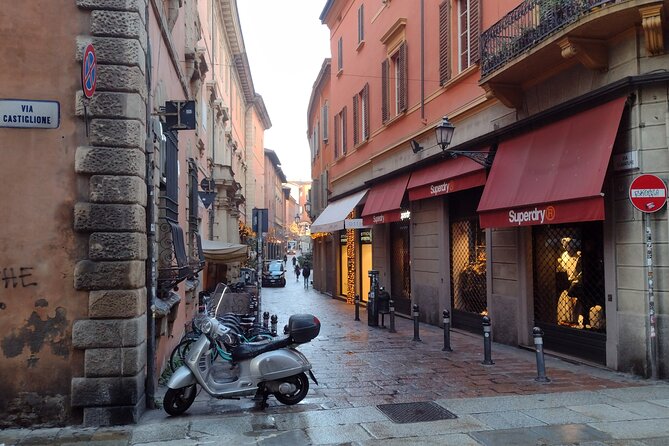
Along the way, you get a stop that most history-focused walks ignore: the Roxy Bar, featured in Italian superstar Vasco Rossi’s song Vita Spericolata (The Reckless Life). This is a smart kind of “modern Bologna” moment because it reminds you the city isn’t only medieval and academic.
If you’re into music and local culture, this detail can make the walk feel less like a museum route and more like a living city. And even if you’re not a Rossi superfan, it gives you a clue about how Bologna’s identity shows up in popular art.
Practical tip: when the audio mentions something like this, it’s worth a quick look and then moving on. The tour is a one-hour to one-and-a-half-hour format, so don’t let any single side stop eat the whole schedule.
The Two Towers, Dante’s Inferno, and UNESCO porticos
One of the strongest stretches of the tour is the approach to the Two Towers. You’ll hear how one of them is mentioned in Dante’s Inferno, which is a great way to connect literature to stone you can walk under and around. Even without getting lost in deep commentary, the Dante tie-in gives you a reason to look carefully—this isn’t just “two tall buildings,” it’s part of how people shaped stories about power and darkness centuries later.
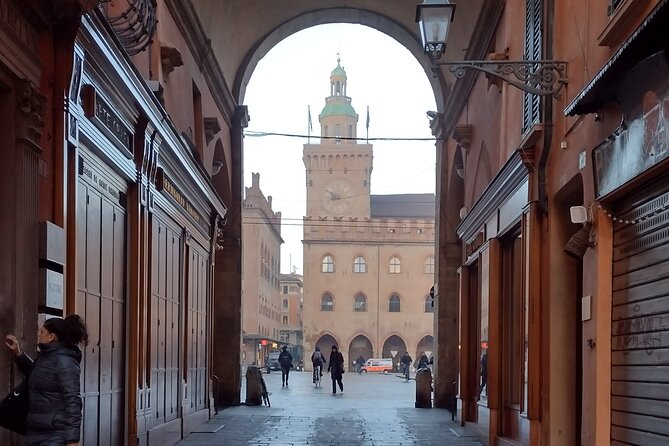
Then you move into Bologna’s famous porticos, a UNESCO World Heritage site (listed in 2021). This part can feel like a cheat code for travelers. Porticos make the walk more comfortable and they create a consistent rhythm: shade in the sun, shelter when weather turns, and a visual corridor where you can focus on architecture rather than weather.
For me, this UNESCO segment is valuable because it’s not only about admiring arches. It helps you notice how streets function in Bologna—how everyday movement is designed, not just incidental.
If you want to get the most out of this section:
- Keep your pace steady enough to get the GPS audio timing right.
- Pause only when the architecture catches your eye—doorways, columns, street vistas.
Santo Stefano’s Seven Churches and Santa Maria della Vita
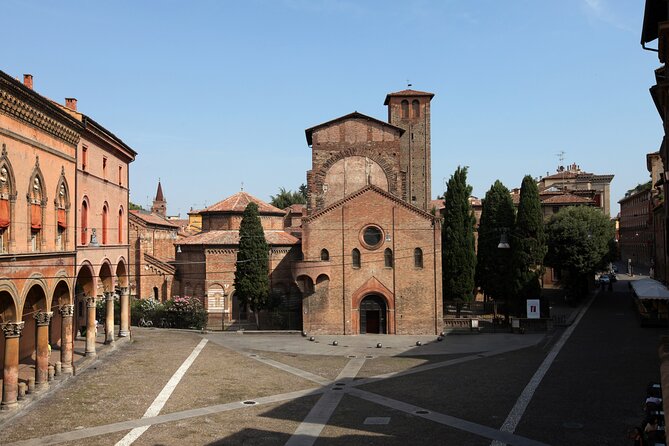
As you continue, the audio includes a chance to see the Seven Churches of Santo Stefano. The name alone is a prompt to look closer. Rather than treating churches as separate stops, the “seven” framing encourages you to notice how the complex works as a group.
You’ll also pass Santa Maria della Vita. Because the tour doesn’t promise a full indoor walkthrough, this is likely more about orientation and exterior awareness than a long stop inside. Still, even passing by a church can be meaningful if the audio helps you spot what matters—style cues, placement, and why it’s part of the story.
A practical approach here: if you want interiors, use the moment to check whether you can enter (and whether it costs anything). The audio tour gives you context; it doesn’t replace on-site visits.
Portici di Bologna and the University of Bologna’s beginnings
Bologna’s identity is not only buildings—it’s also ideas. This tour includes a moment to discover how the world’s oldest university got its start. That’s a huge anchor for understanding why Bologna feels different from many Italian cities. It’s not just old; it’s old and intellectual.
Paired with the Portici di Bologna content, it creates a strong cause-and-effect chain. Porticos aren’t just cute arcades. They support daily life, academic movement, and street culture in a way that students and scholars would have depended on.
If you’re the kind of traveler who likes “why this city is like this,” this university segment is likely to click. It helps you stop thinking of Bologna as a set of monuments and start seeing it as a system: civic spaces, walkways, education, and public life.
One pacing note: this part can take longer than you expect if you get pulled into reading facades and looking up. If you do want a strict one-hour experience, listen actively but don’t overschedule your pauses here.
Piazza Galvani and the electrified frogs story
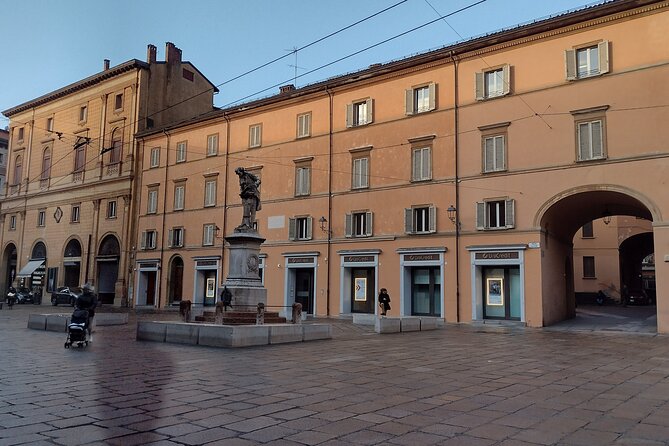
The tour loops past Piazza Galvani for a science story: experiments that electrified frogs. This is one of those Bologna details that makes the city feel surprising. You’re not only touring cathedrals and medieval towers. You’re also hearing how scientific curiosity shows up in the public imagination.
This segment is a good reminder that Bologna’s history isn’t locked in the past. Science, medicine, and experimentation are part of the same cultural thread as architecture and scholarship.
If you want to heighten this stop, treat it like a conversation starter for later. After you finish the walk, you’ll likely find yourself noticing other mentions of Galvani, electricity, or early science across Bologna.
Time, route flow, and when to take this walk
The duration is listed as about one hour to one hour 30 minutes. That’s a helpful range because it’s realistic: you can cover major sights without a marathon.
For timing, think about how you travel:
- If you prefer a light, efficient loop, aim for the shorter end and take only quick photos.
- If you like to pause and actually look, plan closer to 90 minutes.
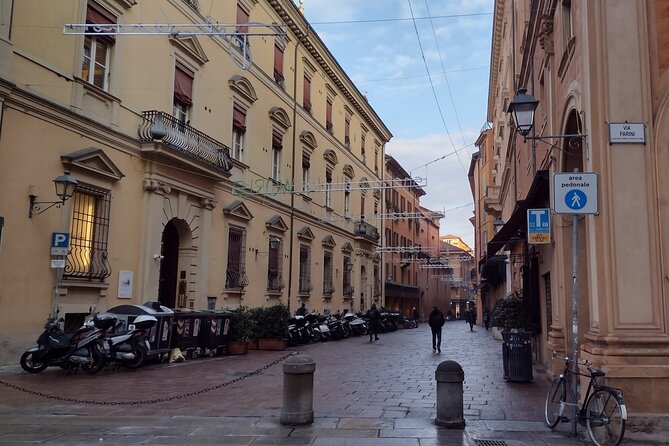
The route also benefits from Bologna’s portico network. Even if the day is bright or changeable, you’ll usually have shelter. Still, carry a small layer and comfortable shoes. This is a walking tour, and Bologna’s center is best enjoyed on foot.
The ending is the same as your start area, looping back to Via d’Azeglio and finishing where you began. That makes it easier to plan dinner right after without worrying about transit timing.
Price and value: $7.99 is a fair trade here
At $7.99 per person, the price feels fair for what’s included, especially because you’re not paying for a vehicle or a scripted group schedule. You’re paying for:
- Lifetime access to the tour in English or Italian
- The VoiceMap app experience
- Offline access to audio and maps
- Unlimited use before and after your booking date
- A route that links major sights quickly
What’s not included matters too. You’ll need to budget for any optional entries on your own. The tour also doesn’t include food and drink, so you’ll decide where to stop for a snack or meal.
If you’re weighing value, ask yourself this: do you want a guided walk, or do you want an audio-powered route you can control? If you’re happy to choose your own pace and entrances, this price can feel like a bargain.
One thing to consider before you book
The biggest “fit” question is how you like your information delivered.
This tour is story-driven and time-efficient. That’s usually a win. But if you’re craving long, detailed factual descriptions at every stop, you might find some segments feel brief. There’s also a chance the narrator spends more time on university-life memories than you want while you’re standing near sights.
My advice: if you buy this as a highlights-and-context walk, you’ll likely enjoy it. If you want a deep, museum-style experience on every stop, you may feel like the audio is too short and you’ll need to add your own museum time.
Who should book this self-guided Bologna audio tour?
This is a great fit for:
- Independent travelers who want to walk Bologna without being tied to a group
- People who like history, architecture, and city stories but don’t want a 3-hour day plan
- Anyone who appreciates the mix of civic sites, towers, porticos, and science references like Galvani
It’s less ideal if:
- You strongly prefer long, detailed explanations at each attraction
- You expect the audio tour to act like a guided museum visit
Should you book this tour?
I’d book it if you want a practical, story-based walking route that hits Bologna’s major landmarks and connects them to bigger themes like art, education, and even science. The GPS playback, offline audio, and lifetime access make it easy to reuse the route later or take it at home via the virtual option.
Skip or rethink it if you know you need deep factual instruction and fully guided interiors. This tour won’t replace paid museum time. It’s built for street-level learning as you move.
If that matches your style, this $7.99 walk can turn a simple stroll into a Bologna you actually remember.
FAQ
What does the tour cost?
It costs $7.99 per person.
Where does the audio tour start?
It starts at Neptune’s Fountain in Piazza del Nettuno, Bologna.
How do I use it once I book?
You’ll get a ticket with instructions and a unique code. Install the VoiceMap app, enter your code, then use the app’s directions to reach the starting point and tap start with your headphones on.
Can I use the audio offline?
Yes. Offline access is included for audio, maps, and geodata.
What sights are included along the route?
You’ll pass or visit areas including Piazza Maggiore, San Petronio Basilica (including its sundial), the Roxy Bar, the Two Towers, the porticos, the Seven Churches of Santo Stefano, Santa Maria della Vita, and Piazza Galvani.
Is it refundable if I cancel?
No. The experience is non-refundable and cannot be changed for any reason.