REVIEW · AHMEDABAD
Morning Heritage Walk – house of mg
Book on Viator →Operated by The House of MG · Bookable on Viator
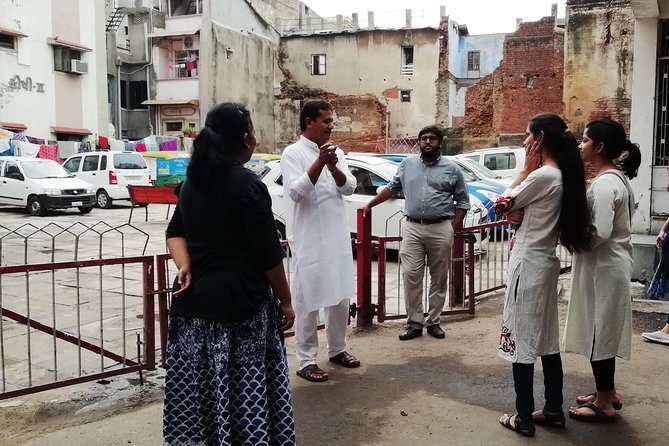
Ahmedabad wakes up with stonework secrets. This morning walk is a smart way to see how different faiths shaped the old city—without racing from place to place. You’ll start early (8:00 am) while streets are cooler and before the day gets loud, then follow a local-style route through historic sites and market lanes.
I really like the small-group feel and the fact that the guide can adjust to your pace. I also love that you don’t just get facts—you get the kind of street-level context that makes Ahmedabad’s landmarks feel connected instead of random stops.
One thing to keep in mind: it’s a walking route in the old quarters, and the experience depends on on-time coordination. In the past, some groups reported missed communication or a late/absent guide, so I’d message and confirm details the day before (and carry the contact info) so you’re not left waiting.
In This Review
- Key things you’ll notice on this heritage walk
- Why the 8:00 am start matters in Ahmedabad’s old city
- Price and group size: what $95.85 gets you
- Stop 1: Sidi Saiyyed Mosque and the jali patterns that make it special
- Stop 2: Bhadra Fort—Ahmed Shah’s stronghold and the Bhadra Kali link
- Stop 3: Jama Masjid with 260 pillars and entrances on three sides
- Stop 4: Ahmed Shah’s Tomb (Raja No Haziro) near Manek Chowk
- Stop 5: Manek Chowk and the rhythm of market life (plus the Teen Darwaja feel)
- The guide factor: what you should look for in a good experience
- What to wear and expect on the ground (not the postcard version)
- Quick value check: who this tour suits best
- Should you book the Morning Heritage Walk with House of MG?
- FAQ
- What time does the tour start and where do we meet?
- How long is the Ahmedabad morning heritage walk?
- Is this tour private, and how many people are in a group?
- Are admission tickets included for the stops?
- What’s the ticket method?
- Do I need good weather?
- What if I cancel?
Key things you’ll notice on this heritage walk
- Sidi Saiyyed Mosque jali windows: Built in 1572–73, with striking stone latticework you can actually spot and compare.
- Bhadra Fort layout in bite-sized chunks: Palace areas, gardens, and the open Maidan-Shah side are easy to understand in context.
- Jama Masjid scale: 260 pillars and 15 domes—plus entrances on east, north, and south.
- Ahmed Shah’s tomb story near Manek Chowk: Raja No Haziro links the city founder to the surrounding religious complex.
- Market-life timing: Manek Chowk shifts from morning activity to silver jewelry shopping and later food-market energy.
- Early start advantage: Cooler temperatures and calmer lanes make the walking feel manageable.
Why the 8:00 am start matters in Ahmedabad’s old city
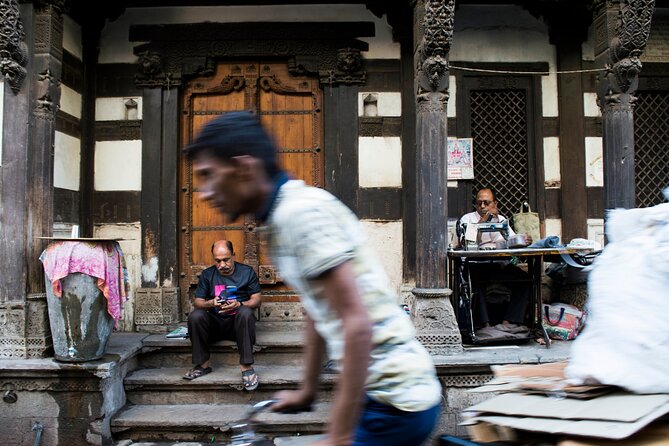
Starting at 8:00 am is not just a schedule detail. In Ahmedabad’s older neighborhoods, mornings can feel like the city is still in “setup mode.” You’ll likely meet at the House of MG by Lal Darwaja / Gheekanta, in the Old City area, and then begin moving while it’s cooler and easier to read the street fabric.
This is the kind of city where the buildings don’t sit alone. They sit over markets, near lanes, and next to places of worship that still function. Going early helps you see the contrast: stonework and arches in crisp light, and people on the street moving with purpose—rather than rushing past because the heat and traffic build.
The walk also fits a morning workflow. After about 2 hours, you’re done back at the meeting point, which makes it easier to keep the rest of your day flexible. If you’re staying in the central area, you can pair it with museums or a longer food stop later without feeling like you lost half the day to logistics.
You can also read our reviews of more tours and experiences in Ahmedabad.

Price and group size: what $95.85 gets you
You pay $95.85 per group (up to 5 people), not per person. That’s a key value point. If you’re traveling as a small party, the cost per head drops compared with many single-person or larger-group city tours.
You also get a private setup—your group only, guided together. For a heritage walk, that matters because questions come up fast. You’ll want time to look closely at carvings, ask why a mosque has certain design choices, or understand why a fort connects to a goddess temple.
Admissions are included for the first four main stops on the route. That’s another practical value point. It’s not a “bring your own tickets” situation where you spend time hunting at each entrance.
The only “watch out” is that the experience depends on coordination. Because the tour is short and starts promptly, being prepared to communicate quickly if anything feels off is worth it.
Stop 1: Sidi Saiyyed Mosque and the jali patterns that make it special
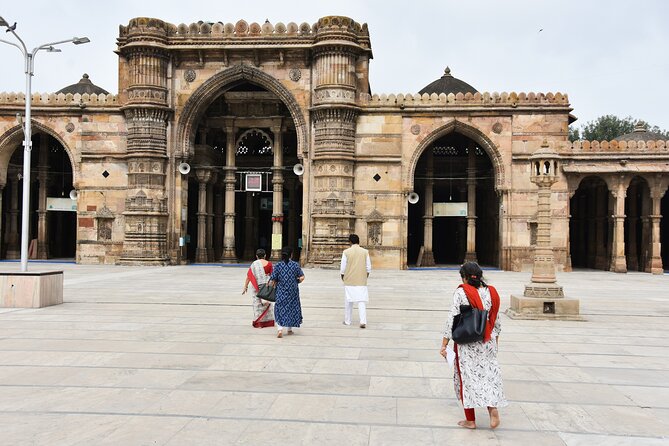
Your first major landmark is the Sidi Saiyad Ni Jali, often called the Sidi Saiyyed Mosque. It’s dated 1572–73 A.D., and it’s famous for its stone latticework jalis—those patterned openings that control light and airflow while adding beauty.
When you’re standing in the right spot, you can really see why people call this kind of work “alive.” The jalis create a soft pattern effect even without dramatic lighting. The mosque also has side and back arches with the stone cut panels arranged in geometric designs. Those panels aren’t just decoration; they’re a way of building order into the architecture.
This stop is timed at about 15 minutes, with admission included. That can sound quick, but with a good guide it works. You’ll get the key design features first, then you can spend your own minutes looking at the details rather than wandering.
Practical consideration: mosques are active spaces. Dress respectfully, keep your pace calm, and follow your guide’s cues for where to stand for the best views.
Stop 2: Bhadra Fort—Ahmed Shah’s stronghold and the Bhadra Kali link
Next you head to Bhadra Fort, and the story here is about how power, city-building, and religion braided together.
The fort is associated with the year 1411 A.D. and is tied to the reigns around Ahmed Shah, the founder of Ahmedabad. The fort’s name is connected to the presence of a Bhadra Kali goddess temple, built during the rule of the Marathas. So even though the fort is a defensive structure, it carries a religious narrative in its own naming.
What I like about how this stop is presented is the layout. You don’t just hear dates—you get the big pieces:
- The palace
- The Nagina Baugh
- Ahmed Shah’s Mosque on the west side
- The open Maidan-Shah area on the east side
This is also where you start feeling the “city as a system” idea. Fort areas connect to places of worship and public space, which helps you understand how Ahmedabad functioned day to day.
You get about 20 minutes here, with admission included. That’s enough time to understand the main components and to see the fort as more than one gate or one wall.
Stop 3: Jama Masjid with 260 pillars and entrances on three sides
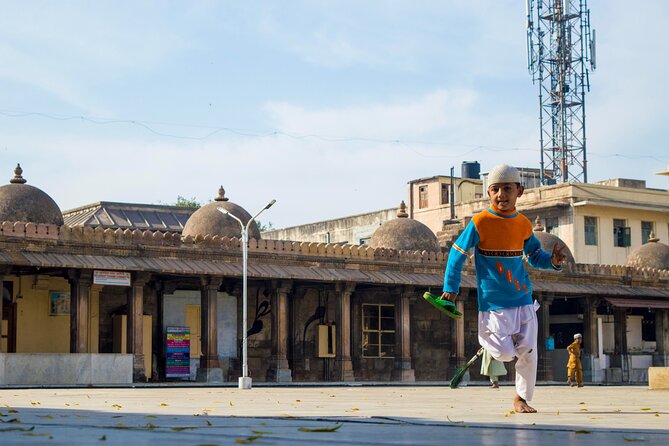
The Jama Masjid is one of the biggest architecture moments on the walk. It was erected by Ahmed Shah I during 1411–1441, and it’s built with a scale that feels impressive even before you start counting details.
The mosque has three side entrances on the east, north, and south. That design detail matters because it shapes how people approach and move around the prayer spaces. It’s not a one-side building; it’s meant to connect from multiple directions.
Then there’s the structural detail: the prayer hall entrance pillars have carved motifs influenced by different cultures living in the city. You also get two fun, concrete numbers to keep in mind—260 pillars and 15 domes. A good guide helps you spot what counts as a pillar in practice, so those numbers don’t turn into trivia.
You’ll spend about 20 minutes, with admission included. Because this is a working mosque, you’ll want to keep your movements respectful and avoid blocking entryways. Standing where your guide directs you is usually the fastest way to get clear views without disrupting the flow.

Stop 4: Ahmed Shah’s Tomb (Raja No Haziro) near Manek Chowk

After the big Jama Masjid moment, the walk shifts to a more intimate story at Ahmedshah Badshah’s Tomb, also known as Raja No Haziro.
This tomb complex sits in the Manek Chowk area, close to the Jumma Masjid, and it’s opposite Rani no Hajiro. The tour framing helps you place it in the “founder-and-family” context of early Ahmedabad.
The mosque includes the tomb of Ahmed Shah I, founder of the city. The grandson, Qut-ud-Din Shah, is buried to his right, and the structure was completed in 1414 by Muhammad Shah, Ahmed Shah’s son.
You’ll only have about 10 minutes here, with admission included, so the goal is to understand the layout and the relationships, not to linger for a long self-guided visit. In a short timeframe, your best move is to focus on the immediate tomb area and the way the complex sits among nearby religious structures.
If you like architecture-as-family-history, this stop is a satisfying payoff. It turns the earlier fort-and-mosque dates into a specific person-and-place story.
Stop 5: Manek Chowk and the rhythm of market life (plus the Teen Darwaja feel)
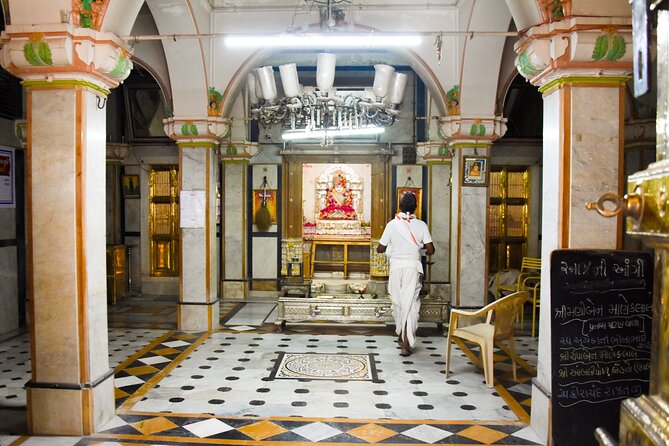
The walk ends with Manek Chowk, the classic central square linked to Baba Manek Nath, a 15th-century saint who lived on the banks of the Sabarmati River.
What makes Manek Chowk worth your time isn’t just the buildings. It’s the timing. The square shifts roles through the day:
- In the morning, it’s used as a cow feeding area
- In the day, it becomes a silver market
- At night, it turns into a food market
- It’s also known for silver jewelers
That pattern is exactly why this kind of heritage walk works. You’re not only looking at monuments; you’re watching the old-city system keep moving.
This stop is listed as free time for about 15 minutes. That’s good—after walking through mosques and forts, you can reset with your own pacing. If you want to buy something small, this is the moment.
The route is also planned to give you the older-city market vibe connected to Teen Darwaja—even if your main “market chunk” time centers around Manek Chowk. Expect lanes, stalls, and a sense of the city living right alongside the historic walls.
The guide factor: what you should look for in a good experience
This is the part that can make or break a heritage walk, and the best versions of this tour hinge on the guide.
I love when a guide is able to do three things at once:
- Explain design features in simple language
- Tie buildings to city history without turning it into a lecture
- Adapt when your group needs slower pacing or extra time at one stop
You’ll get a personal small-group format, so this should feel less like being marched and more like having a knowledgeable local explain what you’re looking at. In the smooth versions of the experience, the guide is courteous and attentive, and that matters a lot when you’re trying to see details like jali geometry, carved motifs, and the way multiple entrances change how spaces connect.
Now, for the one practical caution: because the tour is short and starts early, communication needs to be solid. If you’re the type who hates waiting around, confirm details before you leave your hotel and bring a plan for a quick reroute if timing goes sideways.
What to wear and expect on the ground (not the postcard version)
Since this is a morning walking tour in an older neighborhood, treat it like real street walking, not a museum stroll. The route has a moderate fitness requirement, and some streets can be more challenging than you expect if you don’t walk much at home.
Here’s how I’d prep so you enjoy it:
- Wear comfortable shoes you can trust on uneven pavement.
- Bring a light layer. Mornings can be cooler, and then the temperature can rise quickly.
- Stay flexible with timing. Even short visits inside require calm movement, and you’ll be switching between exterior and interior spaces.
- Have a small bag ready for anything you need, since you’ll be moving from site to site.
Also, this is designed as a mobile ticket experience. Don’t count on printing. Keep your phone charged and your ticket accessible.
Quick value check: who this tour suits best
This heritage walk is a great fit if you:
- Want a short, focused morning in Ahmedabad
- Enjoy architecture details like latticework, pillar counts, entrances, and fort layouts
- Like the idea of mixing religions and city history in one route
- Prefer a guide who can answer questions and adjust to your group
It’s less ideal if you:
- Need a very slow pace or have trouble with uneven, old-street walking
- Get stressed by early starts and tight timing windows
If you’re planning your first day in Ahmedabad, this tour can help you get your bearings fast—because it shows you the city’s “connected story” rather than isolated monuments.
Should you book the Morning Heritage Walk with House of MG?
I’d book it if you want an efficient, detail-focused introduction to Ahmedabad’s old city. The value is strongest when you travel as a small group (up to 5 people) and you care about understanding what you’re seeing at Sidi Saiyyed Mosque, Bhadra Fort, Jama Masjid, and the Raja No Haziro tomb complex.
Just do two smart things before you go: confirm meeting details and carry the contact info. The experience looks built for a smooth morning, and a little readiness prevents a lot of frustration.
If you show up ready to walk and ready to look closely, you’ll leave with a clearer sense of how Ahmedabad’s historic spaces still shape daily life.
FAQ
What time does the tour start and where do we meet?
The tour starts at 8:00 am and meets at House of MG, Bhadra Rd, Opp. Sidi, Old City, Gheekanta, Lal Darwaja, Ahmedabad, Gujarat 380001, India.
How long is the Ahmedabad morning heritage walk?
It lasts about 2 hours.
Is this tour private, and how many people are in a group?
Yes, it’s a private activity. The group size is up to 5 people.
Are admission tickets included for the stops?
Admission tickets are included for the Sidi Saiyed Mosque, Bhadra Fort, Jama Masjid, and Ahmedshah Badshah’s Tomb. Manek Chowk time is free.
What’s the ticket method?
The tour uses a mobile ticket.
Do I need good weather?
The experience requires good weather. If it’s canceled due to poor weather, you’ll be offered a different date or a full refund.
What if I cancel?
This experience is non-refundable and cannot be changed for any reason.