REVIEW · BRUSSELS
Brussels: Historical Tour with Chocolate & Waffle Tasting
Book on GetYourGuide →Operated by Legends of Brussels · Bookable on GetYourGuide
Two hours, one city square, then chocolate.
This 150-minute small-group walk strings together Brussels’ biggest historical hits with two food stops that actually matter.
What I like most: you get a max group size of 14, so the guide can keep it personal and answer questions without racing you along. And the tastings are built into the route, from a top Brussels waffle stop near Manneken Pis to Belgian praline chocolate from a royal warrant holder.
One thing to consider: you’re walking a lot in a short window. If your feet are sensitive, plan on comfy shoes and a slower attitude between sights.
In This Review
- Key Things That Make This Tour Worth Your Afternoon
- Brussels in 2.5 Hours: Why This Route Works
- Starting at Grand Place: City Hall, Big Tower, Red and Green Umbrella
- Grand Place to Manneken Pis: From Ornate Square to Brussels’ Most Famous Little Icon
- Rue des Eperonniers and the Old Waffle Streets
- Saint-Hubert Royal Galleries: Shopping Street, Built Like a Monument
- Cathedral of St. Michael and St. Gudula: Stop for Photos, Stay for the Interior
- Brussels Park and the Royal Side: A Change in Mood Before the Big Views
- Royal Palace and Mont des Arts: Where the Tour Earns Its Ending
- Waffle and Chocolate Tastings: What You Actually Get
- Guides and the Small-Group Advantage: Why Names Keep Coming Up
- Price and Value: How $47 Makes Sense for a 2.5-Hour Plan
- Who Should Book This Brussels History + Food Walk
- Should You Book This Historical Chocolate and Waffle Tour?
- FAQ
- How long is the Brussels Historical Tour with Chocolate & Waffle Tasting?
- What is the price per person?
- What size group is it?
- Where do we meet?
- What food is included?
- What languages is the tour offered in?
- Is it easy to change plans if needed?
Key Things That Make This Tour Worth Your Afternoon
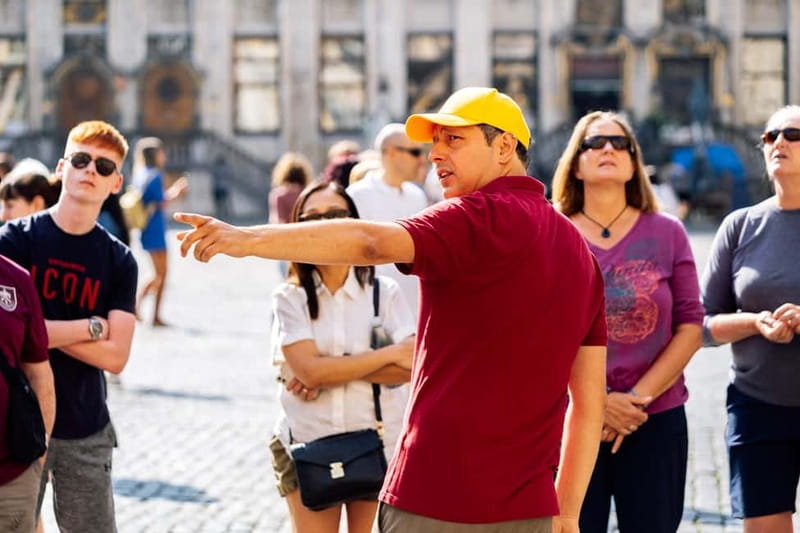
- Small group (up to 14) means you’re not just standing in a crowd for photos.
- Grand Place to Place Royale gives you a tight historical loop plus end-of-tour skyline views.
- Waffle tasting is timed right after the Manneken Pis area so you get the snack while you’re still in old Brussels mode.
- Chocolate from a royal supplier keeps the food stop tied to Brussels’ culture, not just a random shop.
- Local tips at the end help you turn the tour into a real plan for bars, restaurants, and what to do next.
- Guides like Ian, Sarah, Lou, and Clemens show up in reviews as fun, story-first hosts who keep people engaged.
Brussels in 2.5 Hours: Why This Route Works
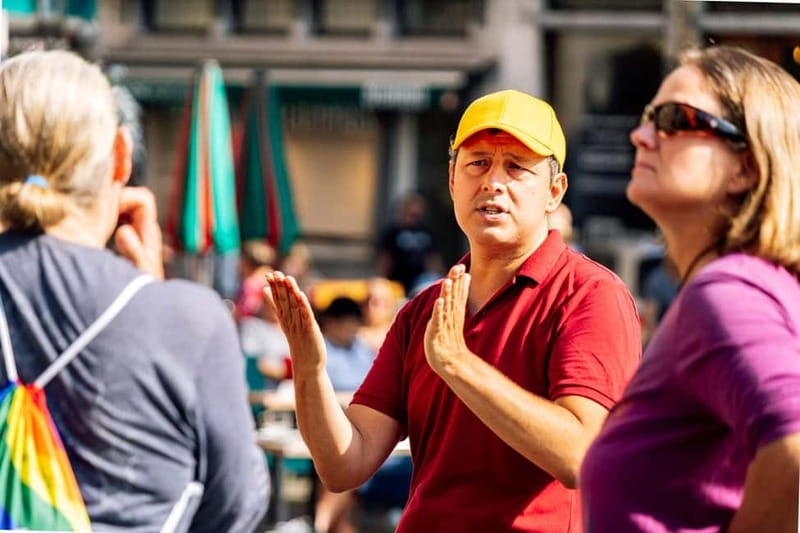
Brussels can feel confusing at first. The city center looks grand, but the story behind it takes time to connect. This tour is designed to give you the map first, then the meaning.
The big win is the pacing: you cover the core landmarks you’ll want on your first day, then you end in a spot with a view that makes Brussels feel bigger than it does from street level. Add the waffle and chocolate stops, and you’ve got a tour that doesn’t just talk about Belgium—you taste it.
And because the group stays small, the experience doesn’t feel like “follow the leader.” You get room for questions, quick clarifications, and a more human conversation with your guide.
Starting at Grand Place: City Hall, Big Tower, Red and Green Umbrella
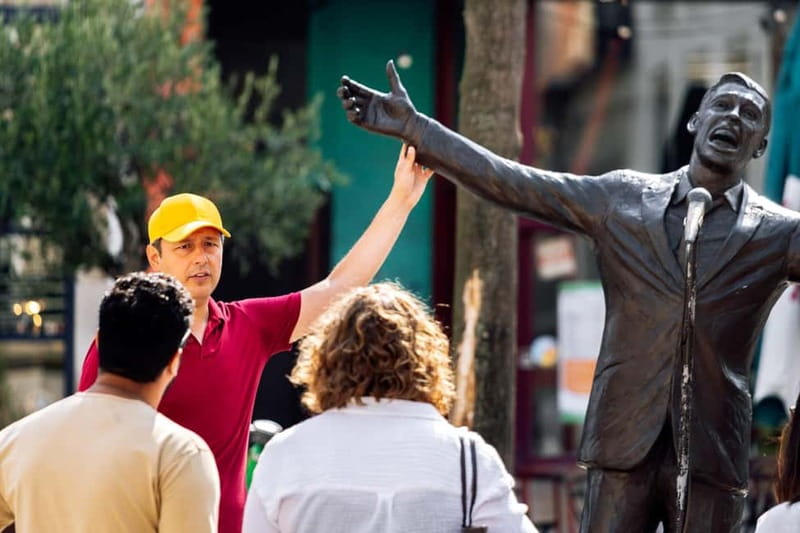
The tour starts at Grand Place, right in front of Brussels City Hall. The landmark here is unmistakable: the city hall is the biggest building, with a tall tower in the middle. You meet down from the tower area—about 13 steps in front of the gate—so keep an eye out for the guide holding a red and green umbrella.
This matters more than you’d think. Grand Place is the kind of place where you’ll stand and stare if you don’t know what you’re looking at. Getting grounded at the start means the rest of the walk feels logical instead of random.
Also, the start spot helps families and first-timers. You’re in the most central, easiest-to-orient area of the old city.
Grand Place to Manneken Pis: From Ornate Square to Brussels’ Most Famous Little Icon
From Grand Place, you move through the center with guidance that connects buildings to events. The tour doesn’t just name statues and streets; it explains how this young city grew into a major player in Europe.
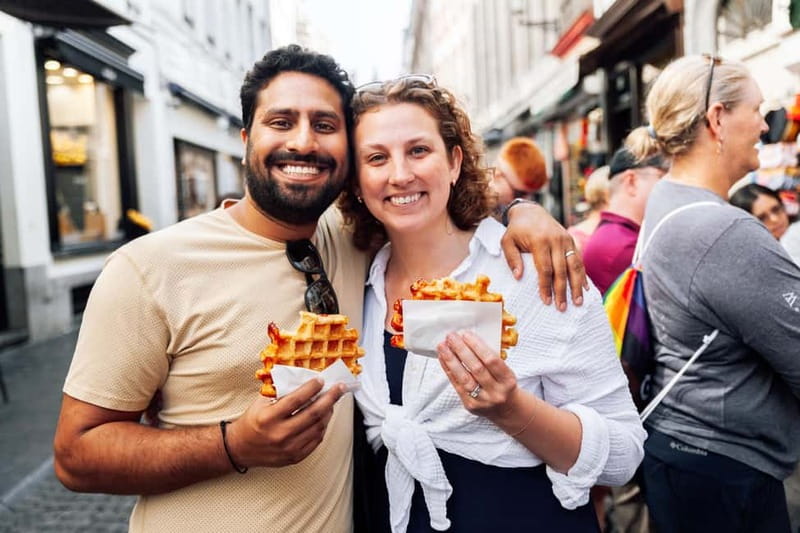
Then comes Manneken Pis, and yes, you’ll have a photo stop. But this stop is also where the tour adds one of its best practical perks: a food moment. The tasting window is set so you’re not waiting hours for the first snack.
Here’s the vibe: Manneken Pis looks like a quick stop, but your guide uses it as a doorway into Belgian identity—small, stubborn, and proud in a very Brussels way. And once you see the surrounding streets, you understand why people keep coming back to this neighborhood even after the main square.
Rue des Eperonniers and the Old Waffle Streets
After Manneken Pis, you’re guided through the surrounding lanes, including Rue des Eperonniers. This is where Brussels starts to feel like a city you can wander, not just a list of monuments.
Rue des Eperonniers is short, but it gives you something valuable: contrast. Grand Place is all grandeur. The side streets are human scale. That shift helps you understand why people love Brussels for more than just the big postcard spots.
One practical consideration: this area is best enjoyed when you don’t rush. If you walk fast, you’ll miss little details your guide points out, like why certain streets became the places to buy, trade, or snack.
Saint-Hubert Royal Galleries: Shopping Street, Built Like a Monument
Next up is the Saint-Hubert Royal Galleries. This part of the walk is a photo stop plus a guided visit, and it’s one of the most cinematic segments of the route. The galleries are more than a passageway—they feel like a covered street designed to show off style and commerce at the same time.
Then there’s another key ingredient: the tour includes food tasting here too. That timing works because you’re already in a place that feels designed for lingering. A guided stop inside the galleries also breaks the walking rhythm, which helps keep the afternoon enjoyable.
If you’re the type who likes architecture, this is a strong stop. If you’re more “show me what to do later,” your guide’s commentary gives you enough context to recognize the difference between a tourist trap and a place worth returning to.
Cathedral of St. Michael and St. Gudula: Stop for Photos, Stay for the Interior
You’ll reach the Cathedral of St. Michael and St. Gudula with both photo time and a visit. The guide adds the historical background behind the building, and you get time to actually look around instead of just passing by at speed.
Cathedrals can be hit-or-miss on tours when the stop is rushed. Here, the structure of the tour gives you a real pause, which makes it easier to appreciate what you’re seeing. Even if you’re not a church person, the scale and details tend to win you over once you’re standing inside.
Tip: wear layers if you’re visiting in colder months. Cathedral interiors can feel cooler than the streets.
Brussels Park and the Royal Side: A Change in Mood Before the Big Views
Between the cathedral area and the royal sights, you’ll get a walk through Brussels Park. This is a welcome reset. You’re shifting from dense historic streets to a greener, wider space that helps your brain catch up.
This pause is useful even for people who hate “rest breaks.” It makes the final portion feel like a payoff instead of another checklist item. You also get a moment to regroup before you head into the Royal Palace and the upper-city view zone.
If you’re with kids, this segment tends to land well because there’s space to breathe and run a little, even while staying in the walking flow.
Royal Palace and Mont des Arts: Where the Tour Earns Its Ending
The tour continues to the Royal Palace for a photo stop and a short guided moment. The point isn’t only the building—it’s the surrounding royal symbolism and the way the city arranges power on the map.
Then you head to Mont des Arts, where you’ll again get photo time and guided context. Mont des Arts is one of the places that makes Brussels look like it belongs in a bigger league of European capitals. You see why so many visitors end up taking “one more photo” here.
From there, the tour returns toward the Grand Place direction via Mont des Arts (about a five-minute walk is mentioned during the transition). The tour ultimately finishes at Place Royale, with an astonishing view over the city.
That last stretch is also when the tour’s practical value comes alive: you’ll get a short information session and a pile of tailored suggestions based on what you care about.
Waffle and Chocolate Tastings: What You Actually Get
Let’s talk food, because this tour earns its name here.
You’re included for:
- A Belgian waffle
- Belgian praline chocolate from a royal supplier (the official chocolate maker connected to the royal family)
The waffle stop is described in a way that makes it feel tied to the neighborhood’s identity, not just “grab something sweet and move on.” Many people highlight that the waffle is a favorite part of the afternoon, and that the quality hits right away rather than feeling like a token snack.
For chocolate, expect samples rather than a full dessert course. One review notes the tasting setup as a small set of bites, and another focuses on the royal-supplier angle, which is the reason the tasting feels more meaningful than a random chocolate shop stop.
If you’re someone who loves food walking tours, this format works because it doesn’t break the tour rhythm. If you’re a serious dessert person hoping for a long chocolate lesson with multiple flavor variations, you might find it a shorter tasting than you’d imagined.
Drinks aren’t included. I’d treat the tastings as part of your planned snack strategy and add a drink only if you want one during or after the tour.
Guides and the Small-Group Advantage: Why Names Keep Coming Up
Small-group tours rise or fall on the guide. This one clearly attracts guides who can hold attention while still keeping the route moving.
In reviews, guides such as Ian, Sarah, Lou, Clemens, and Paul come up repeatedly. The consistent theme is that the guide mixes history with practical local help—fun facts, yes, but also suggestions for where to eat, what bars are worth your time, and what to do next in the city center.
That last part is important. A tour that ends with just “thanks for coming” leaves you stuck planning the rest of your trip. This one adds an information session plus a list of recommendations, which helps you turn the sights you saw into a plan.
Also, the walking pace is described as comfortable, with breaks built into the flow. One review even highlights stops that include restroom time, which sounds small until you’re halfway through a tight schedule.
Price and Value: How $47 Makes Sense for a 2.5-Hour Plan
At $47 per person for about 150 minutes, the price is mainly paying for three things:
- A guide to connect the landmarks into one story
- Access to the best-known tasting stops along the route
- The local recommendations you can use immediately after the tour
If you did this alone, you could absolutely walk between many of these sights. But without guidance, you’d likely spend more time figuring out what you’re seeing—and you’d still have to find food stops and decide which shops are worth your money.
So the value comes from saved time and smoother decision-making. You’re paying for someone to steer you through the city center while you snack in the right places.
Who Should Book This Brussels History + Food Walk
This tour fits best if you:
- Are visiting Brussels for the first time and want the core city center without chaos
- Want a deeper sense of how Brussels grew into a major European city
- Like food, but prefer tastings that are part of the story rather than random side quests
- Appreciate a guide who shares restaurant and bar ideas for later that same day
It’s also a good “return visit” option. Even if you’ve seen the main sights before, the food and the focused route can give you a new way to look at the city.
If you strongly dislike walking or you want to spend long periods inside each building, you may find the structure a bit tight. The good news is that it’s paced with breaks and a small group, so it’s easier on your energy than a giant bus-tour style schedule.
Should You Book This Historical Chocolate and Waffle Tour?
Yes, I think this is a smart booking for most people doing Brussels in a day or two.
Book it if you want history + two tastings in one smooth afternoon and you like getting a guide’s ideas for where to go next. The small group size and the strong emphasis on the tastings make it feel like more than a standard walk-and-tell.
Skip it or adjust your expectations if you want a big, multi-stop tasting experience with lots of different bite-sized chocolate varieties. Here, the format is compact: you’ll leave fed, but you won’t leave full of dozens of samples.
If your day includes Brussels City Hall, Grand Place, Manneken Pis, Royal Gallery energy, and a proper end-view from Place Royale, this tour is built to hand you exactly that mix.
FAQ
How long is the Brussels Historical Tour with Chocolate & Waffle Tasting?
The tour lasts 150 minutes (about 2.5 hours).
What is the price per person?
The price is $47 per person.
What size group is it?
It’s a small-group tour with a maximum of 14 guests.
Where do we meet?
You meet at Grand Place in front of the city hall. Look for the city hall’s big tower, then meet 13 steps in front of the gate. The guide carries a red and green umbrella.
What food is included?
You get a Belgian waffle and Belgian praline chocolate from a Belgian Royal Warrant Holder. Drinks are not included.
What languages is the tour offered in?
The live tour guide speaks French and English.
Is it easy to change plans if needed?
You can cancel up to 24 hours in advance for a full refund. You can also reserve now and pay later.