REVIEW · BRUSSELS
Private Historical Tour: Highlights of Brussels
Book on Viator →Operated by Legends of Bruges Free & Private Tours · Bookable on Viator
Brussels packs a lot into one walk. This private historical tour is built around top stops like the UNESCO-listed Grand Place and Brussels’ comic-strip street art, so you get the big picture fast. The vibe is smart and relaxed, and every stop is timed so you’re not rushing through the landmarks.
One thing to plan for: this is a walking-focused 2 hours 30 minutes with lots of outdoors time, and it runs in all weather. If you hate walking or want long sit-down breaks, this might feel a bit busy.
In This Review
- Key highlights to look for
- Grand Place: the starting point where Brussels shows off
- Comic Art Museum and murals: Brussels explains itself with drawings
- Manneken Pis: a tiny statue with a big reputation
- St. Nicholas Church: medieval power, even in a belltower story
- La Monnaie and the Royal opera district: architecture you can feel
- Galeries Royales Saint-Hubert: the shopping arcade that feels like a time capsule
- Saint-Géry Island: modern Brussels with a cultural pulse
- St. Michael & St. Gudula Cathedral: Brabant Gothic with big presence
- Parc de Bruxelles and Royal Square: Parliament meets the park
- Mont des Arts: the view that makes the walk feel worth it
- Price and value: paying for time saved and context added
- Who this tour is best for
- Should you book this Highlights of Brussels tour?
- FAQ
- How long is the Highlights of Brussels private tour?
- How much does it cost per person?
- Is this tour private?
- What language is the tour offered in?
- Where does the tour start?
- Where does the tour end?
- Are admission tickets included for the stops?
- Does the tour run in bad weather?
Key highlights to look for
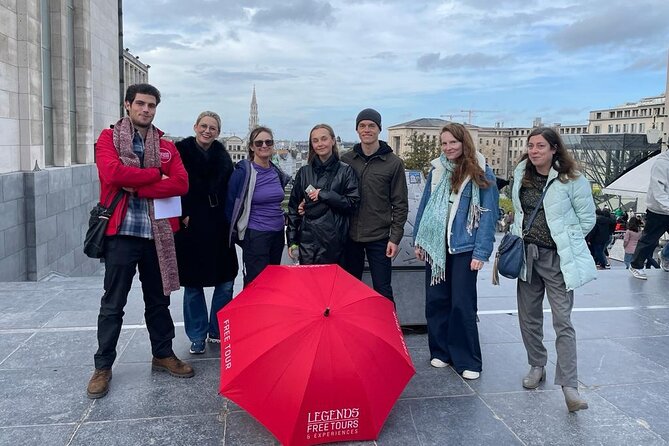
- Grand Place with a red-umbrella meet in front of the city hall, right where the story starts
- Free entry at each listed stop, so your money goes to the guide and the pacing
- Brussels’ comic culture in real places, tied to landmarks you can actually point at
- Icon photos with context, from Manneken Pis to medieval church details
- Opera-house and arcade architecture breaks, including La Monnaie and St-Hubert’s galleries
- A high payoff finish at Mont des Arts, ending with city views close to the center
Grand Place: the starting point where Brussels shows off
You feel it immediately at Grand Place. This UNESCO World Heritage square is famous for its opulent guildhalls and the Town Hall, mixing Gothic boldness with Baroque flair. It’s not just a pretty backdrop; it’s where you learn how the city’s identity got built in public space.
A guide meets you at Grand Place in front of the city hall with a red umbrella. That matters more than you think, because Brussels can be a maze of streets, and it helps you avoid wasting the first minutes figuring out where to stand.
Here’s what makes this stop work so well for an overview tour: Grand Place gives you a reference point. After you understand what this square represents, the rest of the sites start making sense as pieces of one connected story—civic pride, artistic design, and power displayed in stone.
You can also read our reviews of more tours and experiences in Brussels.
Comic Art Museum and murals: Brussels explains itself with drawings
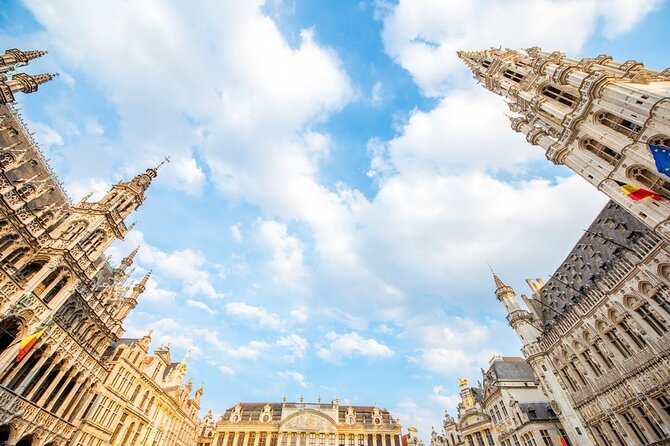
Next comes the Comic Art Museum area, and Brussels leans into what it does best: visual storytelling. Brussels is dotted with comic-strip murals featuring famous characters like Tintin and the Smurfs, and this is where that playful side turns into a real historical thread.
This is a great stop if you’re traveling with kids—or if you’re an adult who still enjoys the clean jolt of something fun and iconic. It also gives you a break from pure architecture, which keeps the tour feeling varied instead of repetitive.
One practical bonus: comic-strip stops tend to be easy to locate and easy to photograph, so even if you only have a short time window, you still get solid value from the time allotted.
Manneken Pis: a tiny statue with a big reputation
Then you hit Manneken Pis, the little bronze boy who’s become Brussels’ unofficial emblem. This statue dates back to the 17th century, which is the kind of detail that makes the landmark feel less like a tourist cliché and more like an artifact with a long memory.
The smart part of this stop is the way it teaches you how traditions get adopted and repeated. Manneken Pis isn’t just a sight; it’s a shorthand for local culture, humor, and identity carried forward for centuries.
The consideration here is the classic one: it’s a quick stop. You’ll see the statue, learn the context, and move on. If you want slow time for photos, you may need an extra minute at the end for another look.
St. Nicholas Church: medieval power, even in a belltower story
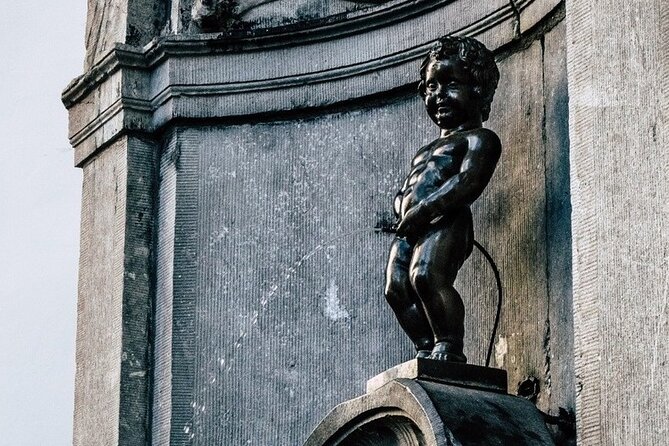
St. Nicholas Church adds a more serious tone, and it’s one of those places where age shows in the structure. The church is among the oldest in Brussels, with foundations laid in the 12th century.
What I like about this stop is the specific angle your guide brings: the church once had the one and only belltower of Brussels, used to show off the city’s wealth and independence. That turns a church visit into a story about competition, status, and civic self-confidence.
Because this stop is timed briefly, it works best as a contrast. You’ve just had the jokes of Manneken Pis; now you get the heavy medieval context. That balance is what makes an overview tour feel worth it.
La Monnaie and the Royal opera district: architecture you can feel
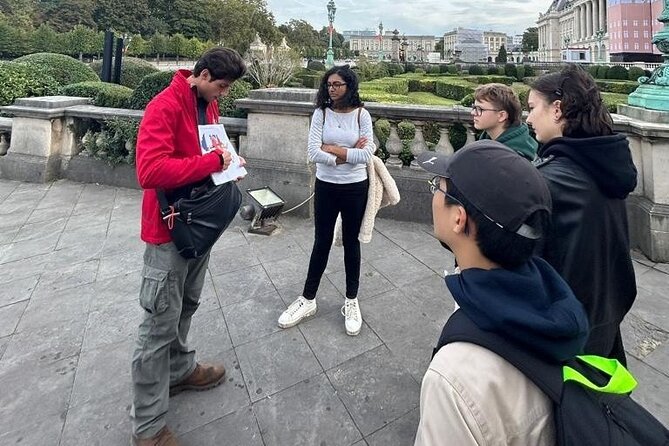
La Monnaie, the Théâtre Royal de la Monnaie, is a famous opera house in Brussels, and it’s a worthwhile stop even if you’re not a hardcore opera fan. The building’s grandeur gives you a sense of how much artistic prestige matters in a city that loves public performance—on stage and in square.
This stop is also a breather in the route. You’re taking in an impressive façade and atmosphere, then moving on—without needing to buy tickets at every turn. In a tour format where admissions are handled for you, it’s a pleasant way to pause and recharge your eyes.
If you’re the type who likes architecture more than museums, this is one of the stops you’ll remember most.
Galeries Royales Saint-Hubert: the shopping arcade that feels like a time capsule
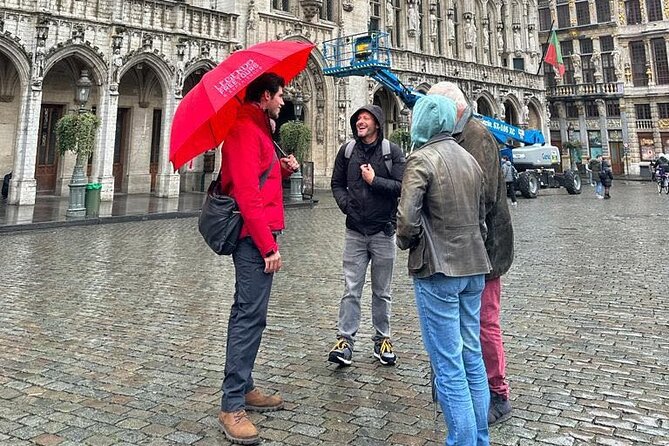
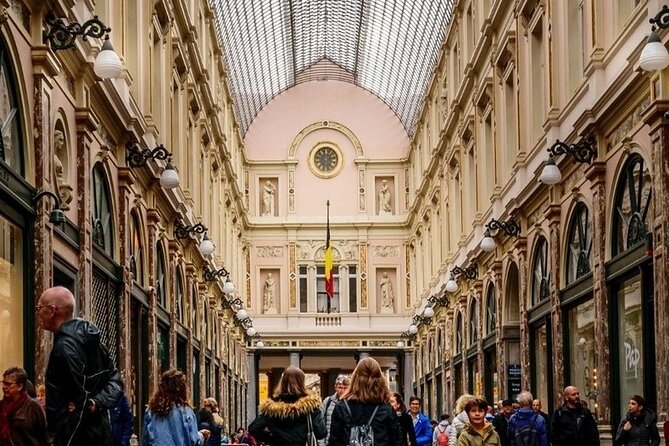
Next is Les Galeries Royales Saint-Hubert, a legendary covered shopping arcade. It’s one of the world’s oldest, and it’s built to feel like a small, elegant world under glass.
This is where the tour scores points for variety. You’re not just looking at grand buildings anymore—you’re stepping into a designed passage with luxury boutiques, theaters, and charming cafes. It’s lively without being overwhelming, and it’s an easy place to take in details while you keep moving.
If you like to travel with your senses, this stop helps. You get the visual charm, the arcade layout, and a sense of how city life flows through sheltered walkways.
Saint-Géry Island: modern Brussels with a cultural pulse
Then you reach Saint-Géry Island, a trendy district that’s known for nightlife and cultural spaces in a former market area. That market-to-modern transformation is the theme here: how a place can stay central while its role changes over time.
This stop is a nice mid-tour contrast, especially after the more formal, historic buildings. You’re reminded that Brussels isn’t a museum city only—it’s a living city with different neighborhoods doing different jobs.
The time is short, so treat it like orientation. You’ll learn what the area is known for and get a feel for the vibe, but you won’t be stuck there long enough to get bored.
St. Michael & St. Gudula Cathedral: Brabant Gothic with big presence
St. Michael & St. Gudula Cathedral brings you back to scale. This magnificent cathedral is built in Brabant Gothic style, and it takes you back to the 13th century.
It’s also a place where your guide’s narration can matter a lot, because the cathedral is connected to legendary tales. Even if you don’t memorize every detail, the stories help the building feel more human and less like pure stone.
This is the kind of stop that rewards a calm moment. You don’t need to sprint through it. Even a quick visit can land well when the architecture is this imposing.
Parc de Bruxelles and Royal Square: Parliament meets the park
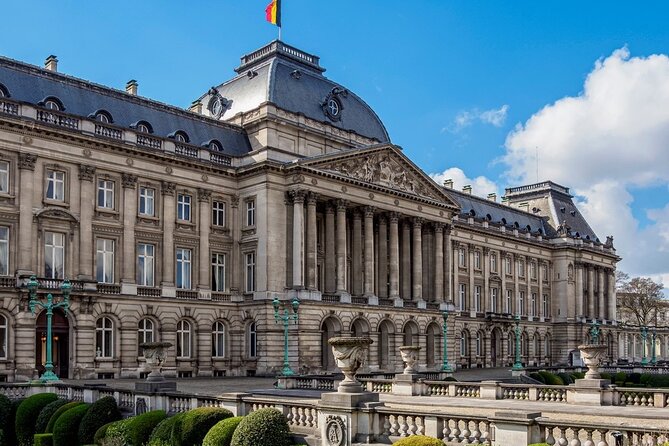
Next comes a quieter stretch: Parc de Bruxelles. This royal park sits between the Royal Palace and the Belgian Parliament, and it gives your legs a gentle reset without pulling you away from the main political geography.
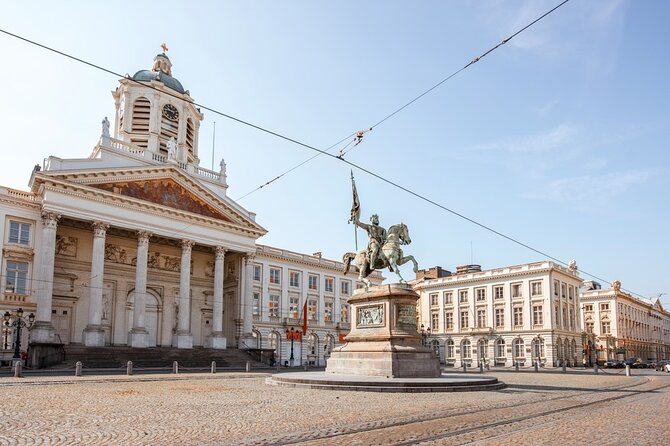
Immediately after that, you move to Royal Square, dominated by the statue of King Albert I. The square is framed by neoclassical buildings, including the Royal Palace and the Belgian Parliament, so you can see how power and civic planning share space in this city.
This pairing works well because it teaches you Brussels’ rhythm: formal governance nearby, then a green release right next door. It’s an easy way to understand how the city’s center is designed for both public life and public ceremony.
Mont des Arts: the view that makes the walk feel worth it
The tour ends on Mont des Arts, also known as the Mount of the Arts. This is your payoff point, where you step into a view over Brussels close to the main square.
I like end points like this because they give your brain a final organizer. After the churches, squares, and arcades, the viewpoint helps you connect the dots—so the city feels more navigable and less like a list of disconnected stops.
Since the end is close to where you began, you also avoid the feeling of being stranded across town. You finish near the center, with an easy transition to grab food, browse, or just keep wandering.
Price and value: paying for time saved and context added
At $105.36 per person for about 2 hours 30 minutes, this tour sits in the range where you’re not just paying for walking access. You’re paying for a local guide, an organized route, and the ability to see major landmarks without stopping to figure out what matters.
A big value factor: the listed stops have free admission tickets. That means you’re not stacking costs on top of the guide price for entry fees that can add up fast in a big-city day.
It’s also private, which is a real deal when you travel as a family or with a small group. Private time means you’re not stuck waiting for slow decisions, and you can ask questions as they come up. If you’re visiting for a short trip and want a structured overview without doing your homework first, this tour fits that goal well.
Who this tour is best for
This experience is ideal if you want a fast, organized way to understand central Brussels without turning your day into museum management. You’ll get a solid mix: civic square, comic culture, iconic statues, churches, major architecture, and a final viewpoint.
It also suits travelers who like humor in storytelling. In this context, the guide experience can be a big part of the joy. Some guides connected with this route are praised for clear explanations and good humor, including names like Sebastian, Daniel, and Don—plus a knack for showing details you might otherwise miss on your own.
If you prefer a slow, deep museum day with long indoor time, you may want a different style of tour. This one is built for movement and quick orientation.
Should you book this Highlights of Brussels tour?
If you want a practical overview of Brussels’ most recognizable sites, I’d say yes. The route is built to help you get your bearings fast and leave with a more coherent picture of how the city’s civic pride, religion, and modern culture connect.
Book it if you like the mix of iconic sights and stories, and if you’re happy to walk for a few hours. Skip it if you want lots of free time at each stop or a tour with minimal outdoor exposure.
Either way, it’s the kind of day that makes your next steps in Brussels easier, because you end with the view from Mont des Arts and a sense of where you are in the bigger city plan.
FAQ
How long is the Highlights of Brussels private tour?
It runs about 2 hours 30 minutes.
How much does it cost per person?
The price is $105.36 per person.
Is this tour private?
Yes. It’s a private tour, so only your group participates.
What language is the tour offered in?
It is offered in English.
Where does the tour start?
The tour starts at Grand Place, Grote Markt, 1000 Brussel, Belgium.
Where does the tour end?
The tour ends at Mount of the Arts, 1000 Brussels, Belgium.
Are admission tickets included for the stops?
All fees and taxes are included, and each listed stop shows admission ticket free.
Does the tour run in bad weather?
It operates in all weather conditions, so you should dress appropriately.