REVIEW · BRUSSELS
600 Years of History and Heritage: A Self-Guided Walking Tour of Leuven
Book on Viator →Operated by VoiceMap Audio Tours · Bookable on Viator
Leuven sounds like an easy day until you start walking and realizing the city is layered like a good beer label. This self-guided audio tour strings together the places that shaped Leuven, from its market squares and church sites to KU Leuven history, with clear narration you can play at your own pace.
I especially like two things: the smooth, easy-to-follow route that takes you through the center without you having to plan every turn, and the way the audio keeps pointing your eyes upward and outward so you notice details you’d miss on your own. The narration also makes the university connections feel practical, not academic.
One thing to consider: it is not a guided group tour, so you won’t get live Q&A. Also, the price is low, but you do need your own smartphone and headphones to use the audio.
In This Review
- Quick hits before you go
- Leuven in 90 Minutes: How the Audio Tour Feels On the Ground
- Starting at Rector de Somerplein and Getting Your Bearings
- The Center Loop: Market Squares, a City Hall Up Close, and Church Resilience
- Following the Old Streets: Old Market Energy and a Long Bar Stop
- Holy Trinity College, Saint Anthony’s Chapel, and Father Damien’s Grave
- The Sint-Antoniusberg Climb: Church Facades and Hotel De Pastorij Details
- Where to Find a Bite, Then Papal History and a Brewery With Ongoing Brewing
- Ladeuzeplein, the Beetle Totem, and a Library With a 100-Year Story
- Shopping Streets and an 1800s Theatre, Then Back to Fonske
- Price and Value: Is $11.99 a Good Deal?
- Who This Tour Suits Best (and Who Might Want Something Else)
- Should You Book This Leuven Walking Tour?
- FAQ
- How long is the walking tour?
- What language is the audio available in?
- Can I use the tour offline?
- What do I need to bring?
- Where does the tour start and end?
- Are tickets or museum entry fees included?
Quick hits before you go
- English audio on your schedule: you control the pace, pauses, and playback.
- Offline maps and geodata: helps when mobile signal is spotty.
- Packed route for the time: roughly 1 to 1.5 hours in the city center.
- You get Leuven’s “why”: history explained around squares, churches, and KU Leuven.
- Stops built around views: narration guides you to facades, statues, and courtyards.
- Ends with Fonske: a satisfying little finish at the Rector de Somerplein fountain area.
Leuven in 90 Minutes: How the Audio Tour Feels On the Ground
If you want a Leuven orientation fast, this kind of walk works. You’re not stuck with a timed group or a bus schedule. You start at Rector de Somerplein and keep moving through the center with audio that tells you what you’re looking at as you walk.
The big advantage of a self-guided format is flexibility. When you hit a weather break, you keep going. When you want a pause, you can. One of the reviews praises the ability to pause and go into buildings along the way, so the tour doesn’t feel like you’re trapped outside just listening.
The narration is in English, and you get lifetime access, which matters if you plan to revisit Leuven later or want to repeat sections for friends. It also includes offline audio and offline maps, so you’re not burning roaming data just to hear about a statue’s story.
You can also read our reviews of more tours and experiences in Brussels.


Starting at Rector de Somerplein and Getting Your Bearings
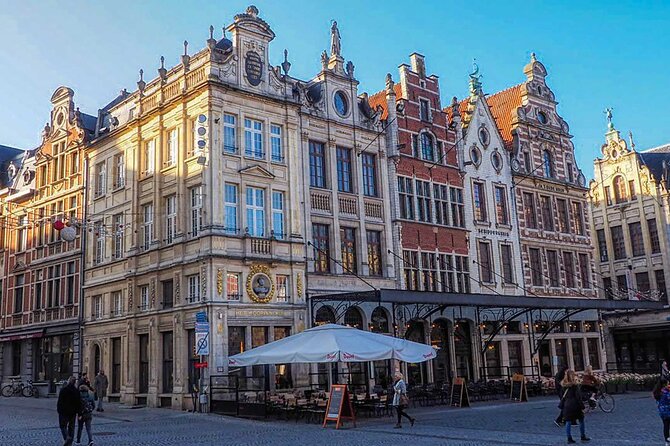
You begin at the Rector De Somerplein perron C3000 area, then the audio steers you toward the heart of town. This is a smart setup because Leuven’s center is where everything connects: squares, churches, and the old street network that still shapes how you move.
Before you’re even deep into the route, you’ll be reminded of Leuven’s role as the capital of Flemish Brabant province. That one line helps the city click. Leuven isn’t just pretty buildings; it’s a civic and educational hub where the university, the church, and the market squares all influence each other.
The tour keeps pulling you back to visual cues—where to look up, what to notice on facades, and which landmarks matter most. That means you can enjoy the walk even if you’re not the type to read plaques for fun.
The Center Loop: Market Squares, a City Hall Up Close, and Church Resilience
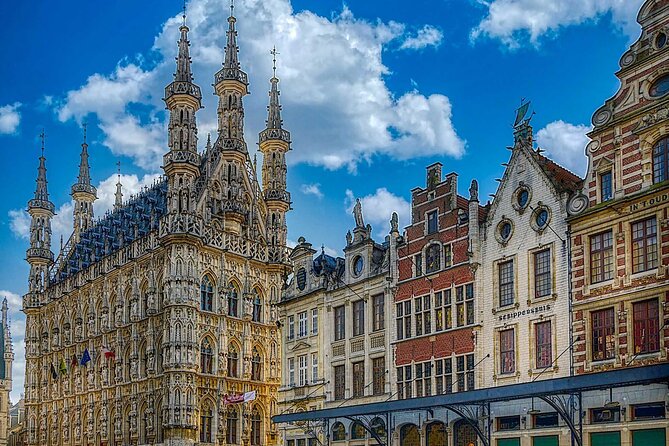
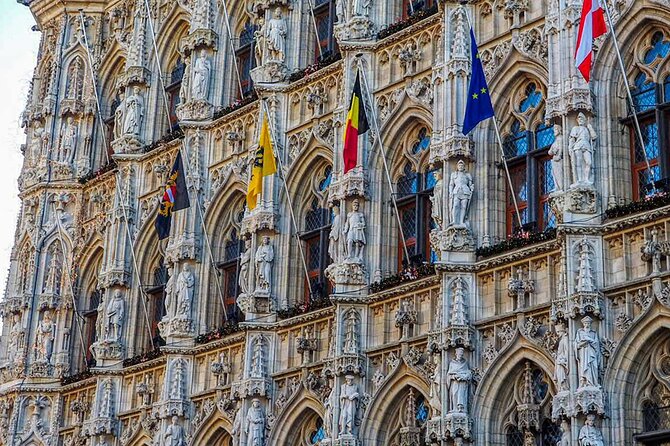
Once you’re in the central market area, the tour quickly turns you into an active observer. You’ll be looking up at a major hall and hearing about its construction and statues. It’s one of those moments where the audio helps you see sculpture and stone as history, not just decoration.
Then the narration shifts to a church-site story—one focused on destruction and reconstruction. Leuven’s past wasn’t tidy, and the tour makes that clear without turning it into a textbook. You’ll get the sense that the city rebuilt itself, and you’re walking through that comeback.
As you go, you’ll also get the Leuven-and-university link. The tour takes you outside the Catholic University of Leuven to hear its history, and it specifically connects the university to the Oude Markt (Old Market) area. That’s useful because Leuven’s education power isn’t hidden. It shows in the streets, the squares, and the rhythm of daily life.
Following the Old Streets: Old Market Energy and a Long Bar Stop
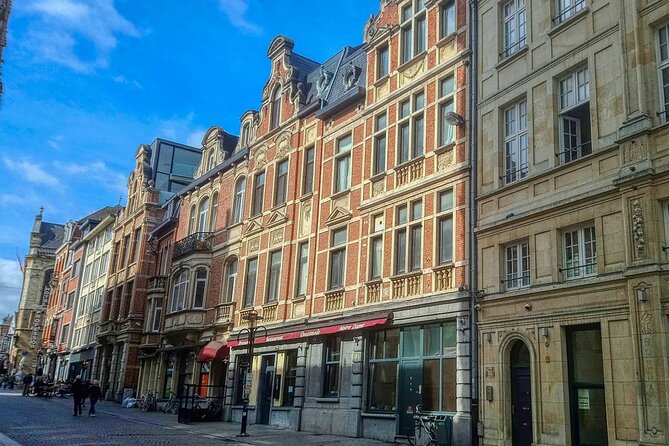
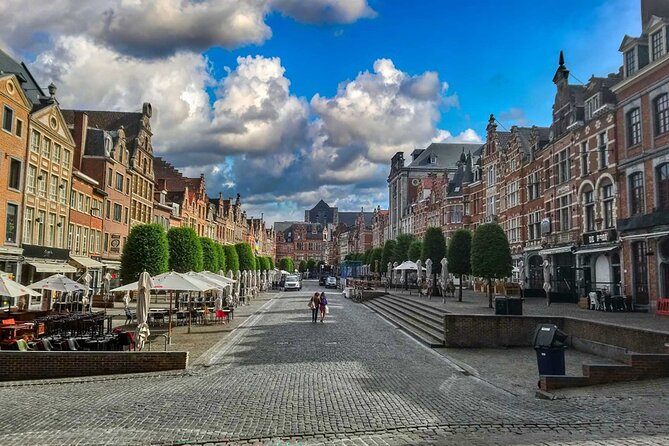
One of the best parts of any walking tour is the transition from big landmarks to the smaller streets that feel lived-in. Here, the route sends you down one of the oldest streets in Leuven while the audio tells you about both distant story and immediate attractions.
This is where you’ll probably slow down. You’ll pass food and beverage vendors, and the audio basically gives you permission to do what you need—if you want refreshment, this is the point to make it part of the walk rather than planning a separate detour.
Next comes a square that competes with the Grote Markt for the title of Leuven’s most famous square. Even if you don’t memorize the rivalry, the tour makes you understand why it matters: squares are the social engine of cities like Leuven. They’re where people meet, protest, celebrate, and shop—then repeat the pattern for centuries.
Holy Trinity College, Saint Anthony’s Chapel, and Father Damien’s Grave
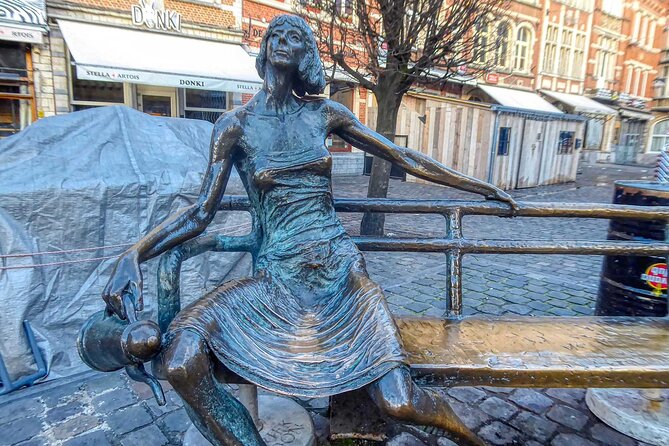
The tour doesn’t just keep you indoors or on the grandest streets. It sends you to specific stops that give Leuven a strong emotional center.
On the Old Market square, you’ll see the Holy Trinity College Preparatory School and hear how Leuven’s more recent celebrities connect to this area. That’s a nice trick. It keeps the walk from becoming only medieval and only solemn.
Then you arrive at a square to visit Saint Anthony’s Chapel. Chapel stops can feel random on some routes, but here it’s placed like a scene change. The tour gives you a reason to be there: you’re not just passing it, you’re approaching a place tied to deeper stories.
After Saint Anthony’s Chapel, you’ll be guided to visit the grave of Father Damien. This is one of those moments where audio walking tours can either feel disrespectful or deeply thoughtful—this one aims for the thoughtful side by making the stop part of the narrative rather than an afterthought.
If you’re in Leuven for a day and only want to remember a few places, I’d put this cluster near the top: chapel first, then Father Damien’s grave.
The Sint-Antoniusberg Climb: Church Facades and Hotel De Pastorij Details
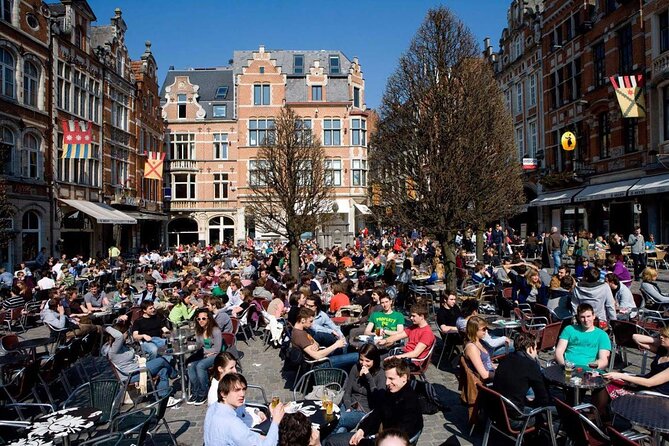
Once the walk turns toward Sint-Antoniusberg, you feel it in your legs. The audio calls the incline mountainous, and it genuinely adds character to the route. Even if it’s not a big hike, it changes your pace and perspective.
As you climb, the tour highlights the history of the church and encourages you to marvel at its impressive façade. That matters because uphill routes are often just “more walking.” Here, the narrative makes it feel like you’re earning the view and earning the architecture.
Then you continue along the street to see Hotel De Pastorij followed by the Faculty of Theology. These are the kinds of stops that can blur together if you’re simply sight-seeing. The audio helps you keep them separate by pointing out what to connect them to: religious education, learning, and the long loop between church and university life.
Where to Find a Bite, Then Papal History and a Brewery With Ongoing Brewing
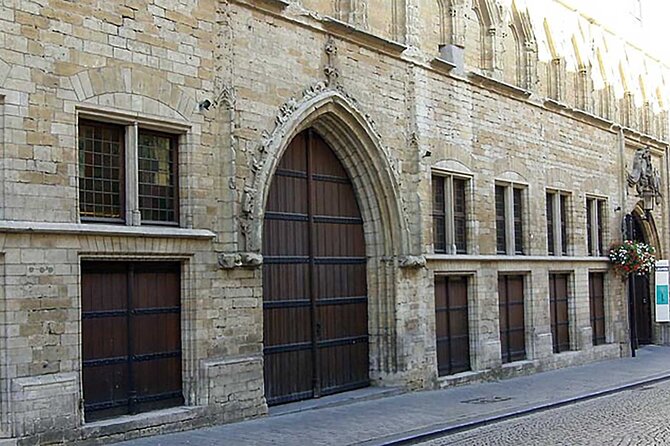
At one point, the tour stops at a square specifically to tell you where to find a good bite to eat. That’s a practical touch for a self-guided walk, because food planning is always the thing that derails your schedule.
After that, the audio moves you to the college entrance for papal history, then introduces a culinary center of Leuven. You’re guided through what sounds like a cozy, locally focused stop, including a brewery history. The key detail the audio gives you is that they’ve been homebrewing inside since 1985.
There’s also mention of an extensive collection housed inside an exquisite building. You’ll likely want to pause here longer than you planned, especially if you like beer culture or objects-and-stories spaces. Just remember: this is still a short overall walk, so pace yourself.
Even if beer isn’t your thing, the value is that this stop turns the narrative from grand monuments into everyday craft and culture. Leuven’s charm is that it doesn’t only live in stone. It also lives in rooms where people brewed, gathered, and built local traditions.
Ladeuzeplein, the Beetle Totem, and a Library With a 100-Year Story
Next you’ll be shown the largest square in Leuven and how it got its name. Then the narration makes a connection involving a Beetle totem linked to the library in Ladeuzeplein. These kinds of links are great for two reasons: they give you a reason to care about public art, and they keep you oriented as you move.
You’ll then wonder at the library building with a short history of only 100 years. That time marker is useful. It tells you the city’s modern identity is still an important part of its story, not just a recent add-on.
When you finish the Ladeuzeplein area, you’ll probably feel like you’ve seen both sides of Leuven: the older religious and market layers, plus a more modern education-and-city-planning layer.
Shopping Streets and an 1800s Theatre, Then Back to Fonske
The last stretch is more relaxed. The audio introduces one of Leuven’s main shopping areas and points out a theatre that dates from the 1800s. Even if you don’t go inside, it’s helpful for understanding where the city’s social life shifted over time.
Then you loop back to where you started, at Rector de Somerplein. The final note is to say hello to Fonske, a statue dedicated to enlightenment, at the fountain end point.
Ending at Fonske is a nice close because enlightenment is the right theme for a university city. You start near the Rector’s area, and you finish with a symbol of learning and thinking. It’s the kind of circular storytelling that makes a short self-guided tour feel complete.
Price and Value: Is $11.99 a Good Deal?
For $11.99 per person, this tour is good value if you want structured sightseeing without paying for multiple attractions. You’re getting English audio narration, plus the VoiceMap app and offline access to audio, maps, and geodata. That reduces the two big costs of self-guided travel: uncertainty and data usage.
You’re also not paying entry tickets on the route because tickets or entrance fees aren’t included. That’s important: it means you’re mostly paying for guidance and context, not admission. For many people, that’s exactly what you want on a first visit.
Do factor in what isn’t included: you’ll need your own smartphone and headphones. If you forget them, you’ll lose the entire point of the tour. Food and drink aren’t included either, though the route does suggest when it makes sense to stop for refreshment.
Also, it’s private in the sense that only your group participates. If you’re traveling with family or a friend group, this is a non-issue in practice because it’s still self-paced.
Who This Tour Suits Best (and Who Might Want Something Else)
This works best if you like walking at your own speed and you enjoy learning through place-based storytelling. If you’re the type who stops for one or two museums but prefers to spend the rest of the day outside, this hits a great balance.
It also suits rainy-day trips well. Self-guided means you can keep moving without worrying about group coordination. One review praised Leuven’s energy even on a rainy day, and this tour’s design fits that exact vibe.
If you want deep museum-style interpretation or lots of interactive engagement, you might find this format a bit light. The audio is informative, but it isn’t a substitute for a live guide with questions and tailored answers.
Should You Book This Leuven Walking Tour?
Yes, if you want an efficient way to understand Leuven’s center without overplanning. $11.99 is a small price for a route that connects squares, church sites, and KU Leuven history while still leaving room for pauses and food breaks.
I’d book it if:
- you want a first-time orientation that doesn’t feel rushed
- you prefer self-paced walking over group tours
- you like architecture and statues, and you want help noticing them
I’d think twice if:
- you’re coming without headphones or aren’t comfortable using your phone for audio and maps
- you’re very schedule-tight and might miss the walk, since it’s listed as non-refundable
If you’re visiting Leuven for a day or part of a day, this is one of the easiest ways to turn a casual stroll into a remembered story.
FAQ
How long is the walking tour?
It takes about 1 hour to 1 hour 30 minutes.
What language is the audio available in?
The tour is offered in English.
Can I use the tour offline?
Yes. It includes offline access to audio, maps, and geodata.
What do I need to bring?
You’ll need a smartphone and headphones. The tour doesn’t include them.
Where does the tour start and end?
It starts at Leuven Rector De Somerplein (perron C3000 area) and ends at Fonske, at Rector de Somerplein 3.
Are tickets or museum entry fees included?
No. Tickets or entrance fees are not included for any museums or attractions on the route.