REVIEW · SAVANNAH
Civil War Savannah!! Guided Walking Tour
Book on Viator →Operated by Savannah Walks · Bookable on Viator
Civil War stories hit different when you’re standing in the middle of them. This Civil War Savannah guided walking tour uses Savannah’s streets and landmark buildings to explain the war’s tactics and the everyday strain on civilians.
I really like the way the tour anchors everything at Warren Square, then builds toward the moment Sherman’s message went out after Savannah fell. I also like the guides—people like Zack, Brad, and Will come off funny, engaging, and very good at keeping the group moving without turning history into a lecture.
One thing to keep in mind: this is a walking tour through places where the war connects to earlier and later city history, so the Civil War focus may feel heavier in the second half than the first—depending on the day and the guide.
In This Review
- Key things you’ll notice on this tour
- Warren Square: The setting behind Sherman’s famous telegram
- Savannah’s Historic District: Why the streets matter
- What you see on the walk: generals, buildings, and the war’s practical logic
- The timeline twist: why 1860 gets mentioned first
- Mid-tour focus: Savannah history as part of the war story
- Citywide strategy talk: North vs South, and why commanders cared
- Ending at Green-Meldrim House: Sherman’s headquarters near Madison Square
- How long it takes, and how to make the most of it
- Who should book this Civil War Savannah tour
- The guide makes the difference: names you might hear
- Price and value: what you’re paying for (and what you’re not)
- Should you book Civil War Savannah!! Guided Walking Tour?
- FAQ
- Where does the tour start?
- Where does the tour end?
- How long is the walking tour?
- What language is the tour offered in?
- Is there a mobile ticket?
- What should I bring for the walk?
- Is the tour suitable for everyone?
Key things you’ll notice on this tour
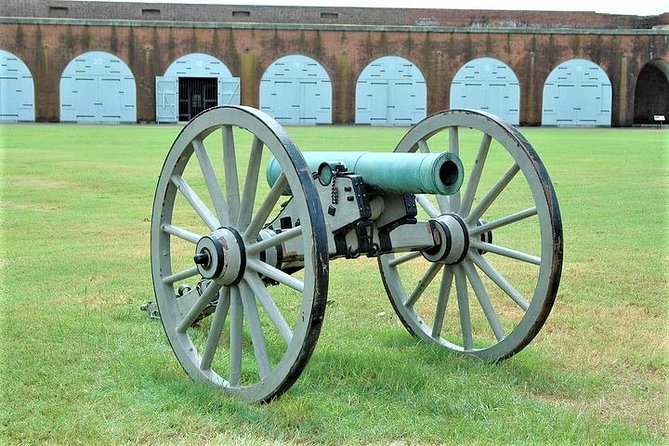
- Warren Square as the starting point tied to Sherman’s telegram to Lincoln after the Union occupation
- Savannah Historic District landmarks in one of the largest National Historic Landmark Districts in the US
- Generals’ houses and Civil War-era architecture that you’d miss on your own
- North vs. South strategy talk, plus how Savannah civilians handled shortages, danger, and uncertainty
- A stop at Green-Meldrim House (Sherman’s headquarters) near Madison Square
Warren Square: The setting behind Sherman’s famous telegram

If you want the Civil War to feel real, you start where big decisions were made. This tour kicks off at Warren Square (near 22 Habersham St), and the opening is built around a key moment in 1864: General Sherman’s telegram to President Lincoln dated December 22, 1864. Savannah had been occupied by Union forces, and the message begins with Sherman presenting the city of Savannah as a Christmas gift.
What I like about starting here is that it gives you a clear storyline. You’re not just wandering old buildings and hearing names. You’re learning how commanders thought, how news traveled, and how the fall of a major Southern city changed the war’s momentum.
Then you’re off into the Historic District, using what you see—streets, layouts, and historic structures—to make sense of why Savannah mattered. On this route, the tour also points out that Savannah’s war timeline starts earlier than many people expect, with Georgian troops seizing Fort Pulaski in January 1860, three months before the better-known attack on Fort Sumter in Charleston.
You can also read our reviews of more tours and experiences in Savannah.



Savannah’s Historic District: Why the streets matter
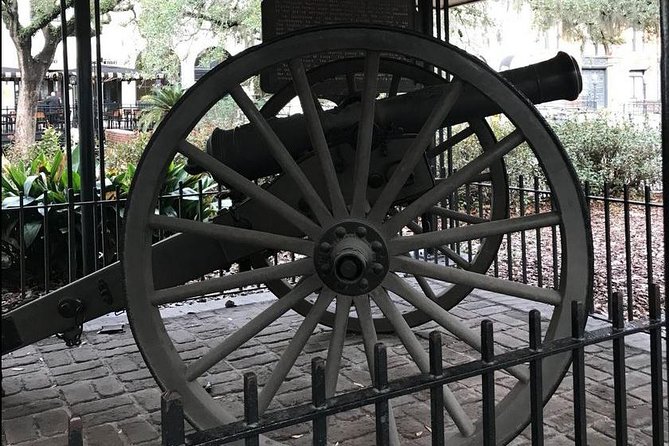
The tour’s backbone is the Savannah Historic District, which was the center of colonial government in the 1700s. This is also where the first reading of the Declaration of Independence took place in Georgia. That might sound like a detour from the Civil War—but it’s not. It explains the foundation of a city that already had power, politics, and major institutions in place when the war hit.
As you walk, you’re effectively learning the city in layers:
- First, the civic and political role Savannah played before the war
- Then, how that same setting shaped Confederate and Union planning
- Finally, how civilians experienced the war not as a map in a book, but as disruption in daily life
You’ll hear how Savannah’s position affected military choices and how the North and the South approached strategy differently. And you’ll get the human side too: hardship, uncertainty, and the strain on people living under wartime pressure.
What you see on the walk: generals, buildings, and the war’s practical logic
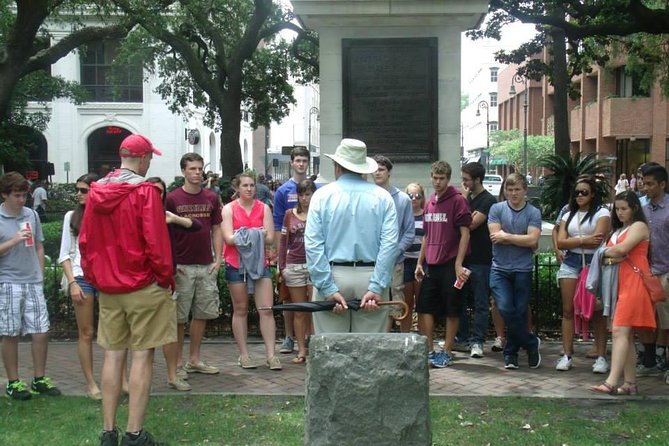
A big reason people love this tour is that it connects “big history” to “small details you can actually see.” Instead of treating the Civil War like an abstract chapter, the guide ties it to the built environment.
Here’s what the tour is built to deliver as you move from stop to stop:
- Houses and buildings linked to prominent Southern generals
- Civil War-era architecture still standing in the Historic District
- Explanations of military strategies used by the North and the South
- Stories about how Savannahians endured civilian hardships during the conflict
Now, a quick reality check: Savannah didn’t become a constant battlefield in the way some places did. That’s not a failure of the tour—it’s part of the historical point. The guide can’t conjure fighting on every block. But you do learn about why Savannah was targeted, how control and movement mattered, and how Sherman’s campaign fit into the broader war.
One theme you may hear clearly: Sherman didn’t turn Savannah into the firestorm he’s often accused of. The tour’s framing includes the idea that only two cities were burned by Sherman—Meridian, Mississippi, and Columbia, South Carolina—while the Confederates burned Atlanta. Whether you already know these facts or not, it helps you understand the difference between myth and what the war campaign actually did.
The timeline twist: why 1860 gets mentioned first
Most Civil War histories start with Fort Sumter. This tour offers an earlier anchor. You’ll hear that the Civil War began in Savannah’s region in January 1860, when Georgian troops seized Fort Pulaski, and that this preceded the Fort Sumter attack by three months.
That detail matters because it changes how you think about cause and momentum. The war wasn’t just one event. It built up through political decisions, conflict escalation, and strategic moves long before shots were fired in Charleston.
The guide also weaves in political context. Since the war was triggered by political issues—like Abraham Lincoln’s election as President—you may notice that the tour treats the conflict as fundamentally political, not just military. If you prefer history without any modern political comparison, this is worth considering, but the focus stays centered on how politics shaped events in the 1860s.
Mid-tour focus: Savannah history as part of the war story
Not every stop is going to scream Civil War. Some blocks are more about how Savannah functioned as a city—its government, its institutions, its geography. That’s where the tour can feel like it runs on two tracks at once: the Civil War explanation and the city background that makes the Civil War make sense.
This is also where the tour can split people. If you want nonstop Civil War battle action, you might wish the war theme started earlier. If, instead, you like understanding how the city worked and why the war unfolded the way it did, you’ll probably feel satisfied as you go.
I found this approach useful because Savannah’s role in the war wasn’t just about battles. It was also about logistics, command decisions, and the lived impact on civilians.
And you’ll likely get moments that feel like the tour is using “war media” rather than just monuments. For example, the route includes a chance to view a confiscated Union map, which gives you a different way to see the war—through the lens of what one side captured and studied.





Citywide strategy talk: North vs South, and why commanders cared
The tour doesn’t only name places. It explains how commanders thought. You’ll hear about North vs. South strategy, including how movement and control mattered more than people expect.
In practical terms, it’s like learning how to read a chessboard after you’ve only looked at the pieces. You start understanding why certain locations were important to the Union strategy and why Confederate control, morale, and resources were under pressure.
The guide also connects the war to civilian life. Instead of presenting hardship as a vague tragedy, the stories describe how locals dealt with disruptions, risk, and daily strain. That matters because the Civil War wasn’t only fought by soldiers—it was lived through by families and communities.
Ending at Green-Meldrim House: Sherman’s headquarters near Madison Square
The tour ends at The Green-Meldrim House, also known as Sherman’s headquarters. This is on the west side of Madison Square, at the intersection of Bull and Harris St.
This ending is a strong payoff because it lands you in a place tied to Sherman personally, right where you can imagine decision-making happening. It’s also the perfect mirror to the beginning at Warren Square, since the tour opens with Sherman’s telegram to Lincoln and then carries you forward to where he was invited to stay and penned his famous missive.
By the time you reach the end, you should feel like you’ve watched the war story unfold in sequence:
- how Savannah was positioned
- why Union forces targeted it
- what command decisions were shaped by strategy
- and how civilians experienced the consequences
How long it takes, and how to make the most of it

The tour runs about 1 hour 45 minutes and is designed for a typical walking pace through the Historic District. With a maximum of 30 travelers, it stays small enough for questions, and that’s a big deal when the guide is telling detailed stories.
A few practical tips so you enjoy the whole thing:
- Wear comfortable shoes. This is a real walk across historic streets, not a sightseeing drive.
- In hot weather, plan for heat. One guide I’ve heard about people enjoyed said it’s fantastic—but don’t pretend July is mild.
- If rain is possible, consider bringing an umbrella. On wet days, you’ll still be walking, and it’s nicer to stay dry than to just grin and soak it up.
Good news for logistics: it’s near public transportation, and it’s easy to build into a day already exploring downtown Savannah.
Who should book this Civil War Savannah tour
This is a great match if you:
- want a guided walk through Savannah’s most important historic core
- like American history, especially the lead-up to the Civil War and how politics fed into military conflict
- enjoy stories with humor and human angles—not just dates and facts
If you don’t like hearing city history mixed into the war story, you might feel a mismatch. But even then, the tour still gives a useful explanation of Savannah’s Civil War role through the architecture, street layout, and specific sites tied to commanders.
Families often do well here too. Kids who are into history usually perk up when the guide uses practical city details and keeps the pace friendly. Just remember: the main requirement is shoes.
The guide makes the difference: names you might hear
One of the strongest signals from past tours is that the guides bring personality and energy. People talk about guides like Zack, Brad, and Will, often mentioning humor, patience, and a way of telling stories that makes the places feel connected.
That matters because a walking tour lives or dies on momentum. When a guide keeps the group together, answers questions clearly, and ties each stop to the larger storyline, you end up learning far more than you could alone.
Price and value: what you’re paying for (and what you’re not)
This tour includes a professional guide and focuses specifically on Savannah’s role in the Civil War—so you’re paying for interpretation, not just access to landmarks.
You’re also getting a format that saves time. Instead of spending your day trying to connect the dots across dozens of sites, you follow a route that turns the Historic District into a coherent lesson. That can be good value even if you’ve visited Savannah before, because the Civil War angle gives you a different lens on the same streets.
What you’re not getting is hotel pickup and drop-off, so you’ll want to plan to meet at the start point yourself and finish near Madison Square.
Should you book Civil War Savannah!! Guided Walking Tour?
I’d book it if you want a solid, guided, first-class introduction to Savannah’s Civil War role—especially if you’re happy to walk and you like history told in story form.
Skip it (or go with lower expectations) if your main goal is battle reenactment energy on every block. This route is about strategy, leadership, and civilian experience, not nonstop combat scenes. And if you’re the type who needs the war theme to dominate immediately, you may want to mentally settle in for some Savannah background before it ramps up.
If you’re flexible and curious, this one has a strong payoff: you finish at Sherman’s headquarters, having walked through the city that shaped decisions on both sides.
FAQ
Where does the tour start?
It starts at 22 Habersham St, Savannah, GA 31401, where you meet your guide at Warren Square.
Where does the tour end?
It ends at 14 W Macon St, Savannah, GA 31401, at The Green-Meldrim House (Sherman’s headquarters) on the west side of Madison Square, near Bull and Harris St.
How long is the walking tour?
The duration is approximately 1 hour 45 minutes.
What language is the tour offered in?
The tour is offered in English.
Is there a mobile ticket?
Yes, the tour uses a mobile ticket.
What should I bring for the walk?
Wear comfortable shoes. If weather looks questionable, bringing something for rain can help since you’ll be walking outdoors.
Is the tour suitable for everyone?
It says most travelers can participate, and it’s near public transportation. Pets are welcome too.