REVIEW · SAVANNAH
Savannah Slavery to Freedom Guided History Tour
Book on Viator →Operated by Gray Line Savannah · Bookable on Viator
This tour asks you to look at Savannah’s story with clear eyes. You’ll trace how West Africans were forced into slave labor, then follow the path toward freedom—without softening the details.
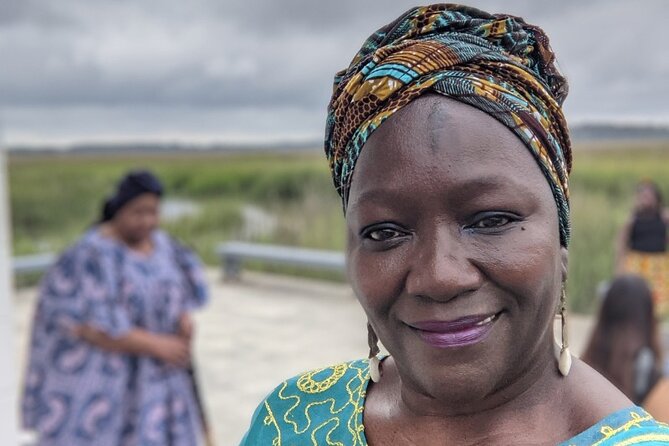
I especially like the Master Gullah Geechee Truth-Teller style. People leave talking about the way Sistah Patt (and guides like Ms. Rosalyn) pair history with humor, context, and a steady, human voice.
One thing to consider: the subject matter is intense. If you’re bringing younger kids or anyone who finds slavery history emotionally heavy, you might want to think hard about timing and expectations.
In This Review
- Key things to know before you go
- Why this tour tells Savannah’s story better than most
- Meeting point and timing: a 3-hour history run on a bus
- River Street: the warehouse economy built on forced labor
- Johnson Square: seeing the auction ground up close
- Second African Baptist Church: freedom as a journey, not a switch
- African American Monument and Laurel Grove Cemetery: memory you can feel
- The guide makes or breaks it: Sistah Patt and Ms. Rosalyn’s styles
- Photo and walking expectations: plan for “see,” not “stroll”
- Who this tour fits best (and who should reconsider)
- Price and value: what $54.78 really buys you
- Quick FAQ (the practical stuff)
- FAQ
- How long is the Savannah Slavery to Freedom guided history tour?
- What sites does the tour include?
- Who narrates the tour?
- Is the tour offered in English?
- How big is the group?
- Are service animals allowed?
- What is the cancellation and weather approach?
- Who should book this tour, and who might skip it?
- Final call: should you book?
Key things to know before you go

- Sistah Patt as the narrator: a Master Gullah Geechee Truth-Teller who connects history, spirituality, and Savannah’s development
- River Street’s warehouse history: learn how enslaved labor helped shape the city’s waterfront economy
- Johnson Square auction ground: see where enslaved people were sold and understand what that location meant
- A bus format with limited exits: you may walk only briefly, so plan to take photos from the road
- African American Monument + Laurel Grove Cemetery: memorial and memory stops that land emotionally
- Small group size: max 32 travelers keeps the tour feeling controlled, not chaotic
Why this tour tells Savannah’s story better than most
Savannah has a pretty postcard side. This is the other side of the city—one that explains how slavery was built into daily life and into the wealth that financed Savannah’s growth.
What makes this tour feel different is the way it’s told. The narration isn’t just facts dumped in order. It’s structured like a story you can follow: where people were taken from, how Savannah used their labor, where auctions happened, and then the hard-to-ignore road toward freedom.
At $54.78 per person for about three hours, it’s not a bargain in the sense of being “cheap.” But it’s strong value when you compare it to what you get: a guided, narrated route through key historic sites, plus context you likely won’t find by reading plaques alone.
You can also read our reviews of more tours and experiences in Savannah.



Meeting point and timing: a 3-hour history run on a bus
Your tour starts at 223 Martin Luther King Jr Blvd, Savannah, GA 31401 and ends back at the meeting point. You’ll ride as part of a group (small, max 32), and the format is built around a bus ride with short stops and street-level context.
This matters for how you plan your day. If you’re hoping for lots of walking and frequent photo opportunities, you may feel slightly limited. In at least one recent experience, guests reported getting out only once—so expect mostly “watch and listen,” with a few chances to step out and look around.
The good news: a bus-based tour keeps the pacing brisk and helps you cover several meaningful locations in one go. Morning and afternoon times are available, so you can fit it into a tight itinerary.
River Street: the warehouse economy built on forced labor
One of the first stops frames the story with a West African lens. You’ll learn about West African tribes that were routed to Savannah and how enslaved labor was used to build the warehouses along River Street.
This is the part of the tour I think you should pay closest attention to. It’s easy to treat slavery history as a separate tragedy, something that happened “somewhere else.” Here, the emphasis is on how the labor fed Savannah’s economy—how buildings, shipping, and money were tied directly to human bondage.
When you’re looking at the waterfront views and historic streets, it helps to keep a mental map: the scenery you enjoy today sat on top of systems designed to profit from captivity. That shift in perspective is what makes the rest of the tour land.
Practical tip: if you want photos, take them when the guide cues the moment. Some angles are better from the street or curbside than from a window seat.
Johnson Square: seeing the auction ground up close
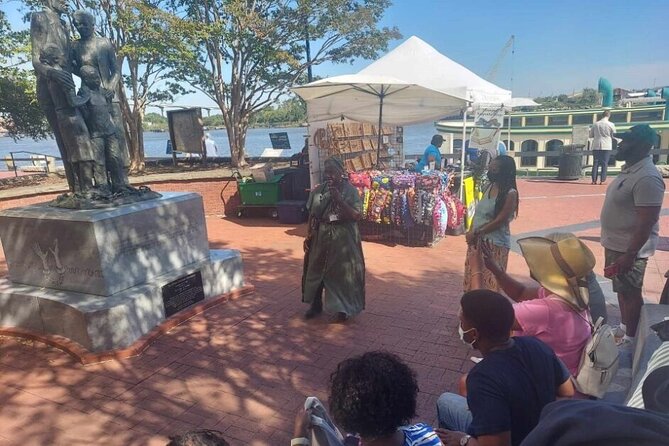
Then the tour moves to Johnson Square, where you’ll learn about where enslaved people were auctioned off. The square isn’t just a pretty landmark here—it becomes a key piece of how the slave trade functioned locally.
If you’re wondering why this place hits harder than a museum exhibit, it’s because the setting is real. You’re standing where sales happened, not where history was placed safely behind glass. Even if you only spend a short time at the stop, the guide’s narration helps you connect the square to the broader system: family separation, forced movement, and the brutal economics of sale.
This is also where the tour’s tone matters. Guides like Sistah Patt are known for balancing truth with a kind of steady spiritual strength—factual, sometimes heartbreaking, but never performative. That balance helps many people process what they’re seeing.
Second African Baptist Church: freedom as a journey, not a switch
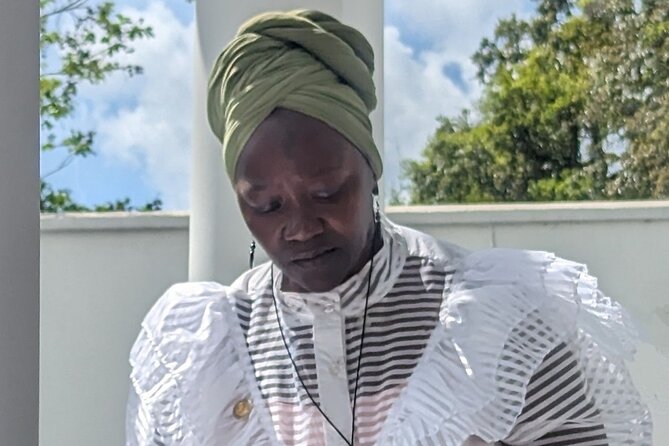
As you board the vehicle and travel through the area, you pass the Second African Baptist Church. The tour uses this stretch to explain the incredible journey to freedom—how freedom wasn’t a single moment, but a route people had to navigate, fight for, and rebuild.
From a visitor’s perspective, this is an important turn. Many history tours either stop at suffering or swing toward celebration too fast. Here, the narration pushes you to hold both realities at once: the cost of slavery and the determination required to reach freedom.
If you like tours that provide architectural and community context, you’ll probably appreciate how this part of the route connects physical Savannah—churches, streets, neighborhoods—with the social story of survival and resistance.



African American Monument and Laurel Grove Cemetery: memory you can feel
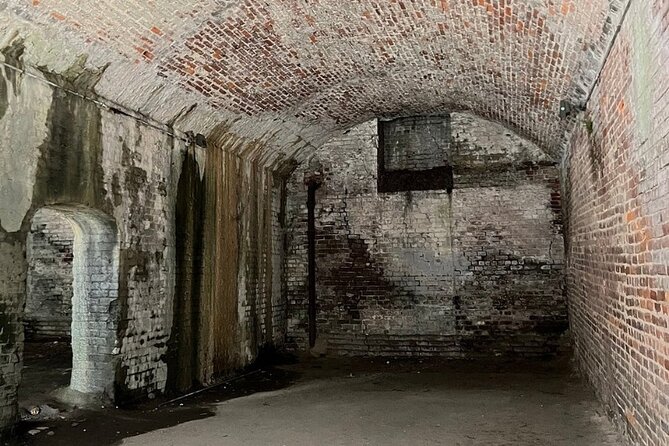
The tour includes stops connected to remembrance: an African American Monument and Laurel Grove Cemetery. These two stops give the experience emotional shape after the heavier street history.
Monuments work differently than buildings. They’re meant to face you. They don’t ask you to imagine; they force attention. In a tour like this, that’s useful because it helps you shift from learning about the past to seeing how the past is held in public memory today.
Laurel Grove Cemetery adds another layer. Cemeteries are places where the story becomes personal without you needing extra explanation. You’re surrounded by the evidence of community life and legacy. Even if you don’t know names going in, the guide’s framing helps you read the place instead of just walking through it.
The guide makes or breaks it: Sistah Patt and Ms. Rosalyn’s styles
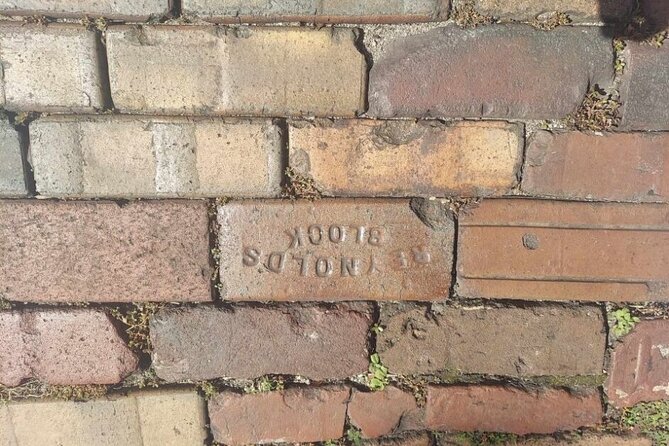
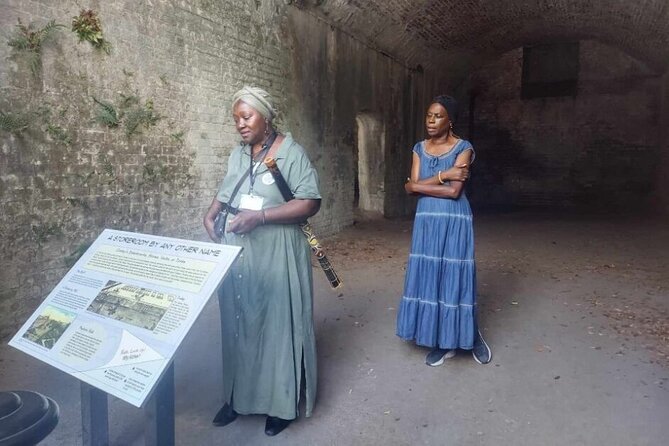
The biggest reason people love this tour is the narration. This experience is facilitated by a Master Gullah Geechee Truth-Teller, and a frequent guide is Sistah Patt.
In reviews and shared experiences, the recurring themes are:
- factual storytelling without padding
- humor used carefully to keep you present, not numb
- interactive moments that keep kids and adults engaged
- context that includes architectural, relational, and spiritual details alongside dates and events
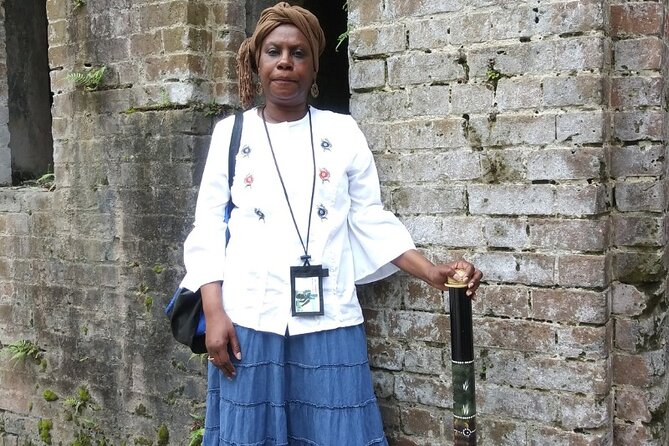
You may also have a different guide on a given day, including Ms. Rosalyn. Either way, the best part is the way the guide turns locations into meaning. Instead of making you memorize facts, the narration helps you understand cause and impact.
That storytelling style is exactly why this is the sort of tour where people say they remember it for days afterward. They don’t just feel informed; they feel oriented.
Photo and walking expectations: plan for “see,” not “stroll”
Because this is a bus-based tour, you’ll want to adjust your expectations about walking. The structure is built to cover multiple sites efficiently, which often means short exits rather than long exploring.
So if you’re the type who likes to spend time wandering, sketching, or taking dozens of angles from street level, you might feel slightly constrained. A smart move is to treat this tour as your “first read” of Savannah’s history, then follow up later with your own slower walk in the areas that sparked your interest.
Also, bring the usual street-smart items: a light layer (Savannah weather can shift), and something small to keep your hands free for your phone while the guide is talking.
Who this tour fits best (and who should reconsider)
This is ideal if you want the real story of Savannah—especially if you care about slavery, African American history, and the way local development was tied to forced labor.
It also works well for families, including older kids. One advantage noted repeatedly is that the guide can keep younger listeners engaged, even when the topics are heavy. That said, not every child handles the emotional weight the same way. If you’re bringing kids in the lower single digits, or you know they struggle with intense historical topics, you might find the experience tough.
If you’re someone who prefers tours that are factual and thoughtful without turning into guilt therapy, you’ll likely appreciate the tone. The goal here is understanding, not blaming the visitor for history they didn’t create.
Price and value: what $54.78 really buys you
At $54.78 per person for roughly three hours, you’re paying for several things at once:
- guided narration by a Master Gullah Geechee Truth-Teller
- multiple historic stops in one coordinated route
- context that connects slavery to Savannah’s growth, not just isolated events
- inclusion of meaningful remembrance sites like the African American Monument and Laurel Grove Cemetery
It can be tempting to compare this to shorter “highlights” tours. But if your real priority is truth and context, longer street-level learning beats a quick drive-by. This tour is built for people who want to walk away able to explain Savannah’s story in a clearer, more accurate way.
Is it expensive? In tourist terms, it’s mid-range. But “value” here is about depth and direction, not minutes.
Quick FAQ (the practical stuff)
FAQ
How long is the Savannah Slavery to Freedom guided history tour?
It runs for about 3 hours. The narrated portion is listed as 2 to 2.5 hours.
What sites does the tour include?
The tour includes River Street, Johnson Square, the African American Monument, and Laurel Grove Cemetery, plus travel past the Second African Baptist Church.
Who narrates the tour?
A Master Gullah Geechee Truth-Teller facilitates the tour. Sistah Patt is commonly listed, and Ms. Rosalyn is also mentioned in experiences.
Is the tour offered in English?
Yes, the tour is offered in English.
How big is the group?
The maximum group size is 32 travelers.
Are service animals allowed?
Yes, service animals are allowed.
What is the cancellation and weather approach?
You can cancel up to 24 hours in advance for a full refund. The experience requires good weather, and if it’s canceled due to poor weather you’ll be offered a different date or a full refund.
Who should book this tour, and who might skip it?
Book it if you want Savannah’s slavery-to-freedom story told clearly, with location-based context and strong narration. It’s also a great choice if you’re a history lover who wants more than surface-level plaques.
Consider skipping (or choosing a lighter day) if you know the topic will be too intense for your group. The tour is built to tell the truth, and that can feel like a lot in a short window.
Final call: should you book?
If your goal is understanding—not just sightseeing—this tour is a smart first choice in Savannah. The route connects River Street, Johnson Square, key community landmarks, and remembrance sites into one coherent narrative.
I’d book it if you can handle heavy topics with care, and if you value a guide who can turn places into meaning. And if you’re traveling with younger kids, aim for a group age where they can listen through history without shutting down.