REVIEW · SAVANNAH
Savannah 101, a History Tour (by Walk With Me Savannah Tours)
Book on Viator →Operated by Walk with Me Savannah Tours · Bookable on Viator
History in Savannah works best when you walk it. This guided loop links the city’s squares, architecture, and major turning points—from cotton wealth to civil war fallout—so the streets start making sense fast. I love that you get a local guide with real personality, plus a tight pace that fits easily into a first day plan. One thing to consider: it’s mostly outdoors and you do need to be comfortable walking between stops.
What I liked most is the way the tour uses each square like a “chapter divider.” One guide highlighted in recent tours, Sandron (and another guide, Sargon), brought energy and made the history feel like it happened right in front of you. I also like the balance of big-picture events (wars, economy, religion) with specific places you can still see—Johnson Square, Reynolds Square, Colonial Park Cemetery, Chippewa Square, and Wright Square.
The main drawback is pacing plus choices. The tour runs about 2 hours and you’ll move from stop to stop, so if you want to linger at houses or churches on your own, you’ll need to do some extra time afterward—especially since the inside house tours at Owens-Thomas House and Green-Meldrim House are not included.
In This Review
- Key things to know before you go
- Savannah’s Squares on Foot: Why This 2-Hour Plan Works
- Johnson Square: Founding Layout and Nathaniel Greene
- River Street and Factors Walk: Cotton Trade, Slave Trade, and Civil War
- Reynolds Square: John Wesley, the Olde Pink House, and Early Experiments
- Owens-Thomas House and Slave Quarters: William Jay and What to Look For
- Colonial Park Cemetery: Burial Practices, Disasters, and Civil War Occupation
- Cathedral of St. John the Baptist: Catholic Roots in Savannah
- Lafayette Square: Electricity, Flannery O’Connor, and Girl Scouts Founder Juliette Gordon Lowe
- Madison Square: The Armory, Scottish Rite, and Sergeant Jasper
- Green-Meldrim House: Innovation, Sherman, and Field Order 15
- Chippewa Square and Wright Square: Oglethorpe, Fires, Savannah Theater, and Juliette Gordon Low
- Price, Time, and Real Value for a First-Time Visitor
- Who Should Book This Tour (and Who Might Prefer Something Else)
- Should You Book Savannah 101 With Walk With Me Savannah Tours?
- FAQ
- How long is the Savannah 101 history walking tour?
- Where does the tour start and where does it end?
- Is the tour mostly free stops or are there paid admissions?
- Do I get a ticket on my phone?
- Is the tour run in good weather only?
- Is this tour suitable for people who need limited walking?
Key things to know before you go
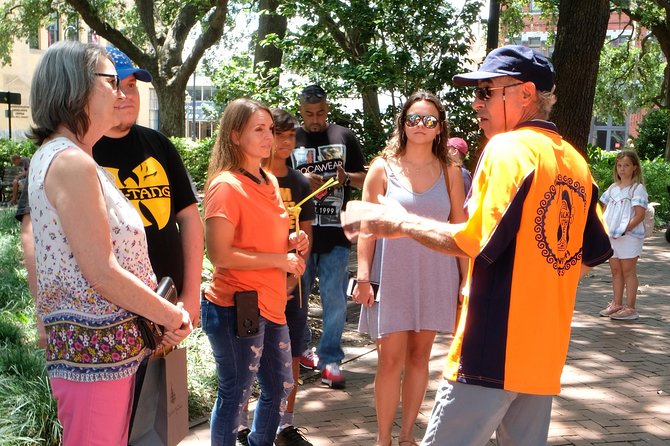
- A smart first-day loop: The route centers on Savannah’s squares and a set of landmark stops that help you understand the city’s layout.
- Architecture with context: You’ll connect building styles to the people and forces behind them, not just list facts.
- War and power show up repeatedly: Union occupation details, Sherman’s residency, and Field Order 15 come up as part of the story, not as random trivia.
- Some stops are walk-bys, some are deep enough: You’ll get quick hits at most squares, with a clearer recommendation for optional house tours.
- Local guide energy matters: Recent guides like Sandron and Sargon were praised for being engaging and entertaining.
- Small group size: The tour caps at 20 travelers, which makes it easier to ask questions without feeling swallowed by a crowd.
Savannah’s Squares on Foot: Why This 2-Hour Plan Works
If you’ve ever looked at a Savannah map and thought, Wait, how does this all connect?—this tour is built for that moment. The format is simple: you walk a route that threads through key squares, then your guide explains how each place ties to the city’s founding, economy, culture, and conflicts.
The value is not in packing in dozens of stops. It’s in picking the right ones. Johnson Square and Wright Square frame the early story. Reynolds, Lafayette, Madison, and Chippewa Square help you see how civic life and architecture evolved. Colonial Park Cemetery and the war-related stops bring the consequences into focus.
You also get flexibility. The tour runs for about 2 hours, and there are different start times so you can fit it into your day. And because you’ll receive a mobile ticket and confirmation after booking, it’s easy to handle even if your schedule is a bit chaotic.
One more practical point: this isn’t a “power walk” tour, but it is real walking. The operator notes it’s not recommended if you can’t walk or roll about 0.25 miles without resting. So if your comfort level is limited, plan your pacing and bring a little extra time.
You can also read our reviews of more tours and experiences in Savannah.



Johnson Square: Founding Layout and Nathaniel Greene
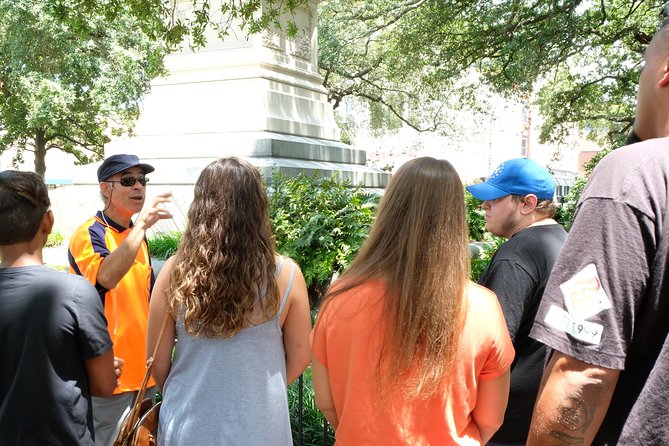
Your tour starts at Johnson Square, one of the best places to get your bearings. Your guide talks about Savannah’s founding and the city layout, which matters because the squares aren’t decoration. They’re part of how the city was planned.
You’ll also hear about Nathaniel Greene and his monument. Greene’s presence in Savannah history can be easy to miss if you’re just sightseeing, but on this walk, it becomes part of the bigger Revolutionary War story your guide is weaving.
What makes this stop useful: it sets up the tour’s core theme—Savannah’s physical design reflects its political and economic ambitions. Once you understand the squares as “structure,” everything else on the route lands better.
Potential drawback: this is a starting point, so it’s easy to be slightly distracted while you orient yourself. If you’re the kind of person who stops for photos first and listens second, try to reverse that order here.
River Street and Factors Walk: Cotton Trade, Slave Trade, and Civil War
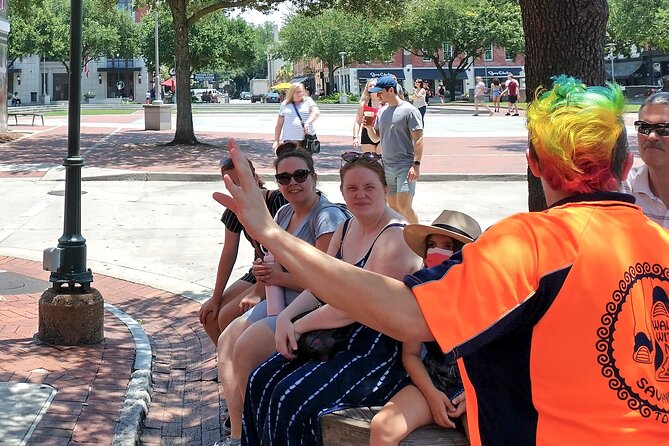
After Johnson Square, the tour shifts from “founding” to “what drove the city.” Your guide covers Factors Walk and River Street as the center of the Georgia cotton trade, and how that wealth connected to the slave trade and the civil war.
This is where the tour becomes more than architecture viewing. You start to see the city’s prosperity and suffering as linked. You also get a framework for understanding why so many later events, laws, and conflicts played out the way they did.
This section also helps you later when you’re walking outside the tour route. When you see warehouses, riverfront remnants, or the geography of the streets, you’ll have context for why certain areas mattered.
Reynolds Square: John Wesley, the Olde Pink House, and Early Experiments
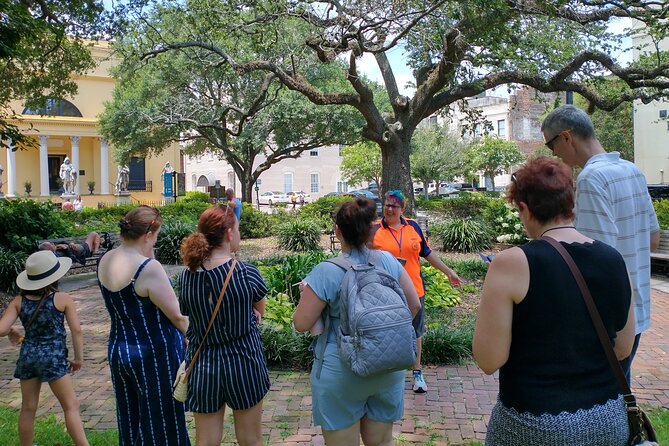
Next up is Reynolds Square, another key square that helps you understand Savannah’s evolving character. Your guide brings in several threads:
- John Wesley, as part of the religious and cultural history that shaped parts of the colony
- The Olde Pink House, tied to architecture and how people lived and worked around it
- Early agricultural experiments in Georgia, which grounds the story in how the colony tried to build an economy
Even if you’re not a “religion history” person, the Wesley connection works because it connects beliefs to day-to-day life and institutions. And the agricultural angle is helpful because it reminds you the story isn’t just about ships and money—it’s also about land, labor, and what people tried to grow.
A small timing reality: this is a quick stop (about 10 minutes), so don’t expect every detail to feel fully explained. Instead, think of it as a map to guide what you choose to read or revisit afterward.
Owens-Thomas House and Slave Quarters: William Jay and What to Look For
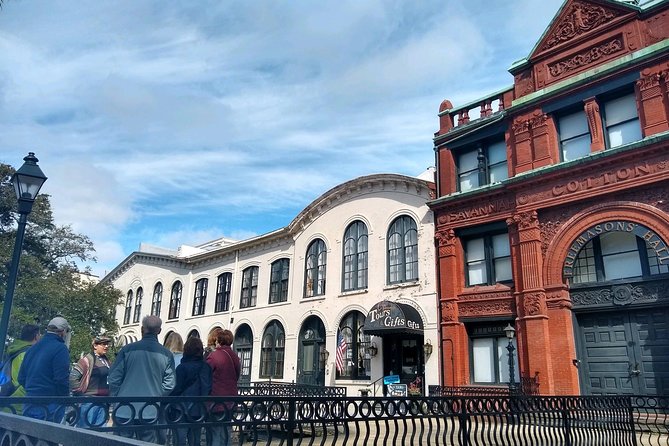
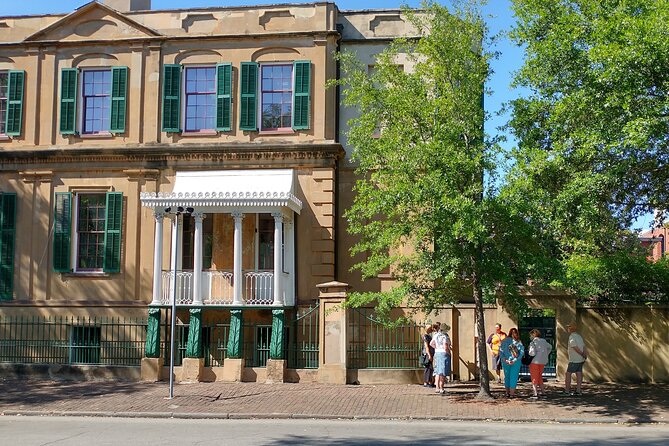
At Owens-Thomas House & Slave Quarters, your guide focuses on architecture—including the role of architect William Jay—and what you can learn from the way these spaces were built and used. This stop is also a clear signal that the tour route is setting you up for deeper understanding.
The inside tour is highly recommended, but it’s not included. Still, the outdoor conversation matters because it gives you a checklist of what to notice later: how design reflects hierarchy, and how living spaces and service areas relate to each other.
Why this matters for your experience: if you can add the house tour later the same day, your notes from the walking part become a shortcut. You’ll know what to pay attention to when you’re standing inside, not just wandering around.
Practical consideration: if you can’t or don’t want to add the house tour, try to ask your guide one or two focused questions at this stop. You’ll get more out of the architecture explanation when you connect it to what you actually care about.




Colonial Park Cemetery: Burial Practices, Disasters, and Civil War Occupation
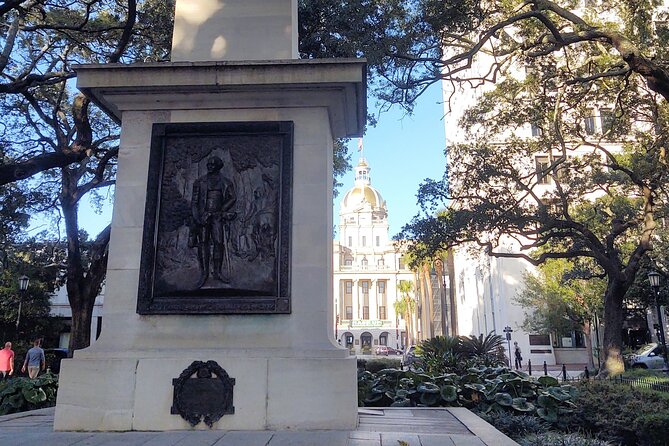
Colonial Park Cemetery is one of the more serious stops on the route, and it earns that weight. Your guide talks about how Savannah treated cemeteries and covers common burial practices. You’ll also hear about disasters that struck the city.
Then comes an important historical pivot: the Union occupation of Savannah during the Civil War. Cemeteries can look like quiet backdrops when you’re just passing by. Here, they become evidence of how conflict reaches ordinary life and leaves long records.
What makes this stop valuable: it adds emotional realism. The tour has economic and political content, but this is where you feel the human side—how people organized grief, memory, and community.
Timing note: you’ll spend around 10 minutes here, so you won’t be doing a slow cemetery “wander.” If you’re the type who likes to read every marker, you may want to plan a separate visit afterward.
Cathedral of St. John the Baptist: Catholic Roots in Savannah
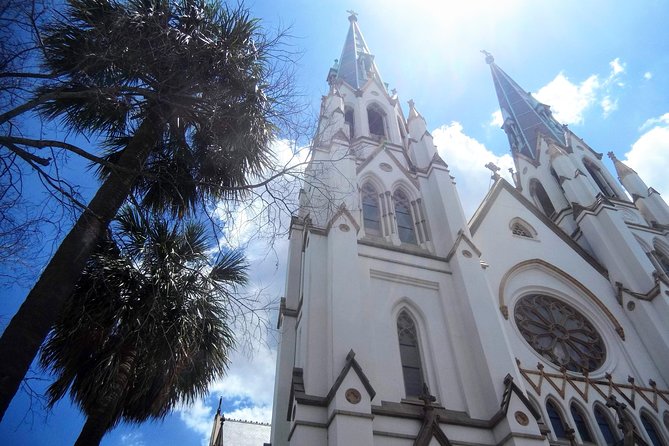
At the Cathedral of St. John the Baptist, your guide discusses Savannah’s Catholic congregations and the construction history of the cathedral. You’ll also get a quick spotlight on some features of the building.
This stop matters because Savannah’s story is not only Revolutionary War and riverfront trade. Religion shaped education, community identity, and architecture styles. Even a short explanation can help you stop treating churches as scenery and start reading them as history.
This is a brief stop (about 5 minutes), so keep your eyes open for whatever the guide points out. If the guide mentions a specific detail, that’s usually the detail you’ll want to remember when you see similar features elsewhere.
Lafayette Square: Electricity, Flannery O’Connor, and Girl Scouts Founder Juliette Gordon Lowe
Lafayette Square connects you to several “big name” stories without turning the tour into a trivia game. Your guide covers:
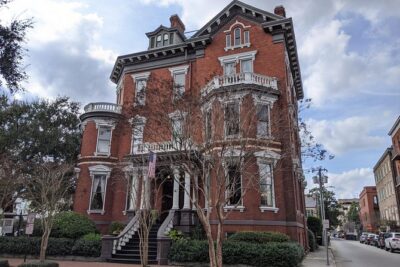
- The Hamilton-Turner Inn, noted as the first home in Savannah to have electricity
- Architectural features tied to that era of change
- Flannery O’Connor, including her childhood home
- Juliette Gordon Lowe, including her adulthood home and her role as the founder of the Girl Scouts
This is one of the stops that makes Savannah feel like a real place people grew up in, not just a stage set for older events.
Why I think it’s a highlight: Savannah isn’t only famous for colonial squares. It’s also a home for writers and community builders. When you hear O’Connor’s connection, and then jump to Lowe, you understand how the city’s identity carried forward into the 20th century.
Madison Square: The Armory, Scottish Rite, and Sergeant Jasper
At Madison Square, your guide continues the architecture thread and brings in Revolutionary War hero Sergeant Jasper.
You’ll hear about the Savannah Volunteer Guards’ Armory, the Scottish Rite Temple, and the Jasper monument and moments of valor in the Revolutionary War.
This stop is short (about 5 minutes), but it helps you connect civic institutions to the larger political story. Savannah’s squares aren’t just “pretty.” They’re where social and military life left marks.
Quick tip: If you’re into architecture, take a second here to notice the building shapes and materials. Even though you only get a short talk, your eyes will start grouping buildings by style and purpose.
Green-Meldrim House: Innovation, Sherman, and Field Order 15
Green-Meldrim House is another major turning point in the narrative. Your guide highlights innovative architecture and also covers the house’s connection to Sherman’s residency during the Union occupation of Savannah.
Then there’s the heavier historical piece: Field Order 15 and how it impacted black communities both before and after its repeal.
This stop is not included as a house admission in the tour itself. Like Owens-Thomas, the inside experience is not included. But the outdoor explanation makes the history behind the walls much clearer if you later choose to tour.
Why Field Order 15 matters to the overall tour: it shows how a city can look stable on the surface while huge policies reshape lives. If you want history with consequences, this is the part that delivers.
Timing note: you’ll likely spend around 10 minutes here, so you won’t get every detail. Still, you should leave with enough context to understand why this house is tied to such a specific moment in time.
Chippewa Square and Wright Square: Oglethorpe, Fires, Savannah Theater, and Juliette Gordon Low
The last stretch is a strong finish because it pulls together politics, culture, and biography.
At Chippewa Square, your guide discusses Savannah founder Oglethorpe and his approach to governing the colony of Georgia. You’ll also hear the implications of Savannah’s beginning as a non-royal colony—a detail that helps you understand why local civic life took shape the way it did.
Your guide also touches on the history of fires in Savannah, along with references to the Savannah Theater and the Independent Presbyterian Church. That mix—governance plus disasters plus culture—keeps the city feeling like a lived-in place, not just a museum footprint.
Then the tour ends at Wright Square, where your guide focuses on Juliette Gordon Low and her childhood home, along with her extended family and their accomplishments. The route also covers the historical use of the lots around Wright Square and the impact of Tomochichi and Mary Musgrove.
You’ll finish one square away from where you started. Your guide can direct you back to where you need to go or call a bicycle cab.
Practical advantage: ending near your starting area makes the whole day simpler. If you want to continue exploring on foot, you’re already positioned well.
Price, Time, and Real Value for a First-Time Visitor
At $40 per person for about 2 hours, this tour is priced like a solid, focused walking experience. You’re paying for a local guide to connect dots you’d otherwise miss—especially between squares, buildings, and the political/economic forces that shaped Savannah.
What makes it feel like good value is the structure: the route hits major story points without dragging you across the whole city. For many first-timers, that “orientation + context” is worth more than a long tour with too many stops.
Also, the group cap of 20 travelers helps keep the experience conversational. And if you happen to book at a time when the group is smaller, you’ll likely get more back-and-forth with your guide.
Who Should Book This Tour (and Who Might Prefer Something Else)
This one fits best if you:
- Like history and architecture and want them connected
- Are visiting for a short time and want to get oriented fast
- Want a guide who can explain why certain buildings and squares matter
It’s also a reasonable choice if you enjoy tours led with energy. In recent experiences, guides like Sandron and Sargon were praised for being engaging and enthusiastic.
You might want to skip or supplement this tour if you:
- Want a super-slow crawl through interiors. The outside walking is the main event, and the recommended house tours are not included
- Are not comfortable with frequent outdoor stops. Weather matters here, and the operator notes the experience requires good weather
Should You Book Savannah 101 With Walk With Me Savannah Tours?
If you’re planning a first trip to Savannah, I think this tour is a strong buy. It’s not trying to do everything. It’s doing the right things: giving you a clear route through key squares, naming the people and forces behind the buildings, and explaining how war, trade, and social change shaped the city.
Book it if you want structure for your day—so later wandering feels purposeful. Skip it or add house tours separately if you need lots of indoor time. Either way, this walk will leave you better at spotting meaning in Savannah’s streets, not just seeing pretty corners.
FAQ
How long is the Savannah 101 history walking tour?
The tour is about 2 hours long.
Where does the tour start and where does it end?
It starts at Johnson Square in Savannah and ends at Wright Square.
Is the tour mostly free stops or are there paid admissions?
Many stops are listed as free, but house tours at Owens-Thomas House & Slave Quarters and Green-Meldrim House are not included. Your guide provides context at those stops, and the inside tours would be an add-on.
Do I get a ticket on my phone?
Yes. The experience uses a mobile ticket.
Is the tour run in good weather only?
Yes. The tour requires good weather. If it’s canceled due to poor weather, you’ll be offered a different date or a full refund.
Is this tour suitable for people who need limited walking?
It’s not recommended for those who cannot walk or roll about 0.25 miles without resting. Service animals are allowed, and well-behaved pets are also allowed.