REVIEW · CURACAO
Costumizable Private Jewish Heritage Tour Experience
Book on Viator →Operated by Curaçao VIP (Private) Tour Guide & Taxi 160 · Bookable on Viator
Jewish Curaçao has real street-history power. This private 3-to-4-hour tour traces the island’s Jewish community from 1651, starting at Mikve Israel-Emanuel and then moving through key sites that help you see the story with your own eyes.
I love the small private group (up to four people) and the low-stress logistics: hotel pickup options, bottled water, and parking fees included.
One thing to plan for: you’ll pay extra entrance fees at some stops, and the synagogue/museum site requires photo ID. A few locations also include stairs.
In This Review
- Key moments worth knowing
- Getting to the sites: pickup, 9:00 am start, and a mobile ticket
- Price and value: $520 per group, then entrance fees
- Stop 1: Mikve Israel-Emanuel Synagogue and Jewish Museum Curacao
- Stop 2: Landhuis Rooi Catootje at Mongui Maduro Museum
- Stop 3: Beit Hayim Cemetery and the 1659 consecration
- Stop 4: Landhuis Chobolobo and the Curacao Liqueur Distillery stop
- The Ashkenazi social story: Club Union in 1932 and Shaarei Tsedek in 1959
- How the private format changes your day (and how to use it)
- What to bring (so the morning stays smooth)
- Who this tour fits best
- Should you book? My take
- FAQ
- How many people are in the private tour?
- How long does the Jewish Heritage Tour last?
- What is included in the $520 price?
- Are entrance fees included?
- Does the tour offer hotel pickup?
- What time does the tour start, and where does it meet?
- Do I need photo ID?
- What happens if the weather is bad?
- Is there free cancellation?
Key moments worth knowing
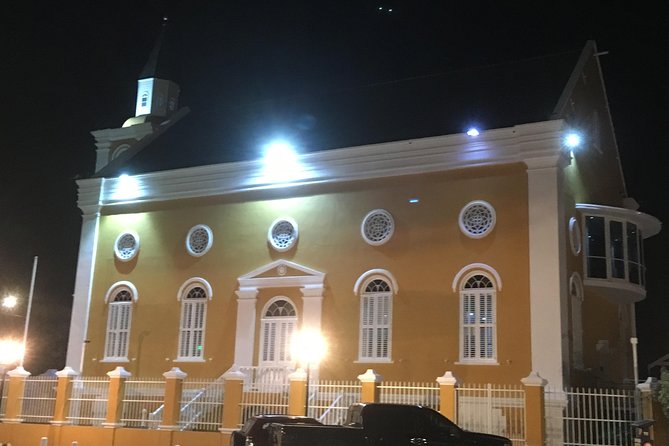
- Up to 4 people, private pacing so you can ask questions and linger when something clicks
- Photo ID required for entry at the Mikve Israel-Emanuel synagogue museum
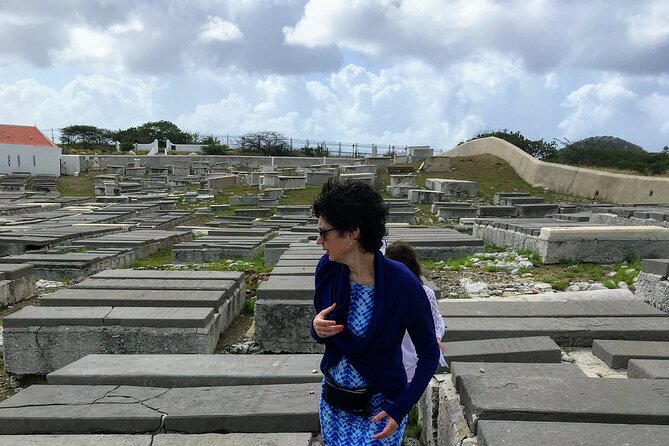
- Beit Hayim Cemetery is free and consecrated in 1659, noted as the oldest Jewish cemetery on Curaçao and the oldest in the Western Hemisphere
- Ashkenazi Jewish community timeline explained, including a social club founded in 1932 and a permanent synagogue named Shaarei Tsedek from 1959
- A mix of sacred and everyday history: synagogue, plantation-house museum, cemetery, and the Landhuis Chobolobo distillery stop
- Flexible timing with a friendly guide (people often mention great communication and patience)
Getting to the sites: pickup, 9:00 am start, and a mobile ticket
This is built for convenience. The tour meets at 4499+V3 Willemstad (and it ends back there), with a start time of 9:00 am. You’ll also have options for multiple departure points, including hotel pickup, which matters a lot if you don’t want to spend your morning figuring out drives, parking, and “where exactly is that entrance?”
You’ll also get a mobile ticket, which helps you avoid last-minute paperwork chaos. In real terms, that means you can focus on the sites, not on hunting down confirmations or scrambling for the right order of things.
If you want the day to flow smoothly, this early start is a good call. You’re visiting places that reward calm attention—especially the synagogue museum and the cemetery—so arriving before the day gets hot and busy makes the visit feel more respectful and easier to enjoy.
You can also read our reviews of more tours and experiences in Curacao.
Price and value: $520 per group, then entrance fees
The headline price is $520 per group for up to four people. That’s not cheap on paper, but it can be fair value because it buys you a private, guide-led route instead of sharing time with strangers and waiting for a bus.
Here’s the practical math:
- If you have 2 people, you’re paying $260 per person for the tour service.
- With 3 people, it’s about $173 per person.
- With 4 people, it comes down to $130 per person for the guide, pickup, bottled water, and parking.
Then add the site admissions (not included):
- Mikve Israel-Emanuel Synagogue / Jewish Curaçao Museum: $18 per person
- Mongui Maduro Historic House Museum: $10 per person
- Beit Hayim Cemetery: free
- Curacao Liqueur Distillery (Landhuis Chobolobo): free
For kids: the paid admission includes a 4–13 rate of $9, and 0–3 is free entrance (as stated for the synagogue/museum admission).
So the tour is “tour-cost plus site-cost.” The upside is that two of the stops are free, which helps keep your day from turning into a fee parade. The key is to budget for the synagogue museum and the Mongui Maduro museum—those are the big-ticket admissions.
Stop 1: Mikve Israel-Emanuel Synagogue and Jewish Museum Curacao
Your first stop sets the tone. This is the Mikve Israel-Emanuel complex, consecrated in 1732. It’s also tied to the Mikve Israel synagogue building being the oldest synagogue building still standing and in continuous use (that’s the kind of fact that hits harder when you’re standing in front of the place).
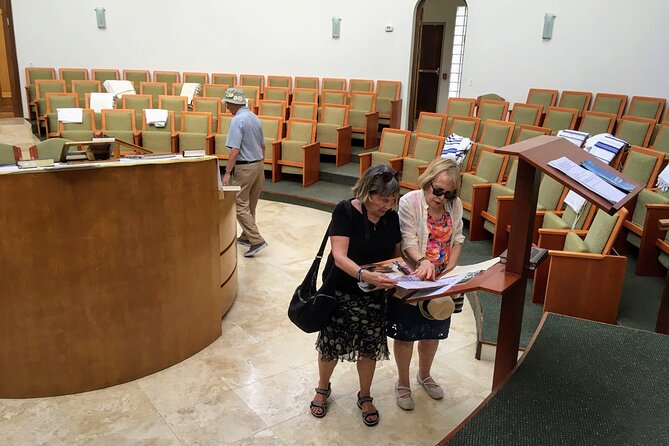
There’s one non-negotiable planning item: you need photo ID to enter the Jewish Museum Curaçao. If you forget it, you can lose time (and your momentum).
Admission for the synagogue museum is $18 per person. The time you spend here is about 1 hour, and that’s plenty if you pace yourself. The value of starting here is simple: you get grounding. You learn the community’s early roots, and you get a sense of how religion, identity, and community structures took hold on Curaçao.
Also, the tour focuses on interpretation, not just facts. You’re not only looking at buildings—you’re being guided to understand what those spaces meant for daily life and community continuity.
Stop 2: Landhuis Rooi Catootje at Mongui Maduro Museum
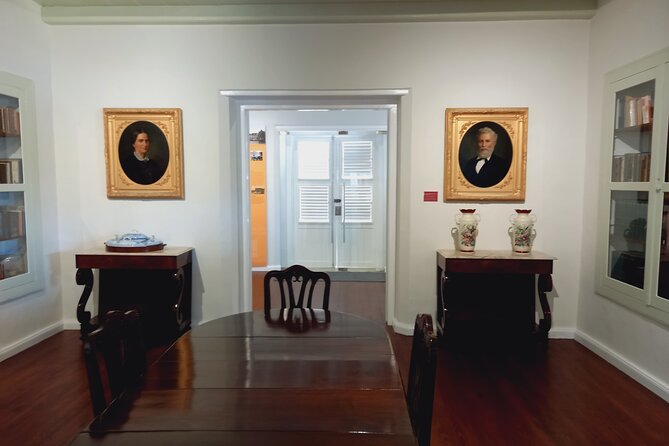
Next you move to Mongui Maduro Historic House Museum. This stop lives inside Landhuis Rooi Catootje, an early 19th-century plantation house—a big shift from religious and memorial sites into a “how life was organized around the island’s economy and estates” type of experience.
Your time here is about 30 minutes, and admission is $10 per person.
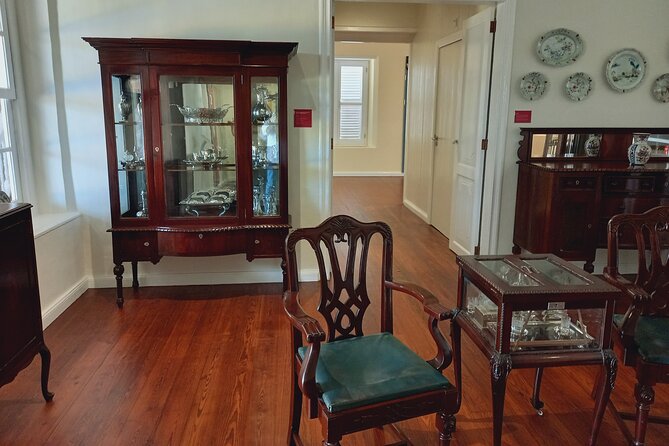
What you’ll want to pay attention to: the museum includes antique furniture and other historic objects. That mix makes the visit feel less like a lecture and more like you’re stepping into a period room. Even if you’re primarily here for Jewish heritage, this stop helps explain the wider setting. Communities don’t live in a vacuum; they live among the island’s institutions, homes, labor patterns, and social spaces.
One drawback to note: the pace is set for a tour, not a slow museum day. If you love furniture and want more time to read everything, you might wish you had longer than the typical half hour. The private format can help, but you still have the overall route to fit.
Stop 3: Beit Hayim Cemetery and the 1659 consecration
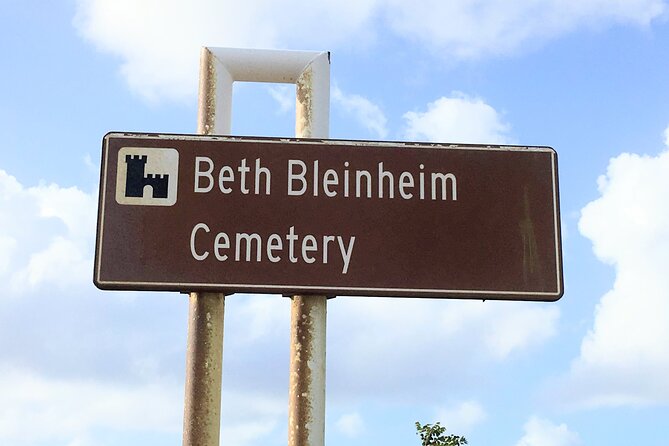
Then comes the stop that most people remember for its quiet power: Beit Hayim Cemetery. It’s connected to Mikvé Israel and was consecrated in 1659. The cemetery is noted as the oldest Jewish cemetery on Curaçao and also the oldest in the Western Hemisphere.
The time is short—about 10 minutes—and the good news is that entry is free.
Because this is a burial site, your best approach is simple: slow down when you arrive. Don’t rush to the “next thing.” Let yourself notice names, dates, and the sense of continuity. Even a brief visit can feel meaningful when you approach it with the right pace.
Also, this stop works well even if your group’s attention span varies. You don’t need to be an expert on Jewish history to understand what you’re looking at. The cemetery does the storytelling for you.
If you’re sensitive to heat or sun, plan for it. Ten minutes sounds easy, but outdoor memorial spaces can feel intense on Curaçao in the middle of the day. Morning timing helps.
Stop 4: Landhuis Chobolobo and the Curacao Liqueur Distillery stop
After the cemetery, you’ll head to the Curacao Liqueur Distillery, also known as the Home of the Genuine Curacao Liqueur, set in Landhuis Chobolobo—a well-known 19th-century country mansion. This stop is about 15 minutes, and entry is free.
This part of the route is useful because it connects the story of people to the story of place. Landhuis buildings are part of the island’s material history: estates, ownership patterns, and the way different economic activities shaped community life.
You’re not expected to leave with a liquor masterclass. The value is the perspective: you’re moving through Curaçao’s physical history, then returning to Jewish heritage themes in a broader context. That helps the day feel more like a coherent narrative rather than a list of separate attractions.
The Ashkenazi social story: Club Union in 1932 and Shaarei Tsedek in 1959
One of the best parts of this tour is the way the guide explains the internal shifts inside the Jewish community, especially the Ashkenazi side.
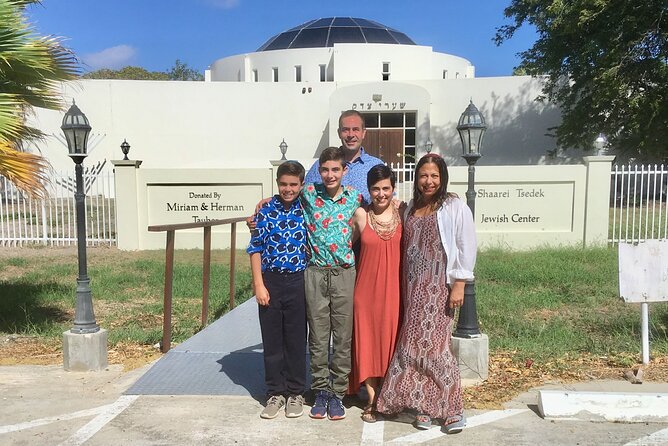
You’ll learn that in 1932, Ashkenazi Jews founded a social center (Club Union) and also a sports club. Then, later, a permanent synagogue didn’t appear until 1959, when it was called Shaarei Tsedek (Gates of Righteous… as named on the tour materials).
That timeline is more than trivia. It gives you an honest snapshot of how communities adapt. A social center and sports club can be a bridge when a full religious infrastructure isn’t ready yet. Then, when things stabilize, the community moves toward a permanent synagogue.
It’s also a reminder that Jewish life on Curaçao wasn’t frozen in the 1600s. This story continues, changes, and builds new institutions over time.
And because the format is private, you can ask follow-up questions like: Why did it take time for a permanent synagogue? How did social life and religion overlap? A guide can steer these answers in a way a group bus tour usually can’t.
How the private format changes your day (and how to use it)
This is where the tour shines. It’s private for just your group, up to four people, which means no “everybody ready in 5 minutes” pressure.
In practice, that can show up in small ways:
- you can spend extra time where you’re interested
- you can ask questions as they come up, instead of saving them for the end
- you can adjust pacing if someone needs a break
People also mention side stops like shopping or gelato. I can’t promise a detour every single time, but the private nature means the guide can often fit short extras when it makes sense.
A few bookings have also included the chance to meet a Lubavitcher rabbi. That’s not something you can put on your calendar like a train arrival, but it’s an example of how personal and human the experience can feel when the right connections line up.
One practical note: you may encounter staircases at some sites. If stairs are an issue for you, tell your guide early. It’s much easier to handle in the planning stage than once you’re already at the door.
What to bring (so the morning stays smooth)
You only need a few basics, but they matter:
- Photo ID for the Jewish Museum / synagogue entry
- Comfortable shoes, since some stops involve stairs
- A little flexibility for weather. The experience requires good weather, so if conditions are poor, you’ll be offered a different date or a full refund
- Sun protection, especially for outdoor memorial time at the cemetery
Good news: bottled water is included, so you don’t have to hunt for it mid-route. And parking fees are covered, which makes the whole day feel easier on your brain.
Who this tour fits best
This works especially well if you want:
- a focused private route instead of a crowded day
- a story-driven approach to Jewish heritage in Curaçao
- time at both sacred and everyday context sites—synagogue museum, plantation-house museum, cemetery, and the distillery stop
- a guide who will be patient while you ask questions and adjust timing
It may be less ideal if you want a long, slow museum day at one location. The route is structured to cover several key stops in 3 to 4 hours, so it’s efficient. The upside is you leave with a full picture; the downside is you don’t get hours at a single gallery room.
Should you book? My take
I’d book this if your goal is a meaningful first pass at Jewish Curaçao—one that connects institutions, people, and time periods without making you wade through facts on your own.
The value is strongest when you’re traveling as a small group (because the $520 group price spreads out) and when you’re comfortable paying a couple admissions for the synagogue museum and Mongui Maduro. If you’re staying in Willemstad and want pickup, that convenience alone can tilt the decision.
One final check before you go: make sure everyone in your party has photo ID ready. It’s the one detail that can create friction if it’s missing.
If you’re aiming for thoughtful sightseeing with a private guide and you care about history beyond postcards, this is the kind of tour that turns Curaçao into a place with context.
FAQ
How many people are in the private tour?
The tour is private for your group of up to four people.
How long does the Jewish Heritage Tour last?
It runs for about 3 to 4 hours.
What is included in the $520 price?
Bottled water and parking fees are included, and you’ll have a private tour experience with pickup options and a mobile ticket.
Are entrance fees included?
No. Entrance is not included for Mikve Israel-Emanuel Synagogue/Jewish Curaçao Museum ($18 per person) and Mongui Maduro Historic House Museum ($10 per person). Beit Hayim Cemetery and the Curacao Liqueur Distillery stops are listed as free.
Does the tour offer hotel pickup?
Yes. There are multiple departure points available, including hotel pickup.
What time does the tour start, and where does it meet?
The start time is 9:00 am, and the tour meets at 4499+V3 Willemstad, Curaçao. It ends back at the meeting point.
Do I need photo ID?
Yes. Participants need to show photo ID to enter the Jewish Museum Curaçao.
What happens if the weather is bad?
The experience requires good weather. If it’s canceled due to poor weather, you’ll be offered a different date or a full refund.
Is there free cancellation?
Yes. You can cancel for a full refund up to 24 hours in advance of the experience’s start time.