REVIEW · ANURADHAPURA
Anuradhapura ancient city tour with Travandgo tours
Book on Viator →Operated by Ashan Sri Lanka Tours · Bookable on Viator
Quick mornings work best in Anuradhapura, and this tour is built for that. You get an air-conditioned ride plus a tight route covering classic stops like Jaya Sri Maha Bodhi and major dagobas, with extra time spent at lesser-seen spots along the way. Two things I really like: the driver’s flexibility to swap in quieter sites if you’ve already been to some temples, and the practical pacing that keeps the temples from feeling rushed. One consideration: several stops have admission tickets not included, so you’ll want to plan for extra cash on the day.
You’ll start at 8:00 am and move through 4–6 hours of Buddhist architecture, from stupa complexes to carved details like moonstones and Kuttam Pokuna (Twin Ponds). It’s a private tour, so only your group rides together, and you’ll have pickup offered as well. Still, because the tour lists a moderate fitness level, you should expect some uneven walking around sites like ruins and temple grounds.
In This Review
- Key highlights worth aiming for
- Price and ticket reality for a $25 Anuradhapura morning
- How the 8:00 am schedule keeps you moving without feeling frantic
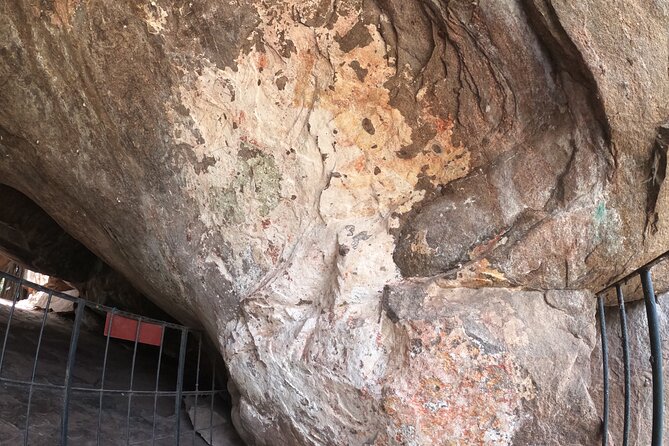
- Isurumuniya Vihara and Vessagiriya: starting with the temple-and-ruin vibe
- Jaya Sri Maha Bodhi and Mirisawetiya Dagaba: big sacred points on a tight clock
- Ruwanwelisaya and Thuparama: two major dagobas with different roles
- Abhayagiriya Stupa, Samadhi Statue, and Kuttam Pokuna: where the details start to pay off
- Why the driver’s flexibility is a real advantage in Anuradhapura
- Who this tour suits best (and who might not love it)
- Should you book this Travandgo-style Anuradhapura tour?
- FAQ
- How long is the Anuradhapura ancient city tour?
- What time does the tour start?
- Is pickup offered?
- Is this a private tour?
- Is an air-conditioned vehicle provided?
- Are admission tickets included for all stops?
- Do I get a mobile ticket?
- What fitness level do I need?
- Can I cancel and get a full refund?
Key highlights worth aiming for
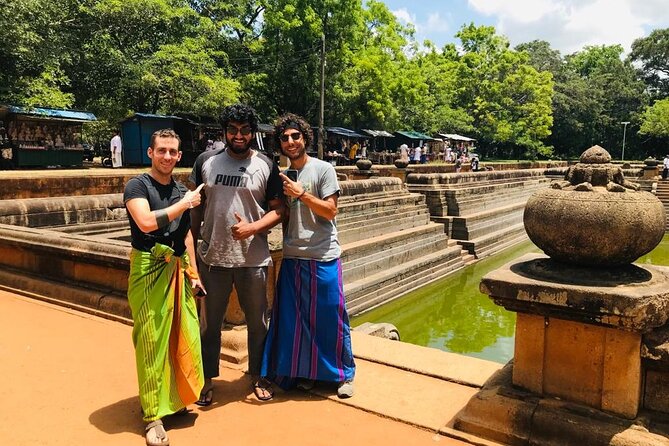
- Driver flexibility to replace some stops with lesser-known sites when you already saw certain temples
- AC vehicle + parking fees included, so your day stays smoother
- A focused Anuradhapura route hitting big names like Jaya Sri Maha Bodhi and Ruwanwelisaya
- A mix of free and ticketed stops, meaning your costs can stay reasonable
- Photo help at the last site, including taking photos and sending them
Price and ticket reality for a $25 Anuradhapura morning
At $25 for a 4 to 6 hour private tour, the value comes from what’s included in the price, not just the route. You get an air-conditioned vehicle and parking fees, and that matters in Anuradhapura because you’re doing multiple stops rather than one. You also get a mobile ticket, which is easy if you prefer not to fuss with paper.
What is not included is lunch, so plan on grabbing something after your last stop. The bigger “budget variable” is admissions: the itinerary shows several stops where admission tickets are not included, while a couple are marked free. In practical terms, you should assume you’ll pay something along the way even if parts of the tour are low-cost.
The good news is the price is still low enough that even with a few entrance fees, it often beats paying for separate tickets plus separate transport. If you’re trying to see the major monuments without spending half a day negotiating rides, this format makes sense.
You can also read our reviews of more tours and experiences in Anuradhapura.

How the 8:00 am schedule keeps you moving without feeling frantic
This tour is designed as a morning block. It starts at 8:00 am, runs about 4 to 6 hours, and includes pickup and transport between stops. Each location has a listed time window (often 10 to 30 minutes), so you’re not sitting in the vehicle too long, but you’re also not expected to spend hours at a single site.
That “short stop” approach is ideal when:
- you want the main sites in one go
- you’re trying not to burn your whole day
- you like a clear route with someone else handling the driving
The tradeoff is that it’s not a slow, sit-down exploration. If you want to linger for long photo sessions at every dagoba, you might feel a little time pressure. Still, the route has enough variety that you’ll get a sense of the bigger Anuradhapura picture rather than bouncing around randomly.
Isurumuniya Vihara and Vessagiriya: starting with the temple-and-ruin vibe
You begin near Isurumuniya Vihara, described as the common name for Meghagiri Vihara. The tour notes it lies close to Tissa Wewa of Anuradhapura, and it also points out an interesting naming detail: the original Isurumuni Vihara is said to be a few hundred metres away and is now called Vessagiri Vihara.
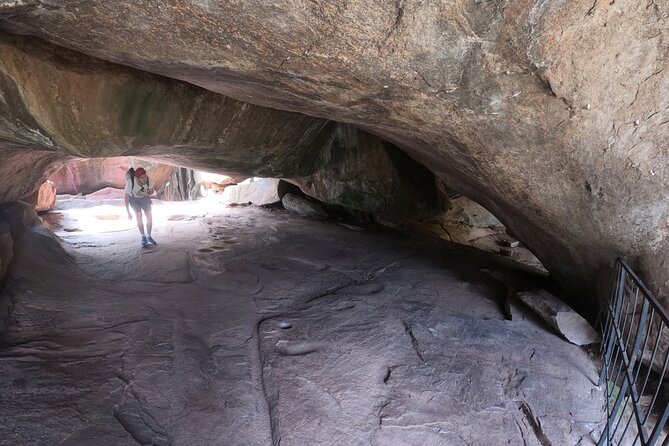
That’s a great way to start because you’re not only seeing a religious site—you’re learning how places relate to each other in the broader complex. Then you move to Vessagiriya Ruins, located a few hundred metres to the left of the current Isurumuniya on the old Anuradhapura–Kurunegala road. The tour description highlights that this temple complex sits around three boulder formations across a large area.
Two practical reasons this start works:
- You get a mix of temple and rock-formation scenery early, so the day feels different rather than repetitive.
- The stop at Vessagiriya is marked admission free, which helps you start your day with less ticket hassle.
If you’re the kind of person who likes details, the names and how they overlap (Isurumuniya vs Vessagiri) give you something real to hold onto.
Jaya Sri Maha Bodhi and Mirisawetiya Dagaba: big sacred points on a tight clock
Next comes Jaya Sri Maha Bodhi. The tour description connects the site to the arrival of Buddhism in Sri Lanka and names Emperor Asoka and Theri Sanghamitta, who came with a branch of the Sacred Bodhi obtained from the main stem in Bodh Gaya (as described). Even if you don’t go deep into the story on-site, the naming and the emphasis on the sacred-bodhi lineage give context for why this place matters.
After that, you head to Mirisaveti Stupa (Mirisawetiya Dagaba). This one is marked with admission free, and the tour notes it was built by King Dutugamunu (161–137 BC) and belongs to the Mahavihara Complex. It also includes a detail about King Dutugamunu defeating Tamil invaders who ruled for 30 years, bringing the narrative into a specific historical framing.
This pairing—sacred tree site plus a major stupa—helps your understanding because it shows two different “forms” of Buddhist heritage: living sacred tradition (as described for the Bodhi branch) and monumental relic architecture (as described for the stupa).
Ruwanwelisaya and Thuparama: two major dagobas with different roles
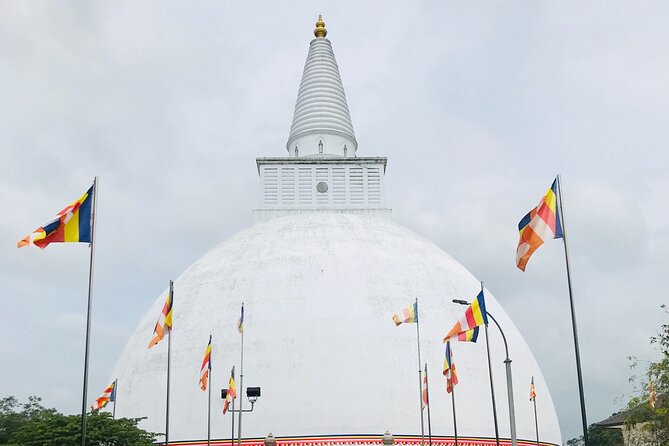
You then visit Ruwanwelisaya (Ruwanweli Maha Seya / Mahathupa), described as a stupa with a hemispherical structure containing relics. The tour specifically notes that two quarts or one Dona of the Buddha’s relics are enshrined in the stupa. If you want one “anchor” stop where everything starts to feel like one huge ancient complex, this is it.
After Ruwanwelisaya, you go to the Dagoba of Thuparama. The description calls it the first stupa built in the country after the introduction of Buddhism to Sri Lanka, constructed during King Devamnampiyatissa (250BC – 210BC). It also mentions that Thuparama wasn’t only a stupa—it included an Aramic complex (monastery), which adds another layer: you’re not just looking at a relic container, you’re seeing the idea of religious living spaces.
If you’re hoping to understand the architecture as a system (stupa + monastic life), Thuparama’s note about the monastery component helps.
Abhayagiriya Stupa, Samadhi Statue, and Kuttam Pokuna: where the details start to pay off
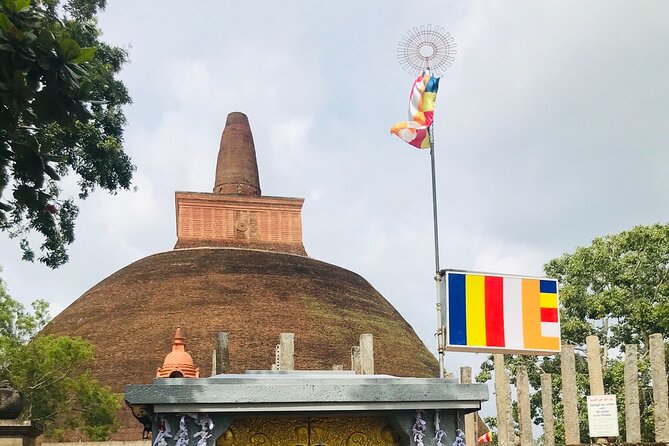
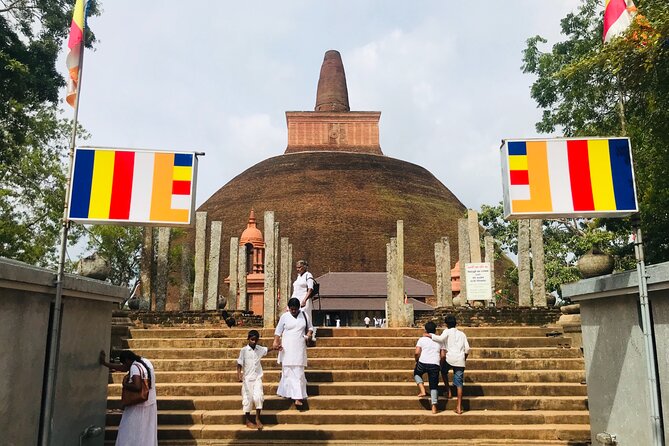
The tour continues with Abayagiriya Stupa, described as part of the aramiс complex of Abhayagiriya Viharaya. It mentions construction in the reign of King Vattagamini Abaya (King Valagamba) in the 1st Century BC. This stop gives you another major stupa complex viewpoint, distinct from the other major complexes mentioned earlier.
Then you shift to details that many people miss when they only rush for the biggest monuments. The tour includes:
- Moonstone (Sandakada pahana), described as tied to early Buddhist architecture, with a note that chronicles record an earliest form possibly associated with Mahiyang (as referenced in the description).
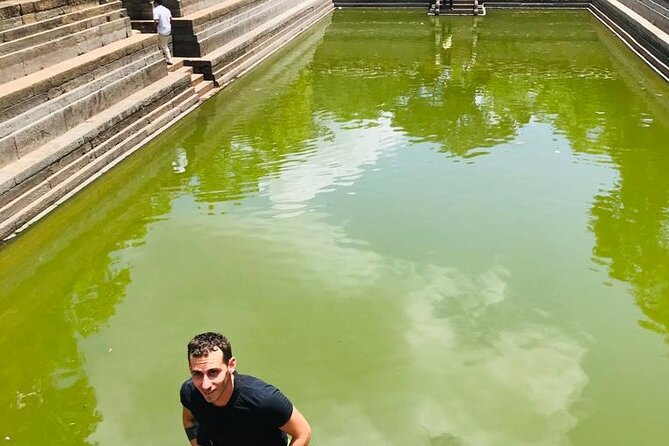
- Samadhi Statue, placed between the gigantic Abhayagiriya Stupa and Kuttam Pokuna (Twin Ponds), described as one of the greatest works of sculptural art of the early period of Anuradhapura.
- Twin Baths (Kuttam Pokuna), described as a hydrologic engineering marvel used by monks for bathing.
This is where you’ll feel the tour’s value most. In a short day, it’s easy to reduce ancient sites into only “big buildings.” Here, the route purposefully includes carved design elements and water engineering, so you leave with more than just a list of names.
A small but important reality check: most of these stops are marked with admission tickets not included, so you’ll likely be paying as you go. On the bright side, you’re paying for variety, not just for repeating similar stops.
Why the driver’s flexibility is a real advantage in Anuradhapura
One of the most praised parts of this experience is how adaptable the driver can be. The tour description emphasizes good guiding and service style, and the standout practical behavior is the willingness to swap sites. If you’ve already visited several temples on your own the day before, the driver can substitute lesser-known sites instead of forcing you through repeat visits.
This matters because Anuradhapura can feel like a lot of temples in one area. A flexible driver keeps the day from becoming a box-checking exercise. It also helps if your group has mixed interests—some people want the big dagobas, others care more about details like the moonstone or Kuttam Pokuna.
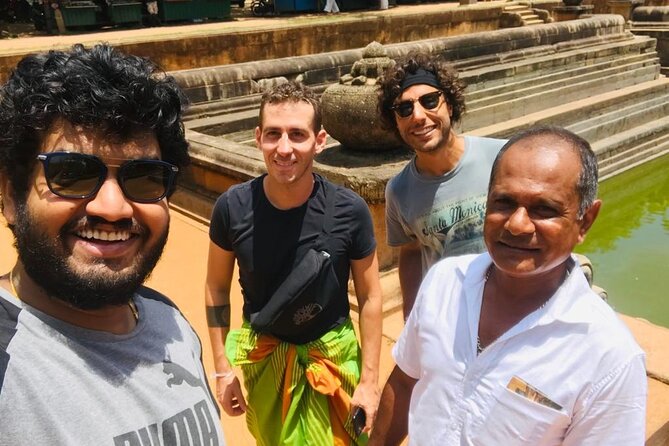
Another thoughtful touch: the driver offers to take photos at the last site and send them to you. That’s not a life-changing feature, but it solves a common problem: you want a decent group photo without constantly passing your phone around.
Who this tour suits best (and who might not love it)
This tour is a strong fit if you want:
- a private experience (only your group)
- an early start and a tight route that covers multiple sites
- AC transport with parking handled
- someone flexible enough to adjust if you already know a few temples
It may be less ideal if you want a slow, museum-style pace at each monument. Since stops are timed (often 10 to 30 minutes), you’ll get a taste rather than a long, deep session at every point.
You also want a moderate fitness level, as stated. That likely means you’ll do some walking around uneven ground and climb into/around temple areas. Bring comfortable footwear and go steady.
Finally, this tour works best for people comfortable paying a few entrance fees where admissions are not included. If you’re trying to keep costs at exactly $25 with zero extra spending, you should reconsider, since the itinerary lists multiple stops where tickets are not included.
Should you book this Travandgo-style Anuradhapura tour?
If you’re aiming for a value-packed morning that hits major Buddhist sites and adds meaningful details like moonstones and Twin Ponds, this is a smart choice. The biggest reasons to book are the low price for private AC transport and the driver flexibility, which makes the day feel tailored instead of rigid.
I’d especially recommend it if:
- you’re short on time in Sri Lanka but want a clear Anuradhapura overview
- you’ve already seen a few temples and want replacements that still fit the route
- you prefer guided convenience (pickup, vehicle, parking) over self-planning
If you hate paying entrance fees or you want to linger for hours at each place, you may be happier with a slower, admission-inclusive option. Otherwise, this one does exactly what it promises: a practical route that lets you see a lot without turning it into a logistics headache.
FAQ
How long is the Anuradhapura ancient city tour?
It runs about 4 to 6 hours.
What time does the tour start?
The start time is 8:00 am.
Is pickup offered?
Yes, pickup is offered.
Is this a private tour?
Yes. It’s private, so only your group participates.
Is an air-conditioned vehicle provided?
Yes. An air-conditioned vehicle is included, along with parking fees.
Are admission tickets included for all stops?
No. Some stops list admission tickets as not included, while others are marked free. Lunch is also not included.
Do I get a mobile ticket?
Yes, the tour uses a mobile ticket.
What fitness level do I need?
The tour asks for a moderate physical fitness level.
Can I cancel and get a full refund?
Yes. You can cancel for free up to 24 hours in advance for a full refund, but not if you cancel less than 24 hours before the start time.