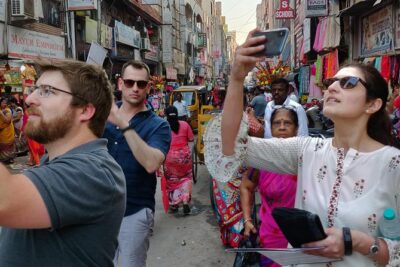
Jaipur’s back lanes tell better stories. This walk, called Once Upon a Time in Jaipur, is built for the people-who-live-here side of the Pink City, not just photo stops. You’ll hear how faith, caste, and community shape daily life while you move through old streets that still feel like a living neighborhood.
Two things I really liked: Deepak’s warm, funny guidance and his gift for making history feel personal, and the way the route focuses on everyday work around Johri Bazaar—the jewelry-making rhythm, temple moments, and street life you can watch up close. The main drawback is simple: you start early (7:30am) and you’ll be walking in temple areas, so plan for warm layers, easy-to-remove shoes, and a few less-pristine lane corners along the way.
In This Review
- Key points before you go
- Walking with Deepak: why this story-first tour works
- Sanganeri Gate meet-up and the early start you should plan for
- Johri Bazaar: the jewelry-making district you see with your eyes
- Temple stops and the head-nod habit (yes, it’s real)
- Snacks, chai, and street life without the tourist trap
- What to bring (and what to skip) for a smooth morning
- Price and value: what $34.04 really buys
- Who this Jaipur walk suits best (and who might not love it)
- Should you book Once Upon a Time in Jaipur?
- FAQ
- Where does the Jaipur walking tour start?
- What time does it start, and how long does it last?
- What’s included in the tour price?
- What should I wear or bring for temple areas?
- Is transportation included?
- What if the weather is bad?
Key points before you go
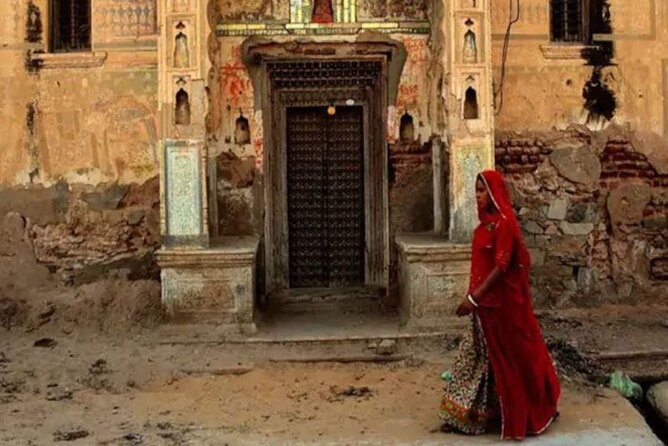
- Deepak’s storytelling connects caste, faith, and neighborhood life without turning it into a lecture
- Johri Bazaar craft district is the center of the walk, with artisans and market energy
- Temple etiquette matters: long sleeves/long pants, and shoes that come off fast
- Snacks are included, plus you’ll naturally pass food and chai spots
- Photography is a permission game in crowded, personal spaces
- It’s private so your group stays together and the pace can feel more human
Walking with Deepak: why this story-first tour works
What makes Once Upon a Time in Jaipur different is the focus. This isn’t a line of monuments where you rush, snap, and move on. Instead, you’re walking with a guide who treats Jaipur like a conversation—something you understand by hearing what people say, how they pray, and what they do for a living.
I especially loved how Deepak brings humor into the mix. He doesn’t just recite facts. He explains the why behind customs, from faith and community roles to the small social rules you’d miss if you were only reading guidebooks. The result feels relaxed, even when the topics get real—religion, caste, and everyday boundaries are part of how the city actually functions.
You also get a very practical kind of cultural learning. You learn how to move through the old lanes with respect, how to interpret what you’re seeing, and how to ask questions without making things awkward. That matters in Jaipur, where daily life is close and personal.
You can also read our reviews of more tours and experiences in Jaipur.



Sanganeri Gate meet-up and the early start you should plan for
The tour meets at Sanganeri Gate inside Jaipur’s Pink City, starting at 7:30am. It runs about 2 hours 30 minutes, and it ends back at the same meeting point. That “start and finish together” setup makes it easier: you’re not scrambling across town to find your ride at the end.
Early morning is the trade-off. The lanes are usually more manageable before the day really ramps up. But you should still treat this like a morning mission. If you hate waking up early, pair it with the mindset that you’re getting the city before it turns into a full-time circus.
For practical comfort, plan on walking through uneven lanes. You may also come across street corners with garbage nearby, so if you’re sensitive to that, mentally prepare and keep a steady pace. The good news: the tour’s focus keeps you moving with purpose, so it doesn’t feel like random wandering.
Johri Bazaar: the jewelry-making district you see with your eyes
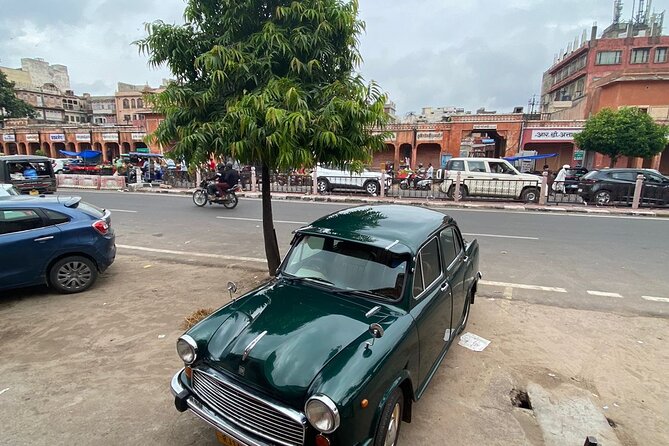
Johri Bazaar is the clear anchor of the walk, and it’s a smart choice. This is the area where Jaipur’s craft culture isn’t frozen in time—it’s still in motion. As you pass shops and workshops, you can connect the dots between the city you see on postcards and the city that pays the bills through skill and trade.
You’ll get a front-row look at the people behind the jewelry. One of the best parts is watching artisans at work rather than just looking at finished displays. You notice tools, technique, and the way sales and craftsmanship blend together. Even if jewelry isn’t your shopping priority, seeing the process makes the city feel more real.
This is also where the market energy matters. You’ll be walking through crowded lanes, hearing vendor calls, and spotting the flow of customers and workers. It’s colorful in the straightforward sense: lots of color, lots of motion, lots of voices. Keep your phone away for a moment and just take it in first.
Temple stops and the head-nod habit (yes, it’s real)
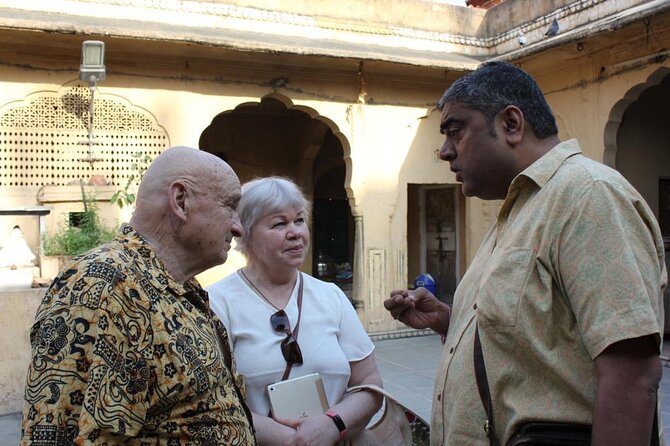
Temple visits are part of the experience, and that’s why the clothing guidance isn’t optional. You’re advised to wear long pants and long sleeves, and you should plan to bring shoes that are easy to remove quickly. If your shoes are tied tight or you hate bending down in public, switch footwear before you leave home.
Inside temple areas, the key is respect over performance. Move calmly, follow your guide’s cues, and remember that the point isn’t to “collect” a photo—it’s to understand how faith fits into daily rhythm.
One of the most useful cultural takeaways is the Indian head nod you’ll hear about on the walk. The guide explains that nodding can mean more than your instinct expects—yes, no, or maybe can come through the same motion depending on context. It’s one of those little things that makes your conversations smoother once you know to watch tone and situation, not just your reflex.
You may also encounter bells, incense scent in the air, and the general feel that worship isn’t a separate museum moment—it’s woven into regular life.
Snacks, chai, and street life without the tourist trap
Snacks are included on the tour, and that’s a small detail that helps a lot. In old cities, the biggest risk isn’t missing a sight—it’s getting hungry and cranky mid-walk. With snacks provided, you can stay focused on the stories and the street scenes without feeling rushed to find food.
You’ll likely pass street food and chai sellers along the way. The vibe is busy—scooters, chatter, vendor calls—but your guide can help you make sense of what you’re seeing. If you want to try something, ask first, and use the guide as your filter: what’s worth it, what’s safe to eat, and when it’s better to just watch.
Also keep an eye out for street wildlife that shows up in places people don’t expect. The route information mentions jumping monkeys leaping across rooftops. You won’t be able to control what appears, but you can stay relaxed—just don’t stare too hard. In animal-meets-market scenes, calm beats curiosity.






What to bring (and what to skip) for a smooth morning
This walk is simple, but it’s not a sit-in-a-cafe tour. You need to be physically ready and socially aware.
Bring:
- A water bottle (it’s specifically advised)
- Easy-to-remove shoes for temple segments
- Long sleeves and long pants
- Something light for comfort (a thin layer can help in the morning)
Skip:
- Anything you can’t remove easily at temple checkpoints
- Assuming photos are automatic. Permission is important.
You’ll also be reminded to get permission before taking a picture of a person. That’s not just polite—it changes how people respond. When you ask, you’re less likely to be blocked, and you’ll get a warmer interaction in return.
And one more reality check: expect some uneven streets. This isn’t a fully polished sidewalk stroll, so I’d wear shoes that support you properly.
Price and value: what $34.04 really buys
At $34.04 per person for about 2.5 hours, this is good value if you care about how a city lives, not just what it looks like. You’re paying for guide time, storytelling, and guided access to the parts of Jaipur where daily life keeps going.
A couple things help you judge value:
- Snacks are included, which is one less cost during the walk.
- It’s a private tour/activity, meaning only your group participates. That often makes the experience feel more personal and less like a cattle shuffle.
- What’s not included matters too: breakfast isn’t included, and private transportation isn’t included. You’ll need to plan your morning arrival and, if you’re hungry beforehand, consider eating before you start.
If you’re the type of traveler who wants monument photos all day, this may feel less direct. But if you want the human layer—the way artisans, priests, shopkeepers, and chai sellers make the city run—then the price starts to look like a bargain for what you get in context.
Who this Jaipur walk suits best (and who might not love it)
This tour fits well if:
- You’re visiting Jaipur for the first time and want the old-city vibe beyond the big-name stops
- You like cultural explanations that connect to everyday behavior
- You don’t mind walking through busy lanes and taking your time with stories
It’s also a solid pick for families who can handle an early start. One of the standout details in the feedback is how the experience worked well for a mother and daughter, which suggests it can be approachable for mixed ages—as long as kids can stay engaged while walking.
You might want to skip or rethink if:
- You need a very structured, monument-only itinerary
- You’re uncomfortable with temple etiquette (shoe removal and covered clothing)
- You’re extremely bothered by less-clean corners you might pass
Should you book Once Upon a Time in Jaipur?
I’d book it if your goal is to understand Jaipur as a living place. The best part isn’t the idea of heritage; it’s the way everyday life shows up in the streets, markets, and temple spaces while a guide like Deepak keeps the story moving with humor and clarity.
Book it if you’re okay with an early morning, walking through old-lane streets, and the basic respect rules that come with temple visits. Don’t book it if you only want major sights or you dislike any amount of market noise and crowding.
If you want Jaipur beyond the postcard layer, this is a smart way to get your bearings fast—and enjoy the city like someone who belongs there for a couple hours.
FAQ
Where does the Jaipur walking tour start?
It starts at Sanganeri Gate, Pink City, Jaipur, Rajasthan 302003, India.
What time does it start, and how long does it last?
The start time is 7:30am, and the tour lasts about 2 hours 30 minutes (approx.).
What’s included in the tour price?
Snacks are included. Breakfast is not included.
What should I wear or bring for temple areas?
Wear long pants and long sleeves and plan for shoes that are easy to remove. Also bring a water bottle.
Is transportation included?
No. Private transportation is not included.
What if the weather is bad?
The experience requires good weather. If it’s canceled due to poor weather, you’ll be offered a different date or a full refund.