REVIEW · UBUD
Crafting Heritage Batik Painting Workshops
Book on Viator →Operated by Five Art Studio · Bookable on Viator
Batik turns patience into a souvenir. In this Ubud-area workshop, you learn the wax-resist method that creates those crisp, colorful batik patterns, then walk away with something you actually made. It’s hands-on, low-pressure, and set in a mellow studio environment outside the busy Ubud loop.
I love the calm family-compound studio feel. It keeps the class from turning into a showroom. I also love the built-in flexibility to work independently or get closer tutor help, so beginners aren’t stuck, and confident artists can still steer their own design.
One thing to keep in mind: batik takes time and care. Even with guidance, it can be trickier than it looks, and you’ll want real patience for the wax and dye steps.
In This Review
- Key highlights you’ll care about
- A mellow Ubud batik studio in a family compound
- Batik 101: hot wax and dye create your pattern
- What happens in the 3 hours: sketch, wax, dye, reveal
- 1) Orientation and design planning
- 2) Tracing and drawing with hot wax
- 3) Dyeing selected areas
- 4) Washing off wax for the reveal
- How much should you rely on the tutor?
- Your finished souvenir: what you’re really taking home
- Who this works for, and who should adjust expectations
- Price and value: $29 for a hands-on Ubud batik painting workshop
- Getting to Five Arts Studio and keeping the day easy
- Should you book this Ubud batik workshop at Five Arts Studio?
- FAQ
- How long is the batik painting workshop in Ubud?
- What is included in the price of $29 per person?
- Where does the class take place, and do you return to the same spot?
- Is lunch included?
- Can I buy alcohol during the workshop?
- What is the group size limit?
Key highlights you’ll care about
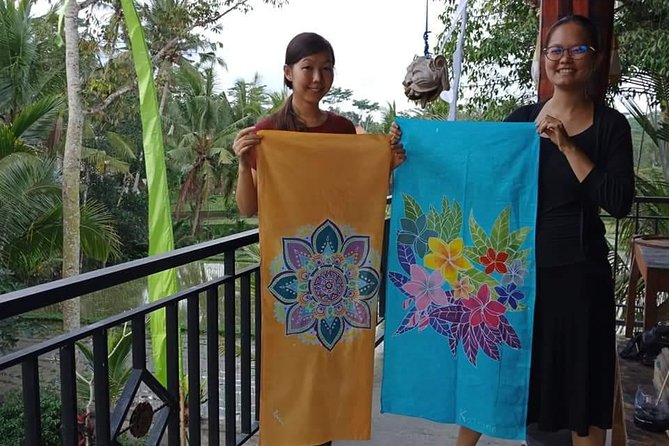
- Wax-resist batik technique that turns hand-drawn lines into dye-protected areas
- Tutor support on your level, from DIY confidence to closer coaching
- Family compound studio setting where art happens in daily life, not just for tourists
- All materials included plus tea/coffee, snacks, and bottled water
- A take-home piece that’s uniquely yours, not a mass-made souvenir
A mellow Ubud batik studio in a family compound
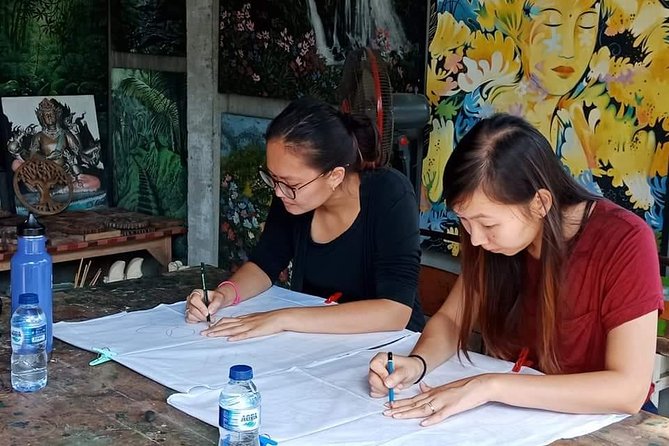
This is a Ubud batik painting workshop that feels more like visiting an artist’s workspace than hopping from attraction to attraction. The class takes place at Five Arts Studio, in the Keliki area (Jl. Raya Keliki, Keliki, Tegallalang, Gianyar). You start and end back at the meeting point, which helps keep the afternoon simple.
The vibe is relaxed. It’s described as a mellow studio outside Ubud, run in a family home compound. That matters because batik is a craft that rewards slow attention. In a calm setting, you have the mental space to learn the steps instead of rushing to finish.
Group size is also capped at 30 travelers, which is a nice ceiling for a class format. It’s big enough to feel social, but small enough that instructors can still give practical feedback and encouragement.
You’ll also get basic refreshment right there: snacks, coffee and/or tea, and mineral water. That’s not just comfort. It helps you stay focused during the part of the process where you’re waiting between steps and adjusting your technique.
There’s also a mobile ticket, and the activity is listed as near public transportation. Service animals are allowed. These details matter in Bali, where logistics can make or break an experience.
You can also read our reviews of more tours and experiences in Ubud.
Batik 101: hot wax and dye create your pattern
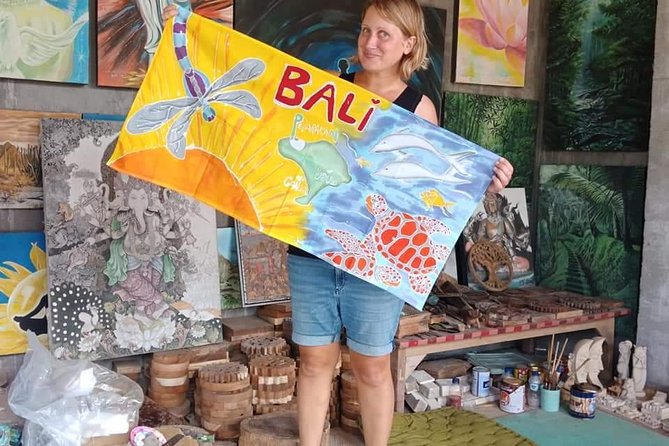
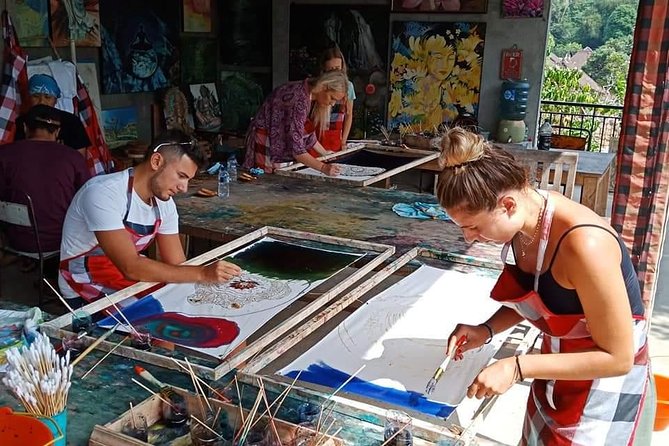
Batik is hand-painted fabric art, and the key idea is the wax-resist method. You’ll sketch a design, then draw it onto the fabric using hot wax. The wax acts like a barrier: when you apply dye only to selected areas, the waxed sections resist dye and keep their original color.
When the wax is washed off, the pattern becomes visible. Those outlines and protected areas are what give batik its distinct look. It’s also why the craft is so satisfying. You can’t just paint and hope. You’re planning how the color will move, then letting wax do the tricky part.
The class includes colorful dyes and hot wax, and the materials are handled for you. That’s a big deal for first-timers. You don’t have to figure out what kind of wax or dye to buy, or how to set up the workspace at home. You just learn the method.
In terms of creative options, you can either use your own ideas and motifs or select from suggestions. This matters for two reasons:
- If you don’t know what to draw, you still get a starting point.
- If you do have a motif in mind, you’re encouraged to add your touch.
Some instructors also emphasize the idea of happy accidents. That’s not just encouragement talk. It’s practical craft advice: with wax and dye, tiny slips happen, and the best results often come from adjusting rather than panicking.
What happens in the 3 hours: sketch, wax, dye, reveal
The workshop runs about 3 hours. In that window, you’ll go through the core stages of batik making, step by step.
1) Orientation and design planning
You’ll begin by sketching out your design. The goal here isn’t perfection. It’s getting a clear plan for where you want lines, shapes, and dye areas.
You’ll be working in a casual studio environment in the family compound. That makes it easier to ask questions when you’re unsure. The class is described as suitable for both artists and complete beginners, which lines up with what you see in the way the sessions are taught: guidance is available throughout.
2) Tracing and drawing with hot wax
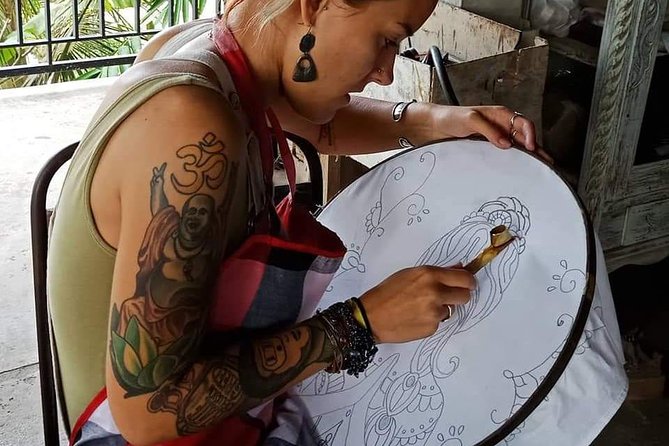
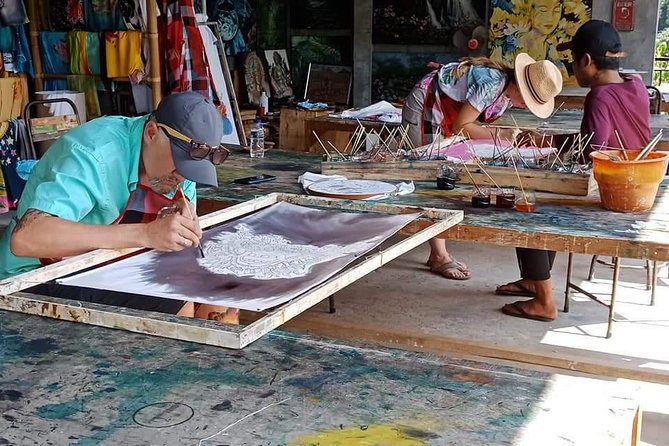
Next comes the signature part: drawing the design on fabric using hot wax. This is the stage where you feel the difference between “watching batik” and “doing batik.”
You’ll apply the wax to selected areas. Then you move into dyeing with the understanding that waxed sections won’t take dye the same way. This is where the wax-resist logic becomes real.
If you accidentally put wax where you didn’t mean to, you don’t start over. Instead, you learn how to work around it. One helpful lesson that shows up in how the class is described: let mistakes become part of the pattern and keep going.



3) Dyeing selected areas
After waxing, you apply dye to selected parts of the fabric. This is a controlled step, but it’s still hands-on. You’ll learn how the choice of dye areas affects the final look once the wax is removed.
Color blending and color choices are part of the fun here, and the instructors provide a range of suggestions if you want them. This is also a moment where teaching helps you stop overthinking. Batik rewards steady progress more than frantic reworking.
4) Washing off wax for the reveal
Once dyeing is done, you’ll wash off the wax. That’s when the whole design appears: the original color remains where wax was applied, and dye shows where it wasn’t protected.
This is the reveal moment people remember. The workshop doesn’t just teach a technique. It helps you see how the technique turns into a finished artifact you can take home.
How much should you rely on the tutor?
The class setup is flexible. You can do everything at your own pace with guidance, or you can work more closely with the tutor if you want extra direction. That’s ideal if you’re:
- a beginner who wants step-by-step coaching, or
- someone with experience who wants help while staying creative.
Instructors are described as patient and supportive, including for kids. So if you’re traveling with family, this is one of the better types of activity that can adapt to mixed ages and skill levels.
Your finished souvenir: what you’re really taking home
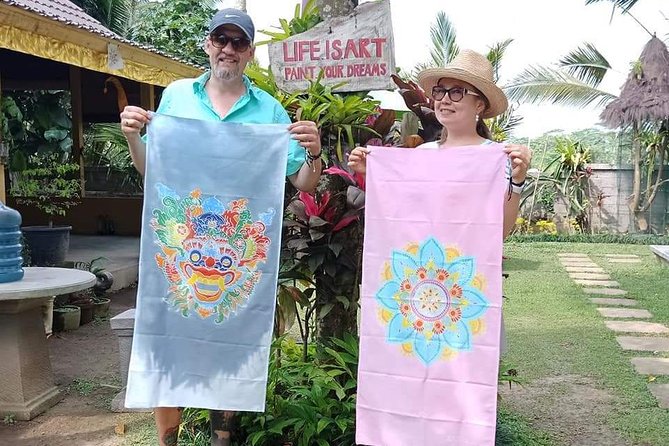
Your goal at the end is simple: bring home a gorgeous and unique vacation souvenir. This class delivers on that because you’re creating the batik piece yourself, not buying a pre-made item from a shop.
Because you sketch the design and place the wax, your final pattern is your own. Even if you choose a template or motif suggestions, your choices in lines, shapes, and dye placement create a personal result.
This is also a souvenir you can talk about. You’ll know what the wax did and why the pattern looks the way it does. That turns it from a decorative purchase into a story piece.
If you like crafts that feel both traditional and practical, you’ll probably appreciate how tangible the learning is. You’re not just learning facts. You’re doing the work. Then you get the artifact as proof.
Who this works for, and who should adjust expectations
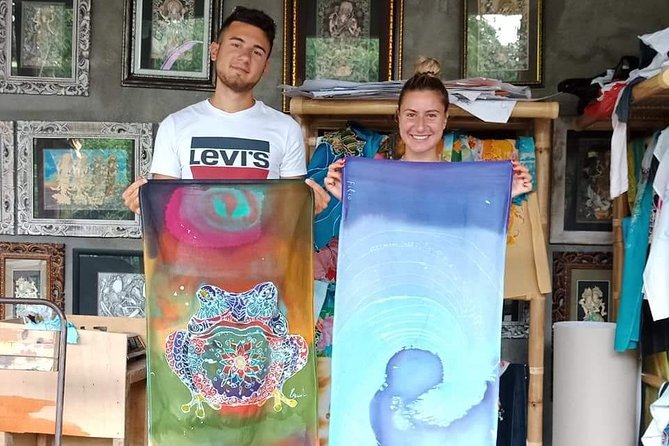
This is one of the best types of Ubud experiences for people who like making things. It’s described as great for both beginners and those who identify as artists. It’s also described as a day-friendly activity, with a calm studio pace that doesn’t feel like a performance.
Families can do well here too. The class environment is set up in a way that instructors can guide children through the process. If you’re bringing a kid, you’ll want to choose a creative mindset over a perfection mindset.
For solo travelers, this is also a strong option. Some classes run with just one student, and the teaching can turn into a more tailored one-on-one session. If you like personal attention, it’s a real advantage.
Now, the expectation check: batik is more difficult than people think. It takes patience, and it can involve wax and dye steps that don’t behave like a typical paint-by-numbers activity. Plan to enjoy the process, not just the final product.
If you’re a perfectionist, remember that the class framing is about happy accidents and learning through adjustment. Your best outcome likely comes when you stop trying to control every tiny detail.
Price and value: $29 for a hands-on Ubud batik painting workshop
The price is $29.00 per person for a workshop that lasts about 3 hours, includes materials, and culminates in a take-home piece of batik fabric art.
What’s included is part of the value story:
- snacks
- coffee and/or tea
- mineral water
- all materials you need to make your own original batik
That’s more substantial than many low-cost craft experiences. You’re not just paying for instruction. You’re paying for the whole setup to create the work in the studio, including wax and dyes.
You’re also getting guided teaching. The class is run by a master artist and supported by a team eager to share the craft. Even when you’re working independently, you’re not left to guess.
Not included items are also clear: lunch is not included, but local food can be ordered. Alcohol is available to purchase. If you want a longer meal break, you’ll need to plan for it separately.
Getting to Five Arts Studio and keeping the day easy
The meeting point is Five Arts Studio on Jl. Raya Keliki, Keliki, Kec. Tegallalang, Kabupaten Gianyar, Bali 80561, Indonesia. The activity ends back at the meeting point.
It’s listed as near public transportation, which can help if you’re not renting a scooter. The start-to-finish structure also means you don’t have to worry about timing your return across town.
One practical note from the info provided: travelers should have a strong physical fitness level. The class itself is not described as extreme, but you should be ready for a normal activity day in a compound setting, with some movement and time spent at the work area.
Should you book this Ubud batik workshop at Five Arts Studio?
I’d book this if you want a hands-on Bali craft experience that teaches a real technique. The wax-resist method isn’t vague. You sketch, wax, dye, and wash off wax to reveal your pattern. That step-by-step structure makes it satisfying for beginners, and it’s still credible for people who care about traditional arts.
I’d also book it if you like the idea of working in a mellow studio in a family compound environment. The setting seems designed for calm focus, and the class cap of 30 travelers helps keep it from feeling too crowded.
Skip it if you want something fast and carefree with zero patience required. Batik is a craft with a learning curve. You’ll do better if you’re willing to slow down and let the process take its time.
If you’re deciding between a quick souvenir stop and a workshop where you’ll actually make something, this is the option that turns time into a skill.
FAQ
How long is the batik painting workshop in Ubud?
The class is about 3 hours.
What is included in the price of $29 per person?
Your ticket includes snacks, coffee and/or tea, mineral water, and all materials needed to make your own original batik.
Where does the class take place, and do you return to the same spot?
The workshop starts at Five Arts Studio on Jl. Raya Keliki, Keliki, Kec. Tegallalang, Kabupaten Gianyar, Bali 80561, Indonesia, and it ends back at the meeting point.
Is lunch included?
Lunch is not included, but you can order local food.
Can I buy alcohol during the workshop?
Alcohol is available to purchase.
What is the group size limit?
The activity has a maximum of 30 travelers.