REVIEW · TBILISI
Ancient Mtskheta and Chronicle of Georgia half day tour
Book on Viator →Operated by Friendly.ge: Transfers & Tours in Georgia · Bookable on Viator
Mtskheta is one of those places where churches and legends feel woven together, and a half day is enough to get the main threads. This tour strings together UNESCO churches plus the Chronicles of Georgia monument, with viewpoints that make the camera work overtime.
What I really like is the smart pacing: you get 3-plus hours of highlights without the day-long fatigue. Second, the guiding style stands out—names like Khato, Aleksi, Tamar, Oksana, and Khatuna come up in reviews for bringing the sites to life with history, legends, and practical context.
One consideration: you do need a bit of flexibility with walking. Access to church and monument areas is pedestrian-only, so expect short walks uphill and be ready for dress-code rules at religious sites.
In This Review
- Key things to know before you go
- Why Mtskheta feels like Georgia’s spiritual front porch
- Half-day timing that fits real sightseeing plans
- Jvari Monastery: the hill viewpoint that ties it all together
- Svetitskhoveli Cathedral: legend, legend-adjacent details, and holy calm
- Antioquia Church: a quick stop with early-Christian weight
- Chronicles of Georgia monument: 16 pillars, Bible scenes, and city views
- What private pickup really changes (and what it doesn’t)
- Price and value: is $65 a good deal for this route?
- Dress code and walking: the two things that matter most
- Who this tour is best for
- Should you book this Ancient Mtskheta and Chronicle of Georgia tour?
- FAQ
- How long is the Ancient Mtskheta and Chronicle of Georgia half-day tour?
- Where does the tour start and end?
- Is hotel pickup included?
- Are tickets or admission fees included?
- Is lunch included?
- What languages are available?
- What dress code do I need for the churches?
Key things to know before you go
- Three to five hours that actually feel like a half day, not a long grind.
- Jvari + Svetitskhoveli give you the classic Mtskheta skyline and Georgia’s Christianity story in one run.
- The Chronicles of Georgia is built for views: pillars, Bible scenes, and a strong panorama back toward the city.
- Pickup and drop-off are included for private tours, which helps a lot if you’re based in central Tbilisi.
- Church dress code is enforced: no shorts or sleeveless tops; cover knees and shoulders.
- Bottled water is included, and you’ll still want to plan around lunch since it’s not part of the tour.
Why Mtskheta feels like Georgia’s spiritual front porch
If you only have a day or two in Tbilisi, Mtskheta is the easiest place to understand the country’s “roots.” You’re not just ticking off buildings. You’re moving through a story—where early Christianity, royal legend, and landscape viewpoints all sit within a short radius.
This tour is also a good match for first-timers because it covers both sides of the Mtskheta coin: the older religious sites (Jvari, Svetitskhoveli, and the Antioquia area) and the grand, 20th-century scale of the Chronicles of Georgia monument. That mix helps you see Georgia as continuous, not museum-separate.
The other value is the guide time. Even with a tight schedule, a good guide helps you notice what you’d normally miss: why a view matters, what a legend explains, and what to look for when you’re standing in front of something famous.
You can also read our reviews of more tours and experiences in Tbilisi.
Half-day timing that fits real sightseeing plans
The tour runs about 3 to 5 hours, so you can treat it like a morning reset or an afternoon highlight. That matters because Mtskheta has a few moments where you’ll want to slow down, stand still, and take in the view rather than constantly moving.
Departure times are offered with options, which is useful for avoiding harsh midday light in summer or for matching your dinner plans. One review even praised choosing a later slot so the sun wasn’t intense. That’s a smart strategy because these stops work best when you can look outward—not just run from shade to shade.
Also, it’s designed to be low-stress logistically. You start and end back at the meeting point in Tbilisi (Europe Square), and if you choose a private option, you get door-to-door hotel pickup and drop-off within Tbilisi.
Jvari Monastery: the hill viewpoint that ties it all together
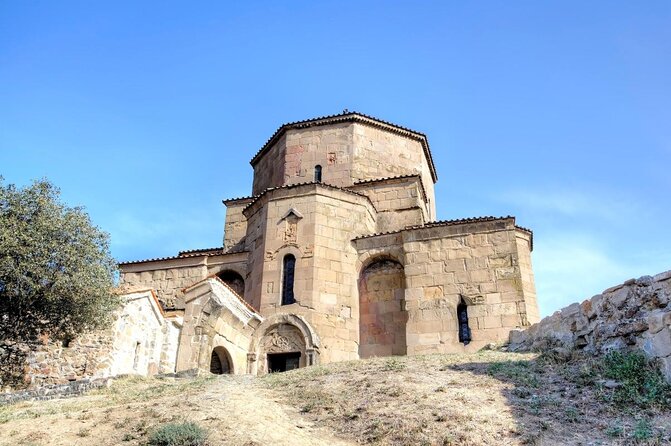
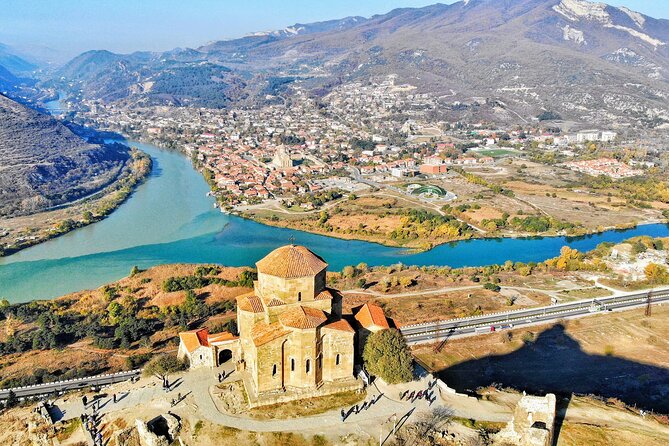
Stop one is Jvari Monastery, on a hill near Mtskheta. The key idea here is the approach: you start with a spot that gives you the wider picture first. You see the ancient city’s layout and the surrounding natural view, which makes the rest of the churches easier to “place” in your mind.
Expect a short entry and some time to look around—about 30 minutes is planned. Admission is listed as free, so you can focus on the experience instead of thinking about tickets.
Why this stop is such a big deal: Jvari isn’t just a pretty viewpoint. It’s one of those places where the setting explains the history. When you can see Mtskheta from above, you understand why religious sites were built where they are. You’ll also appreciate how the guides link legends and architecture, and several reviews mention very specific answers, like questions about details on crosses.
Practical tip: bring a light layer if it’s breezy. Hilltop sites can feel cooler than central Tbilisi, and you’ll likely linger for photos.
Svetitskhoveli Cathedral: legend, legend-adjacent details, and holy calm

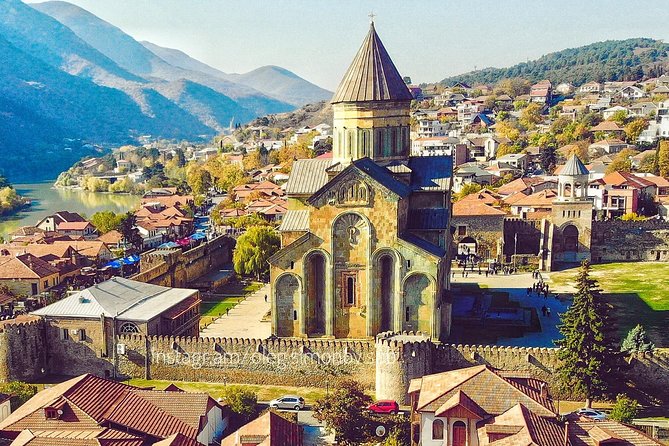
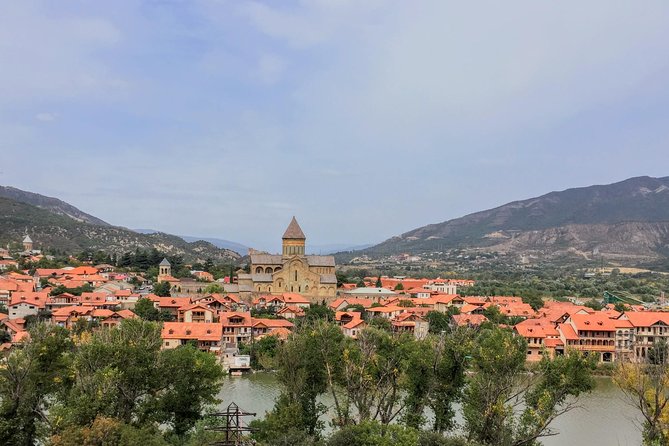
Next comes Svetitskhoveli Cathedral, an 11th-century site. Here, the tour shifts from viewpoint to meaning. The highlight isn’t only the building—it’s the legend attached to the spot. The tour frames the cathedral around the story that Jesus’s robe is connected to the location where Svetitskhoveli was built, which is why many people consider it among Georgia’s holiest places.
You get about 1 hour here, with free admission noted. This is enough time to do two things well: take in the exterior and then settle into the interior (if open) without feeling rushed.
What to pay attention to while you’re there:
- The way the cathedral’s setting feels connected to the town rather than isolated.
- Any guide-led explanation of symbolism and what different spaces are for.
- Moments where the guide helps you understand what the building represents beyond dates and names.
This is also where the “private attention” part matters. If you’re on a private tour, the guide can slow down for your questions. Reviews mention guides like Aleksi and Khato being especially good at answering deeper questions and adding context about Christianity in Georgia, which helps if you’re coming from outside the Orthodox tradition.
Dress code check: Svetitskhoveli is a church, so follow the clothing rules closely—covered knees and shoulders. No shorts. No sleeveless tops. If you forget, it can cost you entry time.
Antioquia Church: a quick stop with early-Christian weight
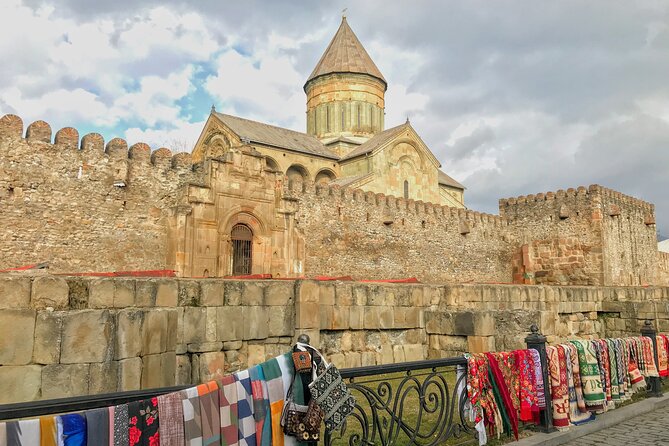
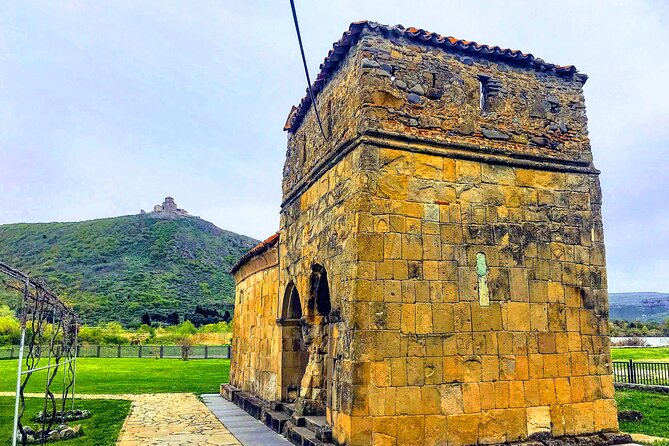
Stop three is Antioquia Church, described as the oldest basilica from the 5th–6th centuries (V–VI cc.). The time here is shorter—about 20 minutes—and the admission is also listed as free.
This stop is ideal when you want a “bridge moment.” After the bigger emotional hit of Svetitskhoveli, Antioquia gives you a sense of how early Christian worship sites appeared in this region. It’s not the longest stop on the schedule, but it adds depth. You’ll feel less like you’re only visiting one era.
The drawback is also obvious: because the time is limited, you won’t get a long, slow wander. So keep your expectations aligned. Treat Antioquia like a focused photo-and-understand moment, then move on while the story stays fresh.

Chronicles of Georgia monument: 16 pillars, Bible scenes, and city views
The final highlight is Chronicles of Georgia, often described as a must-see for the visuals alone. Here’s what makes it special: it uses 16 massive pillars to show Georgia’s history—its rulers—and scenes from the Bible.
And yes, it’s built for photos. One of the main payoffs is the viewing platform angle: from there, you also get a view back toward the city and the Tbilisi sea area.
This stop runs about 45 minutes with free admission noted. That’s a good amount of time because you’ll want to do both:
- Walk in and read the pillar scenes as you can.
- Step back to take in the overall monument from a distance.
If you’re into architecture and history, this is the part that helps you “connect dots” between ancient religious sites and a later, grand storytelling monument. Reviews also call it an Instagram moment in the best way, but you’ll enjoy it more if your guide explains what the figures and scenes are trying to communicate.
Photo tip: sunrise and late afternoon can make the pillars look more dimensional. Midday works too, but you’ll have harsher shadows.
What private pickup really changes (and what it doesn’t)
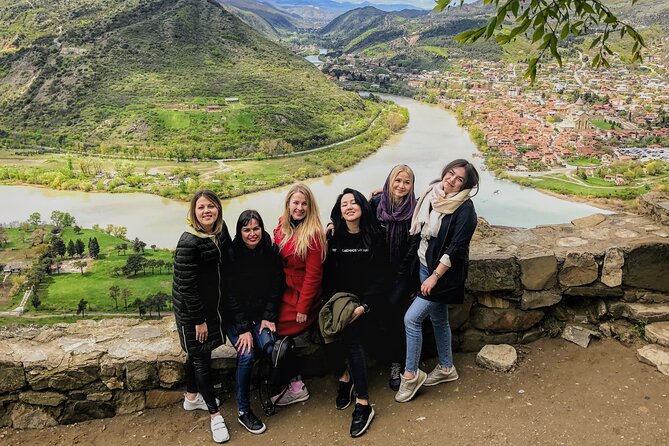
For private tours, hotel pickup and drop-off are included, plus bottled water. In practical terms, that means less time thinking about how to get out of central Tbilisi and more time using your energy on the sites.
For families and couples, the private format is usually where the best value shows up. Guides can tailor the pace, pause longer at viewpoints, and handle questions without the pressure of a big group rhythm. A number of reviews single out guides like Tamar and Aleksi for going out of their way—answering specific questions, adding cultural context, and even helping with small practical needs.
The private format doesn’t remove all effort, though. You still walk to the religious sites, and you’ll still need to plan around site openings and dress code. But the trade is worth it: more time understanding, less time managing logistics.
Price and value: is $65 a good deal for this route?
At $65 per person, this half-day excursion sits in the reasonable, mid-range category for popular regional tours. Here’s what makes it feel like a value:
- Stops that are free to enter are listed for all the key sites: Jvari, Svetitskhoveli, Antioquia, and Chronicles of Georgia.
- Bottled water is included.
- For private bookings, you get pickup and drop-off, which can be one of the biggest hidden costs if you’re figuring transit on your own.
- The schedule is tight enough to fit a half day, but not so tight that you’re sprinting through each location.
What’s not included: lunch. So you’ll want to plan either beforehand or ask your guide for a nearby recommendation. Reviews mention guides recommending restaurants and helping guests with practical meals afterward, which is a nice bonus if you want Georgia food without guesswork.
If you’re comfortable navigating on your own, you could technically DIY the route. But if you want a guide who helps you understand the legends and the meaning behind the monuments, the $65 becomes easier to justify—especially because the itinerary is dense in big cultural stops.
Dress code and walking: the two things that matter most
This tour includes multiple places of worship, and there’s a clear dress rule: no shorts or sleeveless tops. Knees and shoulders must be covered for both men and women. Failing to meet the rule can lead to refused entry, so treat it as non-negotiable.
Also, sites are pedestrian-only. Vehicles can’t enter the areas around many churches and monuments. You’ll do a short walk even if the tour feels “quick,” so wear comfortable shoes you trust. Your legs will be fine—just don’t plan to wear brand-new footwear on a day like this.
If you’re traveling with a kid, this is another practical win: several reviews note that even children stayed engaged, largely because the guide adds stories and context rather than only pointing out facts.
Who this tour is best for
This is a great fit if you:
- Want a high-impact half day from Tbilisi.
- Like religious and historical sites, but also enjoy seeing the bigger picture behind legends.
- Want help making sense of Mtskheta quickly, without drowning in reading material.
- Prefer a guide who can answer questions and adapt a bit—reviews repeatedly call out guides like Khato, Tamar, and Aleksi for responsiveness.
It’s less ideal if you:
- Want a fully free-form day with no schedule at all.
- Dislike walking or hate dress-code rules in churches.
- Are looking for a long museum-style experience, because this is timed and paced.
Should you book this Ancient Mtskheta and Chronicle of Georgia tour?
I’d book it if you want the core Mtskheta experience without the planning headache. The combination of Jvari’s hilltop views, Svetitskhoveli’s cathedral legend, the early-Christian stop at Antioquia, and then the massive storytelling scale of Chronicles of Georgia gives you a strong “first taste” of Georgia’s history and faith.
The best reason to go is the guide factor. When guides like Khato, Tamar, Aleksi, and Khatuna lead, you get more than what’s on a signboard—you get the context that makes you look around differently.
If you go, do two things: pack something that meets the dress code, and wear shoes for short walks. Then settle in—this is the kind of day where the views do the talking, and the stories help you understand why those views mattered in the first place.
FAQ
How long is the Ancient Mtskheta and Chronicle of Georgia half-day tour?
It runs about 3 to 5 hours, depending on the departure time and the pace of the stops.
Where does the tour start and end?
It starts at Europe Square in Tbilisi and ends back at the meeting point.
Is hotel pickup included?
Hotel pickup and drop-off are included for private tours.
Are tickets or admission fees included?
Admission tickets are listed as free for Jvari Monastery, Svetitskhoveli Cathedral, Antioquia Church, and the Chronicles of Georgia.
Is lunch included?
No. Lunch is not included.
What languages are available?
The tour is offered in English, and for group operations the guide can also conduct the tour in Russian at the same time.
What dress code do I need for the churches?
No shorts or sleeveless tops. Knees and shoulders must be covered for both men and women, or you may risk being refused entry.