REVIEW · CAMBRIDGE
Curious Cambridge – The History Tour that’s FUN!!!
Book on Viator →Operated by Terrible Tours · Bookable on Viator
Cambridge history feels alive on this playful walk. Curious Cambridge with Terrible Tours uses fun stories to make 1,000-plus years of the city click as you pass top college names like Trinity.
I especially like the mix of big landmarks and quick context, so you finish knowing what shaped the place, not just what it looks like. You’ll also get college exteriors instead of ticket lines, including the oldest building in Cambridge. One drawback to plan for: you’ll be seeing the colleges from outside and won’t go in, since the focus is time-saving storytelling rather than interiors.
In This Review
- Key takeaways before you go
- Cambridge History Tour Basics: 90 Minutes, Mobile Ticket, Fun-First
- Jesus Green Lock House to the Corpus Clock: The Route’s Real Payoff
- Magdalene Street and Bridge: Port Roads Behind the College Fronts
- St John’s College and the Round Church: The University’s Early Seeds
- Trinity College: Newton Connections and the Prank Story People Remember
- Trinity Hall and Trinity Lane: From Pisspot Lane to Today
- Gonville and Caius: Nightclimbers and a Founder’s Strange Instruction
- Cambridge Market Square: Bell Chimes, Old Market Life, and Town–Gown Clashes
- St Bene’t’s Church, the Secret-of-Life Story, and the Corpus Clock
- Castle Hill: Romans, Vikings, and Normans at Cambridge’s Starting Point
- What You’ll Learn (and Remember) From the Stories
- Price and Logistics: Why ~$28 Feels Fair
- Who Should Book Curious Cambridge, and Who Might Skip It
- Should You Book Curious Cambridge Now?
- FAQ
- FAQ
- How long is the Curious Cambridge history tour?
- How much does the tour cost?
- What language is the tour offered in?
- Is there a mobile ticket?
- Will we enter the university colleges during the walk?
- Where does the tour start and where does it end?
- What’s the group size limit?
- Is the tour near public transportation?
- Is the tour suitable for most people?
- Are service animals allowed?
- Can I get a full refund if I cancel?
Key takeaways before you go
- Small group size (max 25) keeps the pace friendly for questions and banter
- Big “Cambridge hits” in 90 minutes: Trinity, St John’s, Market Square, the Corpus Clock, Castle Hill
- No college entry means lower cost and less waiting, but no chapel/library access
- Stories that land for different ages—including teens—because the guide keeps it moving and relatable
- Ending at the Corpus Clock (Chronophage) gives you a memorable last stop right by King’s College
Cambridge History Tour Basics: 90 Minutes, Mobile Ticket, Fun-First
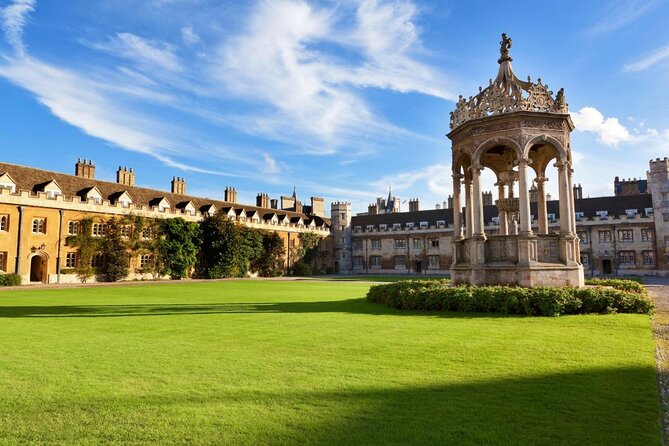
This is a walking history tour built for people who get bored by lectures. The whole format is short, story-driven, and paced around what you can see on the street. Expect about 1 hour 30 minutes, with the exact emphasis shifting based on what the group is curious about.
The ticket is mobile, so you won’t be hunting for paper. The tour runs in English, and it’s capped at 25 people, which matters in Cambridge where the sidewalks around colleges can feel tight.
Price-wise, at $27.74 per person, you’re paying for guided walking, not museum-level entry tickets. That’s a good deal if you mainly want orientation, context, and memorable facts while you stroll through the college neighborhoods.
Jesus Green Lock House to the Corpus Clock: The Route’s Real Payoff
The tour starts at Jesus Green Lock House (Cambridge CB4 3AX) and ends near the famous Corpus Clock / Chronophage on Trumpington Street, opposite King’s College (CB2 1RH). That end point is handy: you’re dropping out right where you can keep exploring on foot afterward.
The route works like a best-of playlist. You move from medieval street traces and early university roots into markets, science-adjacent stories, and finally the higher-ground origin story at Castle Hill. The result is that Cambridge stops feeling like a single postcard view and starts feeling like a place that layers eras on top of each other.
If you like tours that help you get your bearings fast, this one is designed for that. And if your group includes kids or teens, the storytelling style tends to keep attention better than a standard dry walking talk.
Magdalene Street and Bridge: Port Roads Behind the College Fronts
One of the first turns you take is toward Magdalene College, focusing on Magdalene Street and Bridge. The key idea here is that Cambridge wasn’t always the college-only landscape people imagine now.
You’re shown an ancient roadway and connected it to the earlier life of the city—especially the sense that this area was once tied to the port side of things. Even if you never learned about Cambridge’s trading geography before, the story helps you understand why those older routes still matter.
What I like about this stop is that it reframes the pretty buildings. You stop seeing colleges as isolated “fancy architecture” and start seeing them as part of a working city that evolved over centuries.
St John’s College and the Round Church: The University’s Early Seeds
Next up is St John’s College, with attention on the Round Church and the “seed” idea of the University. The point isn’t just that St John’s is old; it’s that Cambridge’s academic identity grew from specific physical and institutional roots.
This is the kind of moment where a good guide can help you connect the dots between buildings and ideas. You’ll get a simple storyline for how early university energy took shape, rather than a list of dates that you’ll forget the next day.
If you’re coming to Cambridge for the first time, this stop is a strong anchor. It gives you a mental framework you can use at the next colleges, instead of bouncing from one name to another.
Trinity College: Newton Connections and the Prank Story People Remember
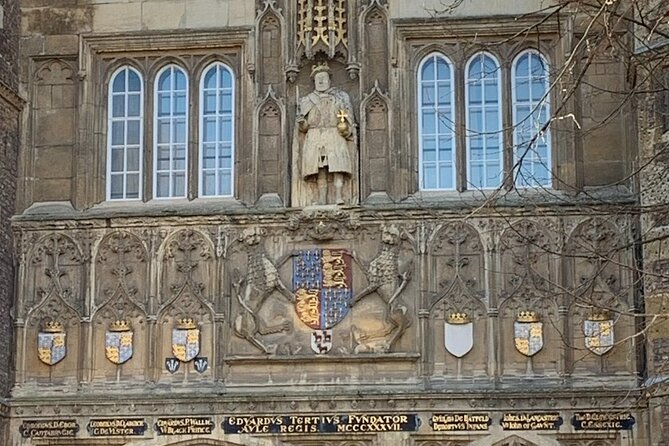
Then you get to Trinity College, the one that often feels like the headline act. Here the tour leans into two story engines: Trinity’s prominence and its place in Cambridge folklore.
You’ll hear about Trinity as the richest college in either Oxford or Cambridge, and you’ll also get the Newton connection. The most “fun” part, though, is the mention of a long-running prank associated with the college. That kind of detail sticks because it turns history into something human-scale.
One practical bonus: even though you’re not entering, Trinity’s frontage is a landmark you’ll likely recognize later when you’re wandering on your own. So this stop works both as a lesson and as a future navigation tool.
Trinity Hall and Trinity Lane: From Pisspot Lane to Today
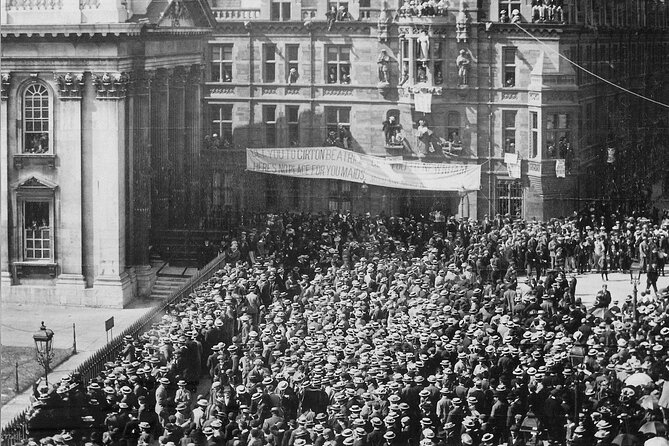
At Trinity Hall, you’ll spend time along Trinity Lane, with the tour spotlighting how the lane’s nickname changed over time. The story includes the older name pisspot lane—so yes, it’s a bit cheeky—but the guiding point is how language and city life evolve.
This stop is great if you like your history grounded in the messy realities of everyday life. It’s not just “great men and grand buildings.” It’s also the street-level stuff that makes a city feel lived-in across time.
The tone stays light. And if you’re worried about awkwardness, the tour even calls out that there’s no need to show up braced for umbrellas for this particular joke.
Gonville and Caius: Nightclimbers and a Founder’s Strange Instruction
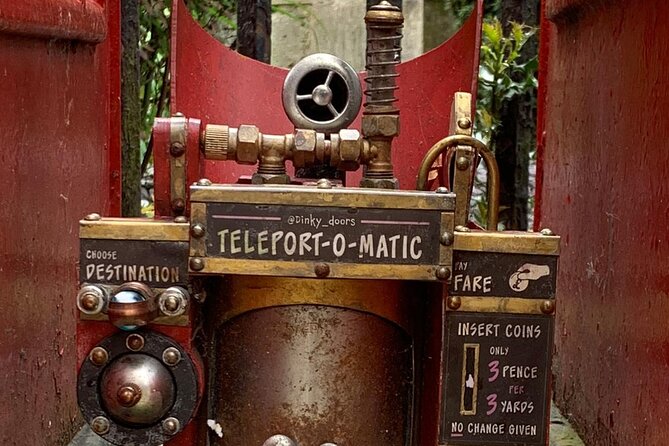
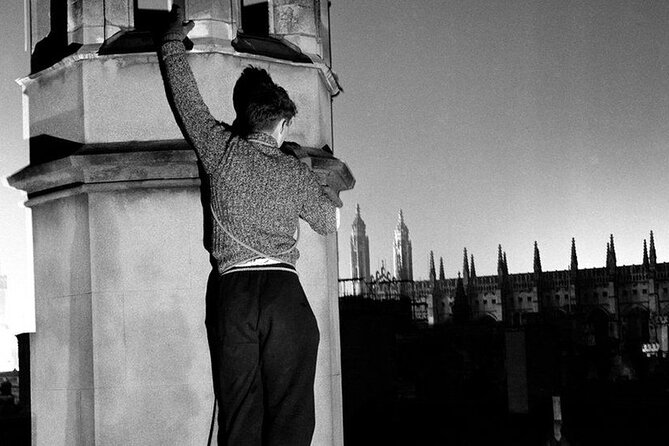
Moving to Gonville and Caius College, the guide brings in the story of the Nightclimbers and an odd instruction linked to the founder. This is one of those stops where Cambridge starts to feel like a place with legends people actually repeat.
It’s also a reminder that universities didn’t only produce scholarship—they also produced customs, rules, and behaviors that shaped campus culture. The “strange instruction” detail helps make the college feel less museum-like and more like a community with its own quirks.
If you’re traveling with a teen, this stop is a good bet. It’s story-first, not lecture-first, and the weirdness is the hook that pulls people through.
Cambridge Market Square: Bell Chimes, Old Market Life, and Town–Gown Clashes

Then you hit Cambridge Market Square, one of the most useful stops for understanding how the university and the city interacted. The tour points out the square’s famous bell chimes, the market’s long life, and the idea of town vs gown tension—right down to punchups.
This matters because Cambridge’s identity isn’t only academic. Markets, money, crowds, and occasional conflict helped shape day-to-day life around the colleges.
What I like here: the tour gives you a reason to care about the square beyond the view. It helps you understand why this spot is still active and why it’s the right place to see how “city Cambridge” and “college Cambridge” lived side by side.
St Bene’t’s Church, the Secret-of-Life Story, and the Corpus Clock
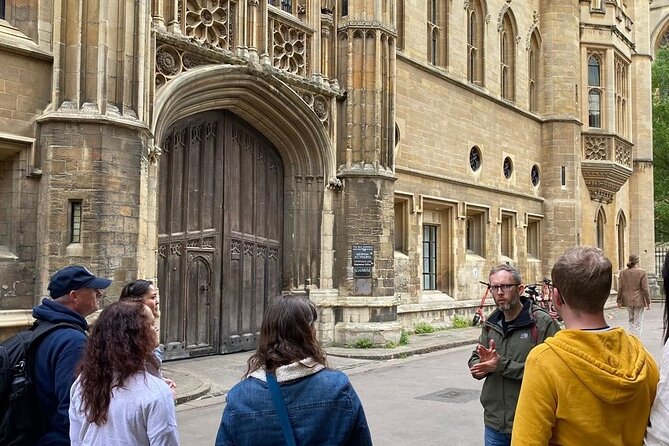
The tour’s most distinctive stop is St Bene’t’s Church on Benet Street. This is where you’ll see the oldest building in Cambridge, and the guide connects it to an intriguing chain of science and storytelling.
You’ll hear about a laboratory tied to the secret of life story, including the pub where someone announced it after a pint. After that, you’ll also get to the Corpus Clock, which is the kind of quirky, mechanical attraction that makes the whole walking tour feel like it’s ending on something you can picture instantly.
This stop also tends to be a crowd-pleaser because it mixes serious background (the age of the church) with playful details (the announcement and the pub setting) and then ties it to a strange modern clock you can spot and remember later.
Castle Hill: Romans, Vikings, and Normans at Cambridge’s Starting Point
The final stretch brings you to Castle Hill, described as where Cambridge began. The storyline here moves through Romans, Vikings, and Normans, with a focus on how they controlled key movement—especially around the last bridge before the sea.
Even if you don’t usually care about military history, this works because it answers a basic question: why did Cambridge grow where it did? The hill connection gives you geographic logic. You start to understand Cambridge not as a scattered set of colleges, but as a strategic place in changing power maps.
If you want a clean mental ending to the walk, Castle Hill delivers. It’s a “how the city started” capstone that pulls together the earlier street and city-life clues.
What You’ll Learn (and Remember) From the Stories
This tour’s real value is how it packages information. Instead of separate trivia islands, the guide ties each stop to a simple theme: city life, academic beginnings, college personalities, science-and-ideas culture, and the physical geography that shaped it.
You’ll also get practical mental anchors:
- You’ll recognize major college names you’ll see again later.
- You’ll understand why Market Square matters in the university-city relationship.
- You’ll finish at a landmark that’s easy to point to in your photos and later meet-up plans.
And the best guides bring stories that match your group. In the past, guides like Peter have used pictures of landmarks to keep comparisons clear, and guides like Ben have delivered a gentler meander with both ancient and more recent insights. Other guides, like Simon and Chuck, are the type who keep storytelling lively enough that teens don’t tune out. Style can vary, but the goal stays the same: history you can follow without homework.
Price and Logistics: Why ~$28 Feels Fair
Let’s talk value in plain terms. You’re paying for:
- Guided walking for about 90 minutes
- Exterior views of major college landmarks (no entrance fees included)
- A story-led approach that gives context fast
- A small-group cap that can make the experience feel less crowded
At $27.74, it’s a strong option when you want the highlights without spending extra on individual college tickets or tours. It’s also a good “starter tour” on your first day, because it helps you plan what to see next.
The consideration is also clear: because the focus is on seeing from the outside, you won’t get the interior experience many people associate with famous Cambridge colleges. If you specifically want chapel views, library rooms, or guided interior access, you’ll need separate plans after this walk.
Who Should Book Curious Cambridge, and Who Might Skip It
This is a great fit if:
- you want a first-timer-friendly Cambridge history walk
- you like humor mixed with context
- you’re traveling with mixed ages, including teens
- you prefer touring by story instead of by “here’s a plaque, read it”
You might skip it if:
- you’re hoping to go inside colleges during the tour
- you want a slow, museum-like experience where you linger in buildings
- you dislike walking that moves steadily from stop to stop
Should You Book Curious Cambridge Now?
I’d book it if your goal is simple: see the key Cambridge landmarks, learn the why behind them, and end with a memorable stop at the Corpus Clock. The price is reasonable for what you cover, and the story-first style makes it easier to remember than a checklist tour.
Just go in with the right expectations: you’re here for street-level history and college exteriors, not for interior college access. If that fits your style, this one is an easy yes.
FAQ
FAQ
How long is the Curious Cambridge history tour?
It lasts about 1 hour 30 minutes.
How much does the tour cost?
The price is $27.74 per person.
What language is the tour offered in?
The tour is offered in English.
Is there a mobile ticket?
Yes, it uses a mobile ticket.
Will we enter the university colleges during the walk?
No. You’ll see the colleges but you won’t enter them, since the tour is focused on time and cost reasons.
Where does the tour start and where does it end?
It starts at Jesus Green Lock House, Cambridge CB4 3AX, and ends at the Corpus Clock on Trumpington Street, opposite King’s College.
What’s the group size limit?
The tour has a maximum of 25 travelers.
Is the tour near public transportation?
Yes, it’s near public transportation.
Is the tour suitable for most people?
Most travelers can participate.
Are service animals allowed?
Yes, service animals are allowed.
Can I get a full refund if I cancel?
Free cancellation is available up to 24 hours in advance for a full refund.