REVIEW · CHARLESTON
Charleston History Tour-Small Groups Only-History & Alleys
Book on GetYourGuide →Operated by Tour Charleston With Adam · Bookable on GetYourGuide
Charleston turns into a living timeline on foot. This history-and-alleys walk is built around engaging storytelling that connects the streets you see today with the people and events that shaped the country. I like that you’re not stuck with quick facts; you’re guided through the same old town paths that have echoed since the city’s earliest days, with stops that help the big themes land in your head.
Two things I especially like: the chance to learn the real stories behind hard parts of American history, and the small-group setup (limited to 10) that makes it easier to ask questions and actually talk with the guide. One thing to consider is simple: it’s still a walking tour, so you’ll want comfortable shoes and a plan for a couple hours on your feet.
In This Review
- Key highlights before you go
- Why Charleston’s alleys make history click
- Starting at 151 Meeting Street: the tour’s “tempo”
- Adam Moore: why the tour feels alive
- Circular Congregational Church: history you can see at street level
- Powder Magazine: how a single site can carry big national weight
- Philadelphia Alley: where narrow space changes the story
- Dock Street Theatre: entertainment and power share the same streets
- Pink House Gallery: a quick glance that keeps momentum
- Old Slave Mart Museum: facing the hard chapters directly
- Old Exchange & Provost Dungeon: where local space intersects with imprisonment and politics
- Rainbow Row: when the view becomes part of the explanation
- 44 Broad St and the final shift toward the waterfront
- Price and value: why $27 can be a bargain
- What to bring (and what to skip)
- Who should book this Charleston history and alleys walk
- Should you book Charleston History Tour with Adam Moore
- FAQ
- Where does the tour start?
- How long is the Charleston history walking tour?
- How many people are in each small group?
- Is the tour wheelchair accessible?
- What language is the tour in?
- What is the price per person?
- What should I bring or wear for the walk?
- Is there free cancellation?
- Can I reserve and pay later?
Key highlights before you go
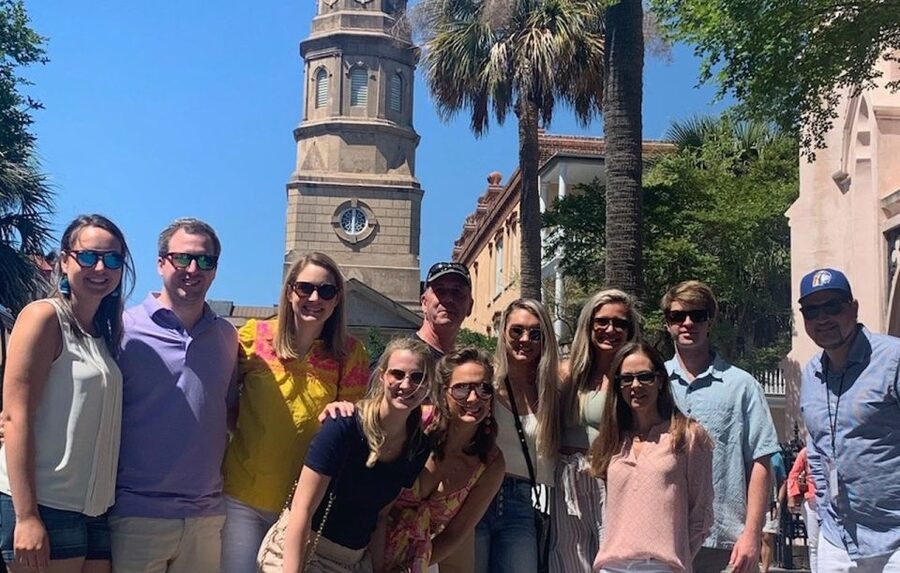
- Licensed guide Adam Moore leads every tour, using storytelling (not just a memorized script) and answering your questions as you go
- Small groups (max 10) mean less waiting, more back-and-forth, and a tour that feels personal
- Old town streets and alleyways take you through an intricate map of Charleston history
- A wide historical lens covers the British, American Patriots, Enslaved people, Confederate and Union soldiers, plus political leaders tied to national history
- Landmarks like Powder Magazine, Philadelphia Alley, Old Slave Mart, and the Provost Dungeon give the stories specific places to stand
Why Charleston’s alleys make history click

Charleston is one of those cities where the buildings are pretty, but the layout is what teaches you. The streets and alleyways create a kind of “sequence,” so when a guide connects a location to the people who lived, suffered, negotiated, or fought there, it stops feeling abstract.
What makes this tour work is the balance. You’re not only looking at brick and signage. You’re walking through the same kinds of paths that different groups moved through across time—British, American Patriots, Enslaved people, Confederate and Union soldiers, and politicians and presidents associated with national decisions, including George Washington. The guide uses those connections to explain how local events mattered to the bigger story of the United States.
Also, you’ll feel the difference in the group size. With a maximum of 10 people, the tour stays conversational. You’re not shoved into a long line where questions disappear. Instead, you can ask something and get an answer that fits where you are standing.
You can also read our reviews of more tours and experiences in Charleston.



Starting at 151 Meeting Street: the tour’s “tempo”
You meet outside 151 Meeting Street, and you should show up about 10 minutes early so you can get going smoothly. This matters because the whole experience depends on timing: the guide’s approach is storytelling in sequence, not a checklist you rush through.
The tour runs about 2 hours, and that’s a realistic length for an old town walking loop with frequent short stops. Each stop is long enough to get oriented, then short enough to keep moving. It’s also why footwear matters: you’ll want shoes you enjoy walking in for the duration, not just for a quick downtown stroll.
One small practical note: Charleston can be buggy in warmer months. Bring bug spray and water so you’re not thinking about relief stops instead of listening.
Adam Moore: why the tour feels alive
The guide here is Adam Moore, a licensed tour guide who also studies business and history at the University of South Carolina. That combination shows in the way he explains connections: not only what happened, but why people acted the way they did in their moments.
I like that the tour is designed around one person leading it. The information provided says Adam makes sure to do all the tours, so you’re not rolling the dice on a different guide each time. It also makes the pacing consistent. When the stories build from one street corner to the next, the tour feels like one narrative instead of separate mini-lessons.
The most praised part of the experience is also the easiest to notice in practice: Adam’s tone. He’s described as funny, personable, and direct—so the history doesn’t feel like a lecture. He answers questions beyond a dry script, which is exactly what you want when the city’s past is complicated and emotional.
Circular Congregational Church: history you can see at street level
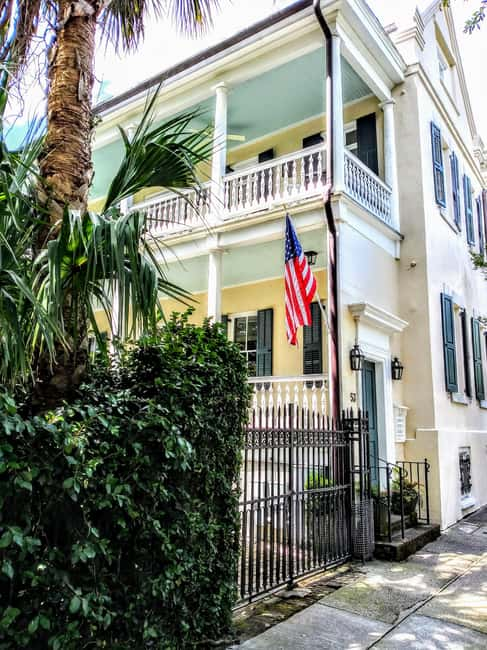
Your first stop is Circular Congregational Church. Even if you’ve never studied Charleston’s early story, church buildings tend to act like anchors. They’re built for community, and that makes them great starting points for understanding how people organized their lives.
This stop is scheduled for about 10 minutes, which is a good pace. You get enough time to look around and settle into the tour mode without it dragging on. If you like historical context that starts broad and then narrows, this opening works well.
Powder Magazine: how a single site can carry big national weight
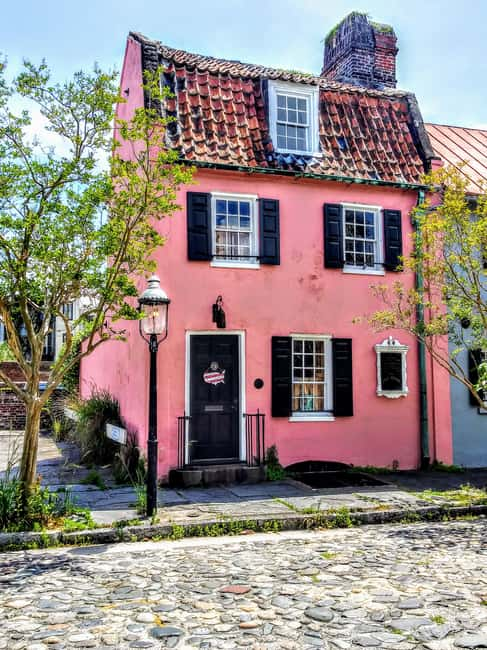
Next up is Powder Magazine, Charleston. The name alone hints at why this kind of place matters in conflict-era stories. In this tour, it’s not treated like an isolated artifact. Instead, it’s used to connect local events to wider national dynamics.
It’s on the schedule for about 15 minutes, which tells you the guide will likely slow down a bit here. That’s usually when storytelling benefits from time—because a guide can explain relationships: who had what power, what risk looked like, and how decisions echoed beyond town limits.
If you’re the type who likes cause-and-effect, you’ll probably enjoy this stop. If you prefer a lighter, purely scenic walk, this section may feel heavier—but it’s part of the tour’s promise to tell real stories.






Philadelphia Alley: where narrow space changes the story
Then you step into Philadelphia Alley for about 10 minutes. Alleys are ideal for history tours because they show you how movement happens in real life. Even without detailed museum-style exhibits, the space itself gives you a sense of how people navigated daily life and worked around obstacles.
On a walking tour like this, alleyways do a second job too: they break the city into “chapters.” You’re not just passing landmarks. You’re moving through transitions that match the guide’s storytelling.
Dock Street Theatre: entertainment and power share the same streets
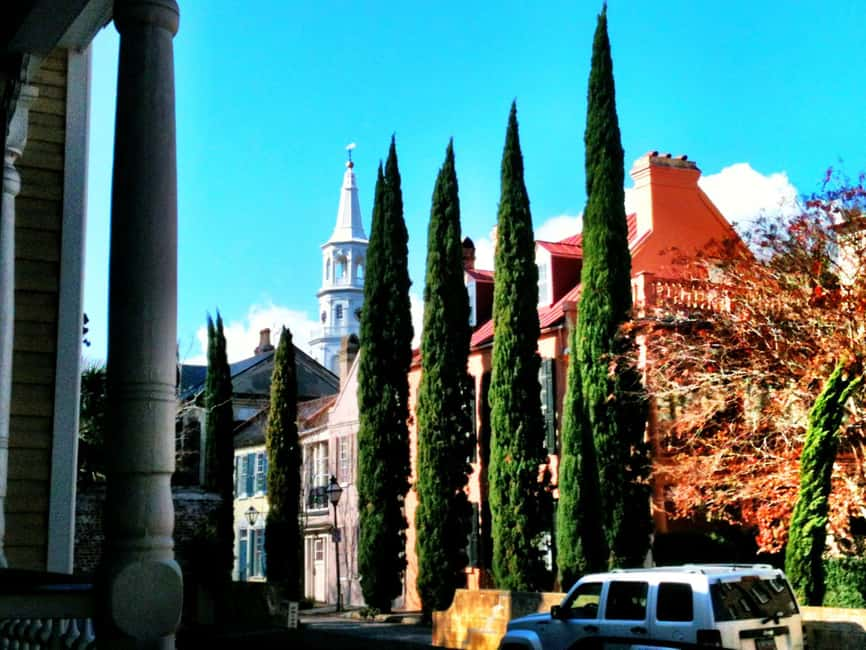
You’ll pause at Dock Street Theatre for about 20 minutes, the longest stop besides the waterfront segment. That extra time suggests the guide spends more effort connecting the location to the human side of the past.
Theatre districts often reflect social life—what communities valued, who gathered, and how public space signaled status. In this tour format, it’s also a chance to shift tone without losing seriousness. The guide can show how culture and civic life sit beside darker chapters.
Practical tip: if you’re traveling with anyone who likes variety, this is a strong midpoint. The tour is still grounded in history, but the longer stop gives breathing room before you head toward more difficult sites.
Pink House Gallery: a quick glance that keeps momentum
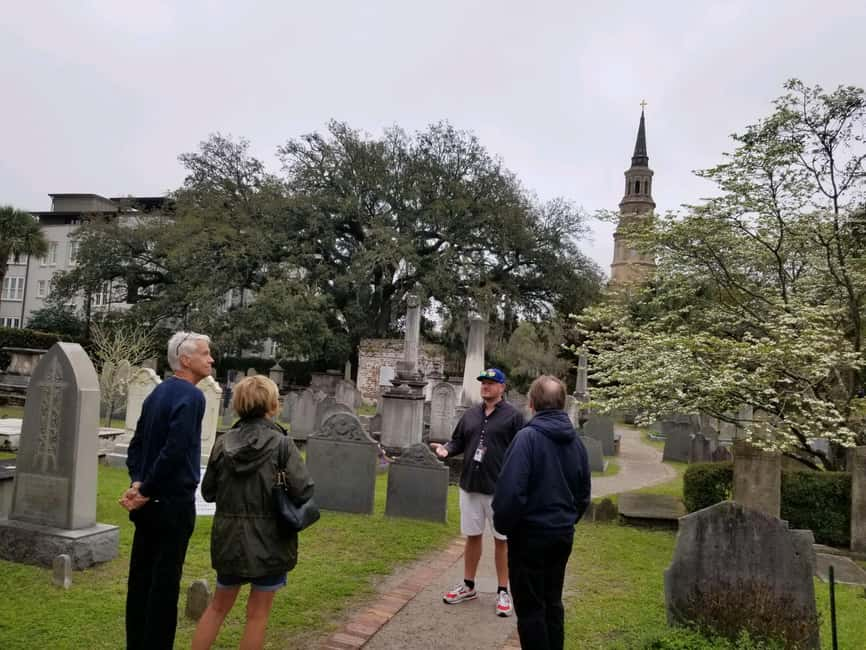
After that comes Pink House Gallery, a short 5-minute stop. Short stops can be easy to underestimate, but they’re useful on a 2-hour tour. They keep the walk feeling guided instead of “you go to point A, then guess what to do next.”
This stop likely functions as a visual break and a way to reset your brain while the guide continues the storyline. If you tend to get restless on tours, the fast pace here may be a plus.
Old Slave Mart Museum: facing the hard chapters directly
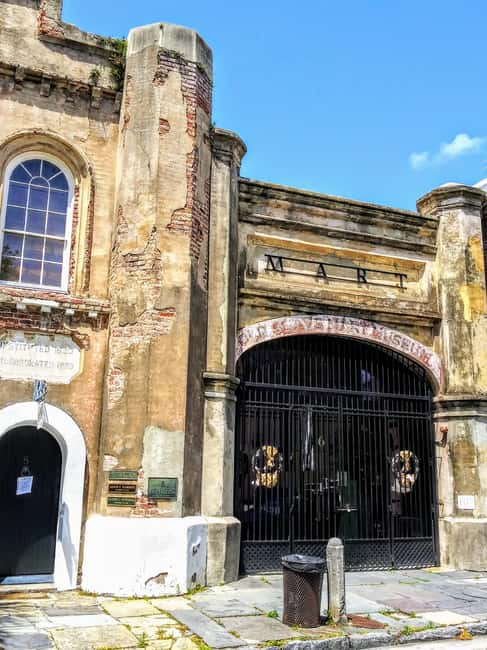
Next is Old Slave Mart Museum, about 10 minutes. This is one of the most important stops on the walk, because the tour’s theme explicitly includes Enslaved people and the systems that dehumanized them.
What I appreciate about putting this site on a walking route is that it resists the idea that difficult history belongs only in classrooms. It belongs on real streets, in real spaces, and in real conversations.
You don’t need to know the details already. The guide’s storytelling approach is built to give you meaning and context at the pace of walking. Still, you should mentally prepare for this section to feel emotionally intense. The goal isn’t to shock you. It’s to make the history harder to ignore.
Old Exchange & Provost Dungeon: where local space intersects with imprisonment and politics
Then you visit the Old Exchange & Provost Dungeon for about 10 minutes. Even without studying beforehand, the names signal a theme: trade and governance mixed with control and confinement.
In tours like this, the value of a site like the provost dungeon is that it brings the abstract idea of power into focus. You’re walking through a built environment where decisions turned into outcomes—especially for people who had little control.
If you want history that connects policy, war, and ordinary life, this is likely a standout moment. If you prefer history that stays purely distant and celebratory, you may find this portion difficult. Either way, it’s a key part of understanding Charleston’s full story.
Rainbow Row: when the view becomes part of the explanation
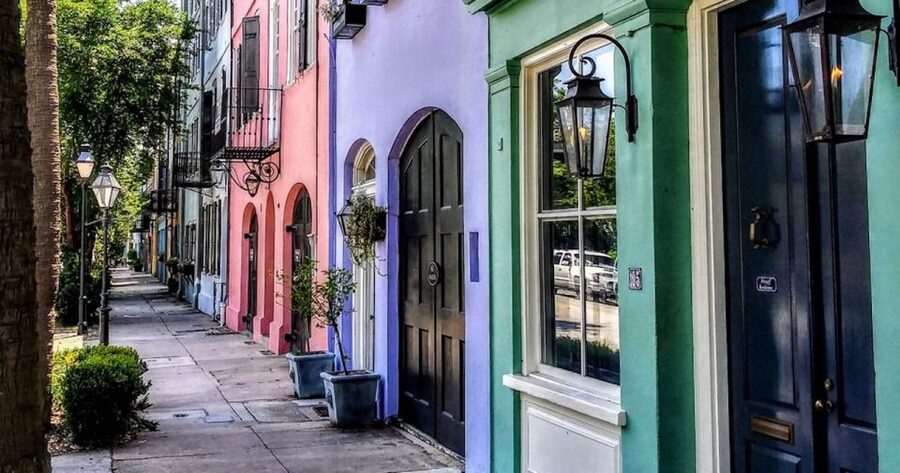
You then reach Rainbow Row for about 10 minutes. This is where many visitors take photos, but on this tour it’s not treated like scenery only. The guide uses the stop to connect the city’s visible landmarks to the past that shaped everything around them.
Ten minutes is enough time to look, regroup, and absorb the story without turning the stop into a slow standstill. If you’re sensitive to crowds, though, this is also one of the points where you might feel more people around. That’s the trade-off of hitting a famous postcard moment on a walking tour.
44 Broad St and the final shift toward the waterfront
After Rainbow Row, you stop at 44 Broad St for about 5 minutes. Short stops like this are usually about tying threads together: what you learned earlier, and how it connects to the city’s institutions and decisions.
Finally, you head to Waterfront Park for about 15 minutes of guided time. The waterfront is a smart closing move. It gives you space after concentrated history stops, and it provides a natural “release valve” for your brain. It’s a chance to step back and see Charleston as a connected system—streets, commerce, movement, and the decisions that traveled farther than one neighborhood.
Price and value: why $27 can be a bargain
At $27 per person for about 2 hours, the value here is mostly about what you get for the time. You’re paying for more than access to locations. You’re paying for a licensed guide, storytelling pacing, and a small group cap of 10 participants.
If you self-walk this route, you could certainly see the sites. But you’d miss the “why this matters” part that makes the stops click. The guide’s goal is to tell real stories that impacted not only South Carolina, but the country as a whole. That is the part that can turn a sightseeing walk into something memorable and educational.
Also, with small groups, the tour avoids the typical walking-tour problem: you don’t feel like a passenger in a moving line. You can ask questions, and the answers make sense in the moment.
What to bring (and what to skip)
This is a walking tour, so keep it simple.
Bring:
- Water
- Bug spray
- Comfortable walking shoes you actually like
Skip:
- Anything that slows you down. If you hate stopping for stretches or you plan to wear shoes that hurt after 30 minutes, plan on suffering.
And arrive early at 151 Meeting Street. Getting settled matters when the tour’s power is in the story flow.
Who should book this Charleston history and alleys walk
This tour is a good fit if you:
- Want a first-timer orientation to Charleston history that goes beyond surface-level facts
- Like tours where you can ask questions and get thoughtful answers
- Prefer a walking format that helps you connect streets to stories
- Are comfortable with tough subject matter and want it handled directly, not skirted
It might not be the right match if you:
- Want only light entertainment and a relaxing stroll
- Don’t like being on foot for about 2 hours
- Prefer museum-style browsing where you control your pace stop-by-stop
Should you book Charleston History Tour with Adam Moore
If you want a Charleston experience that connects locations to real people and real national themes, this is an easy yes. The standout advantage is the guide—Adam Moore—and the small-group cap that keeps the conversation flowing. You get a structured route through major landmarks and alleyways, plus a storytelling style that makes the city’s timeline feel understandable.
Book it especially if you’re traveling with someone who likes history but has trouble sitting through lectures. The walking format helps keep energy up, while the stories give it meaning.
If you’re hoping for a purely scenic walk, consider another option. This one treats history as something you should actually face.
FAQ
Where does the tour start?
The tour meets outside 151 Meeting Street. Plan to arrive about 10 minutes before the start time.
How long is the Charleston history walking tour?
It’s listed as a 2-hour tour.
How many people are in each small group?
The tour is limited to 10 participants.
Is the tour wheelchair accessible?
Yes, the tour is wheelchair accessible.
What language is the tour in?
The tour is offered in English.
What is the price per person?
The price is listed as $27 per person.
What should I bring or wear for the walk?
Wear footwear you enjoy walking in, bring water, and bring bug spray.
Is there free cancellation?
Yes, free cancellation is offered up to 24 hours in advance for a full refund.
Can I reserve and pay later?
Yes. You can reserve now and pay later.