REVIEW · DARWIN
Darwin Heritage Walk
Book on Viator →Operated by Walk Darwin Pty Ltd · Bookable on Viator
Darwin’s CBD can feel like a set from two different centuries. This Darwin Heritage Walk strings them together with stories tied to the buildings you pass every day, from pre-Cyclone Tracy survivors to carefully restored civic spaces. I especially like how it pairs old and new in the same views, so you quickly understand what rebuilt Darwin and what endured.
The second thing I like is the pace and comfort: small group size (up to 6) and a guide who makes time for questions, photos, and shade breaks. One possible drawback: if you’re hunting for long stops at specific memorial or green-space areas, you may wish the schedule gave them more time, so think of it as an orientation plus highlights rather than a slow, lingering tour.
In This Review
- Key Things I’d Put on Your Radar
- Why This Darwin CBD Walk Feels Like a Quick Orientation
- Getting Oriented at the Start Corner: Where the Walk Begins
- Star Village: Pre-Cyclone Tracy History in Retail Form
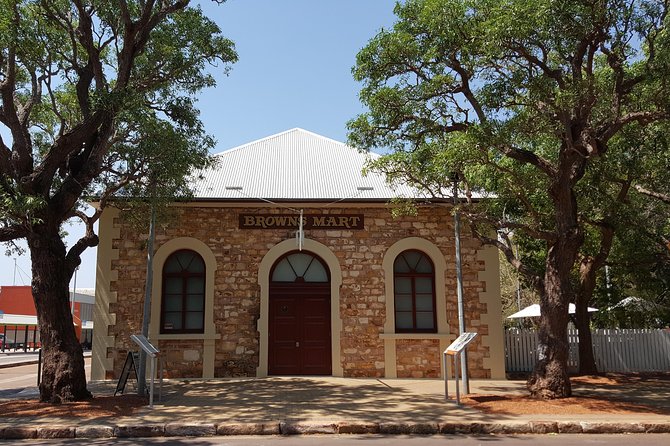
- Brown’s Mart Theatre: Darwin’s Social Life Kept in Place
- Old Town Hall Ruins: When You See a City’s Past in Plain Sight
- Administrator of the Northern Territory: Restored Buildings and Gardens
- Parliament House and Darwin Harbour: The Story Behind Self-Government
- Bicentennial Park: Harbour Green Space With Early Memories
- What the Guide Adds (and Why It Matters)
- Pacing Notes: Easy Walking, But You Should Plan Your Body
- Price and Value: What $42.32 Buys You in Real Terms
- Small Caveat: Topics Some People Want More Of
- Who This Tour Suits Best (and Who Might Prefer Something Else)
- Should You Book the Darwin Heritage Walk?
- FAQ
- How long is the Darwin Heritage Walk?
- What does the Darwin Heritage Walk cost?
- Where do I meet, and where does the tour end?
- What should I bring?
- Is hotel pickup included?
- Does the tour run in bad weather?
Key Things I’d Put on Your Radar
- Pre-Cyclone Tracy survivor sites like Star Village, one of the few original structures from before the big cyclone era
- Two blocks of civic storytelling where Darwin’s governance and social life sit side-by-side with modern use
- Harbour viewpoints with real context at Parliament House and Bicentennial Park
- Photo and question time built into the walk, not tacked on at the end
- Small-group feel with a maximum of 6 travelers, so you’re not shouting over strangers
- Weather-ready planning with guidance to bring sunscreen, a hat, and water for Darwin’s sun
Why This Darwin CBD Walk Feels Like a Quick Orientation
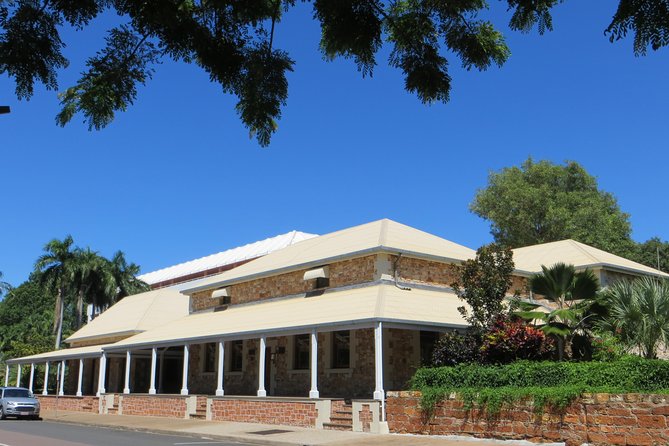
This tour is made for that moment when you step into Darwin and realize you need a map for more than streets. The big idea is simple: you’ll learn why the facades look the way they do, and how the city’s “then” and “now” live next to each other.
The route stays central, with regular opportunities to stop for photos and to look at the quieter corners people miss when they walk straight through. It’s also a practical length—about 2 to 2.5 hours—so you can do it early and still have energy left for the rest of your day along the Esplanade.
You can also read our reviews of more tours and experiences in Darwin.

Getting Oriented at the Start Corner: Where the Walk Begins
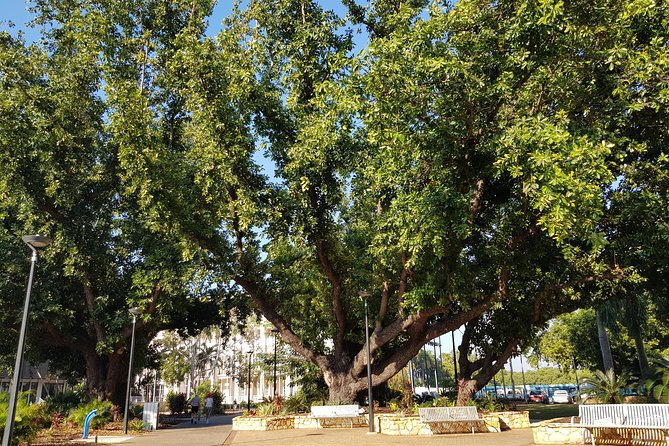
You’ll meet at John McDouall Stuart (Cnr The Mall & Knuckey St) in Darwin City, starting at 8:30am. That timing matters because Darwin mornings can be cooler, and you’ll be outdoors for walking and standing.
The walk also finishes back in the central area at the intersection of The Esplanade and Knuckey Street, opposite Lyons Cottage. That means you’re not stuck far from your next plan—especially handy if you want to continue on foot toward the harbour.
Star Village: Pre-Cyclone Tracy History in Retail Form
One of the first stops is Star Village, a former open-air cinema. What makes it special is that it’s described as one of the few original buildings from pre-Cyclone Tracy—that’s the kind of detail that changes how you see a place. It’s not just a pretty facade; it’s a survivor.
Your guide points out historic features while it’s functioning today as a more modern, chic retail hub. I like this because it helps you notice the “bones” of the building even after its new job. If you enjoy architecture that tells you what happened to a city, this stop hits the sweet spot.
A heads-up: this is short—around 10 minutes—so come with your camera ready. The story is the point, but the best photos usually happen while everyone stops and looks up.
Brown’s Mart Theatre: Darwin’s Social Life Kept in Place

Next is Brown’s Mart Theatre, a building tied to Darwin’s social culture for over 100 years. You don’t go inside on this walk—think of it as a focused exterior perusal with spoken commentary—so your attention stays on the details and the memories attached to them.
This is where the tour starts connecting everyday Darwin life to bigger events and long timelines. The theatre becomes a symbol: a place where community gathered, continued, and adapted.
If you like “why this matters” explanations (instead of just naming sites), you’ll probably enjoy this segment. It’s also a good breather moment since the tour is mostly slow and conversational through the CBD.
Old Town Hall Ruins: When You See a City’s Past in Plain Sight
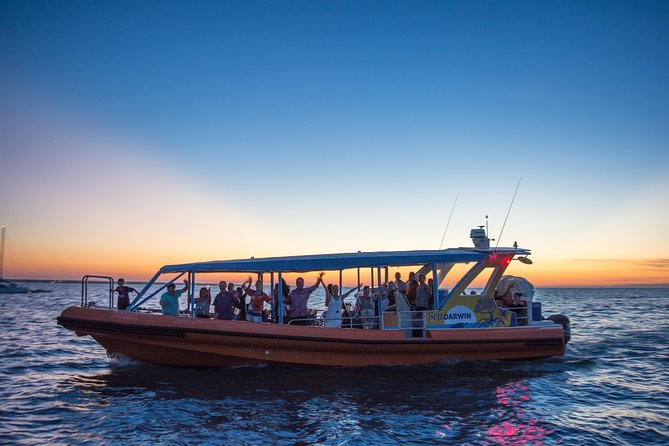
Then you get The Old Town Hall, now in ruins. The clue here is in the name: it’s the Old Palmerston Town Hall, and it’s described as a visible reminder of the early pioneers who passed through the site.
Seeing ruins in the city center can feel eerie in a useful way. You don’t just hear about early Darwin—you get a physical anchor that you can look at and think about: how the city changed, what survived, and what didn’t.
This stop is also about 10 minutes, which helps keep the walk moving without turning it into a full-day archaeology project.
Administrator of the Northern Territory: Restored Buildings and Gardens
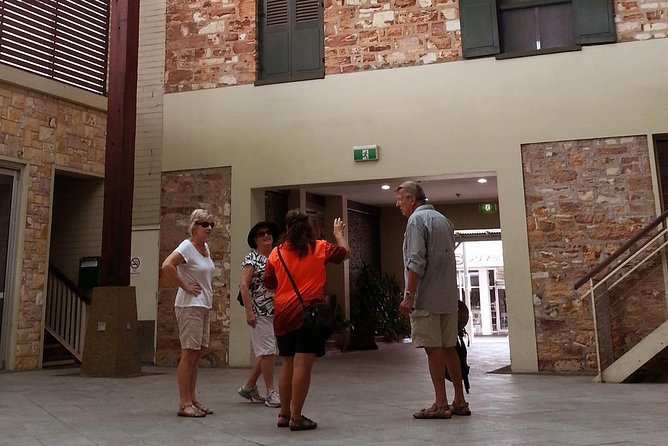
After the ruin-and-remembrance moment, the tour shifts into restored beauty at the Administrator of the Northern Territory. You’ll see the restored buildings and gardens that reflect life from Darwin’s early years, and you’ll learn that the site today is used as offices for the Administrator of the Northern Territory.
I like this stop because it balances the harder parts of Darwin’s story with a sense of place and design. Gardens in the tropics aren’t decoration here—they’re part of how people lived and cooled themselves, and they frame buildings in a way that feels practical, not just pretty.
The commentary keeps the focus on the link between past and present use, so you don’t leave thinking this was just a pretty detour.
Parliament House and Darwin Harbour: The Story Behind Self-Government
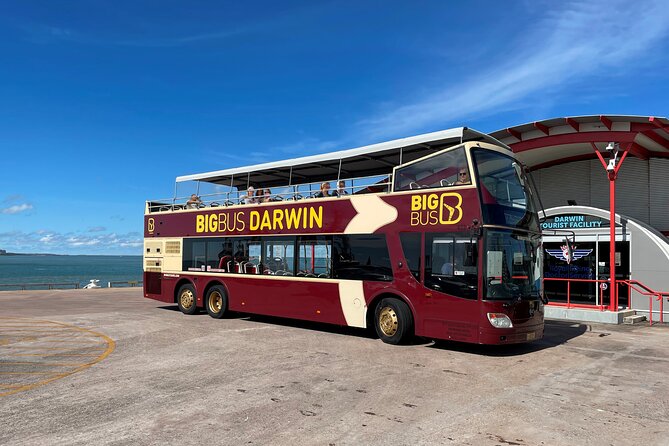
At Parliament House, you’re told about a grand building that presides over Darwin Harbour, and you’ll learn more about self-governing modern Darwin. Even if you’ve seen lots of parliament buildings around the country, Darwin’s context is distinct—place, history, and identity all show up fast.
This is one of those stops where the views help the story land. You can connect the political role of the building to the harbour setting and how the city’s direction grew from a port-and-pioneer origin into a more formal civic system.
Expect around 10 minutes at this stage. It’s enough time to get the meaning and grab a couple of solid harbour-facing photos, but it’s not meant to replace a longer harbour walk.
Bicentennial Park: Harbour Green Space With Early Memories
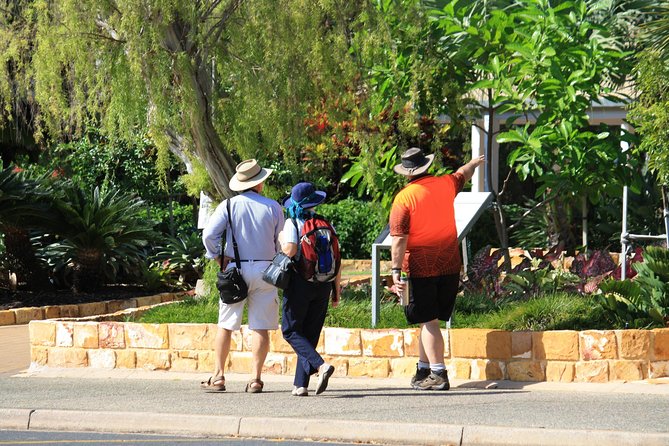
The final highlight segment is Bicentennial Park, overlooking Darwin Harbour. The park is described as a green space for leisure and recreation, with hidden treasures around the area that remind you of early Darwin.
This is a smart ending shape for the tour. After several stops centered on civic buildings and resilience, you get space to breathe, look around, and take a calmer set of photos with the water and sky in the background.
It’s also a longer stop (about 15 minutes), which gives you that little extra buffer to slow down and reset—especially if the sun is doing its thing. Bring water and take your time here. Darwin heat doesn’t care if you’re on a schedule.
What the Guide Adds (and Why It Matters)
The biggest difference on this kind of walk is whether the guide turns facts into something you can picture. The guides here—people like John and Robin, based on what’s been shared—are praised for being passionate about Darwin and for handling questions well.
The tour structure also supports that. You’ll get spoken commentary tied to each site, plus frequent chances to stop and photograph. One thing I’d take seriously from the experience style: guides tend to build comfort into the timing, including shade breaks.
That matters in Darwin more than most places. Good shoes and sun protection aren’t optional, they’re what lets you enjoy the stories instead of rushing through them.
Pacing Notes: Easy Walking, But You Should Plan Your Body
This isn’t a marathon. It’s best for moderately active travelers because there’s walking and standing throughout the tour.
The tour is also designed for a small group with a maximum of 6 travelers, so you’re moving at a human pace rather than getting herded. Still, you’ll spend time on foot. If you’re sensitive to heat or long standing, the earlier start time can help, and your breaks will matter.
Also: the tour runs in all weather conditions and you should dress appropriately. If conditions are poor enough to cancel, you’ll be offered another date or a full refund. In plain terms: plan for sun and rain, and pack like you’re going outside because you are.
Price and Value: What $42.32 Buys You in Real Terms
At $42.32 per person, this isn’t a budget “see stuff fast” deal. It’s priced like a small, guided orientation with multiple meaningful stops—especially because it includes a local guide and spoken commentary.
Here’s why it can still be good value:
- You’re getting context for major Darwin moments, including events like Cyclone Tracy and the bombing of Darwin mentioned as part of the narrative.
- You see multiple important civic and cultural sites in a short span, with time to ask questions.
- With up to 6 people, you’re more likely to get personal answers instead of generic speeches.
If you like doing a heritage walk early to understand the city before you explore on your own, this price can feel fair. If you already know Darwin’s history and you mainly want deep time at monuments, you might choose a different style of tour—or add your own time to focus areas you care most about.
Small Caveat: Topics Some People Want More Of
One useful caution is about what the tour emphasizes and how long it lingers on particular themes. Some people have wanted more detail around Indigenous history—specifically around the Larrakia people and early contact questions—rather than brief mentions.
If Indigenous history is a core interest for you, don’t assume it will be covered in the depth you want. The best move is to go in with a few questions and ask directly. Your guide can adapt, and even if the tour can’t cover everything, good Q and A can close a lot of gaps.
Who This Tour Suits Best (and Who Might Prefer Something Else)
This Darwin Heritage Walk is a great fit if you want:
- A focused CBD history orientation without a car
- A guided way to understand why buildings look the way they do
- Easy pacing with frequent photo stops
- A local voice to explain major turning points, including resilience after big events
It may feel less ideal if you want:
- Hours devoted to one memorial or one specific park area (this is a multi-stop highlights walk)
- Maximum time inside buildings (most stops are exterior-focused in the format described)
Should You Book the Darwin Heritage Walk?
If you’re in Darwin for the first time and you want to understand the city fast, I’d book it. The combination of pre-Cyclone Tracy survivals, civic sites, and harbour views makes the walk feel like it has a point, not just scenery.
I’d also book it if you like thoughtful, story-led guiding. People specifically praise guides like John and Robin for making the city feel alive with context, answers, and good pacing.
Just go in with the right expectations: it’s a smart orientation and highlights tour. If you have a strong interest in a specific theme—like Indigenous history depth or longer memorial time—plan to follow up on your own afterward.
FAQ
How long is the Darwin Heritage Walk?
It runs for about 2 hours to 2 hours 30 minutes.
What does the Darwin Heritage Walk cost?
The price is listed as $42.32 per person.
Where do I meet, and where does the tour end?
You meet at John McDouall Stuart (Cnr The Mall & Knuckey St, Darwin City NT 0800). The tour ends at the intersection of The Esplanade and Knuckey Street, opposite Lyons Cottage.
What should I bring?
Bring a camera, sunscreen, a hat, and drinking water. Good enclosed non-slip walking shoes are recommended.
Is hotel pickup included?
No. Hotel pickup and drop-off are not included.
Does the tour run in bad weather?
It operates in all weather conditions and you should dress appropriately. If it’s cancelled due to poor weather, you’ll be offered a different date or a full refund.