REVIEW · MEXICO CITY
Walk around UNAM campus, a UNESCO World Heritage Site
Book on GetYourGuide →Operated by Joaquin Diez Canedo · Bookable on GetYourGuide
UNAM’s campus feels like a living museum. In just three hours, you get a guided walk through UNAM’s UNESCO World Heritage campus, with Mexico City’s most famous murals as your compass. It’s modernist architecture in a volcanic setting, and the art tells you how Mexico thought about education, politics, and identity in the mid-20th century.
I especially like the way the tour turns the buildings into a story you can read with your feet. The guide, Sebastián, connects what you see to student life and the wider socio-economic and political realities on campus. One consideration: it’s a 4 km walk and the tour keeps moving in rain or shine, so come ready for uneven ground and limited toilet options.
In This Review
- Key things you’ll notice on this UNAM campus tour
- UNAM’s Modernist Campus at a Glance
- Where You Meet and How to Get There Without Stress
- The 3-Hour Walk: How the Route Feels in Real Time
- Mexico City’s Most Famous Murals: What You’ll Be Looking For
- Juan O’Gorman’s Central Library: The Architecture Stop That Lands
- Modernist Architecture Meets Volcanic Terrain
- Beyond Buildings: Student Life, Politics, and Why It Matters
- Practical Tips: Rain, Shoes, Toilets, and the 4 km Walk
- Price and Value: Is $76 Worth It?
- Who Should Book This UNAM Campus Tour
- Should You Book This UNAM Campus Tour?
- FAQ
- How long is the UNAM campus tour?
- What does the tour cost?
- Where is the meeting point?
- How can I reach the meeting point using Metrobús?
- Is it wheelchair accessible?
- Does the tour run in the rain?
- Is food included?
- How much walking is involved?
- What languages are the tour guide?
- Is the tour suitable for pregnant women?
- Is free cancellation available?
- Is there a reserve now, pay later option?
Key things you’ll notice on this UNAM campus tour
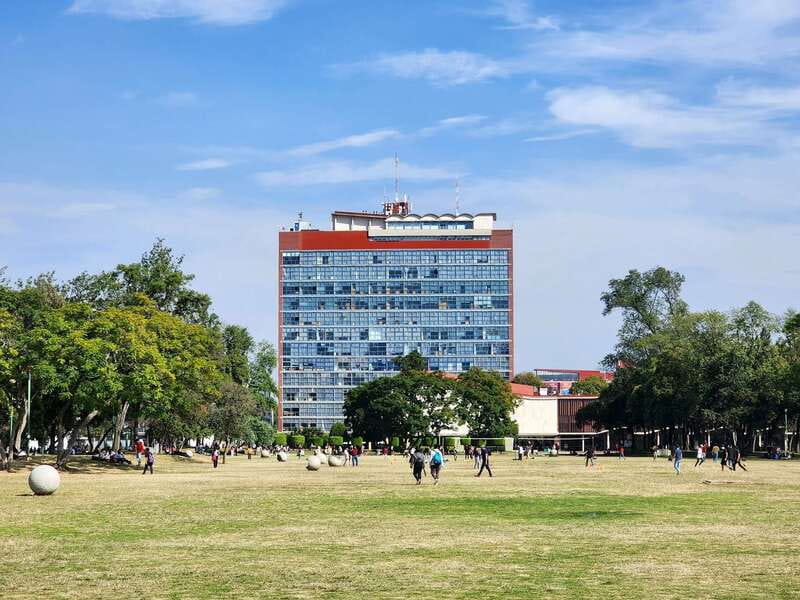
- UNESCO World Heritage campus with mid-century modernist buildings and volcanic rock underfoot
- Murals by Rivera, Siqueiros, and O’Gorman that you can identify fast and understand better
- Juan O’Gorman’s Central Library, a design stop that makes the architecture click
- Modernist architecture explained in human terms, not just dates and names
- A student-life perspective on how different faculties feel and what shapes graduation rates
UNAM’s Modernist Campus at a Glance
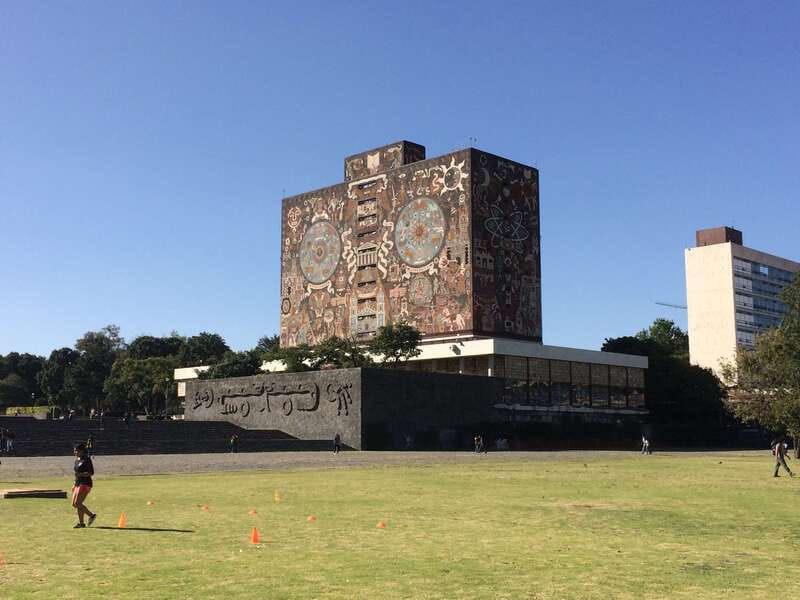
UNAM’s campus is famous for a reason. This is where bold modernist design and major Mexican muralism meet in the same place, on a rocky, volcanic terrain. The buildings were created in the 1950s, a period when Mexico and the United States were tightly linked through culture, industry, and politics. Walking the campus feels like stepping into a design argument: how should an education system look, and what should it stand for?
You’ll spend your time outdoors, and you’ll move at a steady walking pace. That’s part of the point. The murals and buildings land differently when you see them from multiple angles, with the campus unfolding around you instead of lining up for a quick photo.
The best part, for me, is that you don’t just get sightseeing. You get interpretation. Sebastián talks through the meaning behind murals and architecture, and he ties it to day-to-day student life and broader conditions in Mexico. If you like your travel with a little context and a lot of clarity, this is a strong match.
You can also read our reviews of more tours and experiences in Mexico City.



Where You Meet and How to Get There Without Stress
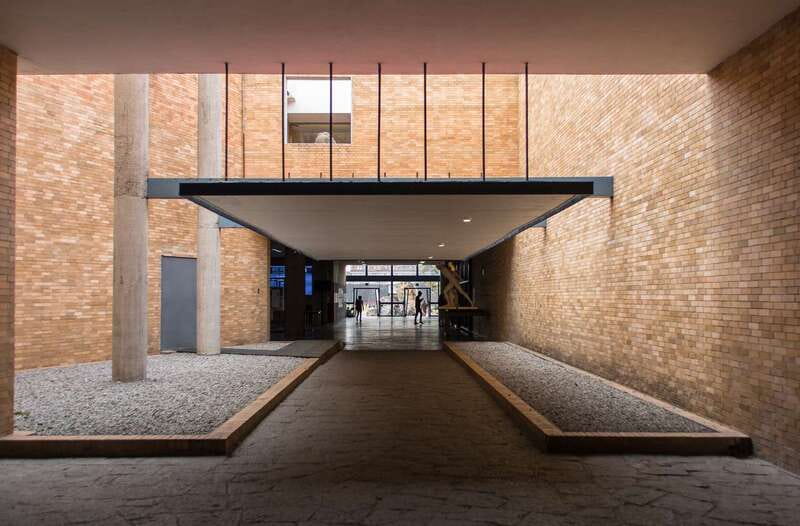
You’ll meet in front of the Estadio Olímpico Universitario. That matters because the campus is spread out, and this spot is a practical anchor.
If you’re using Uber, expect about a 30-minute ride from neighborhoods like Condesa or Roma. If you prefer public transit, use Metrobús línea 1. Exit at Dr. Gálvez Station, then walk south of Insurgentes Avenue for about 10 minutes. It’s a manageable approach, but give yourself a little buffer so you’re not sprinting in shoes that already hate you.
A tip that really helps: if you’re coming at a time when classes are happening, you’ll get more of the campus in motion. Sebastián’s explanations are tied to what students do day to day, and seeing that rhythm makes the campus feel less like a monument and more like a workplace for ideas.
The 3-Hour Walk: How the Route Feels in Real Time
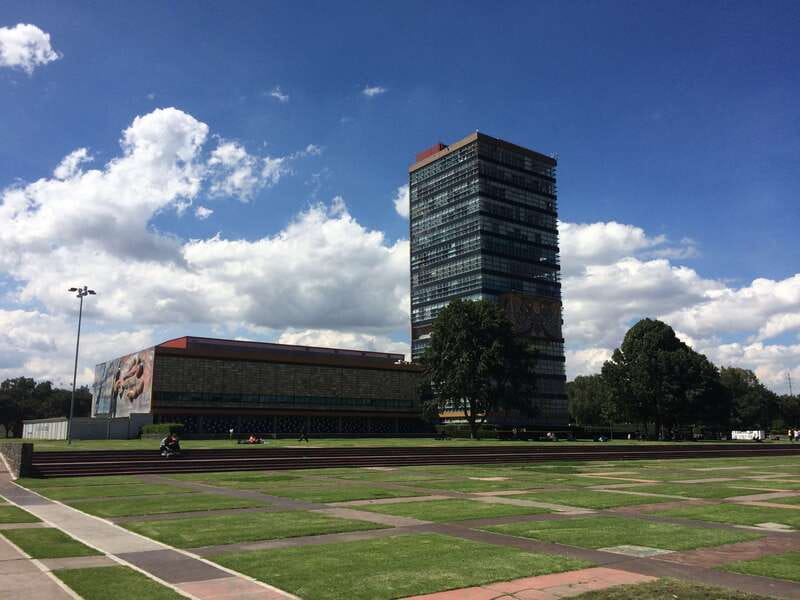
The tour runs about 3 hours, typically available in the morning and afternoon. You’ll cover roughly 4 km total, which adds up faster than you think because you’re not just walking in a straight line. The campus layout asks you to pause, look, and then move again.
Your guide will point you toward the major murals and key architecture highlights, including Juan O’Gorman’s Central Library. Between stops, you’ll also talk through campus history and why the setting is so important. The rocky ground isn’t decoration. It’s part of how the campus grew up around the terrain.
Timing-wise, the tour is designed to keep momentum without turning into a speed-walk. Still, plan your day so you can enjoy the final stop without rushing to your next reservation. After 3 hours of guided walking, you’ll feel it.
Mexico City’s Most Famous Murals: What You’ll Be Looking For
This tour is worth it for the murals alone, but you’ll get more out of them when you know what you’re seeing. You’ll focus on major works associated with artists like Diego Rivera and David Alfaro Siqueiros, with Juan O’Gorman also part of the conversation. If you’ve seen images online, seeing them in person helps you notice scale, placement, and how the art relates to the surrounding architecture.
The guide’s approach makes muralism feel less like a museum label and more like public communication. Sebastián explains symbolism and context, and he connects the murals to Mexico’s political and cultural concerns—especially the way education and public spaces were used to shape national identity.
One more practical benefit: murals are often fixed points you can come back to later. After this tour, you’ll have a mental map of where the art sits in relation to the campus buildings. That makes it easier to explore on your own afterward without wandering around feeling lost.
Juan O’Gorman’s Central Library: The Architecture Stop That Lands
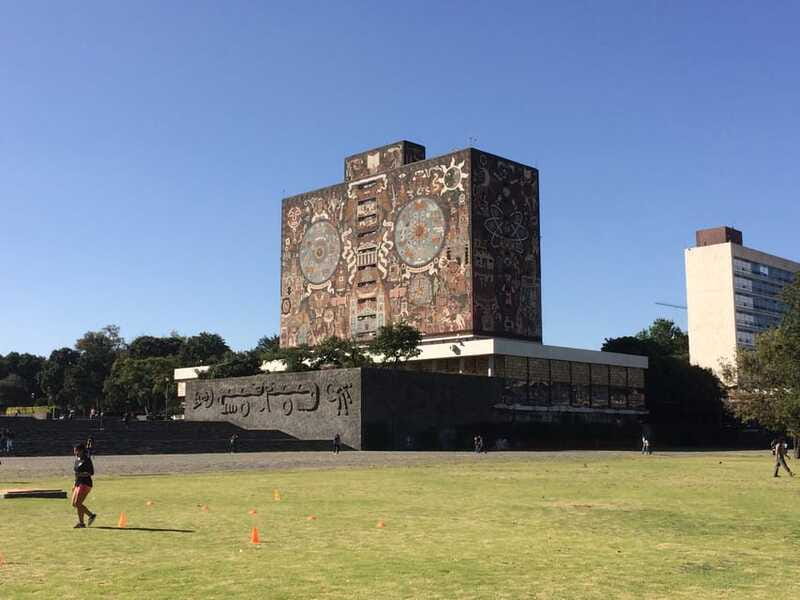
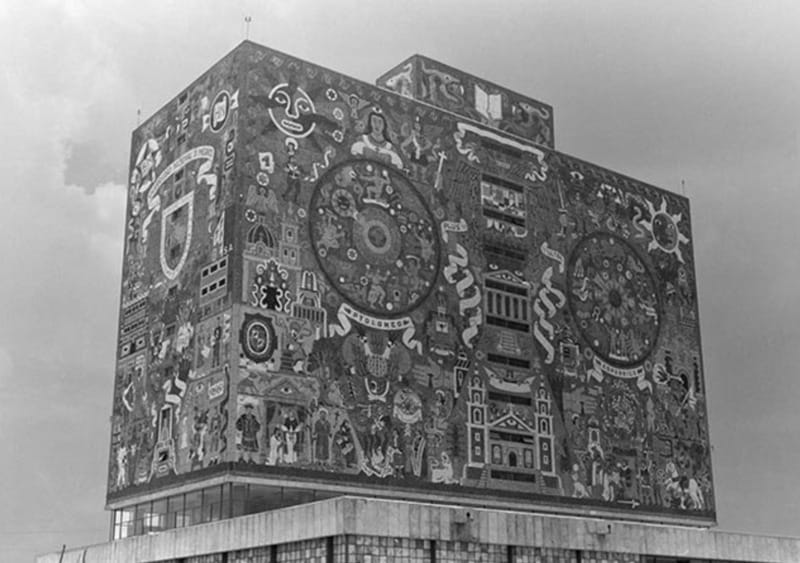
Juan O’Gorman’s Central Library is one of the key highlights, and it’s a design choice that rewards attention. This stop is where modernist architecture stops being an abstract style and becomes a set of decisions—materials, layout, and how people move through space.
Sebastián’s explanations help you see why O’Gorman’s approach matters in the broader story of UNAM. The Central Library isn’t just a pretty landmark. It’s a symbol of what universities were trying to do during the mid-century building boom: promote learning, express modern ideas, and make knowledge visible.
If you’re into architecture (or even if you just want your photos to look like they belong in a book), this is a top payoff moment. You’ll also likely hear how the campus structures the experience of studying and learning—something you can connect to mural messages about society and education.




Modernist Architecture Meets Volcanic Terrain
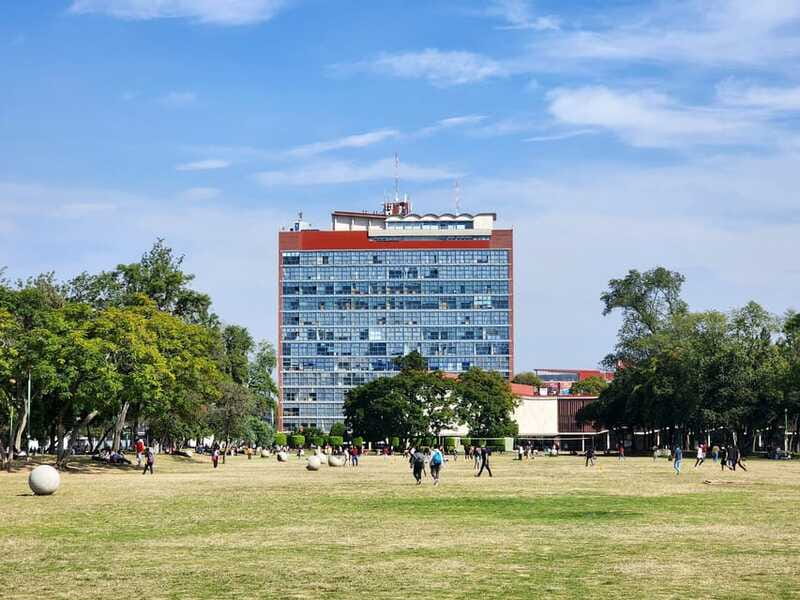
The campus rises from volcanic rock, and that changes everything. You don’t get a flat, easy-to-walk grounds experience. You get texture, slope, and unevenness. That’s also why the architecture looks the way it does: buildings and walls respond to the ground, and the views feel sculpted by the terrain.
Sebastián talks about the campus’s particularities—how the buildings sit in the rocky setting, and how this mix became part of UNAM’s identity. When the guide explains it, you start noticing details like how sightlines work and how different structures relate to each other on the hill.
This is also where the tour’s UNESCO status clicks. The campus isn’t only important because of art and architecture. It’s important because of how those elements come together in a specific place and time—mid-century modernism shaped by real environmental constraints.
Beyond Buildings: Student Life, Politics, and Why It Matters
One reason this tour earns such high marks is the human layer. Sebastián, a former UNAM student and now a lecturer, brings a student perspective that goes beyond architecture. He explains the campus through what it’s like for students, not just what it looks like on postcards.
You’ll hear about socio-economic and political dynamics students face, and how those realities connect to the larger situation in Mexico. That kind of context can feel heavy, but Sebastián keeps it understandable. It makes the campus feel like a living institution with real challenges, not a static showpiece.
You’ll also get a sense that UNAM doesn’t feel identical everywhere. Different colleges can have different vibes, and you’ll see parts of the campus that help you grasp that variety. One review also mentioned the auditorium where Okupa Che is based, which adds another layer to how spaces are used beyond standard academic life.
A final point worth knowing: the tour includes discussion of a low graduation rate and the reasons behind it, though the details aren’t the kind of thing you can cram into a single sentence. Still, it’s a useful thread. It reminds you that universities are systems, and systems have outcomes shaped by far more than campus design.
Practical Tips: Rain, Shoes, Toilets, and the 4 km Walk
This tour runs rain or shine. Mexico City weather can shift fast, so bring a light rain layer or poncho you don’t mind getting dusty. You’ll also be walking about 4 km, and the campus is on rocky ground, so good grip matters. If you only pack fashion sneakers, this is where you pay the price.
Toilets can be hard to find. That’s not a reason to skip the tour, but it’s a reason to plan ahead. If you can, do a quick toilet stop before you start and keep expectations realistic during the walk.
The tour includes water, but it does not include food or drinks. Plan a meal before or after. Also note that hotel pickup isn’t included, so build in transit time to the meet point.
One more consideration: it’s not suitable for pregnant women. If you have any mobility concerns, the wheelchair accessibility note helps, but the route still involves a full tour-time walk length and outdoor terrain.
Price and Value: Is $76 Worth It?
At $76 per person for a 3-hour guided experience, this isn’t a bargain-bucket activity. But the value is in what you get: access to a UNESCO campus, interpretation of major murals, and architecture context from a guide who connects what you see to student life and Mexico’s broader reality.
You’re also getting water included, plus the tour covers multiple focal points rather than a single-photo-stop style route. If you’re the type of traveler who wants a coherent story—why these murals exist, why UNAM looks like it does, and how campus life shapes the institution—this price feels more like paying for expertise than paying for walking.
If you mostly want quick photos with minimal walking, you might find the cost less appealing. But if you like learning and you want your time in Mexico City to point somewhere specific, this tour earns its keep.
Who Should Book This UNAM Campus Tour
You’ll get the most from this tour if you like:
- Architecture and design that connect to history and society
- Murals as public communication, not just art objects
- A campus perspective that includes everyday student life and challenges
It also works well if you want an off-the-radar UNESCO experience that feels less touristy than the usual big-name stops. The campus setting helps you slow down and look carefully.
I’d skip it if you want minimal walking, if rain changes your comfort too much, or if the route won’t work for your situation (especially given the pregnancy note).
Should You Book This UNAM Campus Tour?
Yes, if you’re excited by UNAM’s combination of UNESCO-level architecture and major muralism, and you want explanations that connect art, design, and real campus life. If you’re ready for a 4 km outdoor walk and you can handle limited toilet options, you’ll likely find this one of the best-structured ways to understand the campus in a short time.
If you’re mainly after a relaxed photo stroll, wait or pair a simpler self-guided plan with a shorter stop. But for 3 hours with a guide like Sebastián, this tour offers strong value and a very distinct look at modern Mexico.
FAQ
How long is the UNAM campus tour?
The tour lasts about 3 hours.
What does the tour cost?
It costs $76 per person.
Where is the meeting point?
You’ll meet in front of the Estadio Olímpico Universitario (Olympic Stadium).
How can I reach the meeting point using Metrobús?
Take Metrobús línea 1, exit at Dr. Gálvez Station, then walk south of Insurgentes Avenue for 10 minutes.
Is it wheelchair accessible?
Yes, the tour is wheelchair accessible.
Does the tour run in the rain?
Yes, it takes place rain or shine.
Is food included?
No. Water is included, but food and drinks are not included.
How much walking is involved?
The tour involves about a 4 kilometer (2.5 mile) walk.
What languages are the tour guide?
The live tour guide is available in English and Spanish.
Is the tour suitable for pregnant women?
No, it is not suitable for pregnant women.
Is free cancellation available?
Yes. You can cancel up to 24 hours in advance for a full refund.
Is there a reserve now, pay later option?
Yes. You can reserve and pay later to keep plans flexible.