REVIEW · DOHA
Doha: Combo Heritage & Art Tour of North and West Qatar
Book on GetYourGuide →Operated by Falcon Tours Qatar · Bookable on GetYourGuide
Steel meets sand in Qatar’s west. This 7-hour combo tour strings together UNESCO forts, an abandoned pearl town, and world-famous desert art on a guided loop from Doha.
I especially like the way this format mixes big-name art with readable, real-world history.
I love Olafur Eliasson’s Desert Installation because it turns the emptiness of the desert into part of the artwork. I also love Al Zubarah Fort, where the guide helps you connect the fort’s place to Qatar’s older trading world.
One possible drawback: the timing is tight at each stop (often around 30–40 minutes), so if you want to sit and read for a long time, you might feel a bit rushed.
In This Review
- Key Highlights You’ll Feel Immediately
- Why This North and West Qatar Combo Feels Smart
- Starting in Al Ruwais: the Coast Warms Up Your Eyes
- Al Jumail Abandoned Village: a Pearl Town in Quiet Ruins
- Purple Island and the Art-Stop Energy Shift
- Al Zubarah Fort (UNESCO): trading-era Qatar, told clearly
- Zekreet: cliffs, angles, and a wide-desert feel
- Richard Serra East-West/West-East: steel that fits the empty
- Olafur Eliasson’s Desert Installation: art that uses the desert as a partner
- How the Guide and Transfers Make the Day Easier
- What’s Included, What’s Not, and How to Plan Your Day
- Timing: Short Stops, Big Moments
- Is This Tour Good Value for Your Time?
- Should You Book This Doha North and West Qatar Tour?
- FAQ
- FAQ
- How long is the Doha: North and West Qatar combo tour?
- Where does the tour start and end?
- What sites does the tour include?
- Is the tour guided, and what language is available?
- Is pickup by car included?
- What’s included on the tour besides entrances?
- Are meals included?
- What should I bring with me?
- Is there an option for a private group?
- What is the cancellation policy and is there flexible booking?
Key Highlights You’ll Feel Immediately
- Eliasson and Serra desert art in the same day: modern sculpture set against open sand and sky
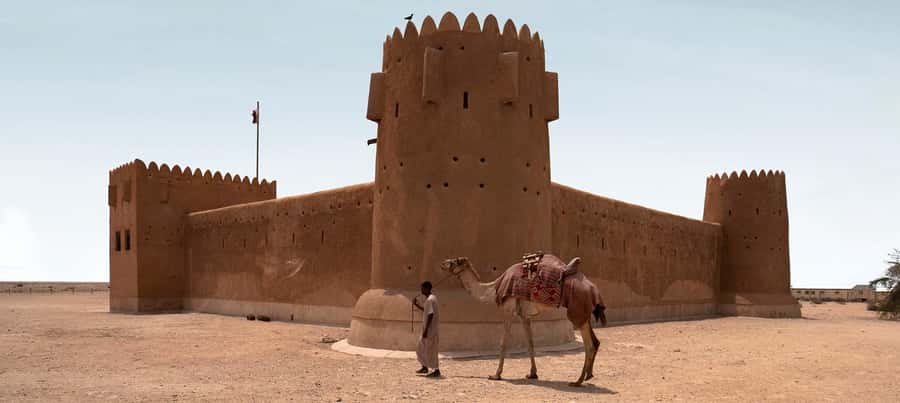
- UNESCO-listed Al Zubarah Fort: preserved fort and archaeology you can actually make sense of
- Al Jumail abandoned pearl town: a short walk through a place that feels frozen in time
- Zekreet “East-West/West-East” monument area: steel forms framed by wide horizons
- Comfort-first transfers from Doha: air-conditioned vehicle plus an English-speaking guide
- Photo-friendly pacing: the guides (often mentioned by name, like Junaid and Javid) are known for storytelling and great photo moments
Why This North and West Qatar Combo Feels Smart
This tour works because it doesn’t treat Qatar like a checklist. You’re not only doing monuments. You’re moving through coastal culture, pearl-diving remnants, and desert art that’s designed for huge open space. That mix is the point.
You start from Doha with round-trip transfers handled for you, so you can spend your energy on the stops, not on directions. And since the tour includes an English-speaking guide plus water, tea, and soft drinks, you’re set up for a long day without constant decisions.
You can also read our reviews of more tours and experiences in Doha.
Starting in Al Ruwais: the Coast Warms Up Your Eyes
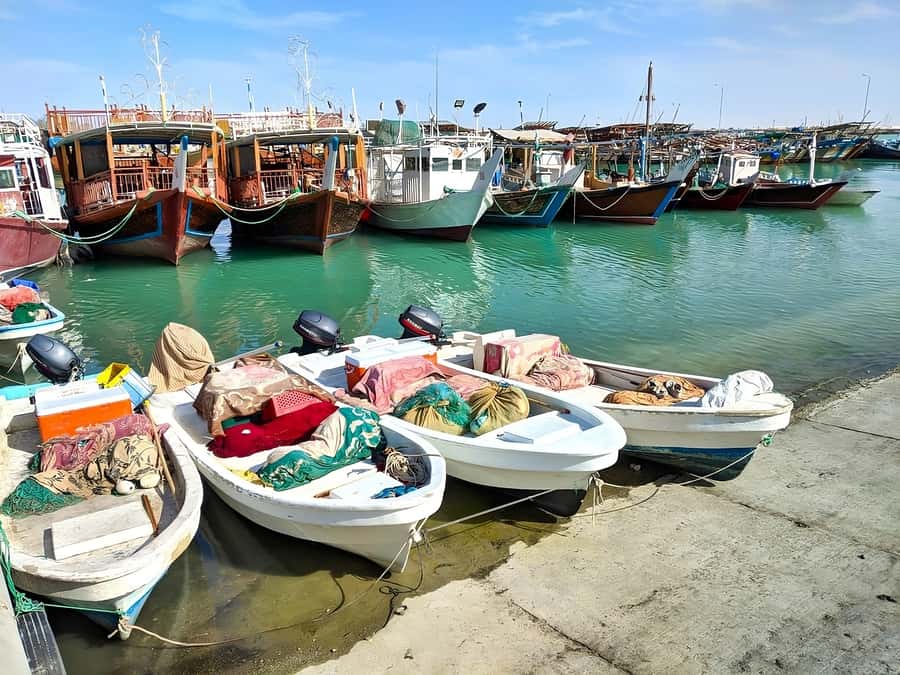
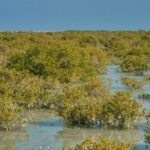
Al Ruwais is where the day gets grounded. You only have about 30 minutes, but that’s enough to get a sense of a quieter Qatar built around the sea. The stop is described as a serene coastal town with traditional fishing culture and sea views, which matters because the rest of the tour goes from shoreline to desert.
This is a good moment to do two practical things:
- get your bearings fast before you hit the forts and sculpture sites
- take wide photos before the day becomes more “close-up ruins and steel”
If you’re the type who likes atmosphere, this first stop helps you shift gears from city time into the slower rhythm of North and West Qatar.
Al Jumail Abandoned Village: a Pearl Town in Quiet Ruins
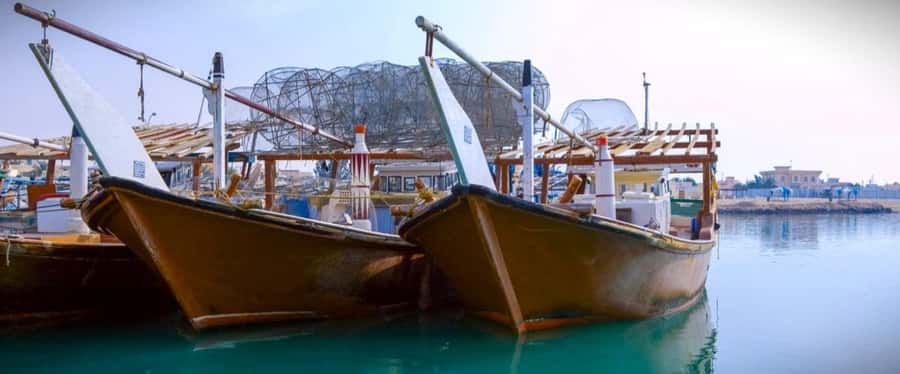
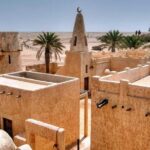
Then you head to Al Jumail Abandoned Village for about 30 minutes. This former pearl-diving settlement is the kind of place where you don’t need to be a history nerd to feel the weight of it. The tour framing is clear: you’re looking at the remains of a historic pearl town, not a themed set.
What I like about this stop is the contrast. After the coast, you step into a landscape of silence and old structures. The guide’s job here is important. Without context, abandoned places can feel like just “ruins.” With context, you start to see what people once did there—work tied to the sea, and a whole way of life organized around diving and trade.
Practical tip: wear shoes you’re happy to walk in. Even with a short visit, you’ll likely move around enough to notice if your footwear is uncomfortable.
Purple Island and the Art-Stop Energy Shift
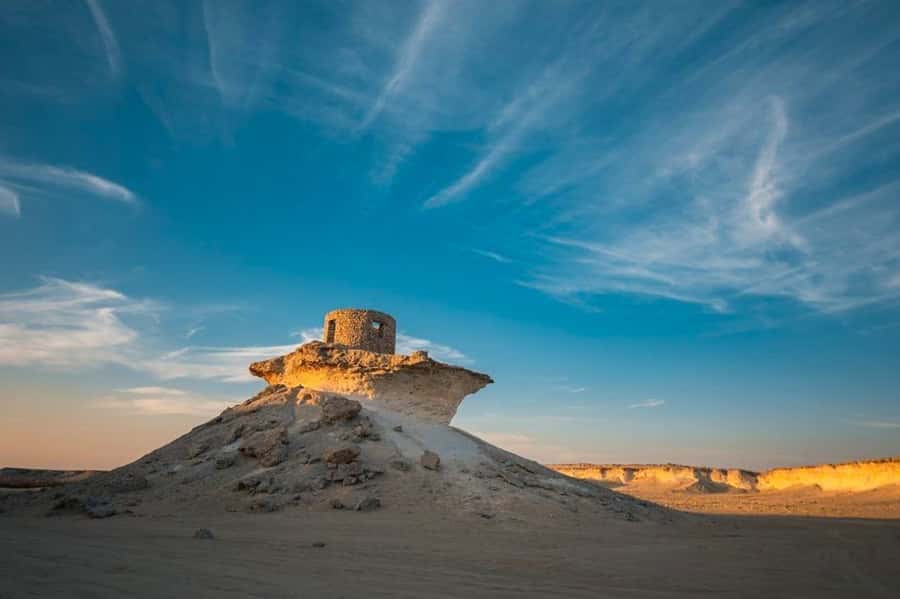
Midway through, you’ll hit a stop called Purple Island. The name alone tells you this is a photo break and a scenery switch—something to reset your eyes before you move deeper into heritage and monumental sculpture.
Right after that kind of visual reset, the tour turns to modern desert art. That matters, because you’re not being asked to “appreciate art” in a museum-like way. You’re being asked to notice how art changes when it’s surrounded by wind, sand, and distance. In other words: your brain has to adjust from stone-and-stories to form-and-space.
Al Zubarah Fort (UNESCO): trading-era Qatar, told clearly
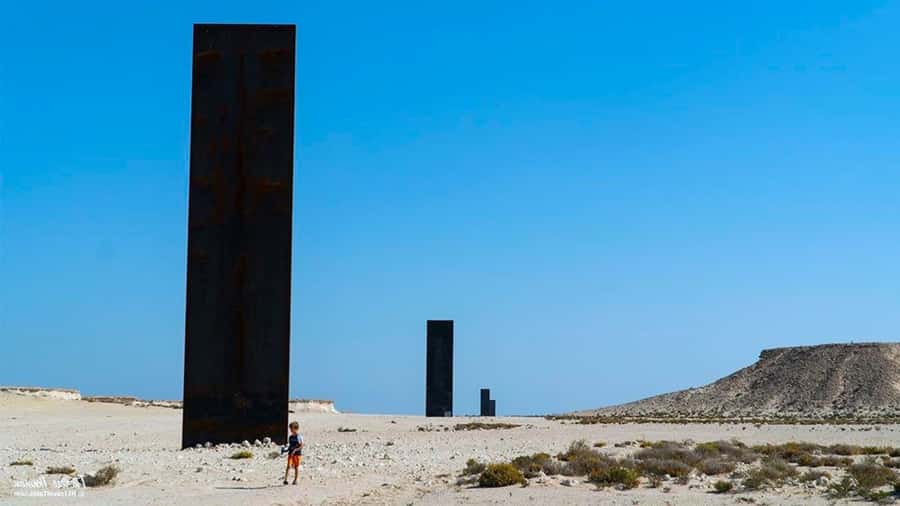
Al Zubarah Fort is the heritage anchor of this day, with about 40 minutes on site. It’s UNESCO-listed, and the tour approach is straightforward: you get a remarkably preserved fortress, plus guidance that helps you understand why it mattered.
Why this stop is worth giving attention to:
- A fort isn’t just a building. It’s an argument in stone about control, protection, and movement of goods.
- The guide’s storytelling turns the site from “old walls” into “a system”—connected to trading patterns and settlement life.
This is one of those places where your timing really matters. Forty minutes sounds short, but if your guide keeps the focus tight—showing key areas and explaining their function—it can be enough to leave with real understanding rather than vague impressions.
If you’re serious about photos, this is also a prime stop. Fort architecture is clean for composition, and you’ll have open sightlines around it.

Zekreet: cliffs, angles, and a wide-desert feel
Next comes Zekreet, about 30 minutes. The value here is the scenery and the positioning. Zekreet is described with dramatic cliffs, which gives you that “edge of the world” feeling even when you’re only there briefly.
For me, Zekreet is also a great place to prep for the final art installation:
- cliffs and exposed rock help you “read” the terrain
- you learn the scale of the area before you see monumental steel outdoors
If you like geology-by-way-of-guidance, this is where you’ll appreciate the guide pointing out what you’re seeing and why it matters.
Richard Serra East-West/West-East: steel that fits the empty
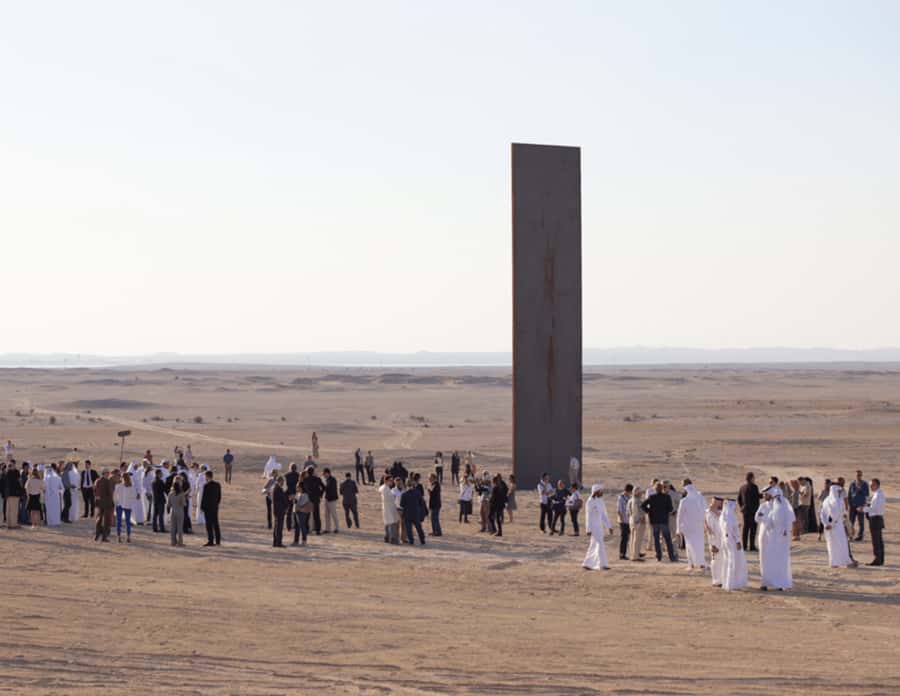
The finale is Richard Serra’s Desert installation, specifically the East-West/West-East monumental sculpture area. You’ll get about 40 minutes here, which is important. Serra’s work isn’t really something you rush past; your view changes as you move.
The tour frames it well: towering steel sculptures stand in harmony with the endless desert. That’s the kind of line that can sound generic until you’re there and realize what it means in practice—your perspective keeps shifting because the sculptures are massive, and the surrounding space is so open.
A practical advantage of having a guided stop at the end: you get to spend your time on the sculpture, not trying to guess the best angles. In guides praised for photography moments (Javid comes up for that), you’ll often find they know how to time your viewpoints so you’re not just photographing randomly.
Olafur Eliasson’s Desert Installation: art that uses the desert as a partner
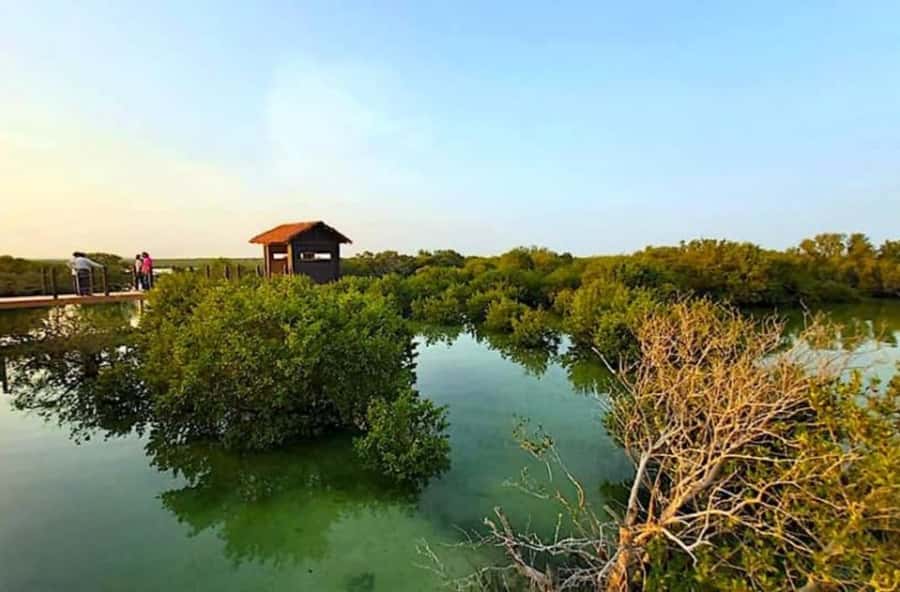
Don’t treat Olafur Eliasson’s Desert Installation as a “quick look.” It’s the tour’s main art experience designed to connect directly with nature. The tour highlight describes it as blending art and nature, and that’s exactly what you’ll notice: you’re not just seeing an object. You’re seeing how the setting changes the feel of the piece.
What makes it special on this particular route is sequence. You’ve already visited:
- Al Ruwais (sea energy)
- Al Jumail (quiet ruins)
- Al Zubarah Fort (heritage stone)
So by the time you reach Eliasson, you’re ready to accept a different kind of “story,” one told through form and environment rather than through walls and dates.
This stop also rewards patience. Even in a half-day style schedule, you’ll feel more than you capture if you take a few slow steps and let your eyes adjust to how the piece relates to its surroundings.
How the Guide and Transfers Make the Day Easier
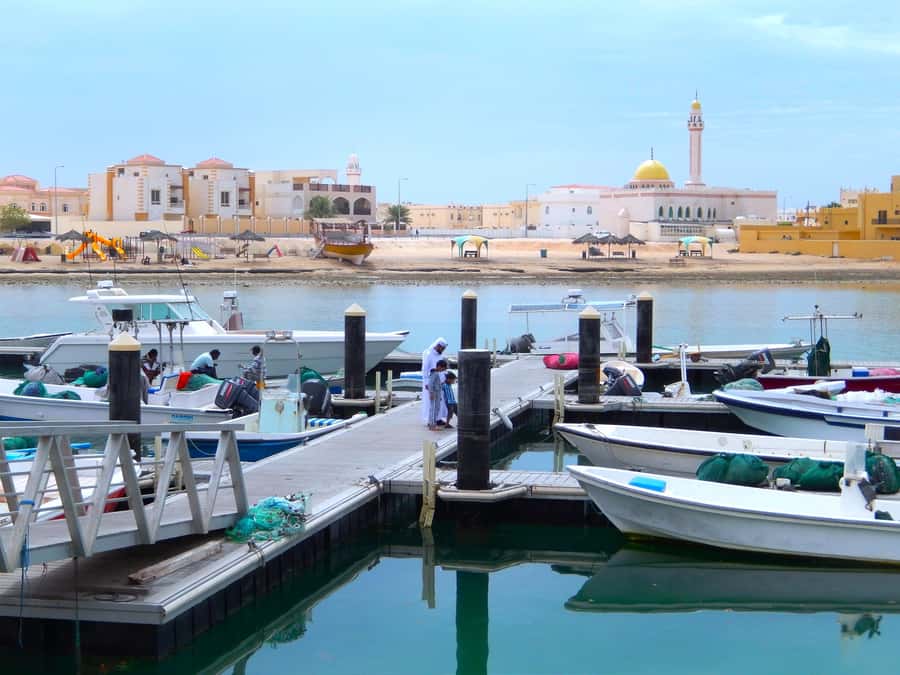
The tour is built around comfort and clarity. You get pickup and drop-off by air-conditioned vehicle, and you don’t have to manage timing between scattered sites on your own.
A detail worth knowing: the guide contacts you on the same day (by call or WhatsApp) to arrange pickup. That’s a small thing, but it reduces stress—especially if you’re traveling with a tight schedule in Doha.
On the guide quality side, names like Junaid and Javid show up in feedback with consistent themes: warmth, strong storytelling, and photo-friendly pacing. If you enjoy learning through conversation, this is a day where that matters. A good guide helps you see how the stops connect, rather than treating each site as separate content.
What’s Included, What’s Not, and How to Plan Your Day
Included items you’ll actually use:
- Pickup & drop-off service by air-conditioned vehicle
- English-speaking tour guide
- Water, tea, and soft drinks
- Entrance to Al Zubarah Fort, Al Jumail Village, Olafur Eliasson art site, and Zekreet East-West/West-East monumental sculpture area
Not included:
- Meals, unless you choose an add-on
So plan like this: you can rely on drinks, but you shouldn’t assume lunch is handled. If you skip an add-on meal, bring a simple plan for energy—snacks you’re happy with between stops.
Also bring your ID. The tour notes that you should carry a passport or ID card, and a copy is accepted. This is one of those details that avoids last-minute friction.
Timing: Short Stops, Big Moments
This itinerary is paced for variety: Al Ruwais (about 30 minutes), Al Jumail (about 30), Zekreet (about 30), and the big art and fort stops at roughly 40 minutes. That structure gives you a taste of many places without turning the day into a long marathon.
The trade-off is simple: you won’t get hours at each site. If you like to read every sign and linger until the light changes, you may want to do this as one “highlight day” and then return later on your own.
If you like photography and broad understanding, this format is a good fit. You get enough time at each point to come away with memories that connect—coast, heritage, modern art—within one coherent day.
Is This Tour Good Value for Your Time?
Value here is less about price and more about what you’re getting for the effort. You’re paying for:
- guided time in several distinct locations
- entrance access at key stops
- transport that handles the hard part: linking remote North/West Qatar sites to Doha
Because the guide is English-speaking and the tour provides drinks, you spend less time managing logistics and more time making sense of what you’re seeing.
If your goal is a single day that gives both art and archaeology, this is exactly the kind of structured loop that saves time.
Should You Book This Doha North and West Qatar Tour?
Book it if:
- you want a one-day mix of UNESCO heritage plus major desert art
- you like guided context (especially for Al Zubarah Fort and the meaning behind the art)
- you don’t want to drive between scattered sites yourself
Consider skipping or adjusting your expectations if:
- you prefer long, slow visits where you can spend 2–3 hours in one place
- you get restless when a day includes multiple short stops
If you’re visiting Doha and you want your time outside the city to feel purposeful, this tour is one of the better ways to do it: you end the day surrounded by monumental steel against the desert horizon, after seeing pearl-diving remnants and a preserved fort that explains why this part of Qatar mattered.
FAQ
FAQ
How long is the Doha: North and West Qatar combo tour?
The tour duration is 7 hours.
Where does the tour start and end?
You’re picked up in Doha and you return to Doha at the end of the tour.
What sites does the tour include?
The tour includes Al Ruwais, Al Jumail Abandoned Village, Olafur Eliasson’s Desert Installation, Al Zubarah Fort, Zekreet, and Richard Serra’s East-West/West-East monumental sculpture entrance.
Is the tour guided, and what language is available?
Yes. It includes an English-speaking tour guide.
Is pickup by car included?
Yes. Pickup & drop-off service is included by air-conditioned vehicle. The guide contacts you on the same day by call or WhatsApp to arrange pickup.
What’s included on the tour besides entrances?
You’ll also receive water, tea, and soft drinks, plus the guided visits.
Are meals included?
Meals are not included unless you select an add-on.
What should I bring with me?
Bring your passport or ID card. A copy is accepted.
Is there an option for a private group?
Yes. Private group availability is offered.
What is the cancellation policy and is there flexible booking?
Free cancellation is available up to 24 hours in advance for a full refund, and there is a reserve now & pay later option.