REVIEW · HANOI
Enjoy making pottery in Amazing Ancient Village!
Book on Viator →Operated by Hanoi Memories · Bookable on Viator
Pottery in Bat Trang feels unexpectedly personal. I love how this tour mixes a real workshop visit with hands-on making, and I also like getting a village guide’s take on how the craft works day to day. One thing to plan around: your finished piece needs the 2-day kiln process to fire and cool, so it’s not a true same-day souvenir.
I’m especially happy when a small group keeps the class relaxed, and this one caps at 8 people. The experience is led by a guide (many groups have guide Son), so you can ask questions while you paint. The pace is easy to follow, but you’ll still want comfortable shoes since you’ll be walking around the village.
This is priced at $52 and runs about 5 to 6 hours, with lunch included and pickup offered. If you’re tight on time, there’s an option to leave with the raw piece that dries naturally afterward, but the kiln-fired result is the part that makes it last.
In This Review
- Key highlights worth your attention
- Bat Trang ceramic workshops: why this is a better Hanoi day than just sightseeing
- Getting there from Long Bien: simple bus ride, smoother class time
- The village tour: watching locals create ceramics step by step
- Hands-on pottery making: shape, paint, and send it to the kiln
- Lunch in the village: a real break, not a rushed add-on
- The kiln timing: why your pottery takes extra time to become finished
- Price and value: what $52 buys you in real terms
- Who should book this Bat Trang pottery class from Hanoi
- A few practical tips so your pottery day goes smoothly
- Should you book Amazing Ancient Village pottery in Bat Trang?
- FAQ
- How much does the Bat Trang pottery tour from Hanoi cost?
- How long is the tour?
- Do you get picked up from Hanoi?
- What is included besides the pottery class?
- Where do you meet for the trip to Bat Trang?
- Is lunch included in the price?
- How long does it take for the pottery to be properly finished?
- Can you still participate if you’re short on time?
- How big is the group?
- Is the tour ever canceled due to weather?
Key highlights worth your attention
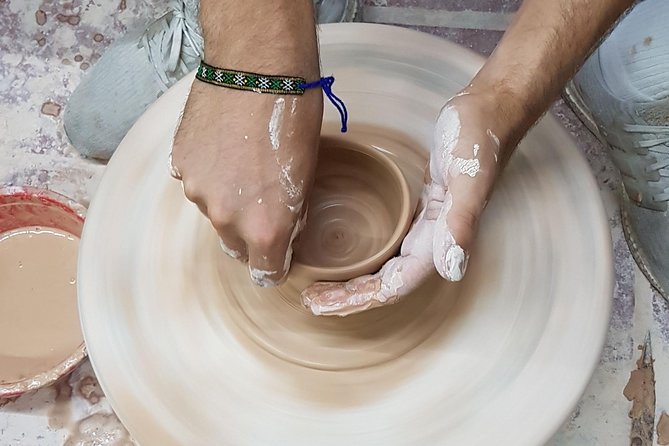
- Bat Trang Ceramic Village workshop tour with a local guide and a look at multiple production stages
- Small group size (max 8) for more time at the workstations
- Make, paint, and place in the kiln as part of the class
- Complimentary lunch included in the village
- Plan for 48 hours of firing/cooling for a finished, usable piece
- Option for a raw version if you’re short on time
Bat Trang ceramic workshops: why this is a better Hanoi day than just sightseeing
Hanoi is full of great half-day options, but if you want something you can actually do—not just watch—it’s hard to beat a pottery class at Bat Trang Ceramic Village. You’re not stuck in a lecture room. You get a real look at how ceramics move from raw materials into finished products, with locals working through the steps you can see with your own eyes.
What I like is that the tour isn’t just about teaching you a craft and sending you off. You start with the village context—why this place is known for ceramics—and then you move into the making part. That order matters. When you see the workflow first, your own piece feels less random and more connected to the tradition you’re witnessing.
That same practical logic also helps if you’re picky about souvenirs. A pottery item made with a proper kiln firing is usually the kind of thing you’ll actually use later at home—cup, bowl, or small dish—rather than an “oops-I-bought-this” decoration.
You can also read our reviews of more tours and experiences in Hanoi.

Getting there from Long Bien: simple bus ride, smoother class time
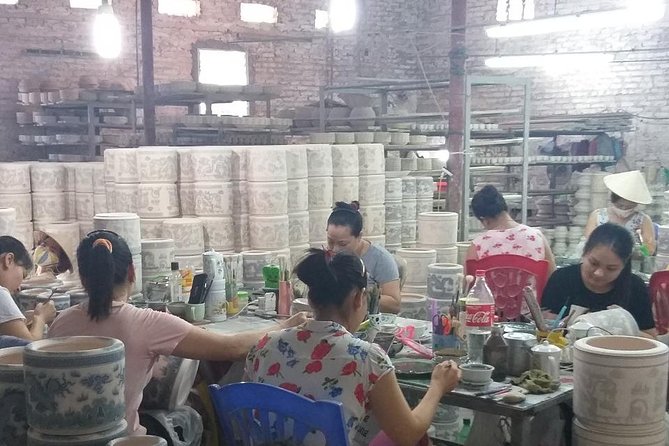
Your day typically starts with a meet-up point at Long Bien Interchange bus station on Yen Phu street, then a bus ride to Bat Trang. It’s a straightforward plan for a Hanoi outing: you show up, get on the bus, and don’t waste the most time-stressful part of the day figuring out transport.
Two practical things to keep in mind:
- This is designed for a half-day format (about 5 to 6 hours), so arrive a bit early at the meet-up point.
- The tour includes pickup offered, but even if you’re not using it, it’s near public transportation, so it’s not a “remote countryside” mission.
Small-group format matters here too. When only up to 8 people join, it’s easier for the guide to manage the schedule and for the instructor to check in on your work before you move to painting.
The village tour: watching locals create ceramics step by step
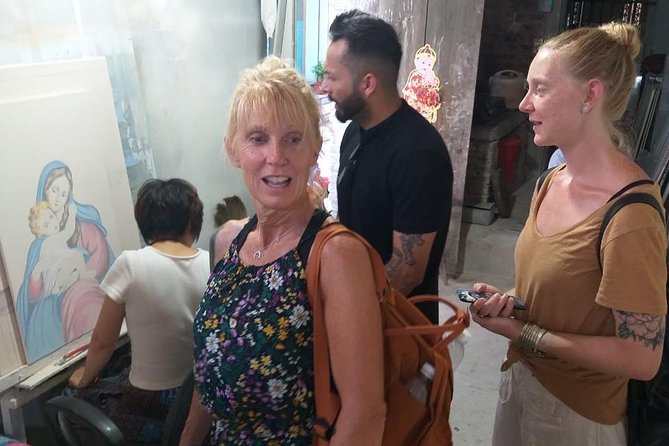
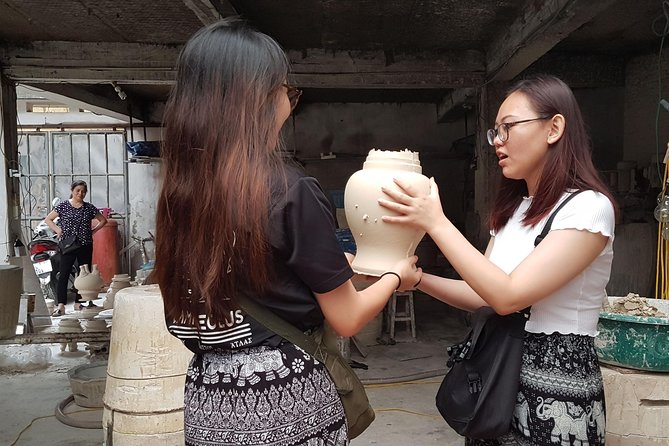
Once you arrive, you don’t immediately jump to the wheel. You first get a village visit with a local guide to understand the area and its ceramic culture. This part is valuable because it gives you the why behind the craft—how the village became known for pottery and how the work gets done in a place where it’s normal to see production all around you.
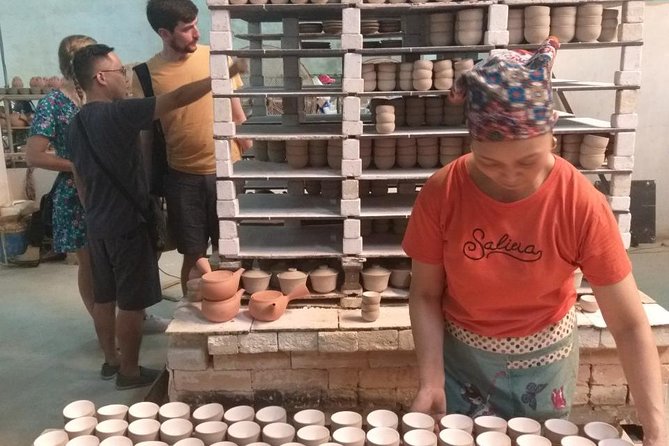
Then you shift into the workshop atmosphere. You’ll watch local workers and the product through different stages of ceramic manufacture. That matters more than you might expect, because pottery is full of “invisible” steps:
- The shaping stage is only one piece of the puzzle.
- The painting stage is where you personalize your work.
- The firing and cooling stage is what turns fragile into usable.
If you like learning by observation, this sequence scratches that itch. You can connect what you’re seeing in the workshops to what you’re about to do at your own workstation.
Hands-on pottery making: shape, paint, and send it to the kiln
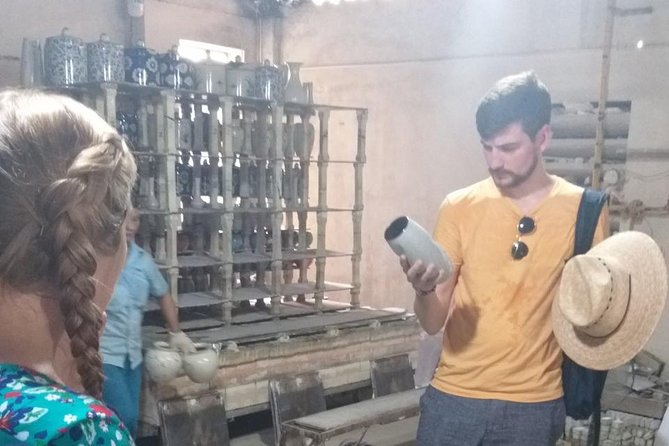
Now for the part you came for: the class where you make a pottery piece by hand, paint it, and then put it in the kiln. Even without prior experience, the activity is set up for most people to participate, so you’re not signing up for an advanced ceramics workshop.
Here’s what you should focus on during your own session:
- Hand-making: Don’t aim for perfect symmetry. Aim for clean edges and a shape that feels stable in your hands.
- Painting: Keep in mind that your design needs to work on ceramic surfaces, not paper. Choose simple patterns over tiny details if you want your work to look good after firing.
- Kiln placement: This is where the workshop team does the precision work for you. Your job is to follow instructions and get your piece handled correctly.
The best part is the feedback loop. You can ask your guide questions as you work—many groups have guide Son—so you’re not left guessing about the process. That human guidance turns a “fun activity” into a memory with actual understanding behind it.
Lunch in the village: a real break, not a rushed add-on
You also get complimentary lunch in the village. This is one of those details that can make or break a half-day tour. If a schedule is tight and lunch isn’t included, you end up eating quickly and moving on with tired energy. Here, you can slow down for a bit and recharge.
Because the day includes both walking through the village and hands-on work, lunch also gives your hands and brain a moment to reset—especially if you’ve been painting for a while.






The kiln timing: why your pottery takes extra time to become finished

This is the big planning detail, so don’t treat it casually.
Ceramics made in this style require an extra two days to be properly completed. That includes firing and cool-down time in the kiln. In practice, that means your finished look—color settling, durability improving, and the piece reaching the right state—depends on staying in the area long enough for the process to finish.
If your schedule is flexible, it’s worth building around that. A fired, cooled piece is more likely to look better, last longer, and be genuinely useful (the goal is that it can hold liquids and food, not just sit on a shelf).
If you’re short on time, the tour offers a workaround: they can provide a raw version that dries naturally in a few days after you leave Hanoi. It’s possible, but you should treat it as a different outcome. The kiln-fired results are what typically make a ceramic souvenir feel like a “real object,” not a project you still need to finish at home.
Price and value: what $52 buys you in real terms
At $52 per person, this isn’t a cheap “walk in, paint once, walk out” situation—and that’s exactly why it can be good value. You’re paying for three things that cost time and coordination:
- Transportation from Hanoi (bus day trip format, with pickup offered)
- A guide-led visit through the village and workshop stages
- A hands-on class with painting plus kiln processing afterward (the kiln completion is the part that takes real time)
Add lunch into the mix, and the day becomes more than an activity checkbox. You’re essentially buying a guided cultural visit and a craft experience, wrapped into a single organized plan.
Also consider the group size. A max of 8 people tends to reduce bottlenecks—more time at the workstations, less waiting around, and better attention when you’re handling your piece. In a craft class, that’s where value hides.
Who should book this Bat Trang pottery class from Hanoi
This tour is a strong fit if you:
- Want something different from the usual Hanoi rhythm (not just sightseeing, but a skill-based activity)
- Like hands-on work and don’t mind a craft day that ends with your piece being processed afterward
- Prefer small groups and guided context
- Want a souvenir with actual meaning and better long-term usefulness
It’s also a decent option for a mixed group because it’s designed so most people can participate. Service animals are allowed, and it’s near public transportation, which makes it easier for many visitors to manage without extra stress.
A few practical tips so your pottery day goes smoothly
These are the kinds of small details that keep the experience pleasant:
- Wear shoes you don’t mind getting a little travel-dirty. You’ll be walking around the village.
- Plan for the extra time needed for your piece to be properly finished—don’t assume it will be ready instantly.
- If you have only a little time in Hanoi, ask about the raw version option early so you can decide based on your schedule.
- Bring a watch on your phone and keep track of the day’s rhythm. The tour is about 5 to 6 hours, and the workshop sequence moves.
And if you’re the type who likes to make something that looks good later, pay attention during the painting step. That’s the part you can control most.
Should you book Amazing Ancient Village pottery in Bat Trang?
I’d book it if you want a memorable Hanoi day that combines a guided village visit with real creative output. The value is strongest when you can afford the 48 hours+ needed for the kiln firing and cool-down, since that’s what turns your piece into a souvenir you’ll actually want to use.
If your trip dates are tight, the raw version option helps, but you’ll be trading the fully finished result for a project you complete naturally afterward. In that case, book with eyes open.
Overall: for $52, with lunch included, a small-group setting, and the chance to make something that’s processed in a kiln, this is one of the more satisfying hands-on experiences you can fit into Hanoi.
FAQ
How much does the Bat Trang pottery tour from Hanoi cost?
It costs $52.00 per person.
How long is the tour?
The tour runs about 5 to 6 hours.
Do you get picked up from Hanoi?
Pickup is offered.
What is included besides the pottery class?
You get a Bat Trang Ceramic Village tour with a guide, you’ll participate in the pottery making class, and there is a complimentary lunch provided in the village.
Where do you meet for the trip to Bat Trang?
You meet at Long Bien Interchange bus station on Yen Phu street, then go by bus to the village.
Is lunch included in the price?
Yes, lunch is complimentary in the village.
How long does it take for the pottery to be properly finished?
Proper firing and cool down takes at least 48 hours, which is why ceramics require an extra two days to be completed.
Can you still participate if you’re short on time?
Yes. If you’re short on time, you can be provided a raw version that dries naturally in a few days after you leave Hanoi.
How big is the group?
The experience has a maximum of 8 travelers.
Is the tour ever canceled due to weather?
Yes. The experience requires good weather. If it’s canceled due to poor weather, you’ll be offered a different date or a full refund.