REVIEW · CATANIA
Etna excursions at sunset ancient craters and lava flows
Book on GetYourGuide →Operated by Enjoy our sicily · Bookable on GetYourGuide
Etna at sunset changes the whole mood. You’ll explore Europe’s highest active volcano and UNESCO site with expert nature guides, then finish with one of the best Sicily sunsets from Etna’s paths. I especially love the mix of ancient craters plus lava walks and the way the guide ties eruptions to local life and the plants you see. One watch-out: the ground is volcanic and the tour is not suitable if you have altitude sickness, breathing issues, heart problems, or are pregnant.
This is a practical outing, not a rushed “look then go” photo stop. You start in Trecastagni, ride up in a van, visit an extinct side crater, and take an easy, panoramic hike designed to match the light as the sun drops. You’ll also learn what Etna means to nearby communities, not just what makes it famous.
Plan for late-afternoon timing. You’ll usually begin around 3:30 PM, travel about 45–50 minutes to the first stop, then spend the last part of the tour waiting for sunset at the end of a scenic trail. If you hate being outside for hours, even in mild weather, bring a real jacket and expect some chill at golden hour.
In This Review
- Key things you’ll notice on this Etna sunset tour
- Why Mount Etna at sunset feels different
- Getting picked up in Trecastagni and heading uphill
- Stop 1: Ancient side craters and the volcano’s older chapter
- The main hike: a 2 km loop over lava fields
- Sunset time: why you’re waiting at the end of the trail
- What the expert guide teaches (and why it’s useful)
- The practical pace: 4 hours that don’t feel stuffed
- Price and value: is $84.96 per person worth it?
- Who should book this Etna sunset excursion
- What to bring so the evening stays comfortable
- Should you book this Etna sunset excursion?
- FAQ
- What is the duration of the Etna excursion?
- What time does the tour start?
- Where do I meet for pickup?
- Is the hike difficult?
- Are food and drinks included?
- What languages are offered for the live guide?
- Is the tour private?
- What should I bring?
- Who is the tour not suitable for?
Key things you’ll notice on this Etna sunset tour
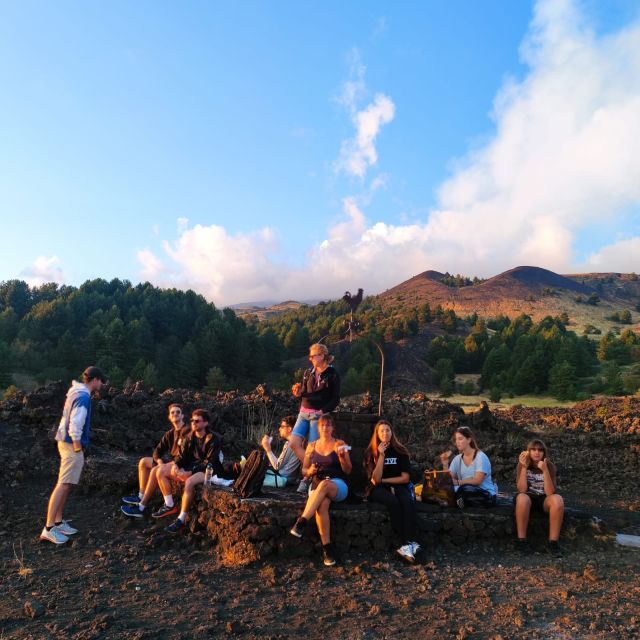
- A simple 2 km loop hike with easy footing and big views
- Ancient side craters plus walking through both newer and older lava fields
- Expert nature guidance on flora, fauna, eruptions, and local life
- Sunset timing built into the route so you’re positioned as the light changes
- Small groups or private options for a calmer volcano experience
Why Mount Etna at sunset feels different
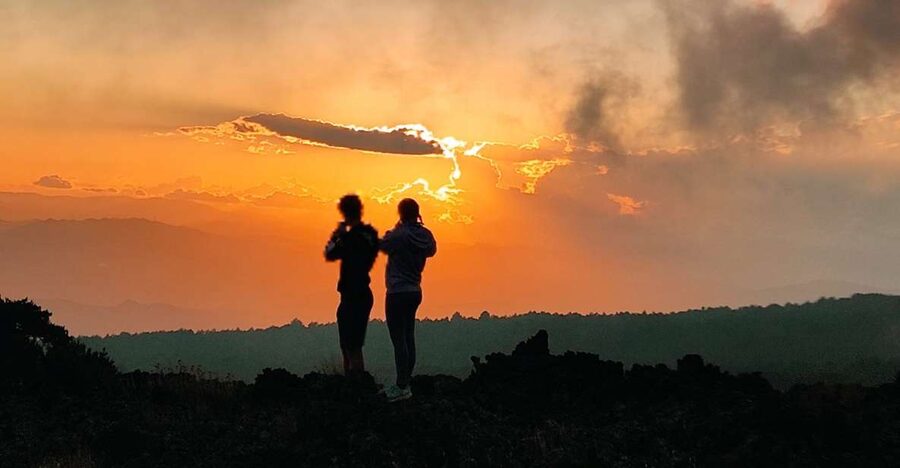
Mount Etna is active, loud in history, and serious business for scientists. But at sunset, it turns more human. The sun angle brings out the color of the rocks, the heat is lower, and the whole mountain looks less like a threat and more like a living landscape shaped over time.
I like that this tour is built around time—the guide paces the stops so you’re not sprinting. Instead, you get a sense of what Etna looked like at different stages: older craters you can walk around, then lava areas that show how the volcano keeps renewing itself. And when you pause at the end of the trail to watch the sky change, it’s not just a photo moment. It helps you connect what you learned earlier to what you’re seeing now.
The other smart part: you’re not sent up there with no context. You get explanations on eruptions and how local people live with the volcano. That matters, because Etna isn’t only a spectacle. It’s part of everyday life in eastern Sicily.
You can also read our reviews of more tours and experiences in Catania.

Getting picked up in Trecastagni and heading uphill
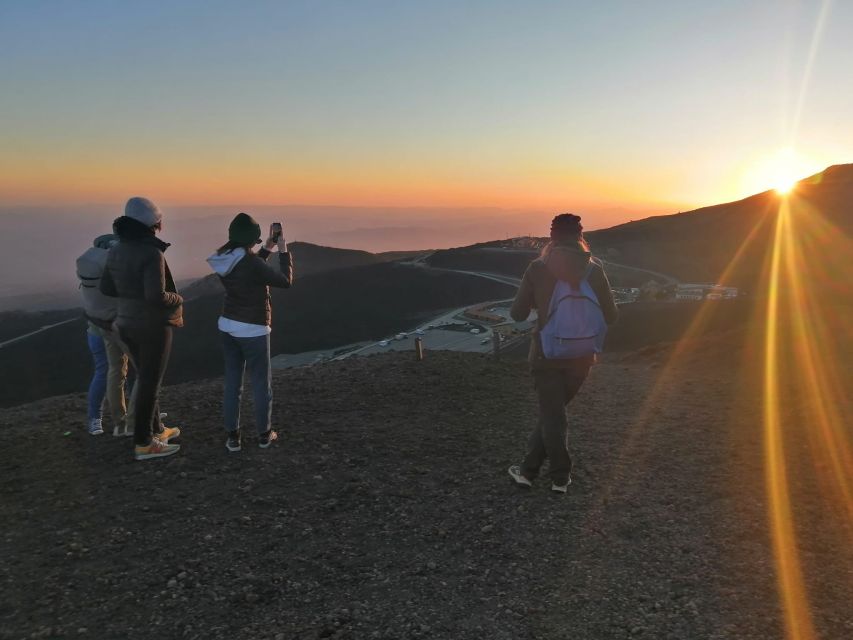
You meet close to the church—Saint Biagio Church in piazza Stesicoro (Trecastagni area). From there, the provider includes pickup and drop-off from the meeting point in Trecastagni, so you don’t have to figure out parking or your own logistics on a busy volcano day.
After pickup, you spend about 45 minutes (roughly 45–50 minutes) in the van before the first on-foot stop. That travel time is a blessing. It helps you save energy for the hike and lets the guide set up the story of the day before you start walking. You also avoid that common tourist problem: showing up late, rushing, and missing the best light.
At the end, you return back to the meeting area, with drop-offs offered at three nearby spots, including Chiesa di San Biagio in Sant’Agata alla Fornace and Piazza Sant’Alfio. If you’re staying in that zone, this makes life easier.
Stop 1: Ancient side craters and the volcano’s older chapter
Your first major walk is about history in rock form: ancient side craters. This is where the trip earns its “think less like a tourist and more like a reader” energy.
A side crater matters because it shows Etna’s behavior isn’t only about the main peak. It also reveals how activity spreads, how eruptions build new features, and how the mountain changes across time. Even if you’re not a geology person, you’ll feel the difference between fresh activity and older formations because the older zones are stable enough to walk through and study from a sensible path.
There’s also a practical reason to do this early. You’re starting while the light is still decent, so the terrain looks clearer. Plus, you’re fresh enough to pay attention. Later, after the long scenic hike and sunset waiting, your brain works better when it already has a framework.
The main hike: a 2 km loop over lava fields
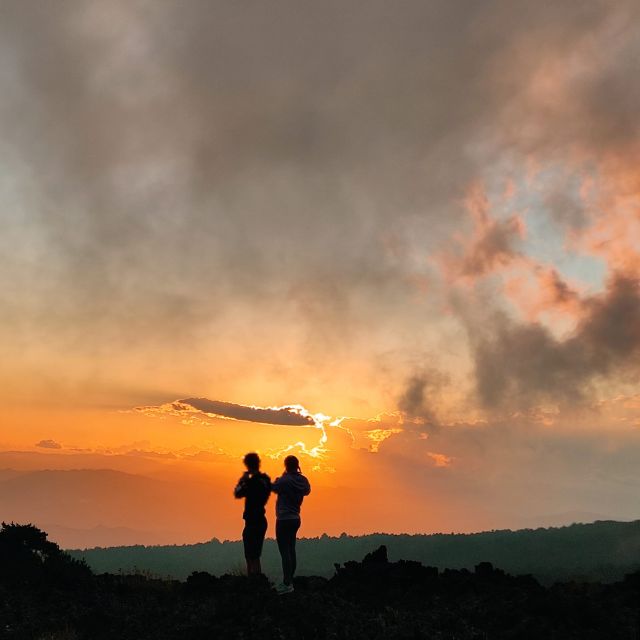
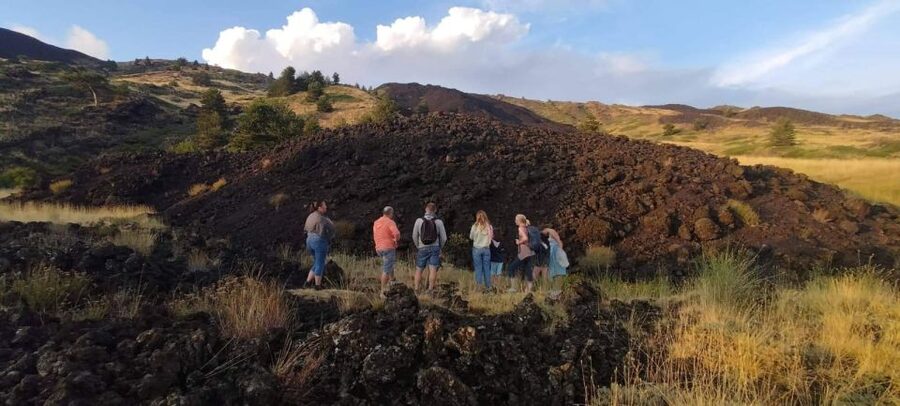
The heart of the tour is the hike along an Etna trail: a 2 km loop with an easy level. It’s short enough that most people can handle it, but it’s still a real walk, not a stroll. The guide keeps the route panoramic, so you spend time looking at the volcanic features rather than only focusing on your feet.
Here’s what you’re walking through: areas that include both recent and ancient lava fields. That’s key. When you move across lava over time, the surfaces and shapes often feel different—older flows tend to look more weathered and integrated into the ecosystem, while newer ones can feel harsher and more barren. Your guide points out what to look for, including unique flora that survives on and around volcanic ground.
This is also where the “local connection” part starts to make sense. Etna isn’t a distant monster. It’s the ground people grow things in, work around, and build lives alongside. When the guide explains how communities relate to the volcano, it clicks faster when you’re standing in the actual terrain.
Possible drawback: even with an easy classification, volcanic paths can be uneven. Wear sturdy shoes, not flimsy sneakers.
Sunset time: why you’re waiting at the end of the trail
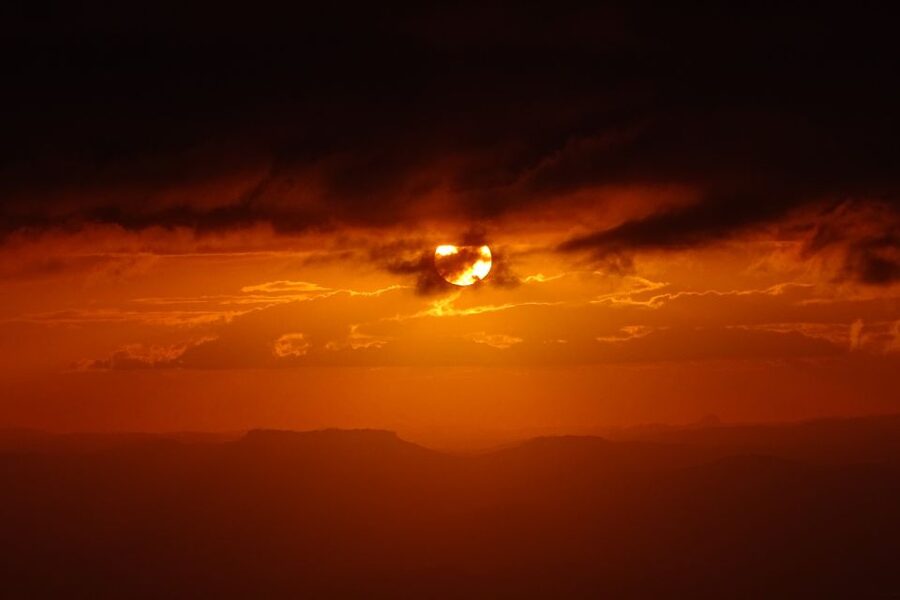
The tour is timed so that you reach the sunset point at the right moment. After the 2 km loop, you pause and wait for sunset. This timing is the whole payoff.
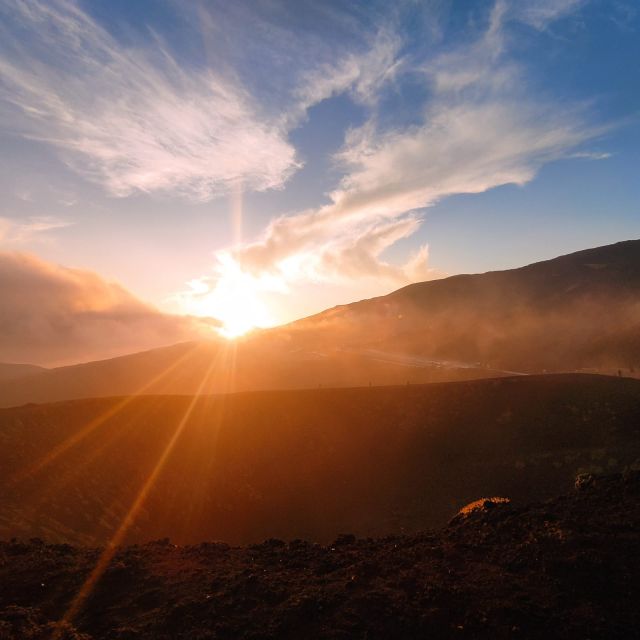
Sunset on Etna isn’t just pretty skies. The rocks change color, shadows stretch, and the volcano’s structure becomes easier to read. If you’ve ever watched a landscape shift slowly and felt your brain stop trying to “capture it” and start understanding it—this is that. The guide’s earlier explanations make the view feel less random.
Also, sunset tends to make a group quieter. That’s when you’ll hear the guide’s last bits most clearly—especially if you’re asking questions about eruptions, life on the mountain, or the plant species you saw along the trail.
Bring a jacket. Even if it’s warm earlier, higher elevations and evening air can cool fast.
What the expert guide teaches (and why it’s useful)
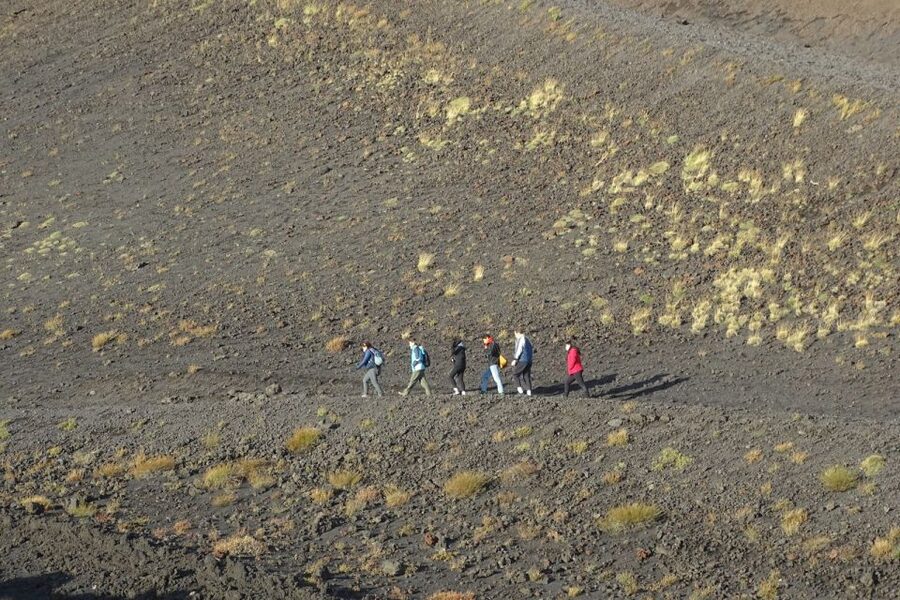
This excursion is led by live nature guides who talk in French, Italian, or English (you pick your language needs when booking, based on availability). The guide’s job isn’t only to point and talk. It’s to help you understand what you’re seeing—eruption patterns, volcanic history, and the way Etna shapes flora and fauna.
Here’s what that adds for you:
- Eruptions make more sense. You’ll hear how side craters and lava flows connect to the mountain’s activity rather than getting generic facts.
- You notice more on the walk. Instead of only looking at rock, you look for how plants manage to live there.
- Local life becomes part of the story. You learn the relationship between locals and the volcano, which makes the visit feel grounded instead of only “wow volcano.”
I also appreciate that this is a small outing focused on a handful of stops. When a tour chooses fewer things and explains them well, you remember it later—and you get more enjoyment in the moment.
The practical pace: 4 hours that don’t feel stuffed
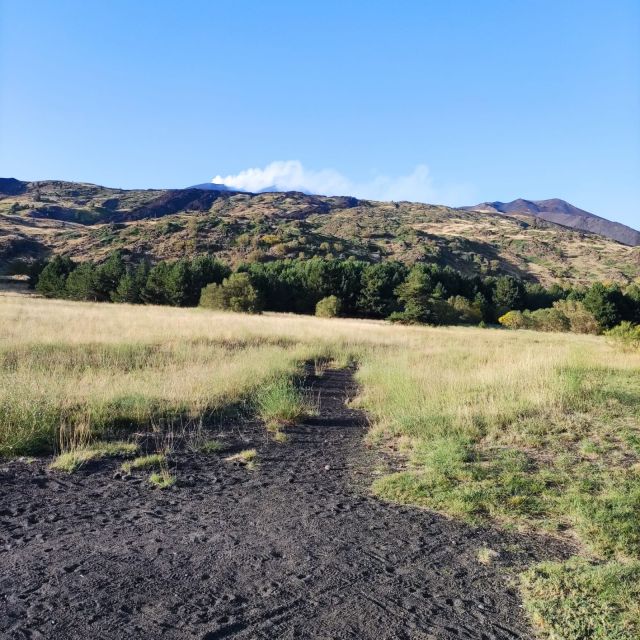
Total duration is about 4 hours including travel time. Starting around 3:30 PM, you spend part of that time on the van, part walking, and part waiting for sunset.
That mix matters. Longer hikes on Etna can be a lot. This one is designed for an easy loop and a panoramic stop, so it works for people who want a real volcano experience without signing up for a full-day endurance test.
It’s not a “sit on the bus” tour, either. You’ll be outside, moving at a comfortable pace, and learning along the way. Just keep your expectations realistic: you won’t get a scientific tour of every feature. You’ll get a strong highlight sequence with meaning.
Price and value: is $84.96 per person worth it?
At $84.96 per person, this isn’t a budget activity, but it also isn’t priced like a private guide exclusive experience. What you’re paying for is the full package of:
- expert live guiding (not self-guided)
- pickup and drop-off from Trecastagni
- van transport to the volcanic area
- structured stops: extinct side craters, lava-field walking, and sunset waiting
- a guided hike that’s short enough to be approachable
If you compare this to piecing together separate transport, entrance tickets (if applicable), and a guide you can actually talk to, the cost starts to make sense. You’re buying time and a guided plan that matches sunset light—something you can’t easily replicate on your own unless you know the area well.
Also, the average rating is 4.9 from 16 reviews, which suggests you’re likely to get the kind of guide-led experience that people come back for.
Who should book this Etna sunset excursion
You’ll probably love this if you:
- want Etna with context, not just photos
- like easy walking with a strong payoff view at the end
- enjoy nature talk—plants, volcanic features, and how life adapts
- are traveling from the Trecastagni area and want a simple pickup plan
You might want to skip it if you’re someone who:
- has altitude sickness concerns, breathing issues, heart problems, or is pregnant (this tour is listed as not suitable)
- needs a fully flat, fully predictable walking surface
- hates being outside during evening air
If you’re on the fence and you’re generally healthy, the easy hike distance is a good sign. Just treat volcano terrain with respect—bring proper shoes and take it slow where needed.
What to bring so the evening stays comfortable
This is simple, but don’t ignore it. Bring:
- comfortable clothes
- a jacket (sunset waiting means you cool off)
- sturdy shoes for uneven volcanic ground
You also should plan on food and drinks being on your own. The tour doesn’t include food or drinks, so if you know you get hungry, grab something before you meet or bring a small snack for the time gap. (Nothing complicated—just handle your energy so you can enjoy the view.)
Should you book this Etna sunset excursion?
Yes—if you want the classic Etna experience with good timing and solid explanations. This tour earns its money by combining three things that matter: an approachable hike, stops that cover both older and newer volcanic features, and a sunset plan that actually uses the route you walked.
Book it especially if you’re staying near Trecastagni and don’t want to wrestle with transport on your own. If you need accessibility or have health limits related to altitude or breathing, check those factors carefully first.
If you want a volcano day that feels personal—rocks, plants, and local life all tied together—this is a strong pick.
FAQ
What is the duration of the Etna excursion?
The tour lasts about 4 hours, including travel time.
What time does the tour start?
The starting point is listed as 3:30 PM, though departure timing may vary depending on sunset time.
Where do I meet for pickup?
Pickup is from the meeting point close to Saint Biagio Church in piazza Stesicoro (Trecastagni area). The activity also includes drop-off back near the meeting area.
Is the hike difficult?
The main hike is described as an easy 2 km loop. That said, volcanic paths can be uneven, so comfortable shoes help.
Are food and drinks included?
No. Food and drinks are not included.
What languages are offered for the live guide?
The guide speaks French, Italian, and English.
Is the tour private?
It offers private or small groups, depending on what you choose when booking.
What should I bring?
Wear comfortable clothes and bring a jacket.
Who is the tour not suitable for?
It’s not suitable for people with altitude sickness, respiratory issues, pregnant women, or people with heart problems.