REVIEW · JAIPUR
Private Rajasthan Heritage Triangle Tour – Jaipur Jodhpur Udaipur
Book on Viator →Operated by Janu Private Tours · Bookable on Viator
Three cities, one steady plan.
This private Heritage Triangle route keeps your days organized while still giving you real time in the big places: Jaipur, Jodhpur, and Udaipur—plus smart side stops that make the road trip feel like part of the story. I like that the pacing is built around transfers in a private A/C vehicle, so you’re not stuck negotiating transport after sightseeing.
My second big plus is the on-the-ground support: you get a professional guide in Jaipur, Jodhpur, and Udaipur, which makes the sights easier to understand fast (especially forts and palaces). One thing to keep in mind: monument entrance fees and boat/temple-related tickets are not included, so your final spend will be a little higher once you’re on-site.
In This Review
- Key things to know before you go
- A triangle route that makes sense for first-timers
- Day 1 in Jaipur: Birla Mandir, Albert Hall, and MI Road
- Day 2 Jaipur checklist: City Palace, Jantar Mantar, Hawa Mahal, Jal Mahal
- Day 3 to Jodhpur via Pushkar: temple time and Clock Tower evening
- Day 4 Jodhpur’s Mehrangarh and Ranakpur’s carved Jain walls
- Day 5 Udaipur: Gangaur Ghat, Jagdish Temple, City Palace, and lake time
- Day 6 back to Jaipur with Chittorgarh Fort on the way
- Price and value: what $300 really covers
- Who should book this Heritage Triangle and who should skip it
- Should you book this Private Rajasthan Heritage Triangle Tour?
- FAQ
- What cities does the Private Rajasthan Heritage Triangle Tour include?
- How do you travel between Jaipur, Jodhpur, and Udaipur?
- Are professional guides included?
- Are hotel accommodations included?
- Are monument entrance fees included?
- Where does the tour start and what time?
Key things to know before you go

- Private A/C vehicle for the whole triangle means fewer hassles and more comfort on travel days
- City guides in all three hubs help you connect the dots between architecture, religion, and power
- Pushkar, Ranakpur, and Chittorgarh add depth beyond just the famous city centers
- Long drive days are part of the deal (you’ll want water, shade, and a patient mindset)
- Entrance fees are extra, so it helps to budget before you arrive
A triangle route that makes sense for first-timers
The “triangle” idea is practical. You’re not doing back-and-forth trips across Rajasthan; you’re moving in a loop: Jaipur west to Jodhpur, then southeast to Udaipur, and back again. That matters because Rajasthan distances add up fast, and a well-timed route keeps your sightseeing days from collapsing into transit fatigue.
I also like how the tour blends “major hits” with a few stops that reveal different sides of the region. In the middle of the triangle, you’ll hit Pushkar (for the temple and lake atmosphere), Ranakpur (for carved Jain architecture), and Chittorgarh Fort (for scale and historical weight). Even if you don’t memorize every fact, you’ll feel the variety.
One practical note: this isn’t a slow, coffee-shop-only itinerary. You’ll be moving through multiple stops per day. If you prefer museum-only days and lots of downtime, you may want to treat a couple of the optional-feeling moments (like strolling markets or extra lake time) as flexible.
You can also read our reviews of more tours and experiences in Jaipur.


Day 1 in Jaipur: Birla Mandir, Albert Hall, and MI Road
Your day starts with pickup at Sanganeer Airport in Jaipur at 8:00 am, then you head straight to your hotel to settle in. After that, you get a half-day orientation in Jaipur, which is a nice setup if you’ve just landed and you don’t want to plan your first hours.
The stop at Birla Mandir gives you a calm contrast to the city’s busier streets. It’s a white-marble temple complex dedicated to Lord Vishnu and Goddess Lakshmi, and the feel is more serene and reflective than “tourist chaos.” The tour keeps the time short, which is smart on Day 1 because you want to save energy for a longer Jaipur day tomorrow.
Next is the Albert Hall Museum, a landmark on Jaipur’s cultural map. The tour includes time there, but it’s not covering the monument ticket—so expect to pay the entrance fee directly on-site. Even if you’re not a hardcore museum person, it’s a good “getting your bearings” stop because it gives context for what you’ll see in forts and palaces over the next days.
Then you get a drive along Mirza Ismail Road (MI Road), which is a practical way to see Jaipur’s modern pulse while still staying inside the heritage-city vibe. Finally, you’ll pass by Raj Mandir Cinema, known as a big local movie theater landmark. It’s not a must-do like a fort, but it helps you understand how Jaipur’s identity mixes old and new.
If I had to pick a drawback for Day 1, it’s that your first stop choices can feel slightly “sample-size.” That’s normal for a half-day. The good part is tomorrow gets fuller.
Day 2 Jaipur checklist: City Palace, Jantar Mantar, Hawa Mahal, Jal Mahal

Day 2 is where Jaipur starts to click. You’ll move from one major site to the next with enough time at each to actually register what you’re looking at, not just take photos and sprint.
You start at City Palace, and it’s one of those places where guide help really pays off. The palace complex is tied to Jaipur’s royal administration, and understanding the layout helps you see it as a living system—not just a collection of pretty buildings. Ticket cost is not included here, so plan for the entrance fee.
After City Palace, you’ll visit Jantar Mantar, Jaipur’s astronomical instruments. This is a great reminder that Jaipur wasn’t only about warfare and royalty—there was serious science here too. The site is UNESCO-listed (as noted in the tour info), and it’s an easy win for travelers who like a blend of art, engineering, and “wait, how did they do that?”
Then comes the photo-famous Hawa Mahal (Palace of Wind). You’ll have a short stop here, and it works best if you look up first before you rush to the front windows. It’s built for airflow and spectacle, so even a quick visit can tell you a lot about how the palace was designed to be seen and to function.
You’ll also stop at Royal Gaitor Tumbas, a set of cenotaphs with intricate architecture. It’s not always the top choice for people who only have one day in Jaipur, so I like that this tour includes it—it adds variety beyond the headline monuments.
Finally, you reach Jal Mahal. The tour notes it as a free admission stop, and that’s helpful since it means you can enjoy the views without adding another ticket expense. It’s surrounded by water, which gives it a different mood than the palace-and-fort stops. It’s also a nice pause before the longer drive toward Jodhpur tomorrow.
Overall, Day 2 is full. If you get tired, focus on two things: take your time at City Palace and Jantar Mantar, then treat Hawa Mahal as a quick “signature moment.”
Day 3 to Jodhpur via Pushkar: temple time and Clock Tower evening

This is the day the tour turns into a road trip. After breakfast, you’re picked up and transferred toward Jodhpur, and you’ll have about five hours of driving time.
On the way, the tour includes a stop in Pushkar—time around the Brahma temple and Pushkar Lake. Pushkar has a distinct spiritual rhythm, and even with limited hours, you can feel how the lake shapes daily life and worship. The tour mentions admission free for this stop, which helps your budget.
Then you continue to Jodhpur, check in, freshen up, and head to Clock Tower Market for about two hours. This is a smart evening plan because it gives you a local-feeling stroll after a travel day. It’s also your chance to get a sense for Jodhpur’s bazaars and how people actually move through the city streets at night.
If you want one practical tip for Day 3: eat something early and keep your plans light. You’ll want energy for a proper Jodhpur fort day on Day 4.
Day 4 Jodhpur’s Mehrangarh and Ranakpur’s carved Jain walls

Jodhpur is the fort-and-detail city, and Day 4 reflects that. You’ll start with breakfast, then head out on a dedicated sightseeing block with the guide.
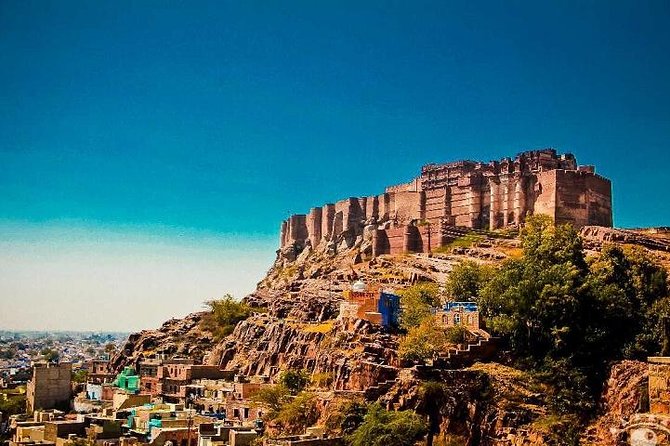
Your first major stop is Mehrangarh Fort. Expect big views over Jodhpur and a strong sense of how the city was protected and controlled. The tour notes the monument ticket is not included, so you’ll pay your entry fee on-site. The good news: even if you only stay for about an hour, Mehrangarh delivers because you can read the scale with your eyes.
Next is Jaswant Thada, the white marble memorial. This one is quieter, more contemplative, and it’s easier to enjoy if you slow down. Ticket cost is also not included here, but the time allotted is short enough that it won’t drain your whole day.
Then comes a big change of pace: Ranakpur Jain Temple en route to Udaipur. This stop is listed as free in the tour info and includes about two hours. Ranakpur is known for dense carving and intricate design, and in practice it’s the kind of place where a guide helps you notice things you’d otherwise miss. It also breaks up the drive, so it functions both as sightseeing and as a mental reset.
Finally, you arrive in Udaipur and settle in for the night. That structure is good. You don’t cram Udaipur’s top sights on the exact same day you’re crossing out of Jodhpur.




Day 5 Udaipur: Gangaur Ghat, Jagdish Temple, City Palace, and lake time
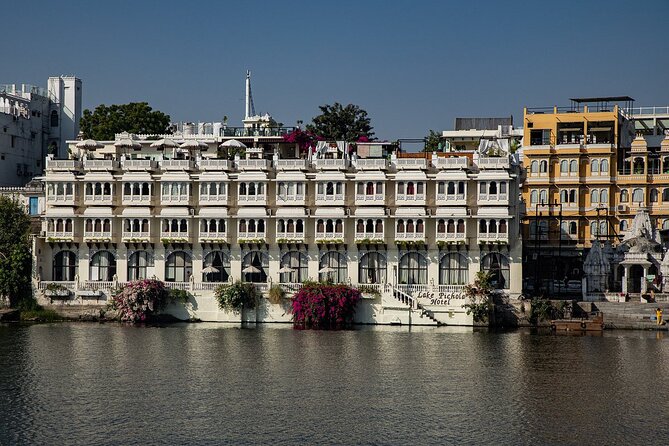
Udaipur feels like a different planet from the forts. Day 5 is your “most complete” Udaipur day, with multiple landmark stops and enough time to actually experience the city’s waterfront mood.
You begin at Gangaur Ghat, then move to Jagdish Temple, which the tour describes as one of Udaipur’s popular temples. This is a solid combo because the lake/ghat atmosphere sets the scene, and the temple adds spiritual and cultural depth.
After that, you visit City Palace of Udaipur, which includes about two hours, but the ticket isn’t included. This is the stop where Udaipur’s architecture makes sense. From higher viewpoints, you can see why the palace and the water are always in conversation.
Next is Lake Pichola, including time plus a boat ride opportunity. The tour notes the boat-related ticket is not included, so plan for that extra cost. Even if you’re not a “boat person,” Lake Pichola is the right kind of short ride: it gives you a new angle on the palaces and shorelines.
Then you get Fateh Sagar Lake for a walk, plus Sahelion Ki Bari (the tour lists it more than once, but the core idea is the same). Sahelion Ki Bari is a garden built for royal ladies of Mewar, which makes it a nice break from temples and forts. It’s also one of those stops where you can slow down and just breathe for a bit.
There’s time for lunch on your own after the main tour block, and the schedule leaves room for extra exploration if you still have energy.
If you get tired, prioritize this order: City Palace first, then Lake Pichola. Those two are your best “Udaipur identity” anchors.
Day 6 back to Jaipur with Chittorgarh Fort on the way
Day 6 is a longer transfer day back to Jaipur. The tour structure says about eight hours of travel, and it also notes a planned stop at a major site on the way from Udaipur to Jaipur—Chittorgarh Fort.
That’s a smart ending. Udaipur can feel mellow and scenic, but Chittorgarh is the opposite: massive, dramatic, and historically heavy. Even if you don’t spend all day there, a fort stop at the end can give you a final “Rajasthan snapshot” before you return.
One detail in the day plan looks cut off in the provided information, so I can’t promise the exact timing of the stop beyond the fact that Chittorgarh Fort is included as an on-the-way visit. Expect a full-feeling day, and pack patience for road time.
Price and value: what $300 really covers
At $300 per person for a 6-day private route, the value comes from three things you usually don’t get together:
1) Private A/C transportation between cities
2) Guide time in Jaipur, Jodhpur, and Udaipur (not just a driver and a map)
3) Tour-operation costs like fuel, parking, tolls, and bottled water
Hotels are not included, and neither are monument entrance fees in Jaipur, Jodhpur, and Udaipur. That’s important for budgeting. If you add up entrance fees plus the lake boat ticket, your total trip cost can creep upward, especially if you plan to go inside every monument listed.
The good news: several stops in the day plan are marked free (like Jal Mahal and Ranakpur, for example). Also, private tours often make sense financially if you’re traveling as a group, because the vehicle is for your party, not shared with strangers.
If you want to judge value quickly, ask yourself this: would you rather pay for a driver plus guide help that handles the route and timing, or do you want to self-plan and risk losing hours figuring out tickets and meeting points? If the thought of planning sounds tiring, this tour’s structure usually feels worth it.
Who should book this Heritage Triangle and who should skip it
This tour is a great fit if you want:
- A first-time Rajasthan plan that covers Jaipur, Jodhpur, and Udaipur without guesswork
- The comfort of a private A/C vehicle for long road days
- A schedule that includes major sites plus Pushkar, Ranakpur, and Chittorgarh
You might want to skip or adjust if you:
- Want a super slow pace with lots of free time and minimal driving
- Hate paying separate entrance fees and boat tickets
- Prefer independent travel without guided explanations
One more practical note: the tour includes a meeting point at Sanganeer Airport and starts at 8:00 am, so plan your arrival flight timing with buffer.
Should you book this Private Rajasthan Heritage Triangle Tour?
If you want an organized triangle loop with real guide time in the three biggest cities, I’d lean yes. The biggest strengths are the private transport setup and the fact that you’re not just sightseeing—you’re getting context, especially where monuments, forts, and temples can get confusing without help.
Before you book, do two quick checks. First, budget for entrance fees and the items marked as not included. Second, make sure your travel style can handle multi-stop days and longer drives like the Day 3 and Day 6 transfers.
If that sounds like your pace, this is a solid way to experience Rajasthan’s triangle without turning your trip into a logistics project.
FAQ
What cities does the Private Rajasthan Heritage Triangle Tour include?
The tour covers Jaipur, Jodhpur, and Udaipur. It also includes planned stops in Pushkar, Ranakpur (Jain Temple), and Chittorgarh Fort as part of the route between the main cities.
How do you travel between Jaipur, Jodhpur, and Udaipur?
You travel by a private chauffeur-driven A/C vehicle. The tour also covers fuel, parking charges, toll taxes, and interstate taxes.
Are professional guides included?
Yes. The tour includes a professional, informative tour guide in Jaipur, Jodhpur, and Udaipur.
Are hotel accommodations included?
No. Hotel accommodation is not included in the tour price.
Are monument entrance fees included?
No. Monument entrance fees in Jaipur, Jodhpur, and Udaipur are not included, and some items like the boat ride ticket (and other site tickets listed as not included) may cost extra.
Where does the tour start and what time?
The tour starts at Sanganeer Airport, Jaipur (India) with a start time of 8:00 am.