REVIEW · VOLKLINGEN
Völklingen Ironworks World Heritage Site: Guided tour of the ironworks site
Book on GetYourGuide →Operated by Weltkulturerbe Völklinger Hütte · Bookable on GetYourGuide
Völklingen Ironworks turns machines into stories. This UNESCO site is one of the few places where you can stand inside the industrial engine room and watch how pig iron is produced, with an expert guide making the old technology make sense. I especially love the way the tour connects big machinery (from the blower hall through the blast furnace) to the human side of work, and I also like that the ticket includes full day entry so you’re not stuck only with the guided portion. One caution: the tour isn’t ideal if you’re afraid of heights, since there’s a viewing platform option above the rooftops.
After the guide finishes, you’re free to roam. The complex is big—halls, open spaces, and an intriguing maze of pipe systems—and you can build your visit at your pace by hitting the exhibitions and science stop on your own. The pace can feel a bit brisk for reading or photos during the tour, so if you want lots of time to stop and stare at details, you’ll want to plan extra time after.
In This Review
- Key highlights at Völklingen Ironworks
- UNESCO ironworks you can actually walk through
- Price and value: why $25 feels fair here
- Where the tour starts and how the 2 hours are used
- From the blower hall to the blast furnace: what you’re actually learning
- Seeing the preserved site maze: pipes, halls, and open spaces
- Ferrodrom® Science Center: making industry feel understandable
- The old coking plant and the Paradise garden transformation
- Viewing platform: getting your bearings above the rooftops
- Photography, reading time, and how to pace your visit
- Who this tour suits best (and who should skip it)
- Should you book? My practical take
- FAQ
- FAQ
- How long is the guided tour at Völklingen Ironworks?
- Where do I meet for the guided tour?
- What language is the live guide?
- What’s included with the $25 ticket?
- Is there free or reduced admission for some visitors?
- Is the site wheelchair accessible?
- Is it safe for people afraid of heights?
Key highlights at Völklingen Ironworks
- UNESCO setting: the only fully preserved ironworks from the heyday of industrialization
- Guided explanation of pig iron production through the key industrial halls
- Full day access to permanent and special exhibitions after the 2-hour tour
- Ferrodrom® Science Center included, plus the old coking plant area to see how production worked
- Paradise garden access, created from former industrial space
- Viewing platform option above Völklingen rooftops for a wider perspective
UNESCO ironworks you can actually walk through
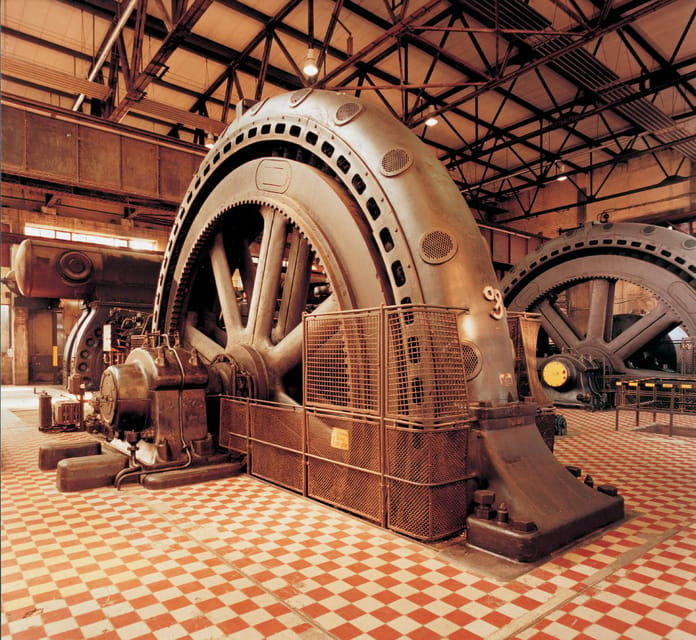
Völklingen Ironworks is in Saarland, Germany, and it’s famous for one simple reason: it survived. Not as a rebuilt “theme version,” but as a real, preserved industrial site from the peak of Europe’s industrial age. That matters because you’re not just reading about old iron-making—you’re looking at the halls and machines themselves, understanding how they were laid out, and seeing how the system operated as a whole.
This is also a landmark in UNESCO terms. It’s the only fully preserved ironworks from that industrial heyday, and it was the first monument from this era to be inscribed on the World Heritage List. When you’re standing in the complex, you get why that recognition happened. The site’s scale and the survival of the infrastructure make it unusually good for learning—not just admiring.
And it’s not frozen in time in one mood. There’s industrial “hell” history at the coking plant, and then there’s the transformation into a place people can enjoy today. The contrast is one of the most memorable parts of the visit.
You can also read our reviews of more tours and experiences in Volklingen.
Price and value: why $25 feels fair here
At about $25 per person for a 2-hour guided tour, the big question is whether you’re getting more than a quick highlight walk. In this case, you are.
You’re paying for:
- a guided tour of the World Cultural Heritage Site,
- day admission to the World Cultural Heritage Site,
- access to all permanent and special exhibitions,
- plus entry to the Ferrodrom® Science Center,
- and access to the Paradise area (the reclaimed garden space).
So your money buys two things: the structured explanation during the tour, and then the freedom to explore afterward. That’s a strong value setup for a site like this, because the ironworks is large and not everything is explained in the same way during the guided time.
One small trade-off: some visitors feel the tour can be quick and that there aren’t many chances for stopping to read labels or focus on photos during the guided portion. The good news is that the ticket covers your self-guided time afterward, so you can slow down when you want.
Where the tour starts and how the 2 hours are used
Your meeting point is in the entrance area at the ticket office. That’s useful because you can get oriented fast: you know exactly where to be when the guide begins.
The tour itself runs about 2 hours, and the guide language is German. That doesn’t mean you’re out of luck if you’re not fluent, but it does mean your best experience will come from understanding the guide’s explanations. If you’re comfortable with basic German, you’ll likely catch more of the “why” behind the machinery stories.
In plain terms, the flow goes like this:
1) You follow the guide through the ironworks halls and key production areas.
2) The guide explains how the system worked, including how pig iron is produced and how people lived and worked in Saarland’s industrial era.
3) After the guided tour ends, you can explore the entire site on your own, including exhibitions and the science and garden areas included with your ticket.
That structure is the reason this tour works well. You get the learning momentum of a guide, then you can choose your own pace for the big site.
From the blower hall to the blast furnace: what you’re actually learning
The core of the guided experience is the industrial heart of Völklingen Ironworks. You’ll move through major spaces, including the blower hall and the blast furnace area, and you’ll get an explanation of the process of making pig iron.
Why that’s worth your time: iron production is not magic. It’s a system—heat, fuel, airflow, and a chain of steps—built into the layout of the plant. Seeing the machinery in place helps you understand why these were not random buildings. They were parts of one production logic.
During the tour, the guide also connects the technology to the people who used to live and work here. That’s the second learning layer that makes the visit feel more human. Instead of only thinking about machines, you start asking the questions that mattered to workers: What did the work demand? What did the day-to-day life look like around heavy industry? How did Saarland fit into the wider industrial heart of Europe?
A practical note: because it’s guided and timed, you’ll likely get the clearest explanations during the walking segments rather than during long stops. If your ideal museum day is lots of slow reading, plan to do your detailed label time after the guide ends.
Seeing the preserved site maze: pipes, halls, and open spaces
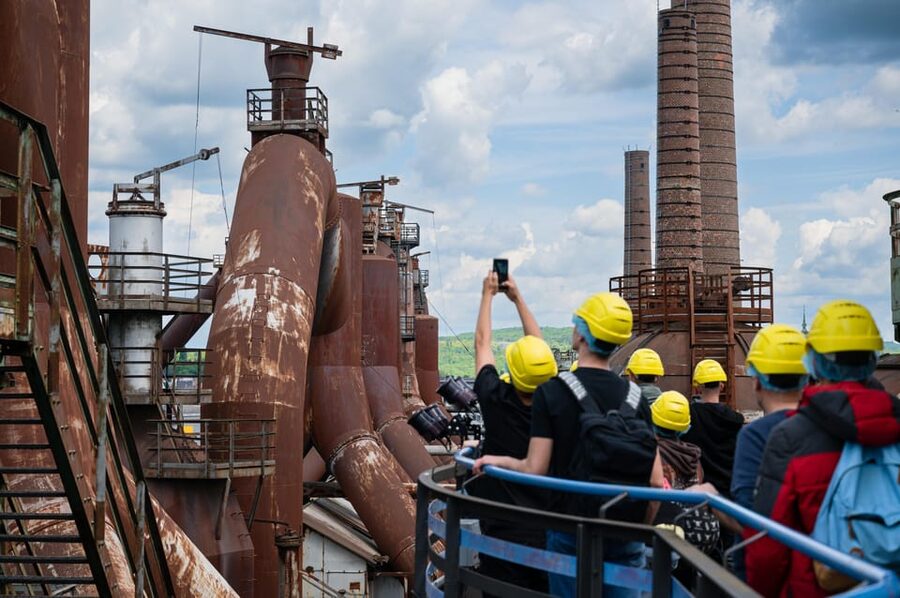
One of the most distinctive features of Völklingen Ironworks is the built environment—halls, open spaces, and a maze of pipe systems. That’s not just a visual detail. It helps you understand the scale and integration of industrial operations.
When you’re in a working-style layout like this, you start seeing connections that are easy to miss in a traditional museum. The pipe systems show how materials and gases move through the production process. The halls show how the industrial workflow was organized under one roof or within one industrial campus layout.
After your guided portion, you can return to areas at your own pace. This matters because some visitors find the guided time gives only a small view of the whole site. That’s not a failure of the tour; it’s simply the reality of a large UNESCO industrial complex. The ticket gives you the ability to expand your experience with extra roaming time.
Ferrodrom® Science Center: making industry feel understandable
Your admission includes access to the Ferrodrom® Science Center. If you want a break from straight industrial viewing, this is the spot that helps you convert what you saw into clearer concepts.
The reason I think this is a smart inclusion is simple: ironworks history can feel technical fast. A science center component gives you another angle—often the kind of learning that sticks better than walking past machines while hearing about them once.
You’ll also appreciate this if you’re visiting with someone who doesn’t want an all-day industrial deep focus. The ticket includes it, so you’re not stuck choosing between “guided learning only” or “only exhibitions.” You get both.
The old coking plant and the Paradise garden transformation
Völklingen doesn’t only show the industrial engine. It also shows the afterlife of the industrial landscape.
Included with your ticket is access to the Paradise area, described as a reclaimed garden that emerged from the former “hell” of the coking plant. That’s a powerful contrast because it turns the story from purely production and pollution into one that includes recovery and nature returning to former industrial space.
When you walk in the Paradise area, you’re seeing reclaimed parts of the site. It’s not just a pretty stop. It’s part of the UNESCO story: how societies moved from industrial necessity to new ways of using, interpreting, and living with old industrial infrastructure.
If you like places where history and the present share the same space, you’ll find this section especially memorable.
Viewing platform: getting your bearings above the rooftops
The site includes a viewing platform above the rooftops of Völklingen. You can treat this as your “pause and reset” moment. From above, the complex and its layout become easier to understand—how the different sections relate to each other spatially.
One caution: the activity is not suitable for people afraid of heights. So if that’s you, skip the platform and focus on the parts you can enjoy comfortably.
If you’re not afraid of heights, this stop can help you connect what you’ve learned during the guided walk to the overall shape of the site.
Photography, reading time, and how to pace your visit
A couple of things to know before you go:
- The guided portion can feel relatively quick, with limited opportunities for stopping for photos or reading labels.
- The guided tour gives you a strong entry point, but it may only show a small slice of the entire facility.
My advice: treat the guided tour as your “orientation and understanding” phase, then switch into “linger mode” after. After the tour ends, use your included day admission to go back to areas you cared about most—especially if you’re the type who likes to photograph machines, pipes, and key production details when you can actually take your time.
Also, if you’re traveling with friends who learn at different speeds, this site structure helps. One person can spend extra time in exhibitions, while another might return to industrial halls for more visual comparison. The ticket makes both styles possible.
Who this tour suits best (and who should skip it)
This is a great match if you want:
- a guided explanation of iron production (including pig iron) rather than only self-guided museum reading,
- access to a big UNESCO site plus exhibitions after the tour,
- and extra included stops like Ferrodrom® and the Paradise garden area.
It’s also a good fit for people who like historical technology but still want the human context. The guide focuses on machines and old technology, but also on how workers who lived and worked there fared.
Consider skipping (or at least planning carefully) if you’re afraid of heights, since the viewing platform is part of the site’s experience.
If you’re traveling with mobility needs, the tour is wheelchair accessible, and that’s a real plus at a site where walking can be extensive.
Should you book? My practical take
Yes, I’d book this if you like industrial history and you want the UNESCO ironworks story explained by a guide. The biggest value is that you don’t end after two hours—you get full day admission, so you can correct for any “too-fast” feeling during the tour by exploring longer afterward.
If you’re someone who needs lots of quiet reading time during the guided portion, you might find the pace a bit rushed. In that case, go in with the right expectation: let the guide get you oriented, then plan your slower museum and photography time for after.
FAQ
FAQ
How long is the guided tour at Völklingen Ironworks?
The guided tour lasts 2 hours.
Where do I meet for the guided tour?
The meeting point is in the entrance area at the ticket office.
What language is the live guide?
The live tour guide is in German.
What’s included with the $25 ticket?
It includes the guided tour, day admission to the World Cultural Heritage Site, access to permanent and special exhibitions, access to the Ferrodrom® Science Center, and access to the Paradise garden area.
Is there free or reduced admission for some visitors?
Yes. Free admission is listed for under 18s. Under 27s with a valid student ID also get free admission. SaarlandCard holders get reduced admission. Free or reduced tickets are handled at the entrance ticket office, and disabled persons with a valid status of from GdB 60% get reduced admission.
Is the site wheelchair accessible?
Yes, it is wheelchair accessible.
Is it safe for people afraid of heights?
No. It’s not suitable for people afraid of heights.