REVIEW · BUSAN
UNESCO World Heritage Gyeongju & Busan Two-city Private Tour.
Book on Viator →Operated by EZTOUR · Bookable on Viator
Two cities, one day, zero hassle. I like the private door-to-door comfort and the way the guide turns sightseeing into photo moments with you, but the day is packed and includes some spots that need a bit of stamina.
You get Gyeongju’s Silla-dynasty landmarks and Busan’s modern seaside scenes without spending your whole trip on transfers. The trade-off is that this is not a slow, wandering style day—it moves on purpose.
One big plus: your guide doesn’t just drive. You’ll also receive a customized plan before you go, so the pacing and stop mix match your interests rather than a rigid group timetable. Just be ready to make smart choices about food and ticket add-ons since lunch and some attractions cost extra.
In This Review
- Key things that make this tour worth your time
- How the Gyeongju + Busan combo actually makes sense
- Gyeongju opener: Bulguksa Temple and Silla-era “wow”
- Gyeongju in the middle: Museum for context, then tombs for scale
- The poetic break: Woljeonggyo Bridge and a slower pause
- Transition to Busan’s best photo mood: Gwangalli Beach
- Hwangnyeongsan Fire Tower views: when Busan starts glowing
- Cheonmachong Tomb: a standout stop with an extra ticket
- Busan on the cable: Songdo Cable Car (Busan Air Cruise) and sea-air views
- Haeundae Beach from Dongbaekseom: coastal cliffs without the full-day commitment
- Gamcheon Culture Village: street-level Busan in a compact window
- Guide, van, and timing: why the logistics feel calmer than you expect
- Price and value: $421 for up to 5 people is the math to do
- What to expect physically and how to pack smart
- Who this tour suits best (and who should consider a different plan)
- Should you book this UNESCO Gyeongju & Busan private day tour?
- FAQ
- How long is the UNESCO World Heritage Gyeongju & Busan private tour?
- How many people are in each private group?
- Do you get pickup, and is there WiFi on the van?
- Are admission tickets included for every stop?
- Is lunch or dinner included?
- Is the tour fully private with only your group?
Key things that make this tour worth your time
- Private group size (up to 5): easier logistics, less waiting, and a smoother flow between cities.
- Pickup + air-conditioned mini-van + onboard WiFi: comfort matters when you’re doing a long, split-day itinerary.
- A guide who drives and photographs: you’ll get steadier, more intentional photo stops than a solo dash.
- UNESCO-focused Gyeongju sequencing: temple, museum, tombs, and old bridges in a single run.
- Busan’s sea views and photo points: Gwangalli, Haeundae, and Gamcheon Culture Village are chosen for easy sightseeing.
- Flexible time balance between Gyeongju and Busan: you can shape the day around what you care about most.
How the Gyeongju + Busan combo actually makes sense
Doing Gyeongju and Busan on your own is totally possible, but it’s also easy to burn half the day figuring out transportation, timing, and which sights are “must” versus “nice.” This private setup is built for efficiency: one van, one guide, and coordinated timing so you spend more hours in places and fewer hours in motion.
I also appreciate the way the day is structured around big visual wins. Gyeongju gives you iconic Silla-era sites—temple architecture, royal tomb grounds, and historic bridges—while Busan shifts to ocean air, boardwalk energy, and street scenes. It’s a clean contrast, and it keeps the day from feeling repetitive.
The only real caution is that you’ll have less time for long meals or slow browsing. If your travel style is all-day café time and unplanned wandering, you may feel rushed. If you like seeing a lot while still having control through a private guide, this works well.
You can also read our reviews of more tours and experiences in Busan.
Gyeongju opener: Bulguksa Temple and Silla-era “wow”
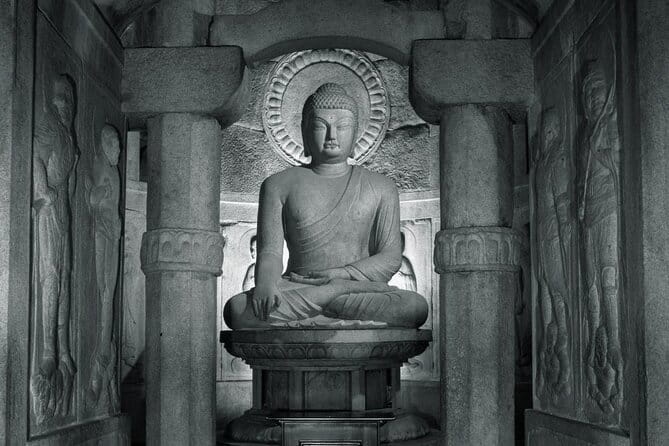
Most first-time Gyeongju days start with Bulguksa for a reason, and this tour gives it a proper block of time. You’ll spend about two hours at the temple, with an admission ticket included. This is a serious, recognizable stop, the kind where you’ll keep noticing details after you think you’ve already “seen it.”
Bulguksa was founded in 751 during the Silla Kingdom era, and the site is closely tied to King Gyeongdeok’s reign. Even if you don’t go deep on every historical layer, you’ll feel the significance in the layout and stonework. This is the moment where Silla history stops being abstract and turns into something you can look at from multiple angles.
Practical note: it’s a temple visit, so wear shoes that handle walking on uneven ground. If you’re traveling with anyone who prefers minimal steps, plan to pause when you need to, and let your guide know early.
Gyeongju in the middle: Museum for context, then tombs for scale
After Bulguksa, the tour heads to the Gyeongju National Museum for about 30 minutes. That short museum stop is smart because it helps you connect what you saw outside with what you’ll see next. You get a quick overview of the Silla Kingdom and its cultural heritage, without turning the day into a museum-only marathon.
Then comes Daereungwon Tomb Complex, roughly one hour. This is where you start to appreciate how monumental the Silla royal and noble burial grounds were. The tombs are known for construction style—stone and packed earth techniques that made them harder to loot historically—so it’s not just “a field of old rocks.” It’s a place with a strong sense of what power looked like in that era.
If you care about architecture and artifacts, use the museum time to ask your guide what to pay attention to in the tomb grounds. In a private tour, you can actually tailor your mental checklist instead of letting the day blur.
The poetic break: Woljeonggyo Bridge and a slower pause

Next up is Woljeonggyo Bridge, about 40 minutes. This is an easier stretch after tomb-and-temple time, and the setting is part of the appeal. It’s described as a wooden bridge built during the Unified Silla period, connecting the area across the Namcheon stream and linking key spots in the old capital layout.
What I like here is the rhythm shift. You’re not constantly climbing or scanning museum displays; you’re taking in views and spacing out your attention. For photography, bridges can be tricky because angles matter—having a guide who knows where to stand saves time.
Stay aware of weather. If it’s windy or rainy, you may want to focus on the immediate viewpoints and keep moving.
Transition to Busan’s best photo mood: Gwangalli Beach
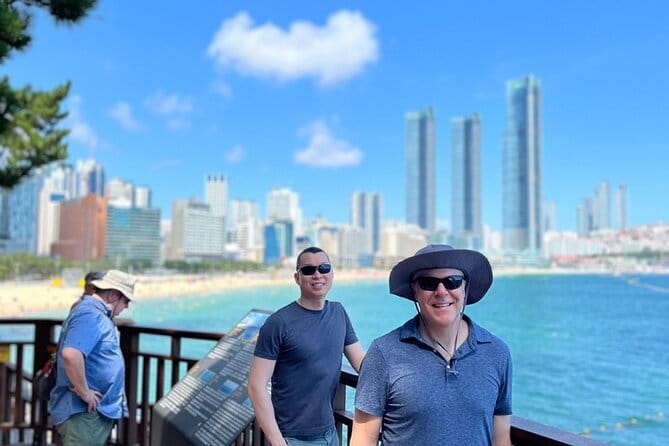
Once you reach Busan, the tour gives you Gwangalli Beach for about 20 minutes, with admission ticket included. This is a short stop, but it’s chosen well: it’s a popular waterfront area where you can look toward Gwangan Bridge and feel the city’s modern, seaside vibe.
It’s also where you can add a food moment if you want. There’s an option to eat live octopus and fish cake soup here, but those experiences cost extra.
Since this is a brief stop, treat it like a “set your photos and keep your appetite ready” moment. If you want a full meal, save it for later in the day or plan a quick snack only.
Hwangnyeongsan Fire Tower views: when Busan starts glowing
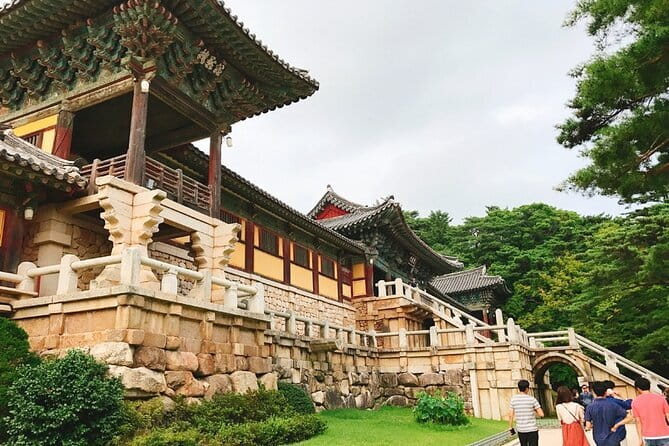
Your next stop is Hwangnyeongsan Bongsu-dae (황령산 봉수대), about 50 minutes. This is a viewpoint climb on a mountain, with an included admission ticket. The payoff is wide-open views—Busan spread out with lights—and the site is known as a dating spot, which hints at how photogenic it feels at the right time of day.
This is one of those stops where “how it feels” matters more than “how long it takes.” Bring a layer if it’s cooler up top. And keep an eye on footing—mountain viewpoints are rarely perfect for quick footwear.
If your group is small and private, this is also a good place to adjust the pace. Your guide can help you decide when to move on if the view is already good.
Cheonmachong Tomb: a standout stop with an extra ticket
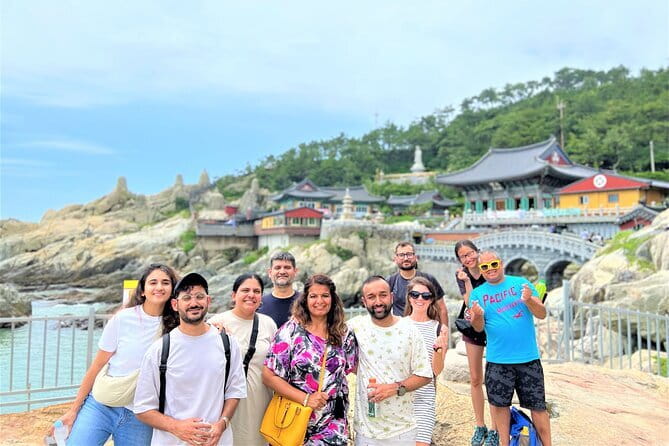
Back in Gyeongju territory again is Cheonmachong Tomb, about one hour. Here’s an important detail: its admission ticket is not included. That means you may pay an extra entry fee, depending on what’s current for that day.
Cheonmachong is tentatively believed to be connected to King Jijeung, with details like its diameter and height listed in the tour description. Even if you don’t memorize numbers, you’ll notice it’s a distinctive, round tomb shape—something different from the tomb complex you visited earlier.
Because this stop has a separate ticket, I recommend budgeting for it mentally. It can be worth it for the variety, but it’s better to know up front so you don’t get surprised mid-day.
Busan on the cable: Songdo Cable Car (Busan Air Cruise) and sea-air views
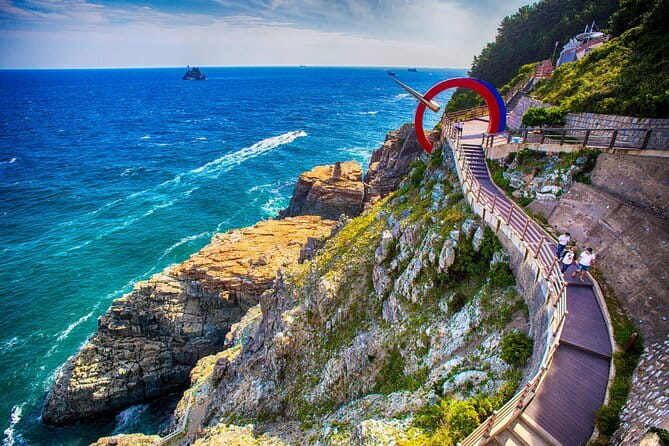
Next comes Songdo Cable Car (rebranded as Busan Air Cruise), about 45 minutes. Admission is not included here either, so you should expect an extra cost. This is a classic “you’ll remember this view” stop, especially if the weather is clear.
A cable car also acts as a nice break in a long day. You’re not walking constantly—you’re moving in a different way while still getting the big skyline/sea perspectives people come for.
If you’re traveling with children or anyone with limited stamina, cable cars can help make the day feel easier. Just be sure you’re on time for any queueing, since the schedule is tight.
Haeundae Beach from Dongbaekseom: coastal cliffs without the full-day commitment
Then you’ll visit Haeundae Beach for about one hour, with admission free. The tour also includes a view from Dongbaekseom Island, south of Haeundae, which is helpful because it changes the angle.
This stop is described as including coastal cliff scenery and the Little Mermaid legend context, plus a chance for memorable photos. In a private format, I’d use this hour for two things: quick panoramic shots and then a calmer moment to breathe.
If you’re traveling in hot or humid weather, plan your photo timing. You don’t need to stand in the sun for long to get good images when you have a guide who can guide you to practical angles.
Gamcheon Culture Village: street-level Busan in a compact window
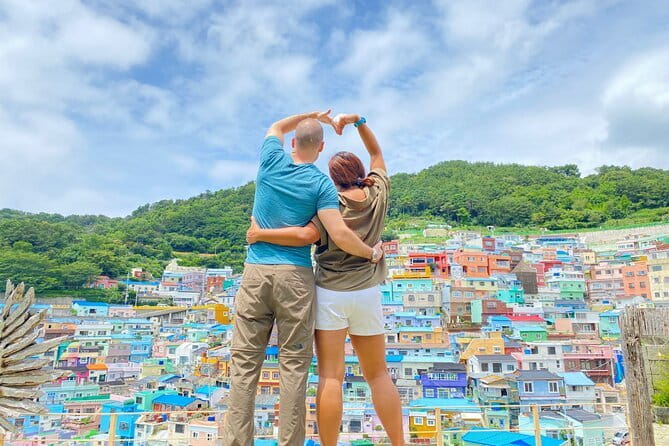
The final major stop is Busan Gamcheon Culture Village, about 30 minutes, with an admission ticket included. Gamcheon is the kind of place that looks great in photos because of its stacked streets and colorful buildings, but it can also get crowded and confusing if you come without a plan.
In a time-limited tour, you get what you need: a focused visit that still lets you feel the neighborhood vibe. This is also a helpful ending point because it’s different from the beach and the viewpoints you’ve already done. It brings the day down from “big views” to “human-scale streets.”
If you want one extra photo or one extra alley to explore, this is the moment to ask your guide. Private touring means you can adjust without derailing everything.
Guide, van, and timing: why the logistics feel calmer than you expect
This is priced as a private tour for up to five people, and the van is air-conditioned with WiFi onboard. Pickup is offered, and parking fees, fuel surcharge, and tolls are included. That matters because it removes the annoying parts of planning—especially when crossing between cities.
The guide role is a standout. Several past groups talked about Mr. Jang as an experienced guide who helped coordinate before the tour, used shortcuts, and made pickup/drop-off easy. One group even mentioned he arranged an additional 1-hour night fireworks yacht tour. That’s not part of the core tour, but it signals the bigger point: he’s actively helping you shape your day.
Also, the tour provides a detailed itinerary sheet in advance, then adjusts it together with you. That’s a quiet benefit. You’re not guessing where to stand, when to leave, or what to prioritize once you’re already in transit.
Price and value: $421 for up to 5 people is the math to do
The price is $421 per group (up to 5), for about 10 hours total. If you fill the van with five people, you’re effectively paying about $84 per person for guided transportation and admission coverage where it’s listed as included.
Here’s why that can be good value: the itinerary is split between cities, which usually means you’d pay for multiple legs of transport and struggle to keep timing smooth. With a private van and driver-guide, you also avoid the “taxi chess match” that often ruins days like this.
At the same time, be aware of what’s not included. Lunch and dinner are on you, and several attractions have ticket fees not included (Cheonmachong Tomb and Songdo Cable Car). So think of the headline price as “transport + guided stops” while you budget for meals and the add-on tickets.
If you have a party of two or three, it can still be worth it if you hate logistics. But the strongest value shows up when your group reaches the upper end of five.
What to expect physically and how to pack smart
The tour description calls for moderate physical fitness. That’s because you’ll have temple grounds, tomb areas, and a mountain viewpoint at Hwangnyeongsan. You don’t need to be an athlete, but you do need to be comfortable with walking and some stairs or uneven surfaces.
Packing tip: wear supportive shoes and bring a light layer for the mountain viewpoint. If you’re doing photos, carry a small battery pack or charging solution since you’ll be out for most of the day.
Weather matters here too. The experience requires good weather, so if conditions are poor, you’ll likely be offered a different date or a full refund. That’s a normal reality for viewpoint-focused travel.
Who this tour suits best (and who should consider a different plan)
This is ideal for families, couples, and friends who want a lot of major sights without doing the route planning themselves. It also suits people who care about photos and appreciate a guide who takes photo moments seriously.
If you’re the kind of traveler who likes to linger and browse at every stop, this might feel like too much. The stops are timed, and you’ll need to make choices on food and side streets. In that case, a slower two-day version of the route would probably fit better.
If you’re traveling with kids, private touring can be a big win because you can control the pace. Just note that tomb and mountain stops do require walking.
Should you book this UNESCO Gyeongju & Busan private day tour?
Book it if you want an efficient, guided day that links UNESCO Silla-era sights with Busan’s modern seaside and photo points. The mix of Bulguksa Temple, the museum and tomb stops in Gyeongju, plus Busan viewpoints and the Gamcheon neighborhood is built for variety without endless travel.
Skip or rethink it if your idea of a great day is slow meals, long sits, and lots of unplanned wandering. This itinerary moves. Also, if you already know you won’t want to pay extra for a couple of ticketed attractions and cable car, double-check your budget before you commit.
My practical bottom line: if you’re traveling as a group and you want a guided day with pickup, comfort, and photo help, this is a smart way to experience two sides of South Korea in one shot.
FAQ
How long is the UNESCO World Heritage Gyeongju & Busan private tour?
The duration is listed as approximately 10 hours, including travel time. The schedule can be adjusted, and you’ll receive a confirmed itinerary sheet before the trip.
How many people are in each private group?
It’s a private tour for up to 5 people per group.
Do you get pickup, and is there WiFi on the van?
Pickup is offered. The vehicle includes WiFi onboard, and the mini-van is air-conditioned.
Are admission tickets included for every stop?
Not all tickets are included. Admission is included for Bulguksa Temple, Gyeongju National Museum, Daereungwon Tomb Complex, Woljeonggyo Bridge, Gwangalli Beach, Hwangnyeongsan Bongsu-dae, and Gamcheon Culture Village. Ticket fee is not included for Cheonmachong Tomb and Songdo Cable Car.
Is lunch or dinner included?
Lunch and dinner are not included.
Is the tour fully private with only your group?
Yes. It’s a private tour/activity, so only your group participates.