REVIEW · SAN FRANCISCO
San Francisco Technology and History Tour: South of Market
Book on GetYourGuide →Operated by Heck Wes Tours · Bookable on GetYourGuide
San Francisco has a talent for turning history into real estate. This South of Market walk connects the startup story to the city’s older industry, rail links, and government projects that reshaped whole neighborhoods. You’ll start in South Park, then follow a mostly flat route through tech corridors and urban renewal sites, ending on a rooftop garden at Salesforce Terminal with skyline-and-Bay views.
Two things I love: the way the guide makes the neighborhood feel layered instead of one-note, and the focus on how today’s tech footprint sits on top of older land uses. A small consideration: this is a short, steady walking tour. Even though the route is flat and includes places to sit, you’ll still want comfortable shoes and a bit of stamina for the full 70 minutes.
In This Review
- Key Points You’ll Remember
- South Park: Where Startup Money Meets Old San Francisco
- 2nd Street: The Flat Walk With Big Shipping History
- Folsom Street Moment: Part of the City, Not Just a Side Note
- Yerba Buena Gardens: Urban Renewal’s Winners and Losers
- Salesforce Park Rooftop: The Skyline View With a Built-Over Past
- Price and Pace: Getting Value From $30 and 70 Minutes
- What to Bring, and How to Make It Easier
- Who This Tour Suits Best
- Should You Book This South of Market Technology and History Tour?
- FAQ
- How long is the San Francisco Technology and History Tour: South of Market?
- Where does the tour start?
- Is the tour wheelchair accessible?
- Where does the tour end?
- What should I wear or bring?
- What language is the tour guide?
Key Points You’ll Remember
- South Park’s changing roles: gold rush camp to luxury development to refugee community to tech finance hub
- Why 2nd Street matters: it links downtown to steamship docks and includes the city’s big land-reclamation story
- Urban renewal with names and consequences: Yerba Buena Gardens isn’t just architecture—it’s about people displaced and political fallout
- Folsom Street on the route: a quick stop-through area tied to the city’s gay history
- Salesforce Park’s rooftop garden: a green top over a former beachfront natural gas refinery site
- Tar Flat to today’s skyline: the tour points out what used to be there, including Klockar’s blacksmith
South Park: Where Startup Money Meets Old San Francisco
The tour begins in South Park, a neighborhood that feels compact but historically stacked. It’s also one of the oldest areas in San Francisco, laid out in the 1850s after a British garden-square idea. That detail matters because you can see how planners shaped public space first, then the city’s economy kept changing the rest of the block.
You’ll take about 10–15 minutes here before moving north. South Park is a practical place to start: the area offers seating and shade, which is a lifesaver on a warm day or if your pace is slower. And because South of Market is San Francisco’s flattest neighborhood, you won’t get punished by hills.
The guide, Wes (Heck Wes Tours), brings this area to life by talking through multiple eras back-to-back. In the 2010s, South Park became home to early offices for Instagram and Twitter. Before that, it hosted a gold rush encampment and a luxury development during the Gilded Age. After the 1906 earthquake, a refugee camp shaped everyday life. The tour also connects the Japanese community and an industrial community to what you see now—until tech finance takes the lead again.
I like how Wes doesn’t treat any era like a “history-only” chapter. You’re standing in the setting where the eras overlapped, and the story explains why that overlap still shapes the neighborhood today.
One more perk: Wes compares historical photos of the neighborhood with the sights along the route. It’s a simple technique, but it makes the city’s transformations click fast. Instead of just learning dates, you learn how the place actually changed.
You can also read our reviews of more tours and experiences in San Francisco.

2nd Street: The Flat Walk With Big Shipping History
Next you’ll head onto 2nd Street, one of the most historically important streets in San Francisco. The reason: it connected downtown to the Pacific Mail Steamship Company’s docks. If you want to understand why cities rise, that’s a key clue—transport routes drive growth, and growth drives everything else.
Wes also points out a major physical reshaping of the land. This street was part of the city’s first large land reclamation project, where one of San Francisco’s hills was flattened to make room for a commercial thoroughfare. It’s the kind of fact that sounds abstract until you’re walking it and thinking: someone had to decide to reshape the city’s body to change its economic future.
Because SoMa is flat, this segment is easier than you might expect for San Francisco. You’re still walking through a tech-heavy corridor, but the focus stays grounded in how the area worked before startups were the headline. You’ll also pass by major tech names along the route, including LinkedIn, DoorDash, and Anthropic, which helps you connect today’s branding to older infrastructure logic.
And if you’re thinking, This is going to feel like a bland “tech offices” walk—don’t worry. The guide keeps pulling the thread back to the corridor’s original function.
Folsom Street Moment: Part of the City, Not Just a Side Note
The route includes Folsom Street, well known for San Francisco’s gay history. Even if you don’t linger long, it’s an important reminder that SoMa’s story isn’t only about industry or investment. It’s also about communities carving out space—often in plain view, often with real consequences for the neighborhood’s social and political tone.
I appreciate that the tour doesn’t treat this as a random “cool fact.” It’s framed as part of the area’s evolving identity. In a city where neighborhoods can be “marketed” until they feel unfamiliar, this kind of context helps you see the difference between a place and its branding.
Yerba Buena Gardens: Urban Renewal’s Winners and Losers
Then the tour shifts to Yerba Buena Gardens, where you’ll talk about some of the city’s largest urban renewal projects. This is where the tour turns from straightforward development story to something more human—and more uncomfortable.
Wes explains how Yerba Buena Gardens came to be, but the emphasis stays on the people who lived there before the redevelopment. You’ll hear about the effects of eviction and how those decisions influenced the city’s political climate.
This is one of the tour’s biggest strengths: it gives you tools to interpret the skyline and the park-at-center-of-everything feeling. You start to see that redevelopment isn’t just “new buildings.” It also means displacement, community disruption, and long-term political ripple effects.
Practical note: since this section includes a pause to look around, it’s a good time to slow down your breathing and reset your photos. If your legs start to feel it, this is the part where you can regroup mentally even if you’re still moving on schedule.
Salesforce Park Rooftop: The Skyline View With a Built-Over Past
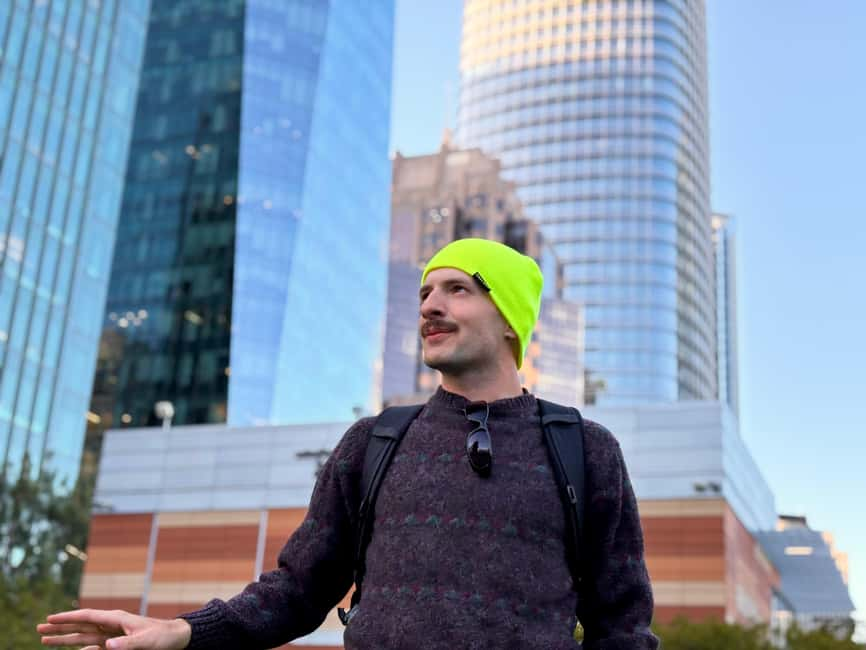
The tour ends near Market Street, at the Salesforce Terminal rooftop garden, where you get a view of the city skyline and the Bay. The rooftop perspective is the obvious payoff—but the story underneath it is the point.
This Salesforce project is described as the most visible imprint of tech in San Francisco, and it’s also the city’s largest development in recent history. But what makes the tour worth it isn’t the scale alone. It’s what the guide connects the scale to.
The site was built over a beachfront natural gas refinery. That detail reframes what rooftop gardens usually mean: here, it’s not just a pretty view. It’s a transformation of an industrial shoreline into a polished downtown tech anchor.
You also learn about the neighborhood that used to exist there: Tar Flat, which the tour frames as one of the city’s poorest areas. Seeing the rooftop garden after hearing that context changes how you read the place. It stops being a single-company story and becomes a story about how economic power reshapes the city’s geography.
Wes adds another historical touch with Klockar’s blacksmith, a reminder of early metalworking roots. You’re not just looking at a modern development; you’re noticing small anchors to what the area did before it was “the future.”
When you finish, it’s easy to keep moving. You’ll have close access to BART and MUNI, and the Powell Street cable car is about a 15-minute walk away. That’s a nice way to extend the day without fighting complicated transfers.
Price and Pace: Getting Value From $30 and 70 Minutes
At $30 per person for a 70-minute walk, you’re paying for more than scenery. You’re paying for a guide who ties together tech, shipping, redevelopment, and political consequences—then helps you see those ideas on the ground.
Why that matters for value: SoMa can feel confusing if you only look at the newest towers. This tour gives you a framework for interpreting what you’re seeing. And because Wes focuses on direct comparisons—historical photos matched with current streets—you get quick mental “maps” instead of a pile of separate facts.
The pace is best described as steady. The route is mostly flat, and the tour includes short guided stops, but you should still assume you’ll spend real time walking. If you prefer sit-down attractions and long museum time, you might find this tour faster than you want. If you like short, focused neighborhood stories you can walk off immediately, this is a good fit.
One more practical plus: there are no obligatory extra fees mentioned, so the headline price stays the headline price.
What to Bring, and How to Make It Easier
Keep it simple:
- Comfortable shoes (you’re walking through downtown and SoMa)
- Comfortable clothes, especially if the weather flips
- If you get warm easily, remember there’s shade and seating in South Park before you start the street walk
Also, because the tour is wheelchair accessible and South of Market is the flattest neighborhood, you can plan without worrying about brutal stairs or steep hill climbs. Still, it’s smart to think ahead about your comfort level for a full 70 minutes outdoors.
Who This Tour Suits Best
This is the kind of tour that works especially well if you’re:
- A first-time visitor who wants SoMa to make sense fast
- A tech-curious traveler who doesn’t want a Silicon Valley-only story
- A local who thinks they know the neighborhood but wants the “before” version
- Anyone who likes city planning and wants urban renewal explained with real consequences
The reviews I’m using as guidance also emphasize that Wes lives and works in the neighborhood and understands the startup ecosystem from the inside out. That combination matters: you get both the present-day tech context and the older-city context, without either one swallowing the other.
Should You Book This South of Market Technology and History Tour?
Yes, if you want a short, walkable way to understand why San Francisco is considered the world’s startup capital—and how that reputation sits on top of shipping routes, reclaimed land, and major redevelopment.
I’d skip it if you only want famous landmarks in big-ticket photo spots, or if you need a lot of sitting time throughout the tour. This one is best when you’re ready to walk, listen, and look at the streets with new eyes.
FAQ
How long is the San Francisco Technology and History Tour: South of Market?
The tour lasts about 70 minutes.
Where does the tour start?
It starts in South Park. The meeting point may vary depending on the option booked, and one listed option is 162 S Park St.
Is the tour wheelchair accessible?
Yes, the tour is wheelchair accessible.
Where does the tour end?
It ends near Market Street at the rooftop garden at Salesforce Terminal.
What should I wear or bring?
Bring comfortable shoes and comfortable clothes.
What language is the tour guide?
The tour is conducted in English.