REVIEW · MIAMI
Miami Cocaine Capital in the 80’s- History tour-
Book on Viator →Operated by Boatmiamiboat -Boat rental tours in Miami- · Bookable on Viator
Old Miami gets a darker storyline.
This 1-hour ride through Coconut Grove connects the dots of how the city became the cocaine capital of the U.S. in the early 1980s, with stops that mix skyline views, big-name landmarks, and the kind of cash-fueled nightlife Miami became famous for. You’ll cruise in a convertible Jeep, so the whole thing feels like a fast, on-the-ground history lesson rather than a sit-and-listen lecture.
What I like most is the small-group setup and control of the vibe. With a maximum of 4 people per car and Bluetooth so you can play your own music, it stays fun instead of stiff. I also like how the facts have teeth: you’ll hear specific numbers linking drug money to real estate, plus real-world crime details tied to places like Vizcaya.
One thing to consider: there’s no bathroom on the tour. Also, it runs best when weather cooperates, since the experience requires good conditions.
In This Review
- Key highlights you can actually use
- Riding through 1980s Miami in a convertible Jeep
- Price and value: $75 per group can work out well
- Where the tour starts: David T. Kennedy Park
- First stop: skyline views plus the real estate-money connection
- Vizcaya Museum and Gardens: gorgeous views with a theft case behind it
- Coconut Grove and the Mutiny Hotel vibe: luxury, peacocks, and power
- Marinas and distribution: how speed mattered
- Miami City Hall: the flying-boat terminal that became local power
- The Mutiny Hotel at Sailboat Bay: why it became a legend
- What makes this tour worth 1 hour (and what it can’t do)
- Price, pacing, and group size: who this works for
- The guide factor: fun facts without the fluff
- Should you book this Miami cocaine-era tour?
- FAQ
- How long is the Miami Cocaine Capital in the 80’s History tour?
- How much does the tour cost, and how many people are in each group?
- Where do we meet for the tour?
- What’s included in the price?
- Is there a bathroom during the tour?
- Does the tour run in bad weather, and what’s the cancellation policy?
Key highlights you can actually use
- Small-group rides (max 4 per car) keep the tour personal and easier for questions
- Coconut Grove focus means you see the neighborhoods tied to the 1980s cocaine scene
- Real estate + drug money numbers give you a clear economic picture of the era
- Vizcaya’s theft story adds a surprising crime thread to a beautiful estate
- Marinas and speed explain how distribution routes worked when law enforcement couldn’t keep up
- Mutiny Hotel context connects celebrity, politics, and informants to one legendary property
Riding through 1980s Miami in a convertible Jeep
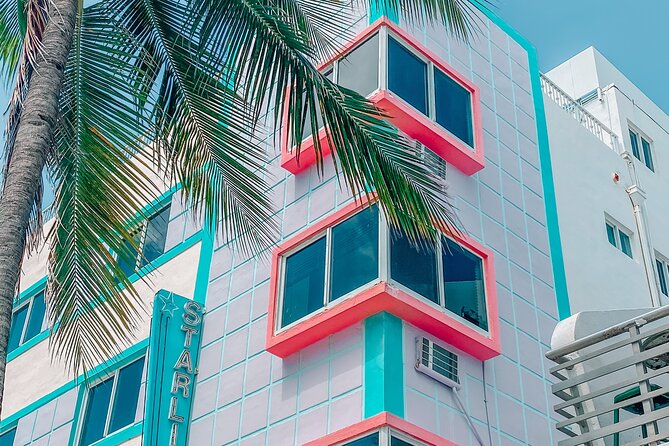
This tour is built around one simple idea: you learn more when you can watch the city slide by. Instead of bouncing between far-flung stops, it concentrates on Coconut Grove and the surrounding spots tied to the 1980s cocaine boom.
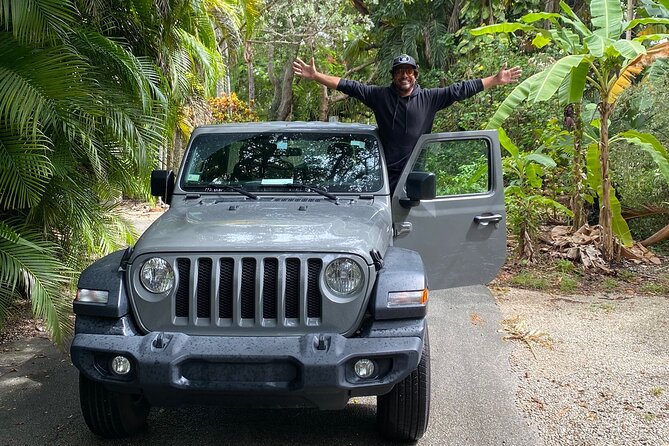
You’re in a convertible Jeep, so you get views without the glass barrier. That matters for Miami, where skyline angles and bay perspectives are part of the story. It also makes the ride feel lighter, even when the subject matter turns serious.
The experience runs about 1 hour and ends back at the starting point, so it’s a good add-on day activity. It’s also private in the sense that only your group participates, which helps if you’re traveling with friends.
You can also read our reviews of more tours and experiences in Miami.
Price and value: $75 per group can work out well
The price is $75 per group up to 4 people. If you book with a full group, that’s $18.75 per person for a 1-hour guided route—pretty reasonable for Miami, especially with transportation included.
If you’re booking solo or as a couple, the cost per person rises since it’s priced per group. Still, the small-car limit keeps the tour from feeling crowded, and that often makes the time feel more efficient.
Timing-wise, it’s commonly booked about 16 days in advance on average. If your schedule is tight, I’d treat it like a planned activity, not a last-minute maybe.
Where the tour starts: David T. Kennedy Park
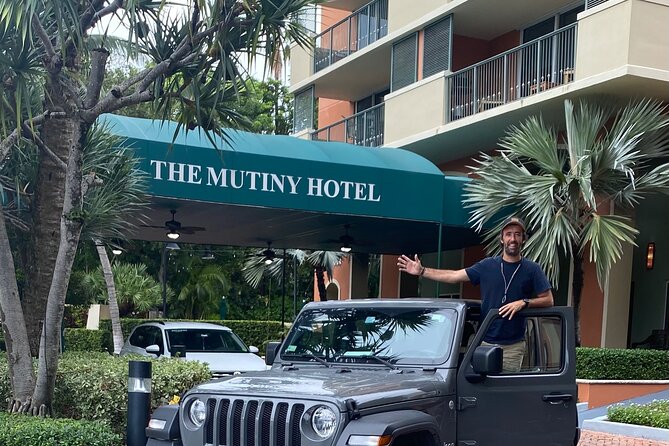
You meet at David T. Kennedy Park, 2400 S Bayshore Dr, Miami, FL 33133. The tour ends back at the meeting point, which is handy if you’re lining up dinner plans right afterward.
It’s also noted as near public transportation. That can help if you’re not trying to coordinate rides for a short, guided circuit.
Bring what you’ll need for the ride since the tour duration is about an hour. There isn’t a bathroom stop included, so plan accordingly before you arrive.
First stop: skyline views plus the real estate-money connection
The tour kicks off with a look at the Miami skyline from the convertible Jeep. Then you’ll get the “why this worked” explanation: the relationship between real estate and drug money.
What stands out is the scale. Real estate is described as the number one industry in the area, generating an estimated $9 billion a year, while the drug trade is estimated to bring about $12 billion a year into the local economy. That combo helps you understand why cocaine didn’t stay in back rooms. Money moved fast and it showed up in the city’s most visible spaces.
The practical value here is context. Once you hear how money translated into property and development, the rest of the route makes more sense. The tour isn’t just naming places; it’s explaining what those places represented to the economy of the era.
Vizcaya Museum and Gardens: gorgeous views with a theft case behind it
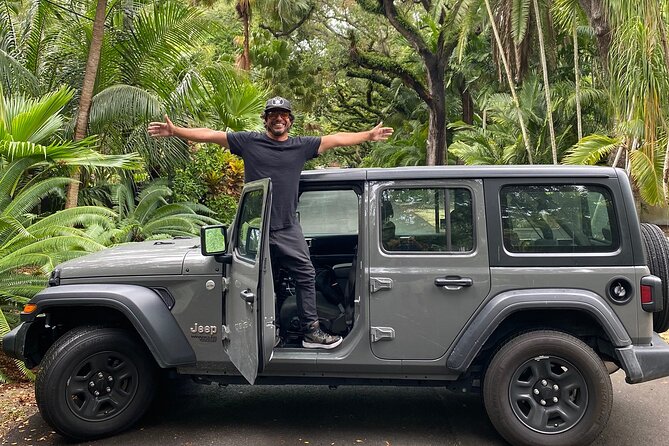
On the way to the Grove, you pass Vizcaya Museum and Gardens, a European-style estate overlooking Biscayne Bay. The contrast is part of the effect: serenity and elegance on the surface, then a story that makes you look twice at how valuable things become targets.
You’ll also learn about a raid in 1971, when three New York residents stole about $1.5 million in art, jewelry, and collectibles. They were caught three days later in New York City, but only a small fraction of the items were recovered.
This is a smart stop for two reasons. First, it grounds you in what “old money Miami” looked like visually. Second, it connects wealth with risk—because in any boom era, high-value goods attract high-stakes crime.
Coconut Grove and the Mutiny Hotel vibe: luxury, peacocks, and power
Once you reach Coconut Grove, you’ll hear why locals call it The Grove. The area gets described as energetic and inviting, and you’ll see the mix of marinas, elegant hotels, and the kind of luxury that drew both regular society and people with far more suspicious reasons to be there.
A key theme of the route is the area’s role as a hotspot tied to the 1980s cocaine kingpins. You’ll drive through the luxury district and see houses and waterfront-adjacent properties that help you visualize how private money can shape public spaces.
And yes, peacocks are part of the picture. Coconut Grove is known for peacocks that roam freely, and you’ll get the chance to see them with their shimmery colors and flashy tails. It’s a strange detail in the middle of a crime-and-cash story, but it also keeps the tour from feeling like a single grim mood the entire time.
Marinas and distribution: how speed mattered
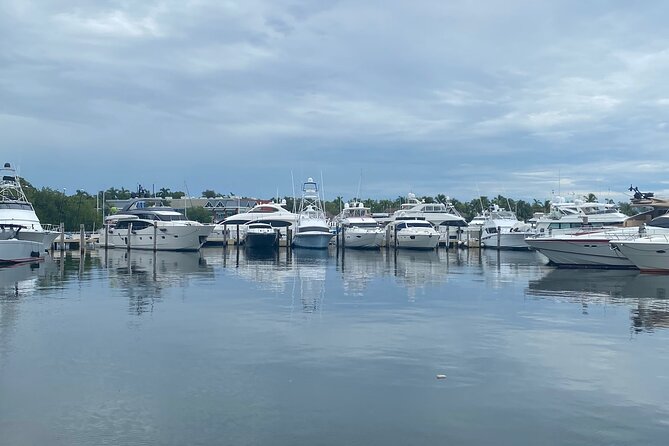
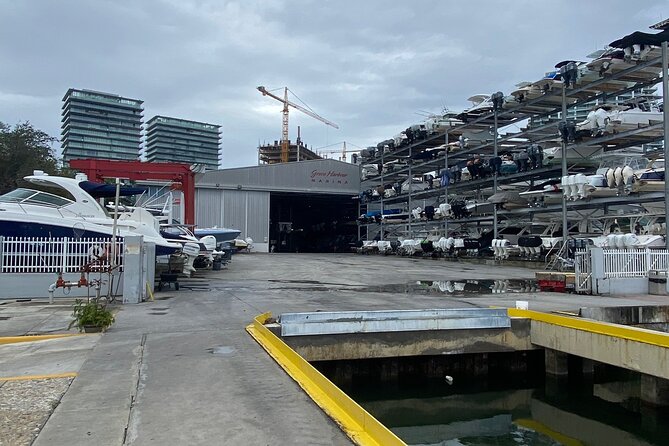
The tour then moves toward the marinas around Coconut Grove to talk about distribution channels used during the 1980s. This is one of the most “explain it like a story” segments, because you’re learning how operations were built around practical constraints.
You’ll hear that boats were part of the pattern going back to the Prohibition era, used illegally as drug runners. And the explanation that law enforcement couldn’t always catch these boats comes down to speed: Coast Guards with typical patrol boats struggled because the runners could go faster.
What I like about this section is that it doesn’t treat the drug trade as magic. It frames it as logistics—routes, tools, and the cat-and-mouse relationship between people moving product and the agencies trying to stop them.
If you’re the kind of traveler who likes to understand how systems work, this will click. If you’re mostly interested in the celebrity side, you still get the reason the glamour had an engine underneath it.
Miami City Hall: the flying-boat terminal that became local power
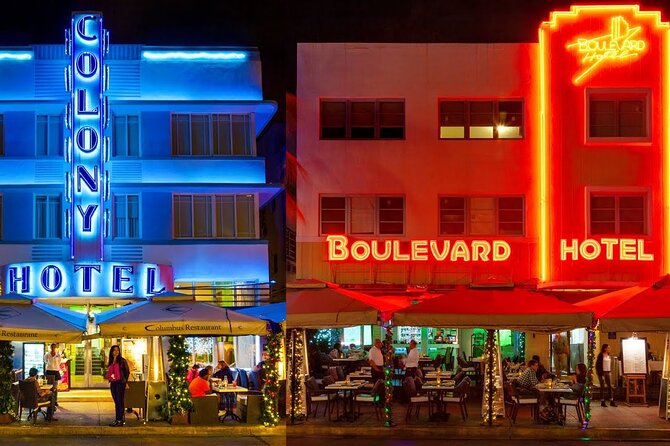
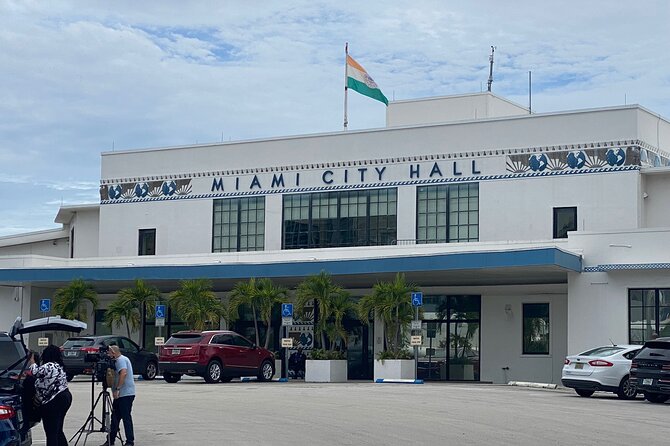
On the way toward the Mutiny, the route passes Miami City Hall. You’ll learn a clean timeline that links aviation history to civic authority.
The building was constructed in 1934 by Pan American Airlines as a worldwide flying-boat terminal. It was sold to the city of Miami in 1946, briefly used as Jackie Heller’s Dinner Key Terrace restaurant, and then converted into City Hall in 1954.
This stop may feel like a breather at first. But it fits the tour’s larger theme: Miami keeps reinventing itself. When you see a structure shift roles—from global travel hub to restaurant to government building—you start to understand why the city could absorb so much change during the 1980s.
The Mutiny Hotel at Sailboat Bay: why it became a legend
The tour’s final stop centers on one of the most iconic symbols of the drug war era: the Mutiny Hotel, also known as Mutiny at Sailboat Bay.
Here you’ll hear the story of how it functioned as a hotspot for drug dealers and celebrities during cocaine heyday. The hotel is described as a mecca for 1980s cocaine kingpins, and the money flow is portrayed as extreme—armored trucks leaving with sacks of cash profits, with the property staying perennially overbooked.
The tour also frames the mix of people around the hotel: celebs, crooked pols, spies, informants, and cops—good and bad. That’s a heavy cocktail, and it’s meant to show how the drug business didn’t just exist in isolation. It intersected with public life, intelligence, and law enforcement in complicated ways.
One detail that people remember is the claim about Dom Pérignon: the Mutiny was described as selling more bottles than any other establishment on the planet. Whether you take that as a literal record or a shorthand for the level of spending, it communicates the same thing—this was an era of showy, high-stakes money.
What makes this tour worth 1 hour (and what it can’t do)
This tour is short, and it’s focused. That’s a strength. You get a structured route through the places that connect skyline, real estate, luxury districts, and key waterfront areas. You also get a guide-led narration, plus bottled water to keep the ride comfortable.
It also includes Bluetooth, letting you play your own music. That’s a practical perk in Miami, where many tours can feel like they’re stuck in a single mood. With the option to bring your own soundtrack, the experience feels more like a group night out with context—not just a history lecture.
The limitation is obvious: you can’t slow down for museum-level detail or long photo stops, since it’s about an hour total. If you want deep, stop-by-stop explanations at every building, you may wish you had a longer, more museum-style itinerary.
Price, pacing, and group size: who this works for
This works best if you want a guided route with transport in a small group of up to 4. It’s private for your group, so it’s not a cattle-car experience.
It also suits people who like “story geography.” You’ll learn how Miami’s economy and law-and-order conflict played out in specific neighborhoods and landmark spaces. If you’re traveling with friends who are curious about Miami’s 1980s mythology but also want structure, this fits.
It may be less ideal if your interest is purely academic or you want long indoor time at places like Vizcaya. The tour’s strength is the ride, the pacing, and the connections between stops.
The guide factor: fun facts without the fluff
The overall vibe comes through in the ratings: 4.6 with 10 reviews, and about 90% recommend it. The praise that stands out is how it delivers a glimpse of old Miami with fun facts and a guide who keeps things interesting.
That’s the sweet spot for this kind of tour. You’re not just hearing spooky headlines; you’re getting context you can walk away with. It feels like you can look at Coconut Grove and understand why it mattered beyond its present-day looks.
Should you book this Miami cocaine-era tour?
Book it if you want a fast, guided way to connect Miami’s skyline and luxury neighborhoods to the 1980s cocaine boom—and you’re okay with one-hour pacing. The convertible Jeep, small-group format, and money-to-city connections make it a practical use of time.
Skip it if you need a bathroom stop included, or if you’re traveling on a day where weather is questionable since the experience requires good conditions. Also skip if you’re looking for a long museum-style deep dive at one location.
If you’re the type who likes to see a city as a system—where money, architecture, and enforcement collide—this tour gives you a focused route and enough detail to make the story stick.
FAQ
How long is the Miami Cocaine Capital in the 80’s History tour?
It lasts about 1 hour.
How much does the tour cost, and how many people are in each group?
The price is $75 per group, up to 4 people.
Where do we meet for the tour?
You meet at David T. Kennedy Park, 2400 S Bayshore Dr, Miami, FL 33133, USA.
What’s included in the price?
Included are a driver guide, a convertible Jeep, Bluetooth (so you can play your own music), bottled water, and a small group size (maximum 4 guests per car). You’ll also get a mobile ticket.
Is there a bathroom during the tour?
No bathroom is included.
Does the tour run in bad weather, and what’s the cancellation policy?
The experience requires good weather. If it’s canceled due to poor weather, you’ll be offered a different date or a full refund. Cancellation is free up to 24 hours in advance for a full refund, and cancellations within 24 hours aren’t refunded.