REVIEW · JAIPUR
Culture and Heritage Walk | Pink City Jaipur
Book on Viator →Operated by Nomadic Tours India · Bookable on Viator
You can piece together Jaipur one lane at a time. This Pink City heritage walk turns famous sights into real neighborhood moments: bazaars, crafts, temples, and the everyday food stops locals actually rely on. What I like most is how much you cover for the price, and how the guide keeps the history practical instead of textbook.
I also love the pacing: it’s slow enough for questions and photos, but focused enough that you leave with a clear feel for how Jaipur works. One drawback to consider is simple: it’s mostly walking through busy markets, so comfortable shoes matter, and you really do want good weather.
In This Review
- Key Highlights Worth Your Time
- Why This 3-Hour Pink City Walk Beats a Long Sightseeing Plan
- Starting at Golcha Cinema: Where You’ll Get Your Bearings
- Hawa Mahal From the Outside: Quick Photos, Real Context
- Bapu Bazar: Where Jaipur Goods Travel From Craft to Market
- Tripolia Bazar by the Wind Palace: Antiques, Metal Worship Items, and Tools
- Johri Bazaar: Jewelry Craft and the Long View
- Food, Tea Stops, and Sweet Shops You’d Skip Without a Local Guide
- Architecture and Traditions: What You Learn When You’re Walking Temple to Market
- Pacing, Group Size, and What to Wear for Comfort
- Value Check: Is $20 a Good Deal for This Pink City Experience?
- Who Should Book This Walk (and Who Might Skip It)
- Should You Book the Pink City Culture and Heritage Walk?
- FAQ
- How long is the Culture and Heritage Walk in Jaipur?
- How much does the tour cost?
- Where does the tour start?
- What time does the tour end?
- What kind of ticket do I get?
- What stops are included during the walk?
- Do I need to pay admission for Hawa Mahal?
- How large is the group?
- Is the tour guided by a female guide?
- What if the weather is bad or I need to cancel?
Key Highlights Worth Your Time
- Small group (max 10) so you can ask questions and actually talk with the guide
- Markets built into the route: Bapu Bazar, Tripolia Bazar, Johri Bazaar
- Food and sweets focus with legendary old-city shop vibes and classic snacks
- Hawa Mahal outside only for quick photos and context, without turning into a ticket line
- Female-guided experience with guides such as Harshit, Deepak, Ayush, or Aayush (based on recent tour feedback)
Why This 3-Hour Pink City Walk Beats a Long Sightseeing Plan
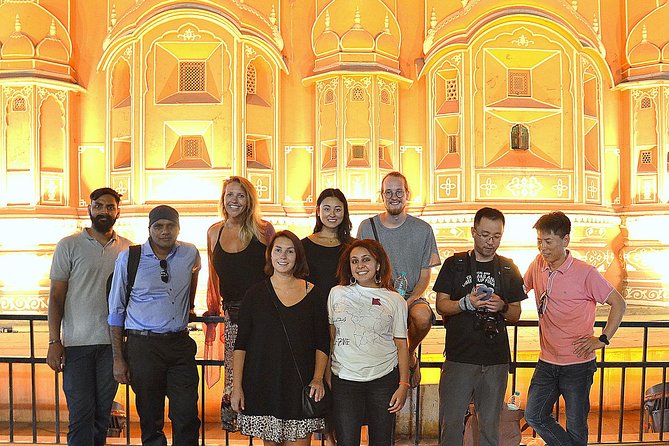
Jaipur can feel huge when you first arrive. This tour solves that by narrowing your day to what locals use every day: markets, workspaces, temples, and the food stalls that keep people coming back.
At about 3 hours, it’s also a smart “first-day” move. You get a mental map fast—where the lanes funnel, where craft is concentrated, and where people stop for tea and snacks. Then the rest of your trip makes more sense.
The price is another reason it works. $20 per person is low enough that you can justify doing it early, even if you later splurge on one bigger attraction. For many visitors, the real value isn’t a single monument—it’s learning how to read the city.
You can also read our reviews of more tours and experiences in Jaipur.



Starting at Golcha Cinema: Where You’ll Get Your Bearings

The walk starts at Golcha Cinema on Chaura Rasta Rd (New Gate, Bapu Bazar) and ends back at the same meeting point. That matters more than it sounds. You’re not negotiating a “see you somewhere random” situation, and you can relax knowing the route stays local.
Because it runs in the old-city area, you’ll be near public transport (handy if you’re hopping between stops by rickshaw or bus). It also means you can tack this onto your day plan without needing a private car.
The tour size stays small, so the group doesn’t feel like a slow-moving parade. In a place made of narrow lanes, small groups help you keep momentum while still getting personal attention.
Hawa Mahal From the Outside: Quick Photos, Real Context
You only see Hawa Mahal from the outside, and that’s deliberate. You get a short history primer and time for pictures, but you’re not stuck turning the visit into a half-day detour.
This is the right way to handle Hawa Mahal if you’re trying to understand Jaipur’s layout. The Pink City has a pattern: monuments aren’t just “objects,” they connect to daily life, nearby markets, and the way people used architecture for practical purposes.
If you love photos, you’ll appreciate the brief stop structure. If you hate wasting time on lines, this approach is even better.
One thing to note: because it’s outside only, don’t expect an interior visit here.
Bapu Bazar: Where Jaipur Goods Travel From Craft to Market
From the meeting area, you move into Bapu Bazar, a place built around items that Jaipur is known for. The point isn’t shopping hard. It’s understanding what you’re looking at.
Your guide points out products and art linked to Jaipur and also things connected to villages nearby. That helps you spot what’s locally made versus what’s sourced from outside the city, which is useful whether you plan to buy or just want to know what’s authentic.
This is also where the walk starts feeling like a real neighborhood. You’ll notice the contrast between the monument zones and the everyday commercial lanes.
Practical tip: bazaars can be visually loud. If you want to shop, go with a plan. If you just want to learn, focus on textures and materials—metalwork, textiles, and the small details people use to judge quality.
Tripolia Bazar by the Wind Palace: Antiques, Metal Worship Items, and Tools
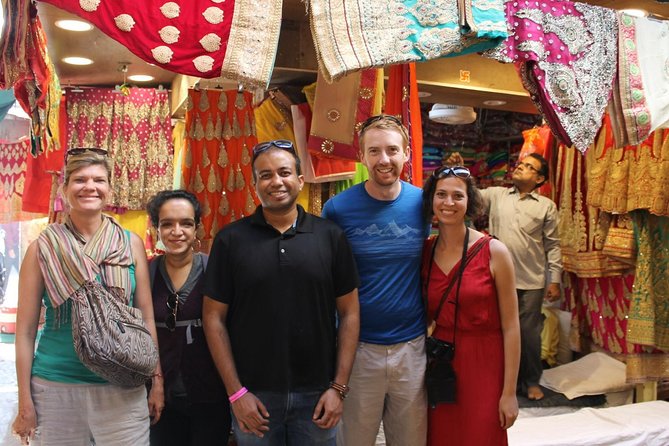
Next up is Tripolia Bazar, located close to the Wind Palace area. This stop has a craft-and-function vibe. You’ll see items such as antiques, utensils, locks, and metal products used for worship.
That worship detail is worth paying attention to. Jaipur’s heritage isn’t only about big buildings. It’s also about small rituals and objects people use repeatedly. When your guide explains what these metal pieces are for, the market turns from clutter into a map of daily devotion.
You also get another quick lesson in how Jaipur’s architecture and trade connect. Temples, household goods, and artisan workshops all sit in the same working geography.
If you’re the type who likes “what am I looking at?” tours, this is a strong stop. If you’re hoping for strict museum-style viewing, the experience here is more hands-on and street-level.






Johri Bazaar: Jewelry Craft and the Long View
Then you reach Johri Bazaar, where jewelry sits at the center. The tour frames it as one of the oldest engines of the Pink City’s economy, starting around 150 years ago.
Even if you don’t wear jewelry, this stop helps you understand Jaipur’s identity. Jewelry is not just decoration in this region—it’s craft, trade, and technique. When a guide gives you the background, you start noticing how materials and design choices reflect local tradition.
Johri Bazaar is a good place to slow down and ask questions. It’s also where you can compare prices and styles if you decide to buy. Just remember: market shopping is its own rhythm, so keep your expectations flexible.
Food, Tea Stops, and Sweet Shops You’d Skip Without a Local Guide
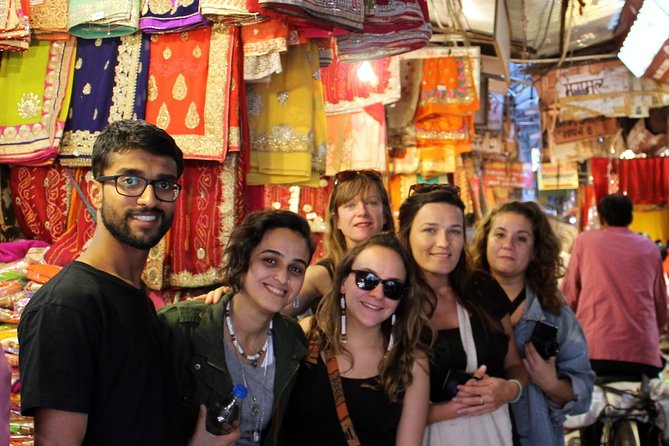
This walk doesn’t treat food as a side quest. The tour is built around snacks and sweets from legendary old-city shops, including classics that have been operating for 50+ years.
That matters because old Jaipur sweets don’t sell themselves on packaging. They sell on habit—what families come back for, what people order when they want something familiar. A guide helps you pick without turning it into guesswork.
You may also get a tea stop at a spot you’d probably never find alone. That kind of moment is often where Jaipur starts to feel calm, even inside busy lanes.
Practical advice: go hungry enough to taste a few things, but don’t overload. The walk covers several market areas in a short time, so pace yourself between stops.
And if you have dietary restrictions, plan to ask your guide early. The tour structure is flexible around what’s available, but you still need clear info before you start sampling.
Architecture and Traditions: What You Learn When You’re Walking Temple to Market
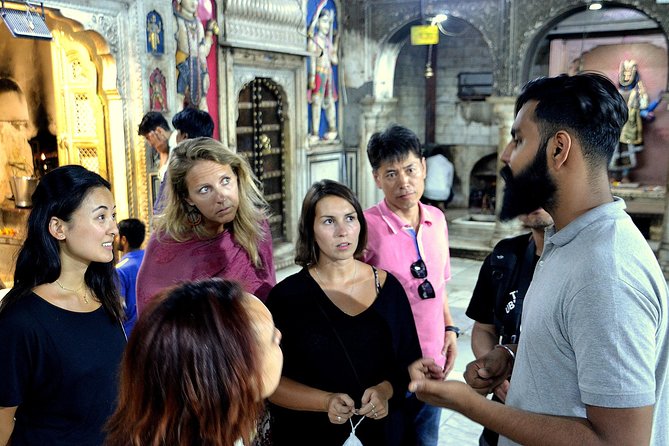
One of the best parts of this experience is how it links religious architecture with everyday life. You move from sight to sight—temples and heritage spaces—while your guide adds the human context: why something was built, how people use space, and what traditions look like when they’re not staged for tourists.
This is also where the guide names you might hear come up. Recent walks have been led by guides such as Harshit, Deepak, Ayush, and Aayush, and the common thread is clear: they love Jaipur and explain it like they’re telling you how it works, not just reciting facts.
You’ll likely notice details you would miss on your own—like how certain market goods connect to worship, or how specific lanes feel purpose-built for trade. It turns architecture into something you can understand through movement.
Pacing, Group Size, and What to Wear for Comfort
The tour stays up to 10 travelers, which helps it feel friendly rather than chaotic. With smaller groups, you can stop for questions, and the guide can adjust to what the group wants—photos, more explanation, or extra time for a snack.
The route is walk-heavy, since it covers market sections and multiple heritage stops in about 3 hours. That’s why shoes matter. Jaipur’s old-city lanes can be uneven, and you’ll want grip and comfort.
Dress-wise, plan for temples. You won’t need anything fancy, but you should be prepared to cover appropriately if you enter or stand near religious spaces. If you’re unsure, carry a light layer you can adjust quickly.
Also, remember that this experience requires good weather. If it’s been raining or the sky looks unstable, expect rescheduling or a refund option depending on how the operator handles it.
Value Check: Is $20 a Good Deal for This Pink City Experience?
For $20 per person, you’re paying for more than a walking route. You’re paying for local storytelling, help spotting what matters in markets, and access to food stops that run on tradition—not just tourist convenience.
You’re also getting a balanced mix:
- quick monument context (Hawa Mahal outside)
- craft-and-trade focus (Bapu Bazar, Tripolia Bazar, Johri Bazaar)
- food and sweets with long-running shop credibility
- religion and architecture explained in plain terms
If you try to do this alone, you can certainly walk the same general areas. But without a guide, you’ll likely miss why objects matter, which shops have real staying power, and how to connect temples to the surrounding trades.
For many first-time visitors, that’s the difference between seeing Jaipur and understanding it.
Who Should Book This Walk (and Who Might Skip It)
You should book if you like:
- street-level travel over strict sightseeing lists
- learning through markets, not just monuments
- trying old-city snacks with guidance
- conversations with a guide who cares about Jaipur
You might skip if you want a mostly seated, ticket-heavy day. This isn’t built like that. It’s about moving, stopping often, and staying curious.
It’s also a good fit for your first or second day in Jaipur, when you’re still learning the city’s rhythm. If you already know Jaipur well, you might crave more specialized experiences—but for most people, this is a strong start.
Should You Book the Pink City Culture and Heritage Walk?
I think it’s a great buy if you value local texture. The combination of markets + food + temple context gives you a fuller Jaipur in a short time, without spending a fortune. The small group size keeps it human, and the guide-led explanation helps you see what you’d otherwise walk past.
If you hate walking or you’re traveling in bad weather, pause and plan carefully. But on a decent day with comfortable shoes, this is the kind of Jaipur experience that makes the city click.
FAQ
How long is the Culture and Heritage Walk in Jaipur?
The tour lasts about 3 hours.
How much does the tour cost?
It costs $20.00 per person.
Where does the tour start?
It starts at Golcha Cinema, Chaura Rasta Rd, New Gate, Bapu Bazar, Pink City, Jaipur.
What time does the tour end?
The tour ends back at the same meeting point.
What kind of ticket do I get?
You receive a mobile ticket.
What stops are included during the walk?
You’ll visit areas including Hawa Mahal (outside for photos), Bapu Bazar, Tripolia Bazar, and Johri Bazaar.
Do I need to pay admission for Hawa Mahal?
The tour notes Hawa Mahal admission ticket is free, and you only view it from the outside.
How large is the group?
The tour has a maximum of 10 travelers.
Is the tour guided by a female guide?
Yes, the tour is led by a female guide.
What if the weather is bad or I need to cancel?
The experience requires good weather. If it’s canceled due to poor weather, you’ll be offered a different date or a full refund. The tour also allows free cancellation up to 24 hours in advance for a full refund.