REVIEW · CHUGOKU REGION
Miyajima World Heritage Torii Kayak Tour
Book on GetYourGuide →Operated by Miyajima Kayak · Bookable on GetYourGuide
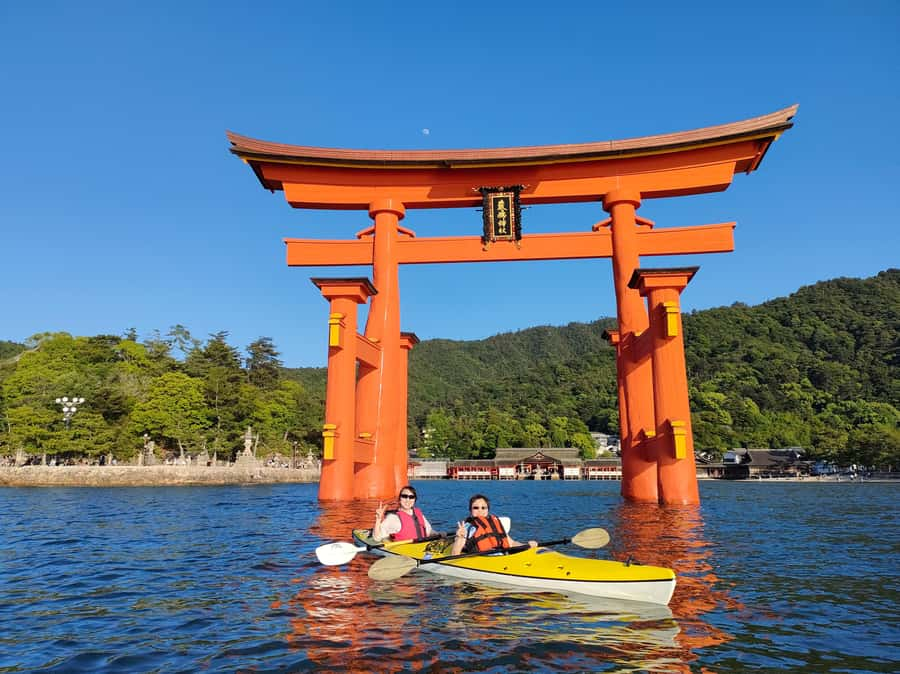
Paddle under the Great Torii’s shadow. This Miyajima kayak tour gives you an up-close view of the floating Torii from the water—exactly where land tourists can’t stand. You slide through calm bays with pine-covered hills and shrine scenery all around, and the whole pace stays beginner-friendly and safe.
I also like the human touch: a guide like Shin (and sometimes Solene) brings local stories, watches the tides, and keeps things running smoothly. Plus, you get free digital photos after the tour, which is a nice perk when you’re busy paddling and trying not to look like a wind-up toy.
The only real catch is conditions. Tide and weather decide what you can see and whether you’ll land on Miyajima, and if you’re prone to seasickness, this one may not be your best fit.
In This Review
- Key highlights worth showing up for
- Why kayaking Miyajima makes the Great Torii feel different
- The meeting point at 1166 Miyajimachō and what to expect on arrival
- From Nagahama Shrine to the water: safety briefing and warm-up paddling
- Approaching the Great Torii of Itsukushima Shrine from the water
- Shoreline paddling: pine hills, smaller shrines, and quiet photo stops
- Optional landing on Miyajima: Omotesando and temple-area time
- Kiyomori Shrine break and the return paddle back
- What’s included, what’s not, and how that affects your budget
- Equipment and packing: wear what won’t punish you later
- Who this tour suits (and who should skip it)
- Guides make the difference: storytelling plus tide timing
- Should you book the Miyajima World Heritage Torii Kayak Tour?
- FAQ
- How long is the Miyajima World Heritage Torii Kayak Tour?
- What price should I expect per person?
- What’s included in the tour price?
- Is there a shore landing on Miyajima?
- Where do I meet for the tour?
- What should I bring and wear?
- Is this tour for everyone?
Key highlights worth showing up for
- Up-close Great Torii photo angle with the base submerged or fully visible, depending on tide
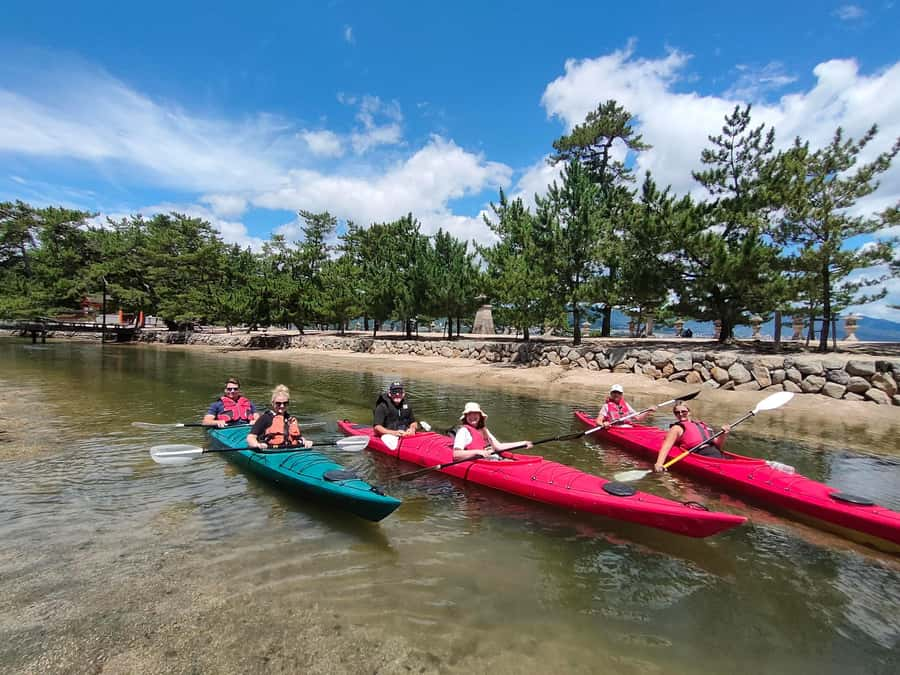
- Small group of up to 10 for a calmer, easier experience on the water
- Guide storytelling with real local context, often including timing tips around the tide
- Shore stops that go beyond the main view, including Nagahama and Kiyomori Shrine breaks
- Optional landing on Miyajima for Omotesando strolling and temple-area visits when conditions allow
- Free digital photos taken by your guides, so you don’t have to juggle camera stress
Why kayaking Miyajima makes the Great Torii feel different
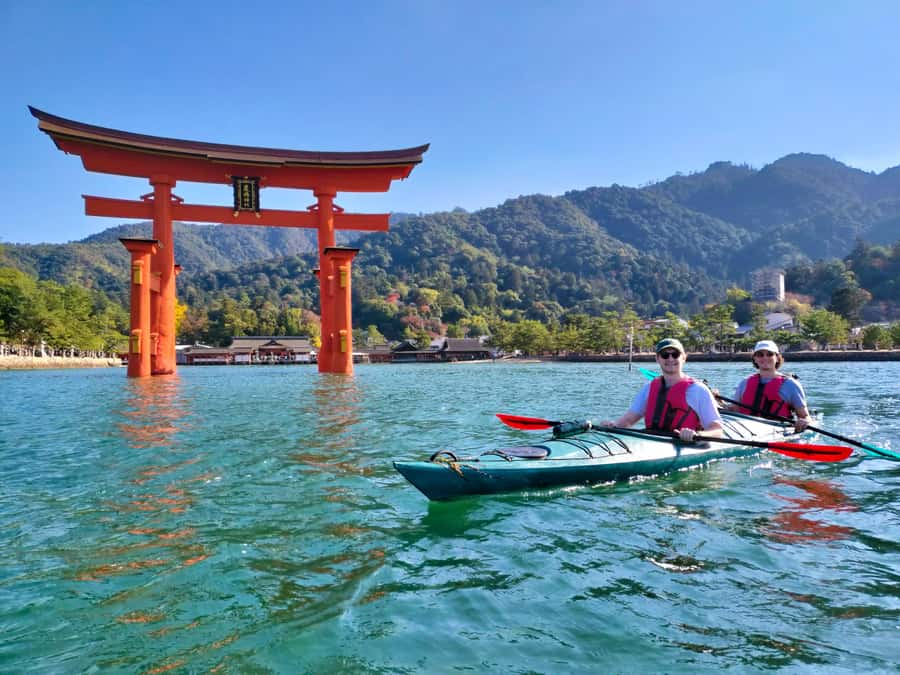
The Great Torii at Itsukushima Shrine is famous because it looks like it floats. On land, you see the effect from the shoreline and platforms. From a kayak, you get a more physical sense of scale—post, rope-like silhouettes of structure, and the shrine setting wrapping around you from multiple angles.
You’ll also get a quieter kind of sightseeing. The water route keeps you moving through the bay instead of stopping in crowds. The tour stays relaxed, with time for photos and simple appreciation when the coast opens up.
The view isn’t just the Torii either. You paddle past coastline features like pine-covered hills and smaller shrines tucked into the landscape. And because the tour runs by tides, the Torii can look subtly different across timeslots—sometimes the base is submerged, sometimes it’s more visible from where you paddle.
The meeting point at 1166 Miyajimachō and what to expect on arrival
Plan to meet near Miyajima Pier, but don’t expect a big, polished check-in building. The meeting area is a small beach about a 4-minute walk from the pier, with no buildings nearby. Kayaks are stored on the beach as a visible landmark, so you’re not hunting for a hidden door.
From the meeting point, you walk about 50 meters and you’ll see a small torii gate. That’s a handy landmark to orient yourself, especially if you’re arriving a bit early and want to calm your nerves before gearing up.
There’s no hotel pickup or drop-off. You’ll handle your own getting to the pier area, then the guide takes over once the group is together.
Once everyone arrives, you’ll change into kayaking gear and store personal belongings in waterproof dry bags. This matters because even a “calm water” tour can splash around during launching and turning.
From Nagahama Shrine to the water: safety briefing and warm-up paddling
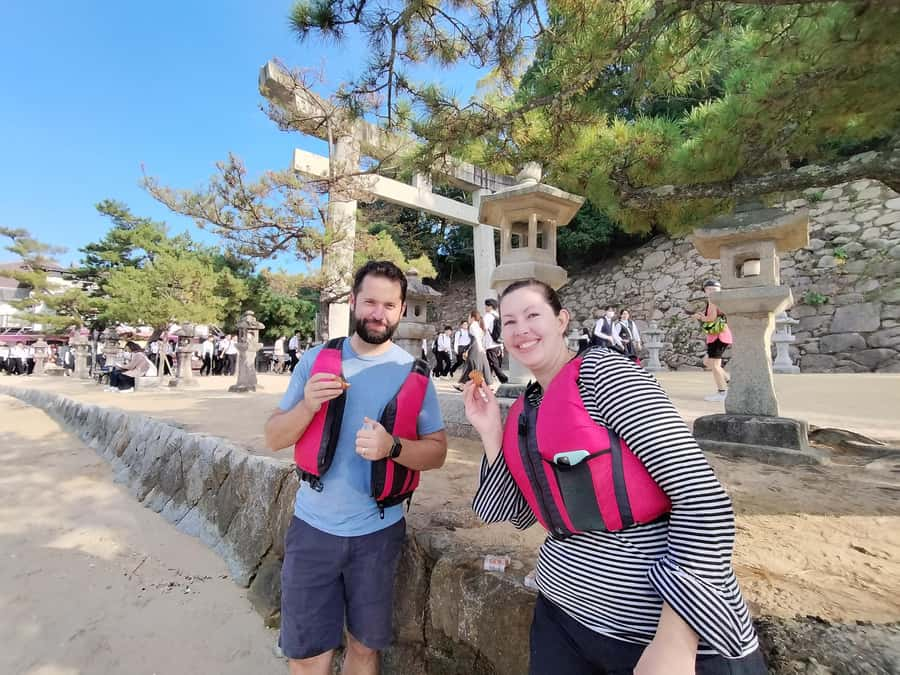
Right away, the tour uses the first stop to set you up for success. You start at a spot near Nagahama Shrine, with about 15 minutes for guided sightseeing plus a safety briefing. This is where you learn the basics that make the rest of the tour feel easy.
Then comes the warm-up paddle. You launch from a quiet beach and follow the guide into calm waters along Miyajima’s coast. During this part, you build comfort while taking in the scenery: pine-covered hills, water views of shrine elements, floating Torii gates in the distance, and ferries moving farther out.
This warm-up is also practical for timing. Kayak tours like this are at their best when your body learns the rhythm early. You want to feel steady before the main photo moment, so this “get comfortable first” plan is a big part of why the tour works for beginners.
Approaching the Great Torii of Itsukushima Shrine from the water
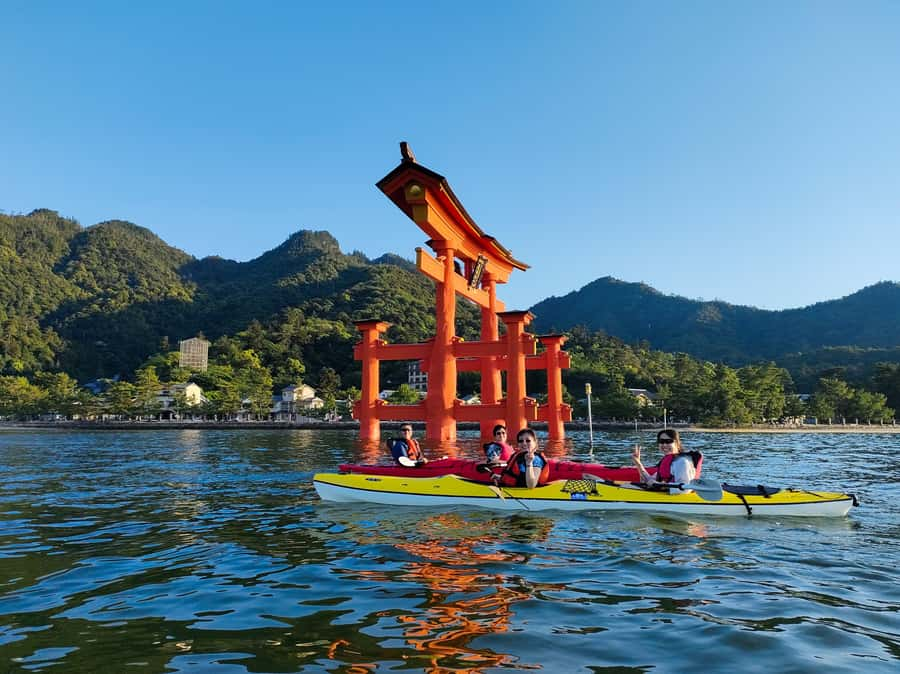
This is the core moment. You paddle toward the iconic floating Great Torii gate for around 20 minutes total, including a photo stop and guided explanation. From the water, the Torii isn’t just a landmark—it becomes a looming structure you pass at water level.
Tides control the look. Depending on the tide, you might see the base submerged or fully visible. Either way, you still get a breathtaking view because the waterline changes how the gate reads against the bay and shrine surroundings.
The guide’s local knowledge is the difference between just seeing it and understanding it. You’re not only snapping photos; you’re getting the context for why the Torii appears to float and what you’re looking at as you approach.
One extra detail I love in the reviews is that guides sometimes adjust timing to match tide conditions. That can mean you’re there at the best moment for the Torii’s water-level effect, not just the time printed on a schedule.
Shoreline paddling: pine hills, smaller shrines, and quiet photo stops
After the Torii moment, the tour continues along the shoreline. You’ll keep paddling at a relaxed pace, and the route is designed to be beginner-suitable rather than a workout sprint.
Expect the coast to change in character as you go: temple-area views, forests, and smaller shrines sitting on hillsides. You’ll also see the bay’s working side from a respectful distance, including passing ferries.
Photo stops are built in, with occasional moments to pause. This matters because the best photos from a kayak aren’t just taken—they’re framed. A short stop lets you steady yourself, aim your camera, and capture that Torii perspective without feeling rushed.
You may even notice oyster-related scenery along the way, because the shoreline area includes oyster banks. If you’re curious, this is another moment where a guide’s storytelling can turn “scenery” into something you actually remember.
Optional landing on Miyajima: Omotesando and temple-area time
If tide and weather cooperate, you may land on Miyajima for a longer break—this is one of the most requested add-ons because it connects water views to on-island walking.
When landing is available, the timing is adjusted based on tide levels and guest preferences. That flexible approach helps because it’s not just about squeezing in steps—it’s about making sure you can return to the water safely.
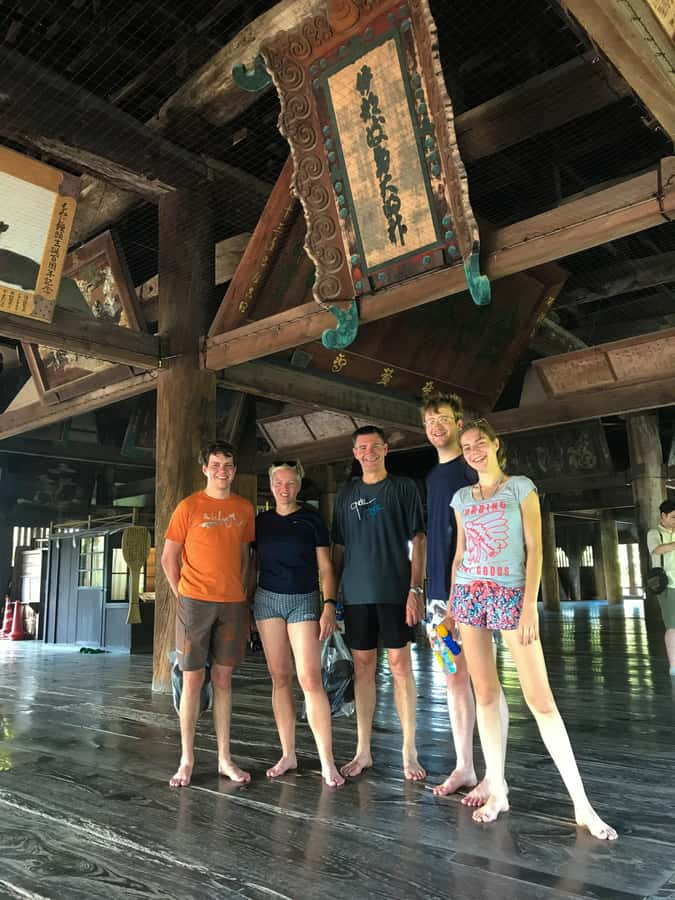
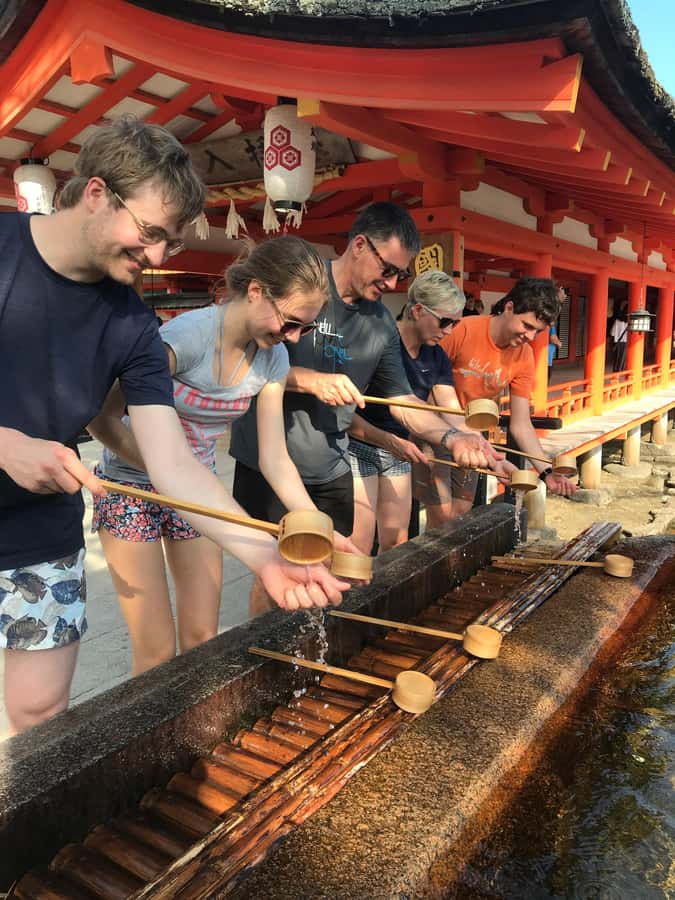
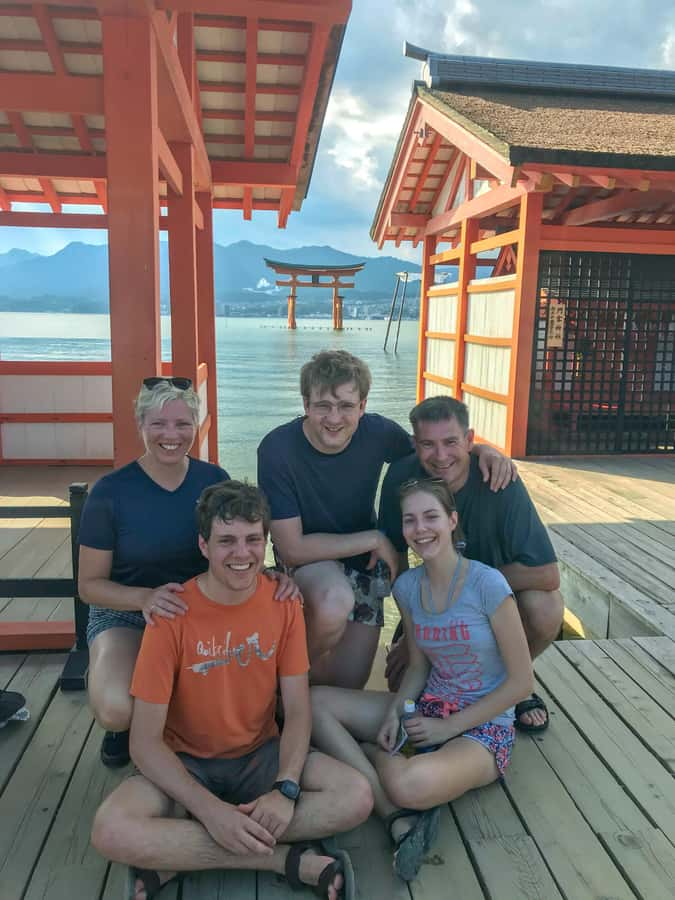
Once ashore, you can stroll down Omotesando, the well-known shopping street area. You might grab traditional Japanese sweets or snacks, and you can also visit nearby cultural landmarks such as Daisho-in Temple or Senjo-kaku.
Even if you don’t land, the tour still offers strong payoff from the water. But if you want the full Miyajima experience—paddling plus walking—landing is the piece to aim for.
Some departures also allow for extra water-time at a small beach while you’re ashore, but availability depends on local conditions at the time.
Kiyomori Shrine break and the return paddle back
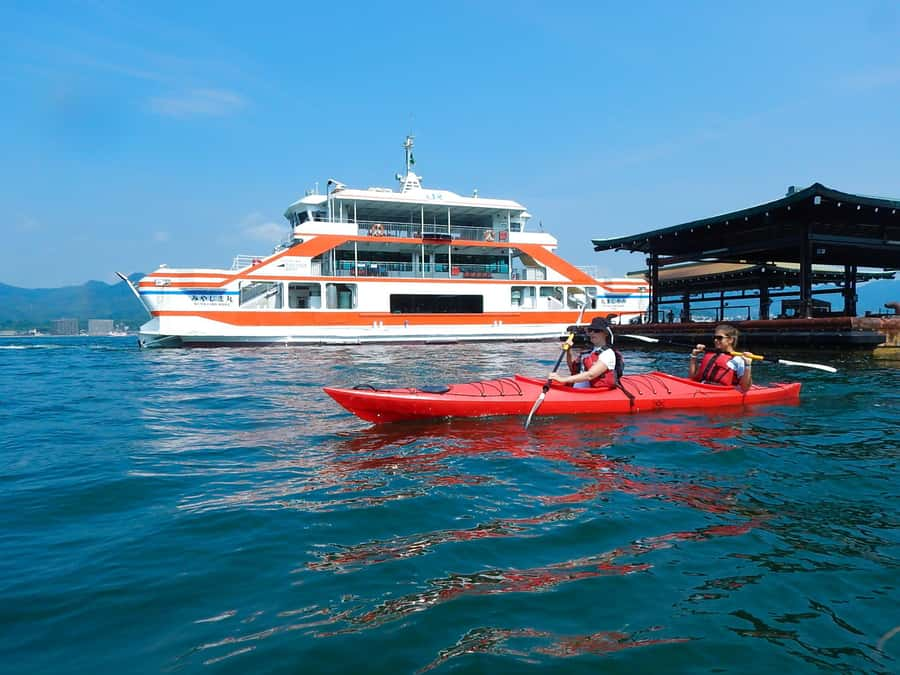
Mid-tour, you’ll also spend time at Kiyomori Shrine, with about 15 minutes including a photo stop and guided explanation. This break helps reset your energy before the return route.
The return paddle usually goes back toward the starting point, and the route may differ slightly. That’s not random—it gives you a fresh perspective on the island and shrine area from the water again, without repeating the exact same angle.
At the end, you land back at the original beach. Then it’s back to gear-out mode: change out of kayaking clothing and listen for a short wrap-up plus Q&A. The guide may share photos taken during the tour, and they can point you toward local spots for later—useful if you want a smooth next few hours on Miyajima.
What’s included, what’s not, and how that affects your budget
You pay $96 per person for a tour that’s two hours long, in a small group capped at 10. The price feels reasonable when you look at what you don’t have to arrange yourself.
Included:
- Kayak, paddle, and lifejacket
- Comprehensive instruction
- Free digital photos taken by guides
- Spectacular views of Miyajima
Not included:
- Hotel pickup and drop-off
- Rental shoes
- Temples entrance fees
That last point matters for budgeting. If you plan to visit Daisho-in Temple or other temple-area stops during shore time, you should expect some additional entry costs. Also remember you’ll need footwear you’re comfortable walking in once you land. Rental shoes aren’t part of the package.
This tour is also a good value if you’re traveling with only a day’s time on Miyajima. You get a rare water perspective without needing to plan kayak rentals, timing, and safety basics.
Equipment and packing: wear what won’t punish you later
Even with waterproof dry bags, you’ll want to dress for getting a bit wet. The essentials to bring are practical:
- Hat
- Change of clothes
- Sandals
- Quick-dry clothing
Quick-dry tops and swim-suitable layers are your friend. Sandals keep it simple when you’re walking on shore areas, but bring socks if your feet run hot or you hate rubbing.
Also note what’s not allowed: alcohol and drugs. It’s a small rule, but it keeps the tour focused and safe—exactly what you want for time on open water.
Water comfort is part of the experience here, so plan to treat this like active sightseeing, not a dressed-up museum stroll.
Who this tour suits (and who should skip it)
This is clearly geared for first-timers. The tour includes instruction, a safety briefing, and beginner-friendly pacing. If you want a unique view without training for days, this fits well.
It’s also a good choice for mixed groups and families, since the experience stays relaxed and the group size stays small. One bonus: the guides often help with photo moments and offer recommendations afterward, which makes the whole day feel less fragmented.
But you should be cautious if:
- You’re prone to seasickness
- You’re above the weight limit (250 lbs / 113 kg for a single kayak, 420 lbs / 190 kg for a tandem kayak)
If you fall near the upper range, double-check what type of kayak you’re assigned. The tour is designed around those limits for safety.
Guides make the difference: storytelling plus tide timing
What separates this tour from a basic paddle is the way the guide connects what you see to the place. You’ll get history and cultural insights along the route, with guidance at each key moment: Nagahama Shrine, the Great Torii approach, Kiyomori Shrine, and the optional landing decision.
Names showing up in the guide experience include Shin and Solene. The pattern is consistent: guides explain what you’re seeing, keep you oriented, and help you get the best Torii angle based on timing.
That matters because the Great Torii effect depends on tides. If the guide adjusts timing to give you the water-level look you want, the tour becomes more than a standard highlight—it turns into a tailored viewpoint.
Should you book the Miyajima World Heritage Torii Kayak Tour?
Book this if you want the Miyajima main attraction from a rare angle. The water-level perspective on the Great Torii is the headline, and the tour supports it with safety, instruction, and time for photos. The $96 price is easier to justify because gear, lifejackets, and free digital photos are included, and the group stays small.
Skip it or think twice if you’re sensitive to motion at sea. Even though the water here is described as calm, the activity still takes you out onto open bay conditions. Also, if you’re unlucky with tide or weather, shore landing may not happen—though you’ll still get the key Torii view from the water.
If your goal is to see Miyajima the way most people can’t—quietly, from the water, with a guide who knows how tides affect what you’ll see—this one is a strong yes.
FAQ
How long is the Miyajima World Heritage Torii Kayak Tour?
The tour runs for about 2 hours.
What price should I expect per person?
The price is listed as $96 per person.
What’s included in the tour price?
You get the required equipment (kayak, paddle, lifejacket), comprehensive instruction, and free digital photos taken by the guides.
Is there a shore landing on Miyajima?
You may land on Miyajima if tide and weather conditions allow. The guide adjusts timing based on tide levels and guest preferences.
Where do I meet for the tour?
The meeting point is a small beach about a 4-minute walk from Miyajima Pier. There are no buildings nearby, and kayaks are stored on the beach as a landmark. Walk about 50 meters from the meeting point to see a small torii gate.
What should I bring and wear?
Bring a hat, quick-dry clothing, sandals, and a change of clothes. The tour involves time outdoors and you should plan for getting a bit wet.
Is this tour for everyone?
It’s beginner-friendly and safe, but it’s not suitable for people prone to seasickness. There are also weight limits: 250 lbs (113 kg) for a single kayak and 420 lbs (190 kg) for a tandem kayak.