REVIEW · OSAKA
Osaka Traditional Performing Arts Heritage Night
Book on GetYourGuide →Operated by Yamamoto Noh Theater · Bookable on GetYourGuide
One night, you meet several Osaka art forms. In 2 hours at Yamamoto Noh Theater, Osaka traditional performing arts comes at you in a friendly bundle, with multilingual explanations and subtitles that help you follow along without a crash course.
I love the balance of styles. You get serious Noh drama side-by-side with comic and story-driven forms like Rakugo, so you get a feel for how many moods traditional arts can hold. I also like the hands-on moment: a couple of audience members in white socks may be invited up to the Noh stage to try a taste of the performance.
One thing to plan for: there’s no video recording or photography inside, so come ready to watch closely instead of collecting phone memories.
In This Review
- Quick hits
- What Makes This Osaka Show Feel Beginner-Friendly
- The Stage Lineup: Noh, Kyogen, Bunraku, Rakugo, and More
- Noh and Kyogen: Serious drama and comic relief
- Bunraku: Puppet theatre with voice and music
- Rakugo: One storyteller, big theatrical energy
- The supporting cast: Rokyoku, Kodan, Kamigata Mai, Gagaku, Onna Doraku, Chikuzen Biwa
- How the Hands-On Noh Stage Moment Works (and How to Get Ready)
- Following Along in English: Subtitles, Materials, and What You Should Notice
- The Osaka Venue Choice: Yamamoto Noh Theater and Why It Fits
- Timing, Etiquette, and What to Bring for a 2-Hour Cultural Night
- Price and Value: Is $32 for Traditional Arts Worth It?
- Who Should Book This Osaka Traditional Performing Arts Heritage Night
- Should You Book? My Decision Checklist
- FAQ
- How long is the Osaka Traditional Performing Arts Heritage Night?
- What traditional performing arts are included?
- Are there English subtitles or explanations?
- Is video recording or photography allowed inside?
- Is this experience suitable for children?
- Can I cancel and get a refund, and do I pay right away?
Quick hits
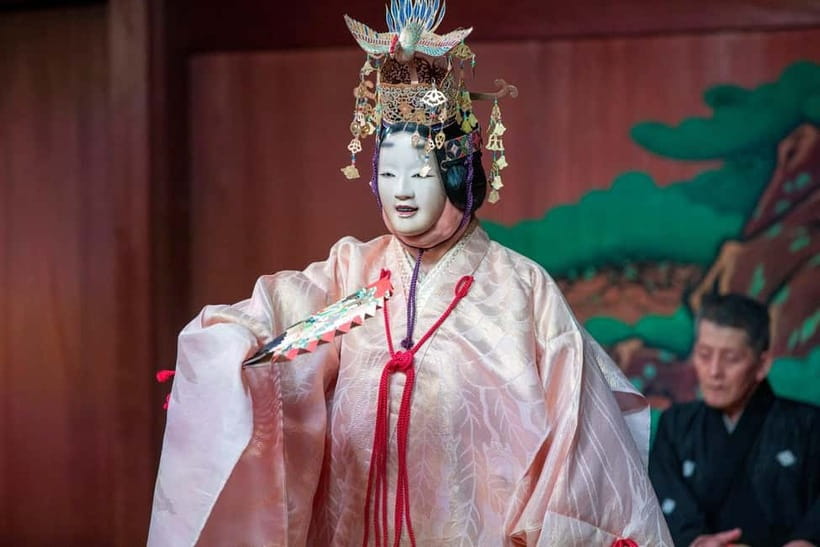
- Multiple Osaka art forms in one show: Noh, Kyogen, Bunraku, Rakugo, Rokyoku, Kodan, Kamigata Mai, Gagaku, Onna Doraku, Chikuzen Biwa, and more.
- English support that’s built in: multilingual explanations, subtitles, and printed/handout materials.
- A real audience moment: a couple of audience members in white socks get a chance to experience the Noh stage.
- Small performances, explained clearly: explanations help you understand what you’re seeing before each segment.
- No photos or recording: the dark, quiet focus is part of the experience.
What Makes This Osaka Show Feel Beginner-Friendly
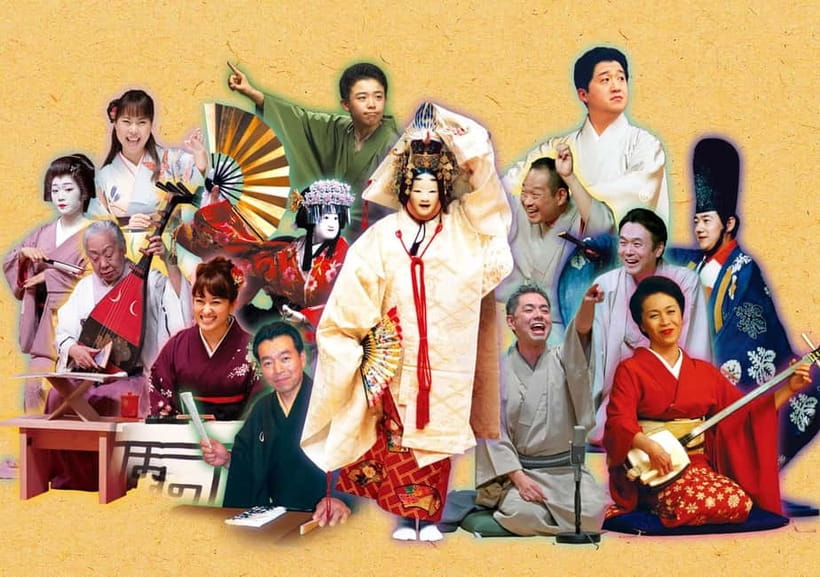
This is the kind of cultural night I recommend when you want depth, but you don’t want homework. Instead of committing to one single art form, you sample a range of Osaka traditional performing arts in one seated session. It’s structured like an introduction, with context added as the show moves.
The best part for newcomers is the way the show lowers the barrier to entry. If you’ve never watched Noh, Bunraku, or Rakugo, you won’t feel like you’re lost in Japanese alone. You get explanations in English and Japanese, plus subtitles that keep your attention pointed at what matters.
There’s also a nice reality check in the format. Traditional arts can feel distant if you only read about them. Here, you see movement, pacing, voices, and instruments in real time, so your brain has something to grab onto.
You can also read our reviews of more tours and experiences in Osaka.


The Stage Lineup: Noh, Kyogen, Bunraku, Rakugo, and More
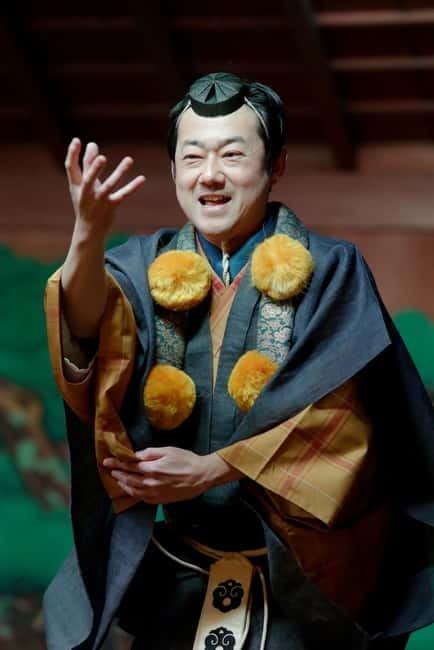
The program is an omnibus-style performance built around highlights from different traditions. You’ll see Noh and Kyogen, plus story and music forms that show different sides of Japanese performing arts.
Here’s what each one tends to bring to your understanding of the night:
Noh and Kyogen: Serious drama and comic relief
Noh is usually slow, deliberate, and highly stylized, with a strong focus on gesture and atmosphere. Kyogen is the counterweight. It’s comic, lighter, and often feels like it explains the world of the stage in human terms.
Seeing them together matters because it shows you tradition isn’t one note. It can be poetic and quiet, then funny and sharp in the next breath. That contrast is a big part of why first-timers often get hooked quickly.
Bunraku: Puppet theatre with voice and music
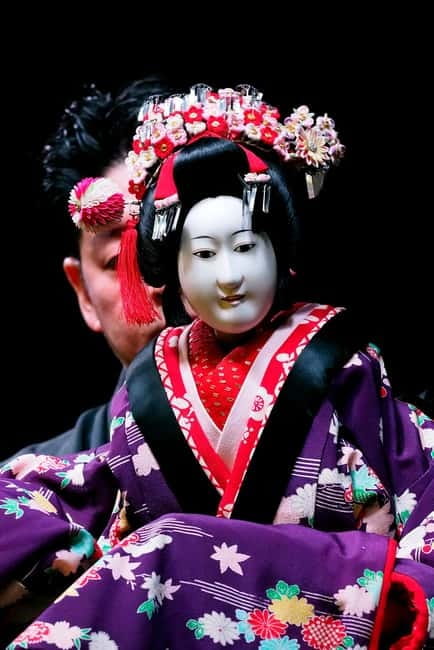
Bunraku is puppet theatre, but it’s not passive. The puppets are brought to life with skilled movement, while narration and accompaniment shape the emotion. If you’ve only seen film-style animation, this is different on every level: the timing, voice work, and physical presence create a live emotional engine.
Rakugo: One storyteller, big theatrical energy
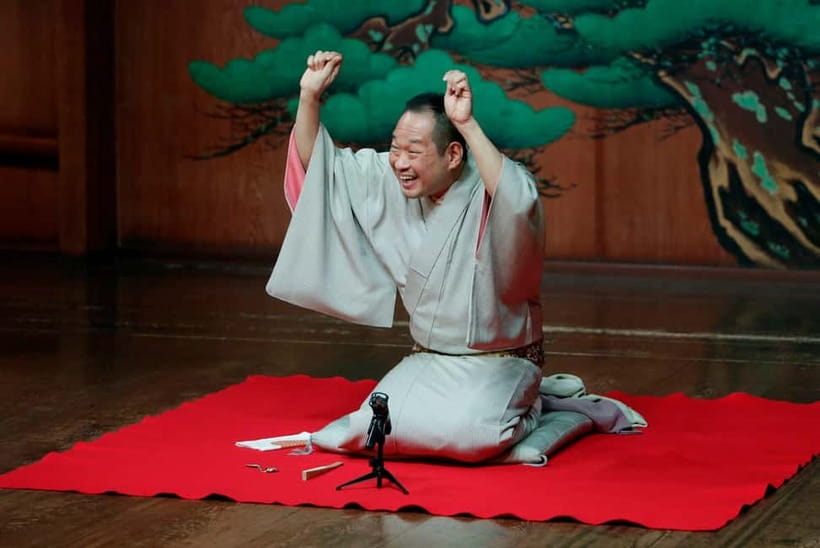
Rakugo is storytelling built for one performer. A single voice can fill a room through pacing, character shifts, and sharp humor. It’s also a reminder that traditional arts include everyday comedy and social observation, not just formal ceremony.
The supporting cast: Rokyoku, Kodan, Kamigata Mai, Gagaku, Onna Doraku, Chikuzen Biwa
Beyond the big names, the show includes additional Osaka-area and classical forms such as:
- Rokyoku (recited performance style tied to instruments)
- Kodan (spoken storytelling with performance emphasis)
- Kamigata Mai (dance tradition associated with the Kansai region)
- Gagaku (court music style)
- Onna Doraku (a vocal/dramatic performance form)
- Chikuzen Biwa (a biwa lute performance tradition)
You don’t need to memorize what each one means before you arrive. The point is exposure with guidance. If one style clicks for you, you’ll have a clear target for what to seek out next in Osaka.
How the Hands-On Noh Stage Moment Works (and How to Get Ready)
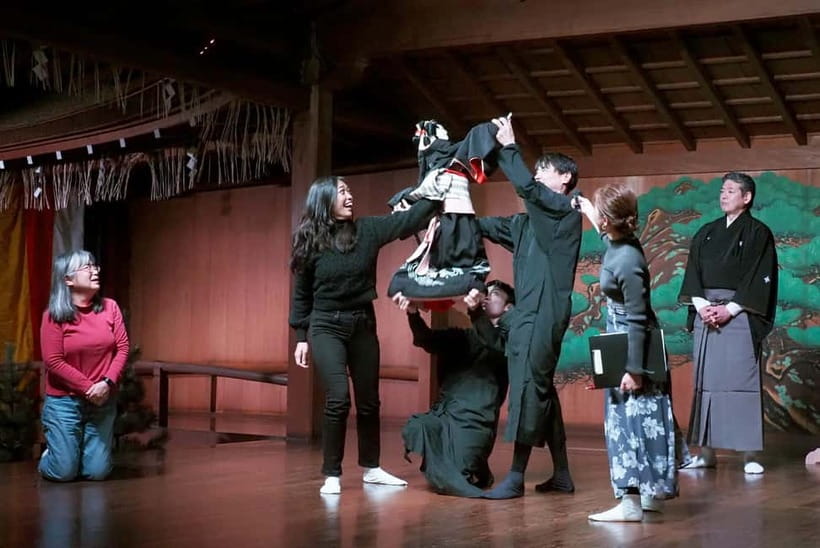
One of the most memorable parts of this experience is the chance for audience participation. A couple of people wearing white socks are invited to the Noh stage to experience Osaka traditional performing arts.
Think of this as a short, guided taste—not a full training course. The goal is to let you feel how performance space works and how the style demands attention to timing and movement. Even if you’re not picked, watching others step onto the stage can make the Noh feel more understandable.
If you want the best odds, be mentally ready for the possibility of being called. That means paying attention to the stage cues and listening for instructions. Also, don’t treat it like a photo moment. The show has a no-recording rule, so the hands-on experience is about participation and presence.
Following Along in English: Subtitles, Materials, and What You Should Notice
A traditional performance can be hard to follow when you only catch emotion and not meaning. This show solves that with multilingual support.
You get:
- Multilingual explanations
- Subtitles
- Materials that support comprehension
The practical value is huge. When the show explains what’s coming before a smaller performance, you know what to watch for. That can turn a confusing moment into a meaningful one. Instead of guessing, you’re tracking themes, tone changes, and what each segment is trying to communicate.
If you’re choosing the English-supported experience, you should expect English translation and subtitles throughout. Some parts may even be presented in English, which helps you connect faster without relying entirely on the text you’re reading.
My advice: watch the performer first, then read the subtitle. You’ll feel like you’re decoding faster, but you’ll also notice how movement and voice carry meaning even when the subtitle is brief.
The Osaka Venue Choice: Yamamoto Noh Theater and Why It Fits
The show is hosted by Yamamoto Noh Theater, and that location matters more than people think. Noh and related traditions are built around the feel of the stage and the rhythm of the room.
Even if you’re sitting with limited background knowledge, the theater setting helps you see the difference between modern entertainment and older stagecraft. The pacing and formality make more sense when you’re physically in a space designed for these performances.
You’ll also notice that the show respects focus. With no video or photography allowed inside, the theater environment stays calm and performance-first. That quiet helps you read the subtle things: the changes in posture, the precision of timing, and the way the music supports the story.
Timing, Etiquette, and What to Bring for a 2-Hour Cultural Night
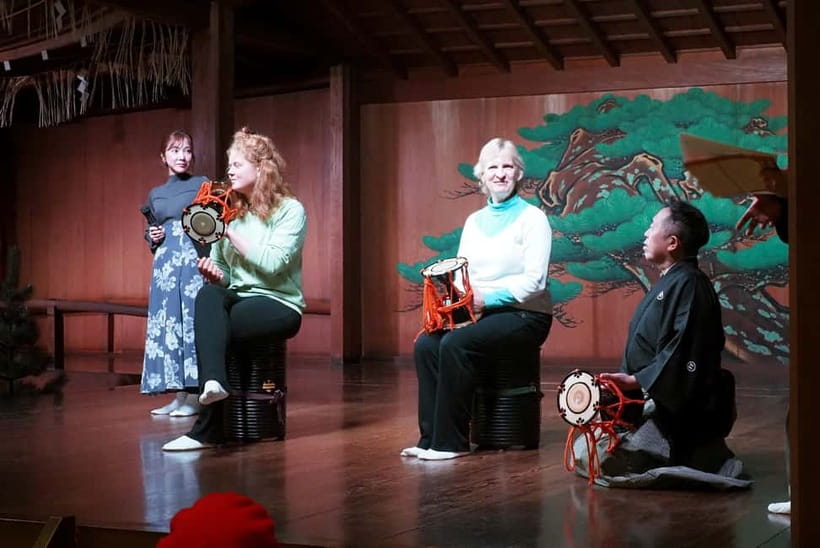
The duration is 2 hours, which is a sweet spot. Long enough for a satisfying range of styles, short enough that you won’t feel trapped if one segment isn’t your favorite.
Plan your expectations like this:
- You’ll see multiple forms in one program, so the energy shifts.
- Explanations are part of the flow, so you’ll have context, not just performance.
- Hands-on participation may happen during the Noh segment.
Practical etiquette matters because it’s a performance environment, not a museum. There’s a clear no-go on video recording and photography inside. That means bring your attention, not your camera. If you want to remember it later, rely on your impressions and any materials you receive.
Also keep in mind the age guidance. The experience isn’t suitable for children under 7. If your child meets the minimum age and can sit through quiet moments, the mix of humor, storytelling, and varied arts can work well.
Finally, dress for a seated show. Wear something comfortable for two hours, and keep your posture steady so you can see the stage comfortably.
Price and Value: Is $32 for Traditional Arts Worth It?
At $32 per person, this is priced like an introduction experience. The value comes from three things you don’t usually get together.
First, you get a lineup that touches many Osaka traditional performing arts traditions in one night: Noh, Kyogen, Bunraku, Rakugo, and additional forms like Gagaku and Chikuzen Biwa. That saves you the time and money of hopping between separate venues for different nights.
Second, you get the comprehension support. Multilingual explanations, subtitles, and materials are not just nice-to-have. They change the experience from passive watching into real understanding. When you can follow what’s happening, you’re more likely to remember it later—and more likely to choose a follow-up show for the style you liked most.
Third, you get interaction. The Noh stage participation, where a couple of audience members in white socks try something firsthand, turns learning into a moment you can’t skim past. Even if you’re only watching, it brings the stage closer.
If you’re traveling with teens or adults who want culture but don’t want a textbook, this price feels reasonable for what you receive in a focused 2-hour block.
Who Should Book This Osaka Traditional Performing Arts Heritage Night
I think this experience is a strong fit if you match any of these situations:
- You’re visiting Osaka and want a quick, meaningful sampler of traditional performing arts.
- You’re traveling with mixed ages and interests, and you want a show with variety across drama, comedy, dance, and music.
- You’re a foreign visitor who wants English support built into the show instead of printed guide guesses.
- You want a hands-on moment without needing prior experience.
It may be less ideal if you’re the type who wants to record everything or if you’re hoping for a deep, uninterrupted evening devoted to one single art form. This is a broad tasting menu with guidance, not a single-style masterclass.
Should You Book? My Decision Checklist
Book it if you want:
- Multiple art forms in one 2-hour night
- English-friendly explanations and subtitles
- A chance to see how different styles connect through performance
- A format that helps you understand even without background knowledge
Skip it (or adjust expectations) if:
- You strongly prefer to take photos or video during shows, because this one doesn’t allow it
- You’re bringing children below the minimum age guidance
If you’re deciding between doing nothing much one evening and having a structured, guided cultural night, I’d pick this. For the money, you get variety plus understanding, and the hands-on Noh moment makes it memorable in a way that a simple lecture can’t.
FAQ
How long is the Osaka Traditional Performing Arts Heritage Night?
The experience lasts 2 hours.
What traditional performing arts are included?
You can expect Noh, Kyogen, Bunraku, Rakugo, Rokyoku, Kodan, Kamigata Mai, Gagaku, Onna Doraku, and Chikuzen Biwa, along with other highlights from Osaka traditional performing arts.
Are there English subtitles or explanations?
Yes. The experience includes multilingual explanations, subtitles, and materials, with English and Japanese support.
Is video recording or photography allowed inside?
No. Video recording and photography inside are not allowed.
Is this experience suitable for children?
It is not suitable for children under 7 years.
Can I cancel and get a refund, and do I pay right away?
Free cancellation is available up to 24 hours in advance for a full refund. You can also reserve now and pay later.