REVIEW · MUMBAI
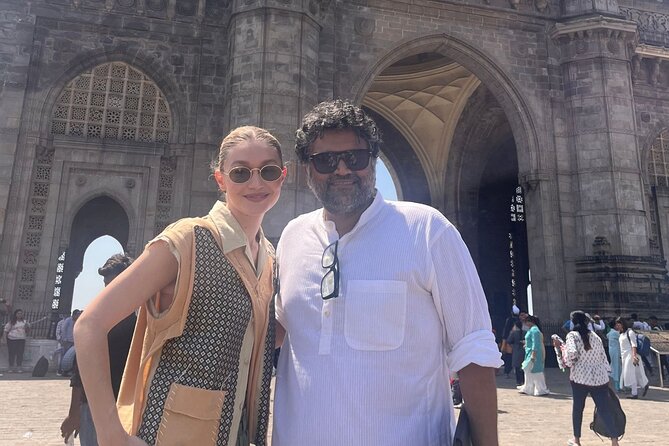
Heritage Walk: Recommended by Gigi Hadid as a must-do in Mumbai
Book on Viator →Operated by No Footprints · Bookable on Viator
Mumbai changes fast on foot. This private heritage walk in South Mumbai strings together big landmarks and small street-level stories, with a professional guide keeping the pace easy and meaningful from start to finish. I especially liked the hotel pickup/drop-off convenience, plus the included Yazdani bakery snack that feels like part of the sightseeing, not an add-on.
You should know one possible catch: it’s built for walking and moderate fitness, and you’re mostly there for the sites and stories rather than a guaranteed inside look at every landmark. If you want lots of time in museums or long interior visits, this format might feel a bit too exterior-focused.
In This Review
- Key things you’ll notice on this South Mumbai heritage walk
- Why this South Mumbai heritage route feels smart
- Price and what $44.39 really buys you
- Where the tour starts: Town Hall and the Asiatic Society area
- Horniman Circle Gardens: a perfect break in the walking
- Yazdani Restaurant & Bakery: snack first, history second
- Flora Fountain and Hutatma Smarak: public space with stories
- Bombay Stock Exchange: finance history you can walk through
- Keneseth Eliyahoo Synagogue: Mumbai’s Jewish heritage
- Kala Ghoda Art Precinct: Watson Hotel and Mark Twain
- Lion Gate ending at the old docks: Ice King and Civil War links
- What makes the tour feel personal: private guiding in real time
- How long it takes and how to pack for it
- Who should book this heritage walk (and who might skip)
- Should you book this private South Mumbai walk?
- FAQ
- How long is the Heritage Walk in Mumbai?
- What’s included in the $44.39 per person price?
- Where does the tour start and end?
- Is this tour private?
- Can children join for free?
- Does the tour run during the Mumbai Marathon or in bad weather?
Key things you’ll notice on this South Mumbai heritage walk
Hotel pickup and drop-off make the first and last hour painless.
A quick Yazdani snack gives you a real taste of Parsi bakery culture.
Town Hall to Kala Ghoda keeps the route concentrated in the Fort-era and nearby districts.
Stop-by-stop stories connect architecture, finance, faith communities, and public spaces.
Private guide attention means you can steer the tour if something catches your interest.
Timing can shift a bit with traffic and the guide’s on-the-ground order.
Why this South Mumbai heritage route feels smart
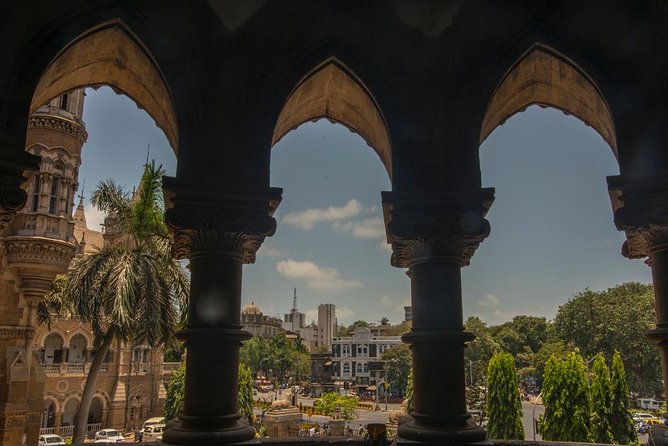
South Mumbai can overwhelm you fast. The streets are busy, the buildings are layered, and it’s not always obvious what’s important and why. This tour is designed to give you your bearings without turning the day into a history lecture. You’re walking through the older civic and commercial heart—where British-era institutions, trading power, religious communities, and art neighborhoods sit close enough to connect in one afternoon.
What makes the experience especially practical is the rhythm: you start at the area tied to Bombay Fort’s early story, then move through key public spaces, major institutions, and heritage precincts. Along the way, your guide helps you see patterns—how a city grows, changes power, and reuses space—rather than treating each stop like an isolated postcard.
You can also read our reviews of more tours and experiences in Mumbai.

Price and what $44.39 really buys you
At about $44.39 per person, the value isn’t just the guide. You’re also getting hotel pickup and drop-off (with a note that Mumbai Suburban hotel pickup may cost extra), plus a quick snack at Yazdani. Add in that the tour is private—your group only—and that you’re not paying admission tickets at the stops, and the price starts to make more sense for a short 3 to 4 hour outing.
This is also the kind of tour that works well for people who don’t want to over-plan. You book it about a month in advance on average, you get a mobile ticket, and you show up at the meeting point. That’s real convenience in a city where getting around can be its own mission.
Where the tour starts: Town Hall and the Asiatic Society area

The tour begins at the Asiatic Society, at Town Hall (in the Fort area). Even before you hit the bigger landmarks, you’re in the right neighborhood for understanding early Bombay. The area is tied to the story of Bombay Fort’s beginnings, and that context matters. It’s hard to appreciate what came later—churches, gardens, institutions, trading—if you don’t know the city’s early “center of gravity.”
From there, you head into the Asiatic Society grounds. This part of the walk focuses on how the city’s cultural and learning institutions took shape in the mid-1800s. Expect guide-led stories that bring it down to human scale: examples like the first gas lights being shown there, and even lighter anecdotes that keep the tour from feeling stiff.
If you’re the type who likes “why this building matters,” this opening is the right way to start. If you’re tired and just want scenic photos, it might feel like a lot at first—so keep an eye out for how the guide connects these early civic stories to what you’ll see later.
Horniman Circle Gardens: a perfect break in the walking
Next comes Horniman Circle Garden, one of those places that makes you exhale in the middle of a busy city. It’s a small “reset” in the route—more open space, more breathing room, and easier sightlines to nearby landmarks. From here, the walk moves toward St. Thomas Cathedral, so you get a blend of garden calm and colonial-era architecture.
This stop is also a good example of what a strong guide does. Instead of rushing you from one photo spot to the next, the guide helps you read the space: what a garden meant in a fast-growing port city, and how nearby institutions clustered around it.
Yazdani Restaurant & Bakery: snack first, history second
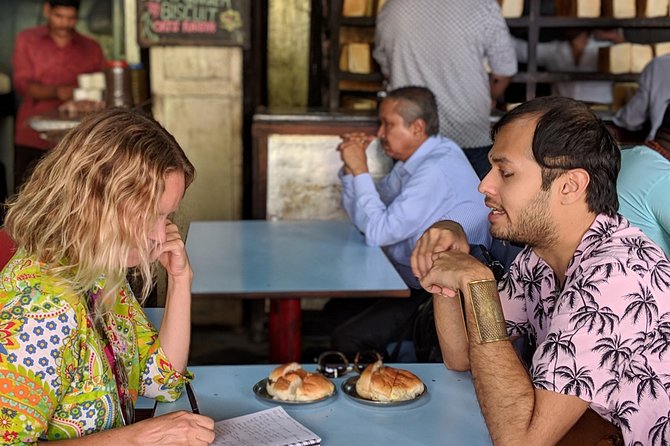
You’ll take a break at Yazdani Restaurant & Bakery for a quick bite. This is one of the most enjoyable parts of the tour because food makes history feel personal. Parsi bakeries are a big deal in Mumbai, and even if you’ve never tried their food before, this stop gives you a quick way to taste that world without turning the tour into a meal.
The tour keeps it short—about 30 minutes—so you don’t lose the afternoon. Practical tip: if you’re sensitive to spice or you get full easily, tell your guide at the start. That’s the benefit of a private tour—you can adjust the rhythm to your needs.

Flora Fountain and Hutatma Smarak: public space with stories
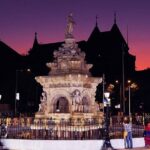
After the snack, the tour moves to Flora Fountain, a landmark tied to the expansion of Bombay beyond the Fort limits. It’s one of those spaces that looks simple from afar, but it’s actually loaded with meaning when a guide connects the fountain to the city’s growth phases.
You’ll also hear about the tale of the division of Maharashtra while looking at Hutatma Smarak. This is where the tour becomes more than colonial-era sightseeing. Mumbai history keeps moving, and public monuments reflect shifting identities. If you like understanding how modern political changes land in physical places, this stop hits.
Bombay Stock Exchange: finance history you can walk through
Next up is the Bombay Stock Exchange, described as the beating heart of Mumbai’s economy. What makes this stop interesting is the origin story: how the institution started under a humble banyan tree and grew into the structure you associate with it today.
This is a great moment for perspective. In one walk, you go from gardens and cathedrals to money and markets. The guide’s job here is to help you see the city as one connected system—trade, institutions, power, and architecture all intertwined.
Keneseth Eliyahoo Synagogue: Mumbai’s Jewish heritage
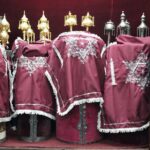
You’ll visit Keneseth Eliyahoo Synagogue, a key stop for understanding Mumbai’s Jewish heritage. The focus is on the Sassoon family and their lasting impact on the city. Even if you don’t know much about the community beforehand, this stop is framed in a way that makes the history easy to follow: who mattered, what they contributed, and why their presence is still visible.
One thing I like about this tour’s design is the balance. It doesn’t only center on the dominant European-colonial layer of the city. It adds another thread—Jewish community history—and you start to see Mumbai as a multi-community port city, shaped by many waves.
Kala Ghoda Art Precinct: Watson Hotel and Mark Twain
Kala Ghoda is where the tour shifts from institutions to creative energy. The Kala Ghoda Art Precinct is the art area of Mumbai, and you’ll walk through it with stories that blend art, family history, and famous visitors.
A standout detail here: the Watson Hotel is mentioned as the first iron cast building in the city that hosted Mark Twain. That kind of connection is exactly why I recommend doing this in a guided format. Without context, you’d see buildings. With context, you see a chain of events—and it’s way more fun.
If you like street photography, this is a strong stretch. You also get the sense that the past isn’t sealed off; it’s still part of how the neighborhood shows up today.
Lion Gate ending at the old docks: Ice King and Civil War links
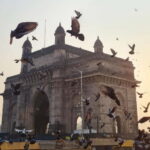
The tour concludes at Lion Gate, at the old docks of Mumbai. This ending works well because it pulls you toward the waterfront—the place where the city’s port life made everything happen. It’s a fitting finish after stops tied to fort origins, institutions, and community landmarks.
Expect stories about the enigmatic Ice King (with mystery around the figure), plus Mumbai’s connection to the American Civil War. That might sound random until a good guide explains how global events connect to local people and trade networks.
This final stop is also where you’ll probably notice the route has a purpose: you’re moving from the city’s older civic center toward the edge where the port economy shaped daily life.
What makes the tour feel personal: private guiding in real time
This is a private tour, so only your group participates. That matters because timing and attention can be tailored instead of standardized. You’ll also see that in how guides operate. For example, names like Meherbeen and Dereck come up in connection with this experience—Meherbeen is described as flexible, and Dereck is noted for waiting when people were running late and then adjusting the tour based on interests.
You can use that same principle during your walk. If you care most about religious history, tell your guide early. If you’re more into finance and trade, ask about Bombay’s economic evolution as you reach the Stock Exchange area. This format makes it easier to ask follow-up questions without feeling like you’re slowing a large group.
How long it takes and how to pack for it
The tour runs about 3 to 4 hours. It’s set at a walking pace that suits people with moderate physical fitness, and the route is near public transportation. Still, you should dress like you’ll be moving: wear supportive shoes and plan for city heat.
Because start and end timing can shift based on traffic, I recommend leaving buffer time around your plans afterward. Also, the guide has discretion in the order of stops—so don’t treat the schedule as something fixed to the minute. In practice, that flexibility helps keep the tour smooth.
One more practical point: the tour requires good weather. If conditions aren’t right, you’ll be offered a different date or a refund. That’s worth factoring in if you’re traveling during a rainy stretch.
Who should book this heritage walk (and who might skip)
This is a strong fit if:
- You’re in Mumbai for a short time and want a focused South Mumbai introduction.
- You like guided storytelling that links buildings, communities, and the city’s growth.
- You want an easy snack stop at Yazdani instead of hunting for food mid-walk.
- You prefer a private experience where your guide can adjust to you.
You might skip if:
- You want guaranteed long interior visits and museum-style time.
- You’re not comfortable with a few hours of walking.
- Your schedule includes the Mumbai Marathon day, since the tour isn’t conducted that day.
Should you book this private South Mumbai walk?
Yes, if you want a practical, guide-led way to understand South Mumbai without juggling transport and planning. The value is real: you get a professional guide, hotel pickup/drop-off, free-entry stops, and a Yazdani snack, all wrapped into a compact 3 to 4 hour loop.
Book it especially if you’re a first-time visitor—or if you’ve been in Mumbai briefly and want a coherent story behind the sights. Just make sure you’re okay with an outdoor, walking-heavy format and that your travel dates allow for good weather.
FAQ
How long is the Heritage Walk in Mumbai?
The tour lasts about 3 to 4 hours.
What’s included in the $44.39 per person price?
You get a professional guide, all fees and taxes, and a quick bite at Yazdani. Hotel pick-up and drop-off are also included (with a note that additional transport cost may apply for pick up from Mumbai Suburban hotels).
Where does the tour start and end?
It starts at the Asiatic Society, Mumbai Town Hall (Fort area). It ends at Ador House, 6 K Dubash Marg, Kala Ghoda (the Archana & Harish Mittal Art Initiative).
Is this tour private?
Yes. It’s a private tour/activity, and only your group will participate.
Can children join for free?
Children below 9 years old can do the tour for free of cost.
Does the tour run during the Mumbai Marathon or in bad weather?
It does not run on the day of the Mumbai Marathon. The tour requires good weather, and if it’s canceled due to poor weather, you’ll be offered a different date or a full refund.