REVIEW · OSAKA
Ancient Capital Tour: Kyoto and Nara Highlights from Kyoto/Osaka
Book on Viator →Operated by LIMON Tours · Bookable on Viator
Kyoto and Nara without the stress. I love the Arashiyama start and the chance to see the Golden Pavilion gardens with tickets handled for most departures. I also like that you skip the public-transport puzzle and ride in an air-conditioned van with free Wi‑Fi. The main drawback to consider: it’s a highlights schedule, so some parts can feel a bit fast if you want slow, deep time.
On the guide side, I’m seeing a strong pattern of helpful, schedule-aware guiding. Guides such as Yuki, Maria, Haru, Riku, and Hama are praised for keeping the day organized and adding practical pointers for what to do after the tour.
One more practical note: the lunch upgrade is available, but the tour can’t provide vegan or halal meals. If you need special food, plan around that early.
In This Review
- Key things I’d watch for before you go
- Kyoto and Nara in one day: what this combo is best for
- Arashiyama first: bamboo forest walks and seasonal Kyoto mood
- Lunch upgrade: when it’s a good idea and when to skip
- Kinkaku-ji Golden Pavilion: making the most of 45 minutes
- Todaiji and the Great Buddha: the scale check you’ll feel
- Nara Park deer feeding: senbei fun without overthinking it
- Meeting points and getting around: Osaka vs Kyoto start times
- Comfort, pace, and walking level: plan for a full day
- Price and value: is $90.75 actually a deal?
- Who should book this Kyoto–Nara highlights day
- Should you book this tour?
- FAQ
- What places does this tour cover?
- How long is the tour?
- Where do I meet the group if I’m starting from Osaka?
- Where do I meet the group if I’m starting from Kyoto?
- Is lunch included?
- Are temple entry tickets included?
- Does the tour include a guide?
- What transportation do you use?
- Do I need to use public transport to get between Kyoto and Nara?
- What’s the maximum group size?
- Can I cancel for a full refund?
Key things I’d watch for before you go
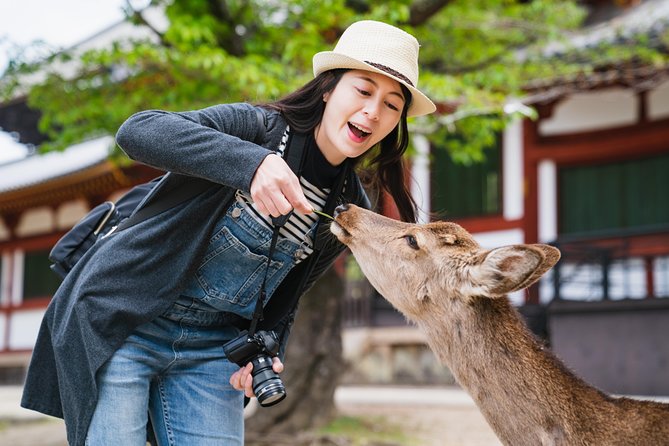
- Arashiyama first: bamboo walking by Tenryuji temple grounds, plus seasonal scenery like cherry blossoms in April or fall color in November
- Kinkaku-ji timing: gold-leaf temple views and reflected photos, with garden time after
- Todai-ji scale in Nara: Great Buddha at one of Japan’s biggest temple complexes
- Nara Park deer with senbei: about 1,200 wild deer roaming freely, with snack feeding as the fun anchor
- No public transport juggling: pickup at central Kyoto or Osaka meeting points, A/C vehicle, and free Wi‑Fi
- Group size capped: up to 42 people, which helps with photo flow and getting answers on the spot
Kyoto and Nara in one day: what this combo is best for
This is the kind of day trip that works when you want the big names—Kyoto’s signature atmosphere and Nara’s famous deer—without turning your vacation into a transit workout. You spend your time at three high-impact stops spread across Kyoto and Nara, then you’re back on the bus.
I like how the route is built for first-timers. Arashiyama gives you Kyoto’s classic river-and-bamboo vibe. Kinkaku-ji delivers one of the most photographed temple scenes in Japan: gold-leaf on a calm pond. Then Nara adds the animal chaos in a friendly, controlled way (senbei in hand), followed by Todai-ji’s massive Buddha scale.
The tradeoff is real. You’ll be moving most of the day. If you love reading every plaque, lingering in temple halls, and taking long detours for side streets, this might feel like a fast tour of the highlights rather than a full experience of either Kyoto or Nara.
Arashiyama first: bamboo forest walks and seasonal Kyoto mood
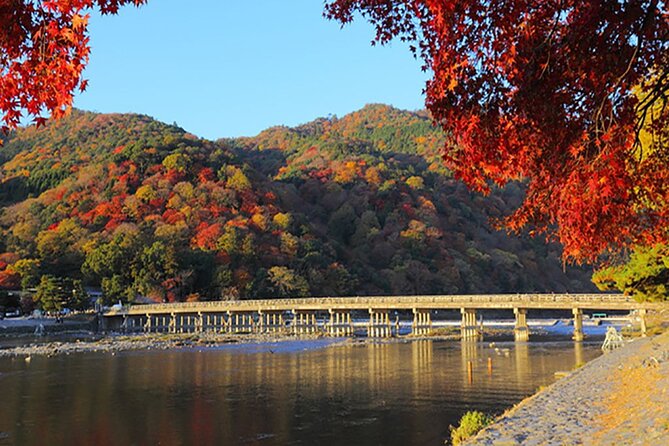
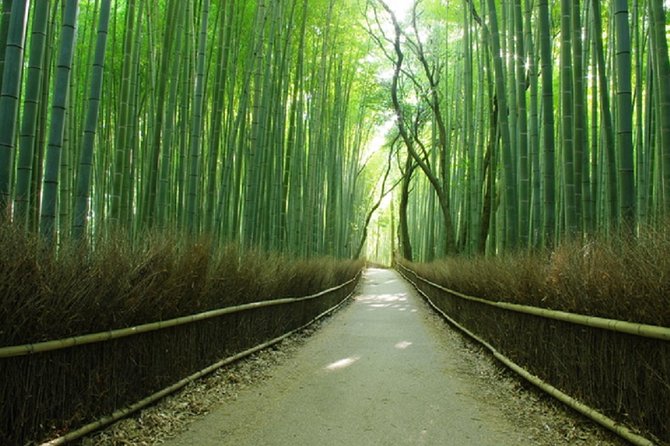
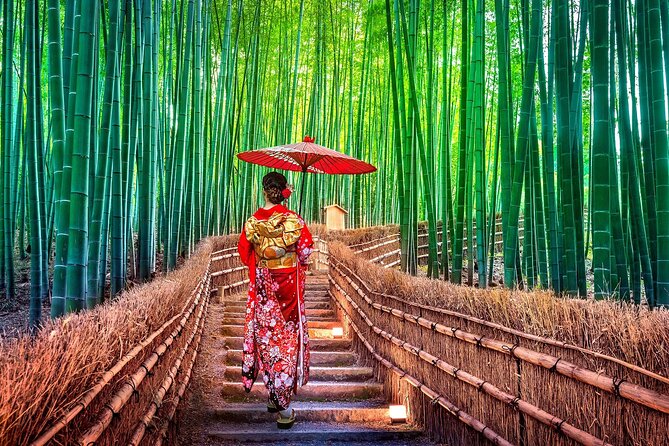
Arashiyama is your opening act, with about two hours on the ground. The focus here isn’t only sightseeing—it’s atmosphere. You’re set up to walk in the Sagano Bamboo Forest area, including a stroll along the edge of Tenryuji temple grounds.
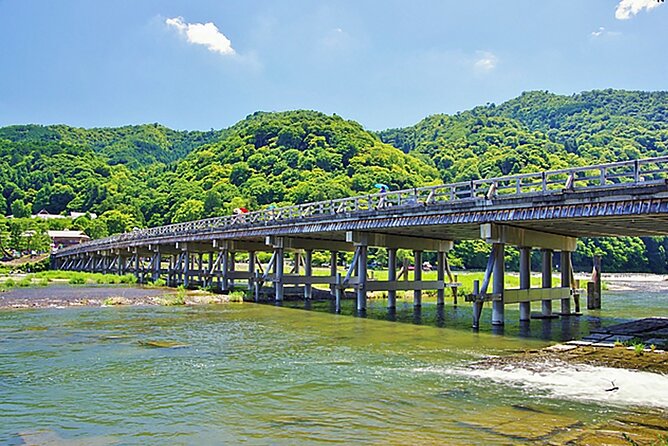
A nice detail: this bamboo walk has been a popular nature viewing destination since the Heian Period, so it’s not just a modern photo stop. And you’ll also get a look at Togetsukyo, the moon-crossing bridge, over the Katsura River.
Seasonal notes are part of the appeal. If you’re there in April, you might catch cherry blossoms. In November, you could see fall colors. In summer, the area is known for cormorant fishing, which is a very Kyoto kind of tradition.
If you’re a planner-type, here’s your move: wear good shoes early. Arashiyama is where the walking starts, and it sets the tone for how relaxed (or not) the rest of the day feels.
Lunch upgrade: when it’s a good idea and when to skip
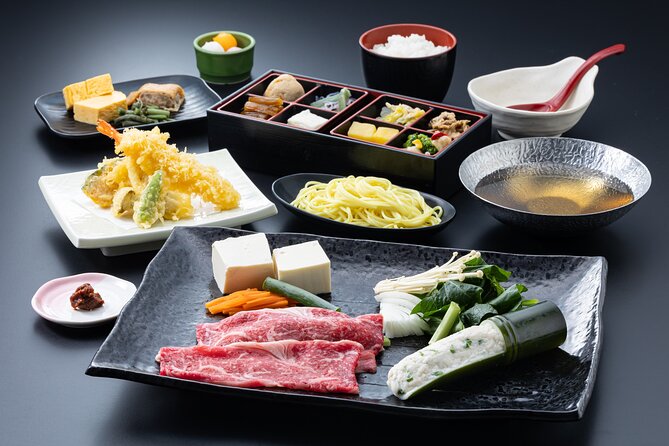
Lunch is offered as an upgrade option. If you choose it, you get a traditional Kyoto-style meal during the Arashiyama portion of the day.
In practice, this convenience is worth something. It means you don’t need to hunt for food while you’re in a crowded area. You also keep the day on schedule, which matters because the stops later are time-based.
But I’d think about whether you prefer flexibility. Some diners like picking their own lunch once they see what’s nearby. If you’re picky about food style or you want a specific café vibe, the lunch option can feel limiting. Also, the tour can’t provide vegan or halal meals, and vegetarian requests need to be arranged at least 3 days in advance.
My rule: pick the lunch option if you’d rather trade freedom for a smooth flow. Skip it if you’re confident you’ll find something great around the main streets and you want control.
Kinkaku-ji Golden Pavilion: making the most of 45 minutes
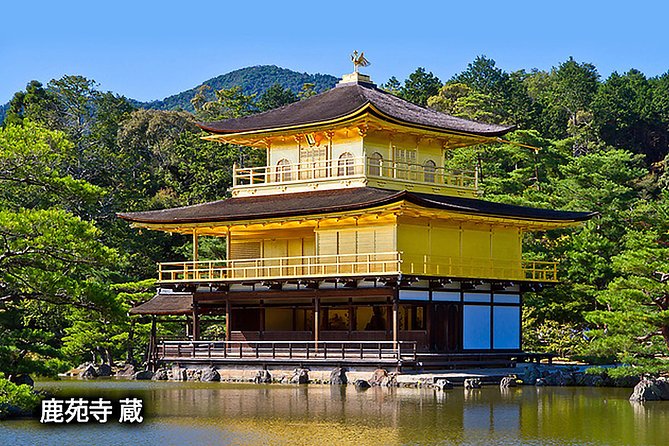
Kinkaku-ji—known as the Golden Pavilion—lands as your next major stop, with about 45 minutes there. This is the moment most people come for: the gold-leaf covered temple gleams in sunlight, and you can usually catch dramatic reflections in the mirror-like pond.
Then the time shifts from the postcard view to the calmer experience of walking the garden paths. The complex’s design dates back to the 14th century, and that gives the whole place a sense of continuity rather than being just a set of modern photo angles.
Here’s the important detail that affects your day: entry tickets are included on most package options, but not on the last-minute option. If you book a departure labeled as last minute, expect that you may need to cover temple entry on your own.
How to handle the photos: prioritize one or two angles and let the rest be bonus. With only 45 minutes, you’ll get more enjoyment if you don’t burn all your time chasing perfect light.
Todaiji and the Great Buddha: the scale check you’ll feel
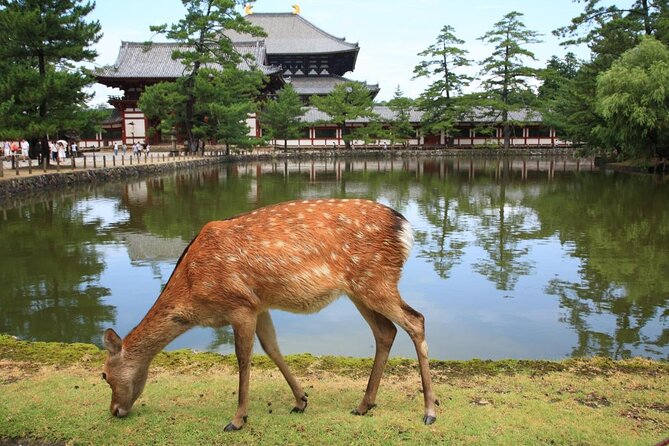
Nara’s highlight section includes Todaiji Temple and the Great Buddha statue. You’re not just walking past a single landmark here—you’re entering one of Japan’s largest temple settings.
The Great Buddha at Todaiji is described as one of the three titanic Great Buddha statues in Japan, which is a helpful framing. It’s the scale that hits first: this isn’t the type of statue you can fully appreciate from one quick glance. Even with limited time, you get a real sense of size and seriousness.
You’ll also be in the UNESCO World Heritage context of the area, which helps explain why the space feels so important. And because it’s part of the Nara Park area, the day’s energy shifts naturally: deer time first, then a calmer temple atmosphere.
Nara Park deer feeding: senbei fun without overthinking it
Nara Park is famous for the wild deer—about 1,200 roaming freely in the park. The tour includes time to walk through the park and see them up close.
The key activity is feeding them with shika-senbei (senbei snacks made for deer). The deer are known for bowing as part of the feeding interaction, which turns a crowded park into something playful and memorable.
Two practical tips based on how this kind of scene works:
- Keep an eye on your snack so you don’t lose your place while checking your bag.
- Don’t expect long quiet moments. Nara deer time is popular, so you’ll want to stay aware of foot traffic while you enjoy the interaction.
Timing helps here. You get about 1.5 hours in the Nara portion, so you can see deer, then pivot to Todaiji without feeling like you missed the main event.
Meeting points and getting around: Osaka vs Kyoto start times
This tour is designed to remove the public-transport burden. You meet your group, take the bus between Kyoto and Nara, and return to your original departure point. No swapping trains, no figuring out which bus stop is correct in a rush.
Pickup details to pin down before you show up:
- Osaka (Namba): 8:50 AM at Namba, OCAT 1F (near Daiso)
- Kyoto (Kyoto Station Hachijo Exit): 9:05 AM at the tourist bus parking area
Check in about 10 minutes before the start time. The bus leaves as scheduled, and late arrivals aren’t refundable.
One small but useful lesson from on-the-ground feedback: guides can be easy to miss at wide building fronts. Look for staff in yellow, and be ready to double-check you’re at the right side entrance.
Also note: the tour runs from Kyoto and Osaka on different dates and buses. Choose your departure point carefully when booking, or you may end up in the right tour but the wrong city.
Comfort, pace, and walking level: plan for a full day
The total duration is about 9 hours, and the stop timing reflects that. You spend around 2 hours in Arashiyama, then about 45 minutes at Kinkaku-ji, then roughly 1.5 hours at Nara/Todaiji, plus driving time in between.
That’s a lot of highlights in one day. Some people love it because it’s efficient and keeps momentum. Others feel it’s tight because there’s limited room for extra reading, slow garden loops, or wandering side streets.
My practical take: this is a good match if you want structure and zero logistics stress. Bring comfortable walking shoes. The tour recommends them for a reason.
The group size can be up to 42, which is big enough to feel like a tour bus day, but small enough that you’ll still get a sense of personal guidance—especially if your guide is proactive.
Price and value: is $90.75 actually a deal?
The price is $90.75 per person, and the tour uses a mobile ticket. On value, the big question is what you’re getting for your time: guide, transportation, and the main entries.
Included items:
- English speaking guide
- Air-conditioned vehicle with free Wi‑Fi
- Lunch if you select the lunch option
- Entry ticket to Kinkaku-ji Temple (usually included, but not in the last-minute option)
- Entry ticket to Todai-ji Temple (usually included, but not in the last-minute option)
What can cost extra:
- Personal expenses
- If you book the last-minute option, entry tickets and meals may not be included
So here’s the math mindset. If you were doing this on your own, you’d still pay for transport plus you’d lose time figuring out connections. You’d also still need to pay temple entry fees. This tour bundles those pieces, and that matters when you’re trying to cover both Kyoto and Nara without burning half your day in transit.
Who should book this Kyoto–Nara highlights day
This is a solid fit if:
- You want Kyoto icons (Arashiyama and Kinkaku-ji) plus Nara icons (deer park and the Great Buddha) in one day
- You don’t want to manage public transportation between cities
- You like a guided day with clear timing and a guide who can help you get your bearings quickly
- You’d rather handle temple entries through the package
It’s a weaker fit if:
- You want deep historical context and long sits in temples
- You’re sensitive to rushing and limited time at each stop
- You need vegan or halal meals (the tour can’t provide them)
Should you book this tour?
Book it if you’re after a well-run, structured highlights day and you want the convenience of A/C transport, free Wi‑Fi, and entry handling for most options. It’s also a smart choice when your Kyoto and Nara time is limited and you still want the big visuals: bamboo walking, gold-leaf reflections, and deer-and-senbei moments.
Skip it or adjust your plan if you know you’ll want extra time in Arashiyama or Nara. This itinerary is built to cover more ground, not to let you slow down and read every detail.
If you’re the kind of traveler who likes to mix “must-sees” with 60–90 minutes of your own wandering time, this tour can work beautifully. Just treat it as the fast, guided starter course—not the whole meal.
FAQ
What places does this tour cover?
It covers Arashiyama in Kyoto, Kinkaku-ji Temple (Golden Pavilion), and Nara Park and Todaiji Temple (home to the Great Buddha statue).
How long is the tour?
The duration is approximately 9 hours.
Where do I meet the group if I’m starting from Osaka?
Meet at Namba, OCAT 1F (near Daiso) at 8:50 AM.
Where do I meet the group if I’m starting from Kyoto?
Meet at Kyoto Station Hachijo Exit, in the tourist bus parking area at 9:05 AM.
Is lunch included?
Lunch is included only if you select the lunch option. The tour also notes that vegan and halal meals aren’t available.
Are temple entry tickets included?
Kinkaku-ji Temple and Todai-ji Temple entry tickets are included on most options. They are not included on the last-minute option.
Does the tour include a guide?
Yes. The tour includes an English-speaking guide.
What transportation do you use?
You ride in an air-conditioned vehicle with free Wi‑Fi.
Do I need to use public transport to get between Kyoto and Nara?
No. The tour provides transport by bus and handles travel between the stops.
What’s the maximum group size?
The maximum group size is 42 travelers.
Can I cancel for a full refund?
Free cancellation is available up to 24 hours before the experience’s start time for a full refund.