REVIEW · MEXICO CITY
Private Historical Tour in San Miguel de Allende and Guanajuato
Book on Viator →Operated by Daniel Mendívil Olvera · Bookable on Viator
That first view of town squares hooks you fast. This private 2-day trip connects San Miguel de Allende’s landmark colonial sites with Guanajuato’s steep-city drama, silver-mining legacy, and Catholic footprints. You’ll also ride in comfort with private transportation, so you’re not spending the whole trip fighting traffic and timing.
What I really like is how the stops stay focused: you get architecture, power, faith, and mining history in a clear route rather than random photo stops. I also like that the guide, Daniel Mendívil Olvera, brings the places to life with patient explanations and real context—handy if your group includes parents or anyone who prefers slower, clearer pacing.
One consideration: several major sights have admission tickets not included (like Santa Cruz de los Milagros and Museo Casa Diego Rivera), so you’ll want a little cash/card buffer and a plan for museum time.
In This Review
- Key points before you go
- Two towns, one clear story
- Private transport and Daniel Mendívil Olvera’s style
- Day 1: Santa Cruz to town-center power and faith
- Day 1’s cathedral vibe, Ignacio Allende, and El Nigromante
- Day 2: Diego Rivera’s birthplace house museum
- Guanajuato’s wide views: Monumento Al Pipila
- The Alley of the Kiss: architecture shaped by geography
- Guanajuato School of Mines: silver, religion, and the two-world city
- Price and Logistics: what $350 really buys
- Practical tips that make this tour smoother
- Who should book this tour
- Should you book this private historical tour?
- FAQ
- How much does the tour cost?
- How long is the tour?
- Is the tour private?
- Does the tour include transportation?
- Where can pickup happen?
- Is the tour in English?
- Are admission tickets included?
- Do I need a mobile ticket?
- What’s the cancellation policy?
Key points before you go
- Private transport for up to 5 means less hassle and more time on foot where it counts
- San Miguel’s power-and-faith loop: Palacio de Gobierno, Plaza de la Soledad, and nearby cultural landmarks
- Convent life and colonial contrasts at Templo y ex-convento de la Santa Cruz de los Milagros
- Guanajuato’s city-scale viewpoints at the Monumento Al Pipila (with a funicular connection)
- Signature street architecture at the Alley of the Kiss
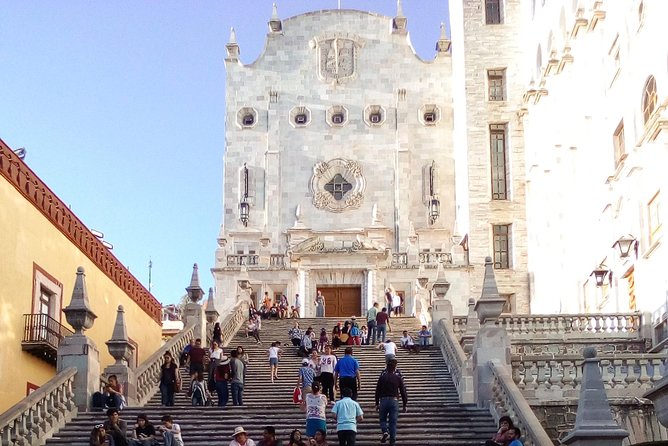
- Silver mining meets religion at the Guanajuato School of Mines
Two towns, one clear story
San Miguel de Allende and Guanajuato feel like cousins who didn’t grow up in the same house. San Miguel leans toward elegant colonial squares, big church silhouettes, and cultural layers tied to independence-era figures. Guanajuato is more dramatic on the ground—steep streets, tight alleys, and lookouts that make the whole city feel like it’s built to watch itself.
This is why I like this kind of private history tour. You’re not just collecting landmarks. You’re getting a chain of ideas: how mining wealth shaped cities, how Catholic institutions reinforced power and daily life, and how independence-era personalities left fingerprints on public spaces. If you’re the type who likes your photos with context—great. If you want pure “wow” scenery, you’ll still get it.
The private setup matters too. In a route like this, the time you save on logistics is time you can spend slowing down, asking questions, and actually looking at details (fountains in a plaza, the layout around a cathedral, the role of clergy-linked institutions).
You can also read our reviews of more tours and experiences in Mexico City.


Private transport and Daniel Mendívil Olvera’s style
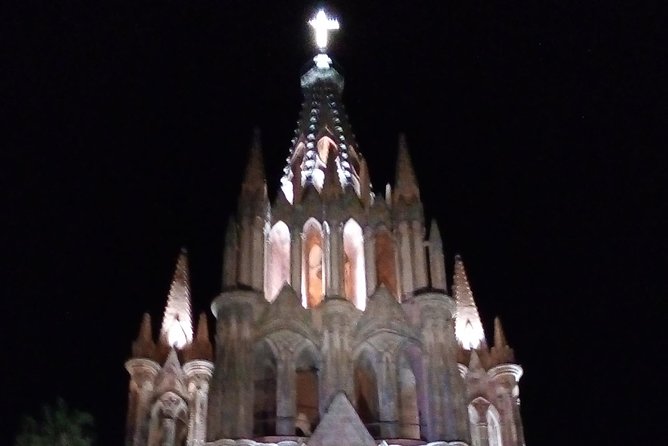
You’ll have private transportation included. Pickup is offered, including airport pickup, which is a big deal when you’re arriving tired and want the first hour of the trip to feel easy.
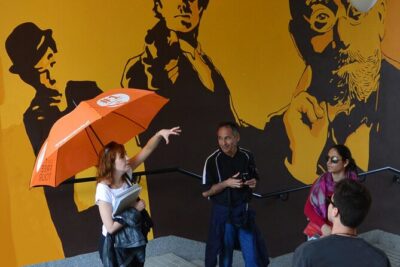
The guide is Daniel Mendívil Olvera, and the pattern of what you’ll likely experience is consistent: clear English explanations, good pacing, and flexibility with the route around your interests. People consistently highlight that he doesn’t just talk facts—he pauses, checks in, and adjusts if the group includes non-English speakers. That matters if your group has mixed ages or different comfort levels.
Also, if you like eating local food without guessing, Daniel’s been described as willing to join you for meals and recommend what feels most authentic. Even when meals aren’t included, this is still a real value add, because restaurant choices can make or break a trip.
One more practical point: this tour is for a private group only (up to 5). That’s what makes it feel personal instead of rushed, especially on uneven streets where standing around waiting for a big group can eat your energy.
Day 1: Santa Cruz to town-center power and faith
Day 1 starts with one of the most atmospheric stops on the route: Templo y ex-convento de la Santa Cruz de los Milagros. This is a convent complex with XVIth century roots, so you’re looking at an entire worldview—how religious communities lived, worked, and organized daily routines. Expect a slower feel here. Even with a set time (about 45 minutes), the value is in understanding what a convent complex represented in colonial Mexico: not just a church, but a system for life and influence.
Admission for this stop is not included, so plan for that. If you’re the type who likes to read placards and soak in architecture, you’ll probably appreciate paying for this one, because it’s the kind of site where context changes how you see everything else that day.
Next you move to a classic San Miguel anchor: Palacio de Gobierno Casa de la Corregidora. This stop runs about 1 hour, and it’s free. What makes it interesting isn’t only the colonial setting—it’s the idea of what power looked like in daily form. You pass through buildings connected to government administration, and the story includes the property of private miners and landowners, alongside religious institutions around a square decorated with fountains.
Then comes a quieter but very meaningful square: Plaza de la Soledad (about 45 minutes, free). This spot connects the former city center to nearby institutions linked with clergy and education. Squares like this are where you feel the city’s social rhythm: markets, gatherings, and the constant presence of religious influence in the civic landscape.
Day 1’s cathedral vibe, Ignacio Allende, and El Nigromante
After the plaza stops, you’ll head to Jardin Allende. This section is listed at around 1 hour and is free, and it’s a strong mix of visual and historical payoff.
You’ll see the San Miguel Gothic cathedral—not a typical European Gothic copy, but a curious example of how Indigenous understanding helped shape Western-style forms. Then you’ll connect the architecture to independence history by visiting the Ignacio Allende independence military house museum. This is one of those places where “name on a street” becomes “real person and real era.”
The stop also loops into cultural art and local landmarks through Centro Cultural el Nigromante, associated with monuments and buildings ornamented by David Alfaro Siqueiros and others. If you like the way Mexican public art talks back to the past, this is the kind of stop that makes you want to slow down and look upward at details.
A small practical note: Day 1 is content-heavy, but the time windows are reasonable. The trick is to decide what you want most—architecture, independence stories, or art references—so you can focus your attention instead of trying to absorb everything at once. A private guide makes that easier, because you can ask for the “why” behind what you’re seeing.
Day 2: Diego Rivera’s birthplace house museum
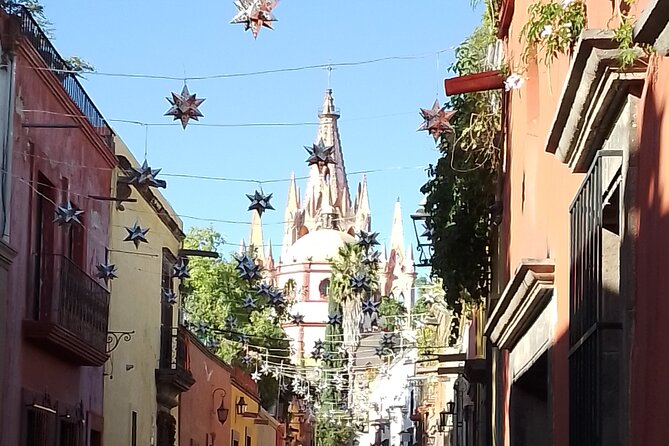
Day 2 begins with Museo Casa Diego Rivera, about 30 minutes. Admission is not included. A house museum can go either way: either it feels like a quick stop or it feels like the kind of place where every room tells you something. With a shorter time slot, you’ll want to treat it like a targeted visit—hit the key areas, look for the family and formative context, and let the guide point you toward what matters most.
Why this works in the overall route: it adds a modern cultural layer after the colonial and independence-era sites from Day 1. You see how Mexico’s identity keeps evolving—art and public culture now carrying some of the same energy that religious institutions and mining wealth once carried.



Guanajuato’s wide views: Monumento Al Pipila
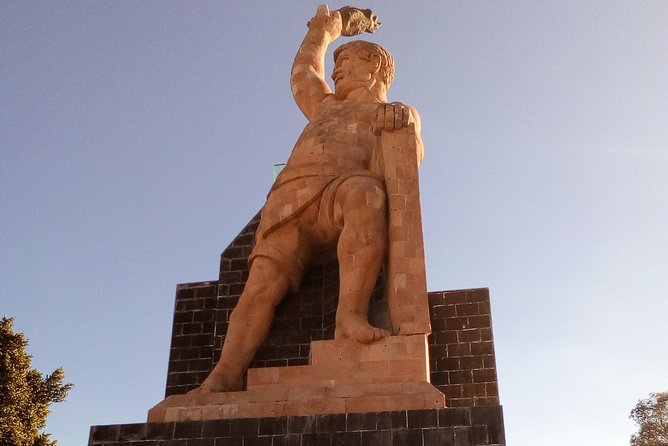
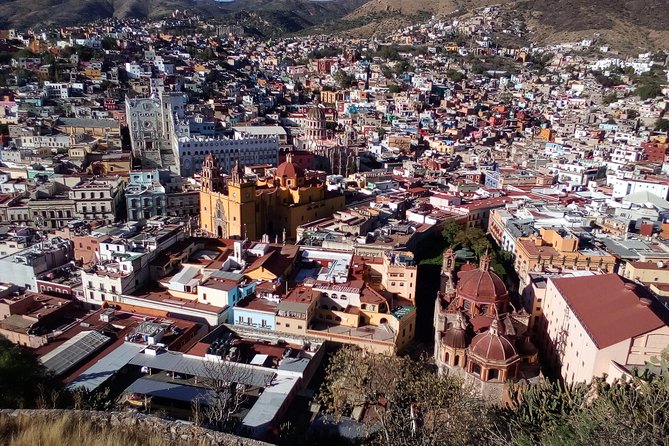
Next you’ll reach Monumento Al Pipila, a viewpoint over Guanajuato city. The time is about 20 minutes, and it’s free. This is the stop you’ll likely love even if you’re not a museum person. Lookouts change how you understand a city: suddenly the steep streets and stacked neighborhoods make sense.
It’s also connected to a practical way to move between levels: there’s a funicular linking it with the city center. Even if you don’t use it, the idea is helpful. Guanajuato was built for hills and movement, and view points like this explain why the city feels the way it does.
At this stage, do what smart travelers do: take a few minutes to scan the city layout before snapping photos. You’ll get more out of the later alley and street stops because you’ll know where you are in relation to the whole place.
The Alley of the Kiss: architecture shaped by geography
Then you’ll visit The Alley of the Kiss, another 20-minute stop and free. This is an iconic Guanajuato photo spot, but it’s more than a gimmick. The alley’s design is tied to the city’s geography—balconies facing and narrowing the space so that people can share a moment across the gap.
What makes this stop valuable on a history-focused tour is that it shows how people adapted buildings to the terrain. Guanajuato isn’t flat; it’s vertical. When you understand that, the alley stops feeling like a novelty and starts feeling like a response to real physical constraints.
The practical trick here is patience. People naturally line up for the shot. If your guide is managing the group well (private tours usually do), you can still get your photos without feeling like you’re in a cattle line.
Guanajuato School of Mines: silver, religion, and the two-world city
Your final stop is Guanajuato School of Mines, timed at about 20 minutes and free. The framing here matters: the school represents colonial life stirred around two worlds—silver mining and religion. That’s exactly the theme you’ve been building all tour.
In other words, this isn’t a random university building. It’s a snapshot of how mining wealth helped create the city and how Catholic influence remained woven into the institutions that educated and organized people.
Even in a short visit, you can usually connect the dots: the wealth that came from silver didn’t just fill pockets; it shaped civic space, architecture, and what kinds of organizations rose to prominence. When you leave, you’ll likely understand why Guanajuato looks like a city of both worship and work.
Price and Logistics: what $350 really buys
The price is $350.00 per group (up to 5) for about 2 days. That’s not per person. It’s per group, which is where the math can make sense fast if you’re traveling with friends or family.
So what are you actually paying for?
- Private transportation (meaning no crowded van, fewer waiting games)
- A guide who’s described as patient, flexible, and attentive to pacing
- A route that hits free stops and major context stops, instead of scattering your time
- English guidance and a mobile ticket approach
What you are not paying for: meals, lodging, and admission to sites and museums, with some stops marked as free and others requiring tickets (notably Santa Cruz de los Milagros and Museo Casa Diego Rivera).
My best value tip: treat admission costs as part of your day planning, not a surprise. Budget a little extra for the paid-entry sites, and you’ll feel in control instead of nickel-and-dimed.
Also, one caution worth taking seriously: some costs around museums or practical items like parking for the guide may pop up depending on how the day runs. If you want zero surprises, ask ahead what you should expect for your own entries and anything operational that could affect the day. It’s a small question that saves stress.
Practical tips that make this tour smoother
- Wear comfortable shoes. Old cities mean uneven ground and lots of walking, even when the time at each stop is scheduled.
- Bring a payment method for the two paid-entry spots: Templo y ex-convento de la Santa Cruz de los Milagros and Museo Casa Diego Rivera.
- If you’re traveling with someone who doesn’t speak English well, this guide style can work especially well. The guide has a reputation for pausing and making time for translation.
- Decide your priority before Day 1: cathedral/architecture, independence figures like Ignacio Allende, or the silver-and-faith thread. You’ll enjoy the route more.
Finally, use the private format for what it’s best at: questions. When you ask why a building looks the way it does—or how mining money changed a square—you turn a sightseeing day into something that sticks.
Who should book this tour
You’ll likely love this tour if you:
- Want a guided, story-driven look at San Miguel de Allende and Guanajuato
- Prefer private transport to save time and reduce stress
- Like architecture plus the background behind it—especially around mining, Catholic influence, and independence-era connections
- Travel with a mixed-age group or anyone who benefits from slower pacing
You might think twice if you:
- Are trying to do this with minimal walking and very minimal museum time
- Hate planning around admission tickets not included for certain stops
- Want long stays inside every museum (this route keeps many visits short and focused)
Should you book this private historical tour?
If your goal is to understand these two towns in a connected way, this is a strong booking choice. The route makes sense: convent and colonial power in San Miguel, then viewpoints and signature city geometry in Guanajuato, ending with the silver-and-religion theme that helps the city click.
The biggest reasons to book are simple: private logistics, a guide who’s willing to adapt to your pace, and a stop selection that balances paid and free sites without feeling random.
If you book, do two things: budget for museum admissions at the paid stops and tell Daniel Mendívil Olvera what you care about most. He’s built the experience around people, not scripts.
FAQ
How much does the tour cost?
It costs $350.00 per group, up to 5 people.
How long is the tour?
It’s about 2 days (approx.).
Is the tour private?
Yes. It’s a private tour/activity, and only your group participates.
Does the tour include transportation?
Yes. Private transportation is included.
Where can pickup happen?
Pickup is offered, and airport pick up is also available.
Is the tour in English?
Yes, it’s offered in English.
Are admission tickets included?
Some sites are free, but admission is not included for certain stops and museums. Meals and lodging are also not included.
Do I need a mobile ticket?
Yes, a mobile ticket is offered.
What’s the cancellation policy?
Free cancellation is available. You can cancel up to 24 hours in advance for a full refund.