REVIEW · AVIGNON
Roman Heritage & Wine Legacy
Book on Viator →Operated by Provence with Gordana · Bookable on Viator
Two classics, one smooth afternoon. This Avignon outing pairs Châteauneuf-du-Pape wine country with the Pont du Gard Roman bridge, plus a human, story-led guide. You get the big names, but the pacing stays friendly enough to actually enjoy both worlds.
I especially like the small group feel (max 8) and the air-conditioned vehicle for the ride between sites. I also like how the tour keeps asking you to connect what you taste to what you see and hear, from vineyard practices to Roman engineering.
One heads-up: you are trading some comfort for variety, and the day can feel car-heavy between Châteauneuf-du-Pape and Pont du Gard. If you hate lots of road time, consider asking for a wine-only approach instead.
In This Review
- Key highlights
- Route and timing: Why this Avignon tour starts at 2:30 pm
- How far you’ll actually travel
- Châteauneuf-du-Pape: where the wine name starts tasting real
- What you’ll learn while wine tasting
- Admission note
- Two winery stops: the secret to why the afternoon works
- Pace and comfort
- Bring your tasting strategy
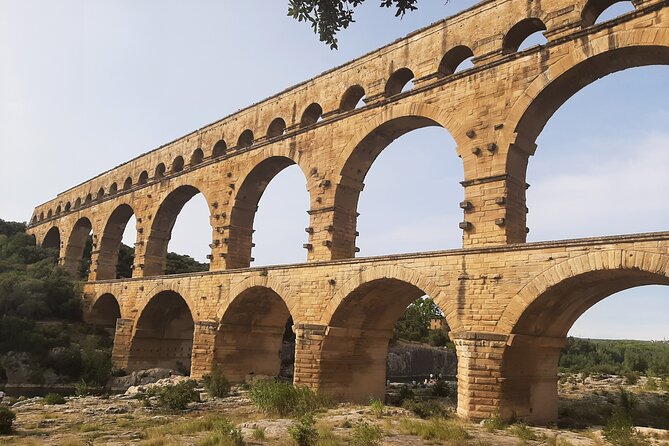
- Pont du Gard: Roman engineering you can actually walk into
- Why the walk time matters
- What to watch for while you’re there
- Value for money: what you’re paying for at $113.84
- Comfort details that show up in real life
- Who this tour fits best (and who might feel cramped)
- Guide factor: Gordana’s style and why people remember it
- Should you book Roman Heritage & Wine Legacy?
- FAQ
- How long is the tour?
- Where do I meet the tour?
- What time does the tour start?
- Is the tour offered in English?
- How many people are in the group?
- What’s included in the price, and is lunch provided?
- Is Pont du Gard admission ticket included?
- Can I bring a service animal and is the meeting point near public transportation?
Key highlights
- Up to 8 people: more time to ask questions without being rushed through tastings
- Châteauneuf-du-Pape wines in real surroundings: you’re not just reading labels on a bus
- Pont du Gard UNESCO site: the highest Roman bridge in the world, with time to walk
- Air-conditioned transport: helpful in hot weather, especially on a late afternoon start
- Strong guide-energy: Gordana’s history and wine explanations get consistently high marks
Route and timing: Why this Avignon tour starts at 2:30 pm
This is a 5-hour, late-afternoon format that makes sense for Avignon. You start at 2:30 pm at the Office de Tourisme d’Avignon (41 Cr Jean Jaurès, 84000 Avignon) and you finish back at the same place. That’s convenient after a morning of wandering the old streets.
The timing also helps with temperature. Even if summer is punishing, an afternoon drive plus shaded Roman-stone moments is often easier than a full-day scramble. And since travel time is included, you’re not constantly guessing how long it takes to reposition.
One more practical note: this tour is offered in English, so you’ll get the full story without translation gymnastics. And because it uses a mobile ticket, you can keep it simple on your phone.
You can also read our reviews of more tours and experiences in Avignon.
How far you’ll actually travel
You’re bouncing between two major stops: Châteauneuf-du-Pape and Pont du Gard. That means you will spend meaningful time in the van. One review called out that the road time can feel long when you pack both together, so decide based on your style: if you love variety, you’ll probably enjoy it; if you prefer a slower pace, treat this as an “afternoon on the move” rather than a lazy outing.
Châteauneuf-du-Pape: where the wine name starts tasting real
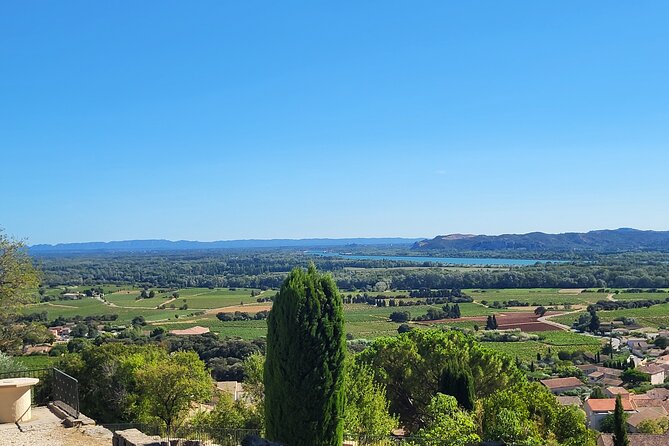
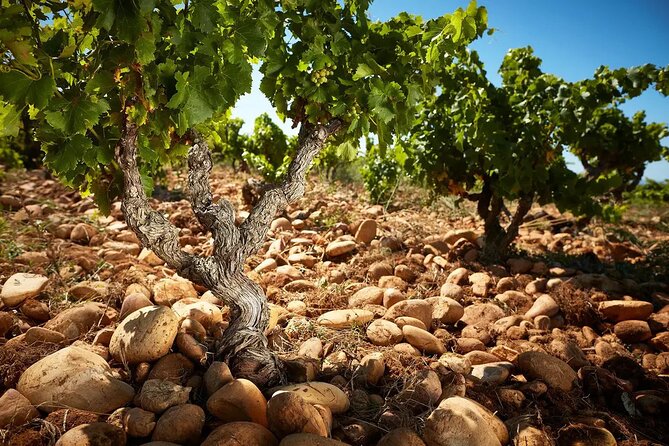
Châteauneuf-du-Pape isn’t just a famous label. It’s a place with dry, sun-baked stony and sandy soils and scrubby Mediterranean vegetation. That matters because it’s part of why the wines feel distinct here: the vines grow in a world that’s hard to farm but perfect for grapes to struggle, focus, and concentrate.
You’ll spend about 2 hours in this part of the day, and the plan is set up like a proper introduction. Expect vineyard viewpoints, a guided explanation of what makes the area tick, and time for tasting. You’re not just being shown a brochure view.
What you’ll learn while wine tasting
The tour’s wine piece stands out because it’s not only about which wine is “good.” The best guides use tastings to teach you how to notice. From the way this tour is described, you can expect guidance on what you’re seeing in the glass and what to connect back to the vines and the region.
A few reviews also mention that you’ll hear from people with real expertise during the winery time, including talk around growing practices. Even if you don’t consider yourself a wine person, this kind of explanation helps you turn tasting into understanding instead of just sampling.
Admission note
The Châteauneuf-du-Pape stop lists admission ticket free, which is great for value. That means you’re not paying extra on your end just to be there. (Any purchase of wine is up to you.)
Two winery stops: the secret to why the afternoon works
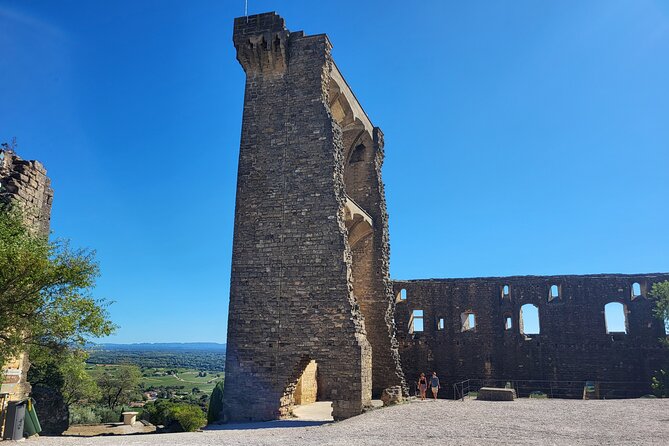
This tour’s structure is built around more than one tasting experience. Reviews mention tastings at two different vineyard/winery stops, including an additional visit at a wine producer site. That matters because you get contrast: two places with similar regional identity, but different approaches and details.
In plain terms, this is how you avoid the “same tasting twice” problem. One stop can be more about the story and setting; another can shift to the winemaker’s process and what they pay attention to. For many people, that’s what makes the afternoon feel complete without being exhausting.
Pace and comfort
The group size is kept small (max 8), and that changes the tone. You can ask questions without fighting for air between strangers. You also tend to move as a unit, so you’re not waiting for someone to finish a purchase decision while the group steams ahead.
Also, air-conditioned vehicle is included. You’ll likely appreciate that once you’re traveling through the hot months.
Bring your tasting strategy
Since lunch is not included, plan for an afternoon where you don’t arrive hungry and hoping tastings replace meals. If you’re someone who gets woozy with wine, eat something before you meet. If you’re a slow drinker, that’s fine too. Small groups usually help you keep your rhythm.
Pont du Gard: Roman engineering you can actually walk into
Then you shift gears to a Roman monument. Pont du Gard is a UNESCO-listed World Heritage Site and it’s famous for being the highest Roman bridge in the world. Even if you’ve seen photos, seeing it in person lands differently because the scale is real and the stone is older than most of the buildings you’ve been staring at all trip.
You’ll get about 1 hour at Pont du Gard. That time is enough to slow down. Reviews specifically mention taking a walk and enjoying the site in the late day light, sometimes referenced as evening sun or sunset timing.
Why the walk time matters
Big Roman sites can feel like you’re just circling for the photo. This one gives you a chance to do more. You’re able to walk and take in the aqueduct-in-action vibe, not just admire it from a single vantage point.
If you only do one Roman site near Avignon, this is a strong pick because it’s both famous and tangible. The structure isn’t hidden; it’s a clear statement across the landscape and the river valley.
What to watch for while you’re there
With a good guide, you’ll likely pick up the “how” behind what you’re seeing: why it was built, how it functions, and what it says about Roman infrastructure. Reviews emphasize that the guide connects the monument to broader regional history and ties it back to what you learned earlier in the day.
One practical tip: wear shoes you don’t mind getting dusty. The walking time isn’t huge, but it’s real ground.
Value for money: what you’re paying for at $113.84
At $113.84 per person for roughly 5 hours, you’re paying for three things that matter: transport, guided interpretation, and paid access where needed.
Here’s the value breakdown based on what’s included:
- Air-conditioned vehicle (included)
- Pont du Gard admission included (1-hour stop)
- Guided time that links Châteauneuf-du-Pape tastings with the Roman site
What’s not included:
- Lunch (so plan food separately)
Is it expensive? It can be, depending on what you compare it to. But if you want both wine country and one major Roman landmark in a single afternoon, this saves you the hassle of arranging transport and coordinating timing yourself. The small group size also nudges the experience toward “guided trip” rather than “bus tour with sound.”
Comfort details that show up in real life
A couple of reviews mention thoughtful touches during heatwaves, including cold water. I can’t promise that every group gets extras, but it tells you the operator pays attention to day-to-day comfort. Bring your own water bottle if you want zero surprises, but it’s nice to know the guide mindset includes practical care.
Who this tour fits best (and who might feel cramped)
This tour is a great match if:
- You want a wine-and-history afternoon with minimal planning
- You like small groups where questions are actually possible
- You want Châteauneuf-du-Pape plus Pont du Gard without switching multiple tickets and schedules
It might feel less ideal if:
- You hate driving time and prefer a wine-only day
- You want a long, slow meal-focused Provence outing (lunch isn’t included)
- You’re very sensitive to motion while tasting (eat first, sip slowly, and tell your guide)
The comments about “a long day” when combining both major stops are your clue. This is not a two-hour sightseeing stroll. It’s a structured afternoon with transport between two very distinct experiences.
Guide factor: Gordana’s style and why people remember it
This experience is offered through Provence with Gordana, and many accounts focus on Gordana’s energy, storytelling, and ability to connect wine and local history. People describe her as upbeat and personable, with deep understanding of both the Châteauneuf-du-Pape area and Roman sites like Pont du Gard.
That’s the intangible part that often separates “tasted some wine” from “I learned something I’ll use later.” When a guide explains how you’re supposed to look for differences, the tastings become more satisfying, even if you only drink a glass or two.
You might also encounter a different guide name in the schedule, but the consistent theme is the same: you’re not getting a silent driver and a stopwatch. You’re getting interpretation.
Should you book Roman Heritage & Wine Legacy?
Yes, if you want a compact afternoon that hits two big regions near Avignon: Rhône wine culture and a top Roman landmark. The Pont du Gard stop alone is worth building around, and the Châteauneuf-du-Pape tastings turn it into more than sightseeing.
I’d especially book if:
- You like guided storytelling
- You’re comfortable with a bit of driving for a lot of payoff
- You want a small group format (max 8)
I’d pause or ask questions if:
- You’re planning around a tight schedule and don’t want much road time
- You expect lunch to be provided (it isn’t)
- You prefer purely wine-focused afternoons
If you’re coming in peak season, note that this tour is commonly booked in advance (often about two months out on average). Locking it early also gives you better choice of departure dates.
FAQ
How long is the tour?
It runs for about 5 hours.
Where do I meet the tour?
You meet at the Office de Tourisme d’Avignon, 41 Cr Jean Jaurès, 84000 Avignon, France.
What time does the tour start?
The start time is 2:30 pm.
Is the tour offered in English?
Yes. The tour is offered in English.
How many people are in the group?
The tour has a maximum group size of 8 travelers.
What’s included in the price, and is lunch provided?
Air-conditioned vehicle transport is included, and Pont du Gard admission is included. Lunch is not included.
Is Pont du Gard admission ticket included?
Yes, the Pont du Gard stop lists admission ticket as included.
Can I bring a service animal and is the meeting point near public transportation?
Service animals are allowed, and the meeting point is near public transportation.