REVIEW · TBILISI
Sacred Sites and Ancient Wonders: Jvari, Mtskheta and Uplistsikhe
Book on Viator →Operated by BB Georgia Travel · Bookable on Viator
Georgia packs a lot into one day. I like how this route links Jvari Monastery hill views with the Svetitskhoveli Cathedral UNESCO site, all in a single, efficient drive out of Tbilisi. I also enjoy the human scale of the stops, from Georgian Orthodox faith at Mtskheta to big, story-heavy history at Gori—plus you may get guides like Irakli, who’s praised for smooth communication and good storytelling.
One thing to factor in: two of the main sites charge entrance fees, and lunch isn’t included, so plan your budget and food breaks accordingly.
In This Review
- Key highlights that make this tour work
- A Hilltop Start at Jvari Monastery (Mtskheta views first)
- Svetitskhoveli Cathedral in Mtskheta: UNESCO status and royal meaning
- Gori and the Stalin Museum: personal story inside political power
- Uplistsikhe Cave City on the old Silk Road route
- Price and value: what you’re paying for (and what to budget)
- Timing, comfort, and how the guides shape the day
- Who should book this Sacred Sites and Ancient Wonders day
- Should you book this tour?
- FAQ
- Which parts of the tour are free to enter?
- What entrance fees are not included?
- How long is the tour and when does it start?
- Is lunch or food included?
- Does the tour include hotel pickup and drop-off?
- What is the cancellation policy?
Key highlights that make this tour work
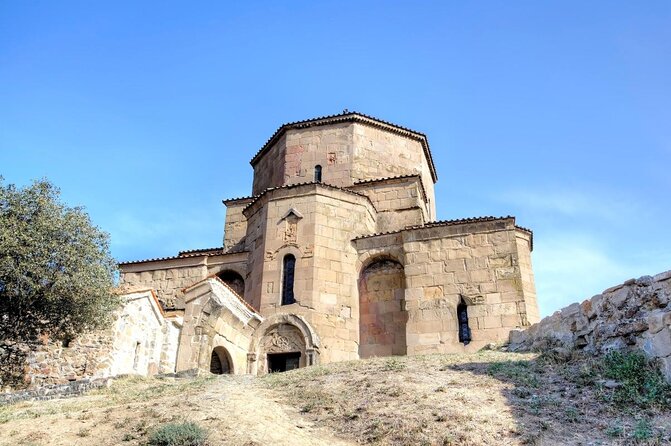
- Jvari’s hilltop perspective: the monastery’s elevated setting gives you a clear view of the Mtskheta area and the confluence of rivers.
- Svetitskhoveli’s UNESCO gravitas: a cathedral tied to royal coronations/burials and the belief that Christ’s robe is located beneath it.
- Gori’s Stalin Museum: an hour in the birthplace home where you can also see his armored train.
- Uplistsikhe Cave City: a rock-hewn complex that was strategically placed on the old Silk Road.
- Private vehicle with hotel pickup: you’re not wrestling public transport for a day of timed cultural stops.
- Simple add-on tickets: only the Stalin Museum and Uplistsikhe require paid entrance fees.
A Hilltop Start at Jvari Monastery (Mtskheta views first)
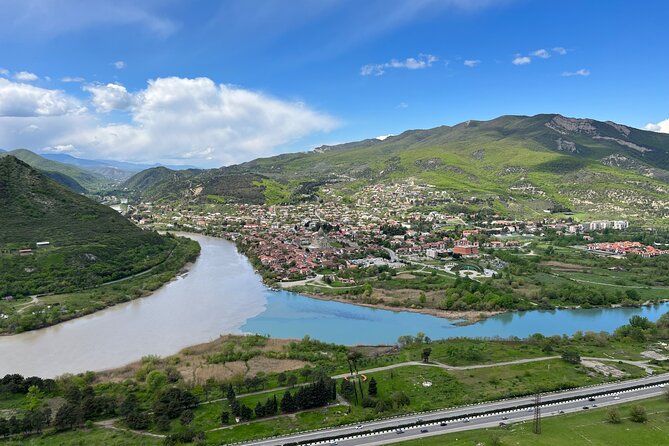
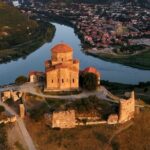
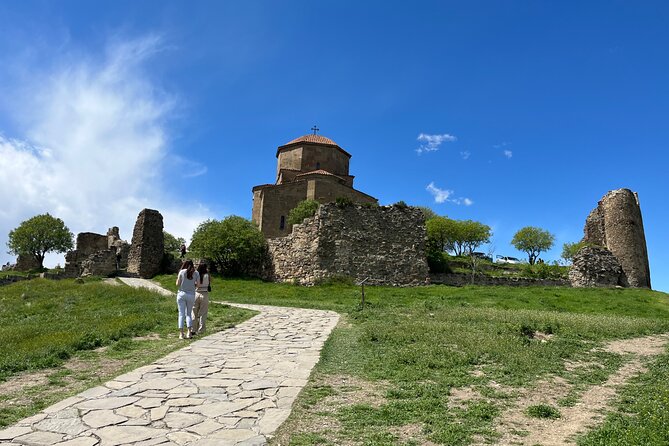
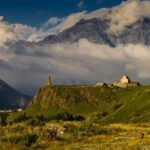
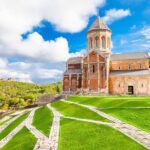
Jvari Monastery is the kind of place that makes the drive feel worth it right away. It sits above the Mtskheta area, and the views are the point. You’ll see the wider geography around the Aragvi–Mtkvari meeting place, which helps you understand why this region became such a crossroads of people, power, and trade.
This stop is short—about 30 minutes—so don’t treat it like a long linger-and-scan session. Instead, think of it as a quick orientation moment. If you arrive curious about why Georgians built so many holy sites on prominent ground, Jvari gives you the answer in one glance.
It’s also a good reset for your day: after the pickup and the ride, you get fresh air, a clear vantage point, and a calm religious setting. Admission here is free, which means you can focus on the experience rather than check your wallet every time you step through a gate.
The only drawback is pacing: if you’re the type who wants a slow, photo-heavy 90-minute monastery visit, you may wish the time were longer. But as the first stop on a seven-hour day, that brevity keeps the rest of the route moving smoothly.
You can also read our reviews of more tours and experiences in Tbilisi.
Svetitskhoveli Cathedral in Mtskheta: UNESCO status and royal meaning
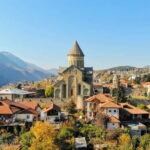
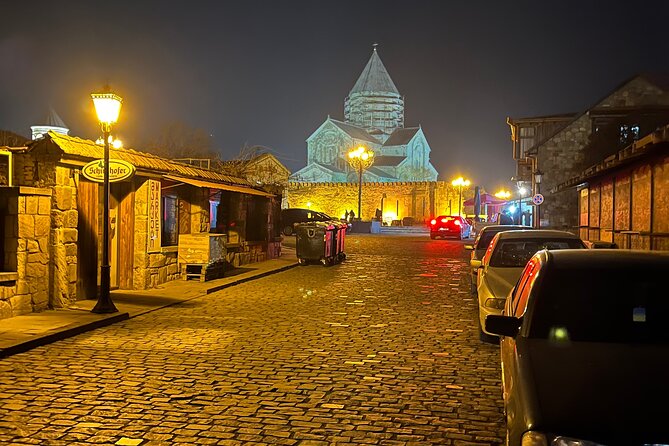
Mtskheta is one of Georgia’s key historic centers, and you feel it most at Svetitskhoveli Cathedral. This UNESCO World Heritage site connects you to a long story: Mtskheta was founded in the 5th century BC, served as the capital of the early Georgian Kingdom of Iberia from the 3rd century BC to the 5th century AD, and later became the coronation and burial place for most Georgian kings even after the political center shifted to Tbilisi.
That royal layer matters because Svetitskhoveli isn’t just a pretty building. It’s described as a masterpiece of the Early Middle Ages, and it carries a major belief tied to the sacred. The cathedral is recognized in part because Christ’s robe is believed to lie beneath it. Whether you arrive as a believer, a history fan, or a curious observer, that detail gives you a different lens for looking at the structure and the setting around it.
You’ll have about an hour here, with free admission. For most people, that’s enough time to enter, look for the most important features, and take in the mood without feeling rushed to the next stop. The cathedral also works well as a contrast to Jvari: same region, but different vibe. Jvari is dramatic and exposed; Svetitskhoveli feels grounded and central.
If you have limited time in Georgia and you want one UNESCO draw that’s clearly tied to Georgian identity, this is a smart anchor. The practical tip is to pace your photos early—inside and around cathedrals, light can change fast and you don’t want to burn your hour on one corner.
Gori and the Stalin Museum: personal story inside political power
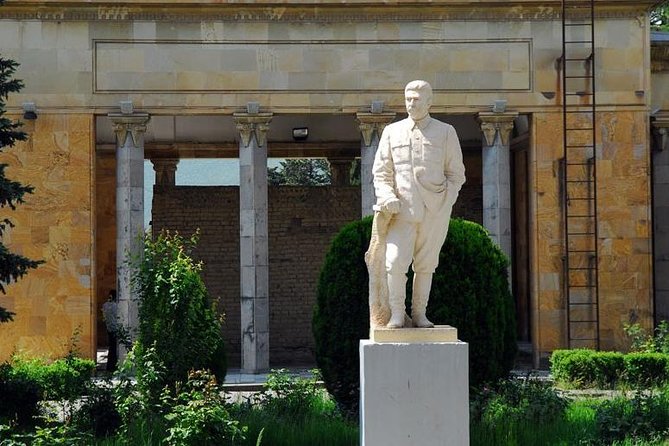
Next up is Gori, and with it, the Stalin Museum. If you’re hoping for a soft, atmospheric museum stop, you might not get that. This is history with sharp edges, centered on the Soviet leader’s origins. The museum is set in the house where Stalin was born and grew up, and it also includes a look at his armored train.
You get about an hour here, and the entrance fee isn’t included. So it’s worth mentally labeling this as an add-on: you’re paying to see the material and follow the narrative, not just to walk past exhibits.
The value of this stop isn’t just name recognition. It gives you context for how a place can become globally famous through a single person—and how museum presentation can turn political mythology into artifacts you can actually see. It’s also a reminder that Georgia’s 20th-century history doesn’t sit in a separate box from everything else you’re learning today.
A consideration: if Soviet-era history makes you uncomfortable or you’re sensitive to heavy political topics, you can feel that tension here. Still, it’s an hour, not a full day, and the rest of the tour returns you to sacred and archaeological sites that balance the mood.
Uplistsikhe Cave City on the old Silk Road route
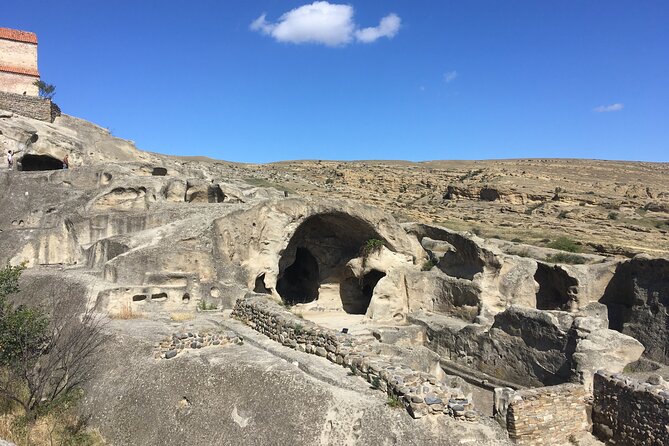
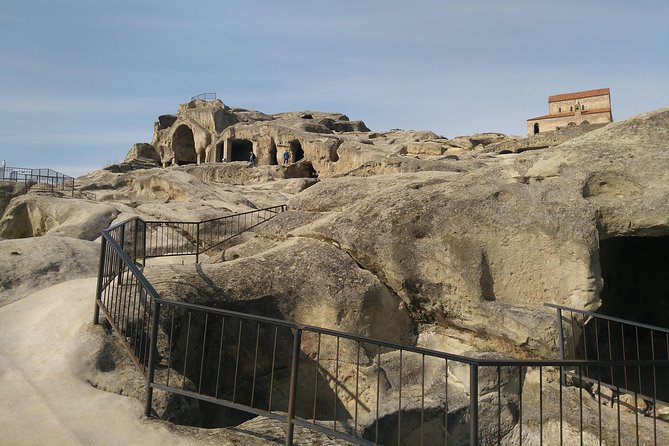
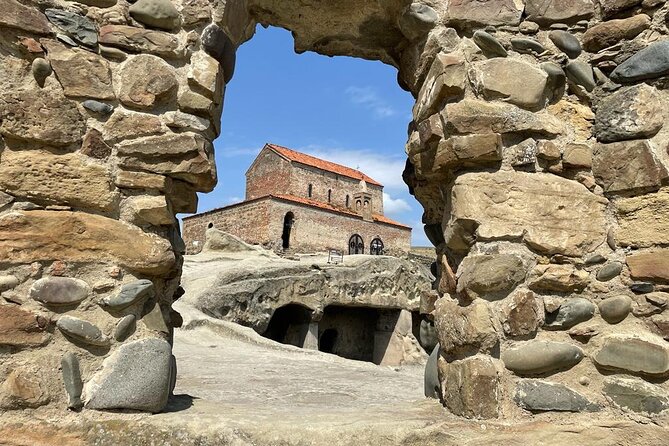
After Gori, the tour shifts from museums back into ancient space with Uplistsikhe, described as a Fortress of the Lord. This is an extraordinary rock-hewn site—an ancient city carved into stone, directly on the path of the old Silk Road.
The scale is part of why I think people remember it. At its peak of prosperity, the city had a population around 20,000. Even if you only see portions on your visit, that detail helps you imagine Uplistsikhe as a working hub, not just an isolated set of rooms.
You’ll spend about an hour here. Like the Stalin Museum, entrance fees aren’t included, so plan for the extra cost. But the fee makes sense in a way: you’re paying to access a complex site that’s essentially built into the earth. It’s also a stop that tends to feel different from the “typical” stone monument. You’re walking through carved spaces that were shaped for daily life, commerce, and defense.
One practical note: because it’s rock-hewn, you’ll want comfortable shoes and a little extra patience for uneven ground and stairs. If your legs are already tired from driving and earlier walking, treat this as a steady pace stop. Don’t rush; the value is in moving slowly enough to notice how the city is laid out.
This is also a great contrast with Mtskheta. You’re seeing Georgian history from a different angle: not coronations and cathedral tradition, but trade routes, strategic positioning, and the everyday imprint of a city that served travelers and merchants.
Price and value: what you’re paying for (and what to budget)
The tour price is listed at $100 per person for roughly seven hours. At first glance, that may sound like a lot for just a few stops—but the included pieces change the equation.
You’re getting hotel pickup and drop-off, a private vehicle, and a driver/guide. That matters more than it sounds, especially on a day-trip route that strings together multiple sites across Mtskheta, Gori, and Uplistsikhe. This isn’t a “meet at a station and figure it out” kind of plan. It’s built for one-day convenience from Tbilisi.
Also, tickets aren’t all treated the same. Two major attractions do cost extra: the Stalin Museum (15 GEL) and Uplistsikhe (15 GEL). The monastery and cathedral stops you’ll visit are free. So your real cost is the base price plus those two entrance fees.
If you hate the mental load of planning transport, timing, and where to park, this kind of packaged day can feel like good value. If you love DIY and you’re already comfortable managing your own route, then a tour can feel more expensive. But for most people, the time saved is the big win—you’re not trying to stitch together multiple locations with limited daylight.
One small plus that helps planning: you get a mobile ticket, and there are group discounts noted in the pricing structure. That can make the day more affordable if you’re traveling with friends and booking together.


Timing, comfort, and how the guides shape the day
The tour runs about seven hours and starts at 10:00 am, ending back where you started in Tbilisi. That timing is practical: it’s late enough for a relaxed morning, but early enough that you’re not forced into a long, late-day push.
Because it’s private for your group, the pace can feel calmer than a busy public group. You’re not competing with strangers for the last view at a viewpoint or trying to hear a guide over other chatter.
The guides are a big part of why this day gets such strong feedback. Irakli is specifically praised for being easy to communicate with and for telling lots of stories throughout the day. Davit also gets credit for helping visitors reach their main goal (Gori) while still adding extra context by showing other sights along the way.
That combination—getting to the core sites without feeling dragged—tends to be the difference between a day that feels educational and one that feels like box-checking. With a day trip like this, you want explanations you can actually use while you’re looking at stone and relics, not just facts read at you on the bus.
One more practical point: food and drinks aren’t included. You’ll want to eat before you go or plan snacks for the in-between stretches, especially since you’ll likely have a natural “waiting” rhythm as you move from site to site.
Who should book this Sacred Sites and Ancient Wonders day
This tour is a good match if you want a single day that covers multiple sides of Georgia. You’ll get sacred architecture and regional identity in Mtskheta, political history in Gori, and archaeological atmosphere in Uplistsikhe—without spending days changing hotels or rebuilding plans.
It also suits you if you value structure. You’ll appreciate being picked up, dropped off, and guided across the route. This is the kind of day where a good guide helps you connect the dots quickly—why the sites are where they are, and what they meant to the people who built them.
If you’re very sensitive to heavy political themes, consider whether you’re comfortable with the Stalin Museum portion. If that’s a deal-breaker, you might still enjoy most of the tour, but you’d be losing the tour’s built-in rhythm, since the route is designed around these four major stops.
Finally, if you’re traveling with limited time in Tbilisi, this is one of the more efficient ways to get outside the city and still feel like you covered something meaningful.
Should you book this tour?
I’d book it if you want maximum variety in one day: hilltop monastery views, UNESCO-level cathedral meaning, a focused museum hour in Gori, and a real rock-carved ancient city. The biggest selling point is how the logistics are handled—pickup, private vehicle, and an experienced guide—so you can spend your energy looking and asking questions instead of planning transport.
I’d think twice if you’re on a tight budget once you add the two extra entrance fees and you don’t want to manage food yourself. It’s also not a “slow travel” itinerary. If you like to linger for two hours in every site, choose a different style trip.
If you’re aiming for a well-paced, story-forward day outside Tbilisi, this one makes a lot of sense.
FAQ
Which parts of the tour are free to enter?
Jvari Church/Monastery and Svetitskhoveli Cathedral are listed with free admission tickets.
What entrance fees are not included?
Stalin Museum and Uplistsikhe Cave Town have entrance tickets that cost 15 GEL each and are not included in the tour price.
How long is the tour and when does it start?
The tour runs about 7 hours and starts at 10:00 am.
Is lunch or food included?
Food and drinks, including lunch, are not included.
Does the tour include hotel pickup and drop-off?
Yes. Hotel pick up and hotel drop-off are included.
What is the cancellation policy?
You can cancel for a full refund up to 24 hours before the experience start time, and free cancellation is available.