REVIEW · SARAJEVO
Sarajevo Under Siege: A War History Tour
Book on Viator →Operated by The Globe Balkans · Bookable on Viator
Sarajevo’s siege stories hit fast. This tour is compelling because you get big city views at Bijela Tabija, then you walk the narrow Tunnel of Salvation that helped Sarajevo survive. It’s also emotionally intense, so go in prepared for heavy subject matter.
What I really like is how personal the route feels. You’ll hear stories tied to where people lived and where families were buried, and that kind of detail turns history into something you can picture. The guide also helps you make sense of what you’re seeing, from Ottoman-era strategy to the Bosnia War’s street-level reality.
Value-wise, you’re paying for the transport and a guided timeline in a compact 3-hour format, starting at 1:30 pm near Vijećnica. The tour price is $30.10, but war-tour entrance fees are extra, so budget accordingly.
In This Review
- Key things that make this tour worth your time
- The big picture: why Sarajevo Under Siege works in only ~3 hours
- Stop 1: Bijela Tabija and the view that makes strategy make sense
- Stop 2: Zetra Olympic Hall area and a family story near the bombed maternity hospital
- The drive along Sniper Alley: fear made into a street crossing
- Tunnel of Salvation: the narrow passage that kept Sarajevo alive
- Lukavica and post-war Bosnia: Dayton, entity lines, and graffiti that keeps the argument going
- Vijećnica (Sarajevo City Hall): a building of books lost and a cultural comeback
- Price and logistics: how the money breaks down for a war-history tour
- What kind of traveler should book this?
- When to go and how to prepare
- Should you book Sarajevo Under Siege?
- FAQ
- How long is the Sarajevo Under Siege tour?
- What time does the tour start, and where do I meet?
- Is pickup available?
- Is the tour offered in English?
- Is this a private tour?
- Are entrance fees included in the price?
- What’s included for comfort during the tour?
- What if the weather is bad or you need to cancel?
Key things that make this tour worth your time
- Bijela Tabija’s viewpoint gives you instant geography for the siege story
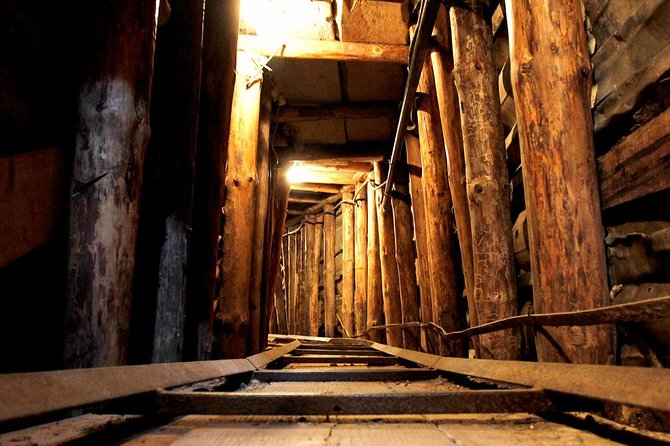
- Tunnel of Salvation walk-through shows how Sarajevo stayed connected in 1993
- Personal war memories are tied to real locations, not vague explanations
- Sniper Alley route turns a modern street into a clear survival narrative
- Post-war place politics around Lukavica helps you understand why memory still divides
The big picture: why Sarajevo Under Siege works in only ~3 hours
Sarajevo can feel like a city of layers: Austro-Hungarian buildings, Ottoman street patterns, and neighborhoods shaped by the 1990s siege. This tour is built to help you read those layers in the right order, without wasting time. You start with views, move into the siege’s daily danger, then go underground into the city’s lifeline, and finish with the places where the war’s memory is still argued.
You also get a private format, so the pacing stays human. Instead of racing through stops, your guide can adjust to questions and the flow of the story. With an air-conditioned vehicle and WiFi on board, the 3-hour timing stays comfortable even if the day is warm.
You can also read our reviews of more tours and experiences in Sarajevo.

Stop 1: Bijela Tabija and the view that makes strategy make sense
The tour begins at Bijela Tabija, the White Fortress. It’s a standout start because it’s not just scenic, it’s explanatory. This viewpoint helps you understand why Sarajevo mattered: from up there, you can grasp how the city’s terrain shapes visibility, movement, and conflict.
Bijela Tabija dates back to the 16th century, and your guide uses that long timeline to connect the dots: Sarajevo’s strategic position isn’t a single-era story. You’ll hear how the city’s location mattered from Ottoman times onward, and then how that same geographic logic played into the Siege of Sarajevo.
Practical note: this segment is about 30 minutes, and there’s no admission fee listed for this stop, so you get value fast. Still, it’s a strong idea to wear good walking shoes and have a light layer. Viewpoints can be windy, and you’ll likely want to linger when the city panorama clicks into place.
Stop 2: Zetra Olympic Hall area and a family story near the bombed maternity hospital
Next you head toward the Zetra Olympic Hall neighborhood area, where the guide lived during the war. This stop is only about 15 minutes, but it’s intense in the way that short stops can be. The point here isn’t sightseeing; it’s grounded memory.
Your guide shares personal details tied to the former maternity hospital that was heavily bombed. Even if you’ve read about shelling before, hearing how childhood life worked under that constant threat lands differently. It’s also why this stop feels ethically careful: you’re not collecting images for a checklist. You’re learning how daily survival reshaped ordinary spaces, including the street where the guide grew up and played.
This stop also includes a visit to where the guide’s father was buried. That level of specificity is rare on tours, and it’s one reason the experience earns a strong recommendation rate. It also means you should be ready to slow down emotionally and let the story sit with you for a moment.
The drive along Sniper Alley: fear made into a street crossing
From there, you drive along one of Sarajevo’s most infamous wartime routes: Sniper Alley. The idea is simple but chilling. This main avenue was under constant sniper fire, so even crossing it could decide whether you survived the day.
Standing in the present-day urban setting, it can be hard to picture what the road meant then. Your guide helps by describing the daily routines people faced: moving for water and food, trying to reach safety, and taking risks that weren’t theoretical. It’s the kind of story that makes you look at modern buildings differently, even after you’ve stepped out of the vehicle.
Because it’s a drive through, you can keep your expectations realistic. You’re not doing a long walk here, and you’re not touring a museum room by room. You’re getting a guided transformation of place—turning a familiar city avenue into a survival corridor.
Tunnel of Salvation: the narrow passage that kept Sarajevo alive
Then comes the heart of the tour: Tunnel of Salvation (Tunnel of Hope). This is the stop that most people remember, and it’s easy to see why. The tunnel was dug secretly beneath the airport runway in 1993, connecting the besieged city with the outside world.
You’ll walk through a section of the original tunnel, which instantly changes the scale of what you’re hearing. Instead of thinking about supply lines in theory, you feel how tight, constrained, and physically demanding this lifeline would have been. The visit also includes authentic wartime artifacts and a short documentary about the Siege, so you get both object-based context and storytelling.
Plan for this segment to take about 1 hour 20 minutes. That’s the longest stop, and it deserves the time. If you’re the type who likes to process through visuals, you’ll probably want a little extra attention for the artifacts and the documentary clip, since they anchor the tunnel story in real material details.
One consideration: the tunnel environment can feel close and darker than street level, so if you’re uncomfortable in confined spaces, this is where you should think ahead. The tour is still built to be respectful and manageable, but the setting is what it is.
Lukavica and post-war Bosnia: Dayton, entity lines, and graffiti that keeps the argument going
After the tunnel, you shift from wartime survival to post-war divisions. The tour concludes with a drive through Lukavica, a place that was once part of the front line during the Siege. Today, it belongs to Republika Srpska, and your guide explains how Bosnia and Herzegovina was divided into two entities: the Federation of BiH and Republika Srpska.
This is where the tour helps you connect the siege to what came after. The Dayton Peace Agreement reshaped the city and the political reality on the ground. It’s not just a name you’ll hear once—it affects who controls what, how people identify, and what’s visible in public space.
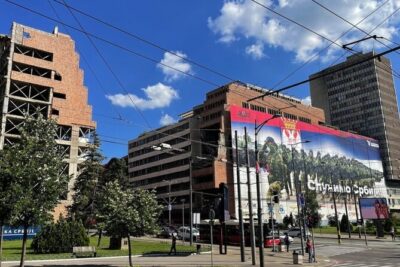
Your guide points out graffiti and murals that glorify wartime figures such as Ratko Mladić. That part of the tour can be uncomfortable, but it’s important. You’re seeing how war memory doesn’t fade evenly; it hardens into symbols, walls, and street-level messaging.
If you want reconciliation narratives, you’ll still get them here, just in a less tidy form. The tour encourages reflection on identity, reconciliation, and how the road to peace is long and uneven.
Vijećnica (Sarajevo City Hall): a building of books lost and a cultural comeback
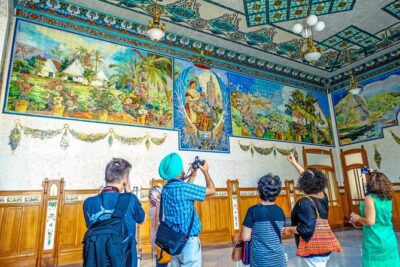
The last major stop is Sarajevo City Hall, known today as Vijećnica. It was built in 1896 during Austro-Hungarian rule, originally serving as the seat of the National Library.
In August 1992, Serbian forces shelled the building, and the library was burned—almost two million books and manuscripts were lost. Your guide shares this tragedy because it’s part of what made Vijećnica become more than architecture. It’s a symbol of destruction and rebirth, and the restoration makes the cultural point visible.
What I like about ending here is that it gives your brain a place to land. You’ve already covered survival and political division. Now you’re in a site that shows how Sarajevo rebuilds what was targeted, including its cultural identity.
If you like to take photos, do it thoughtfully. This isn’t a casual photo stop. Give it a minute, read what you can, and let the guide’s framing shape how you look at the building.
Price and logistics: how the money breaks down for a war-history tour
The tour price is $30.10 per person for about 3 hours. That covers the guided route and private transportation in an air-conditioned vehicle, plus WiFi on board. Pickup is offered from hotels or locations within Sarajevo city center, and pickup begins about 15 minutes before the 1:30 pm start.
Entrance fees are not included. The operator lists war-tour entrance fees of €10.25 per adult and €5.25 per student. The itinerary also marks some stops as admission ticket free, so you’ll want to treat the entrance fee as a separate budget line for the war-related sites the operator charges for. It’s a small detail on paper, but it helps avoid surprise.
Is it good value? For Sarajevo, yes—because you’re getting a guided understanding of multiple key locations in a tight timeline, with personal storytelling and transport. If you tried to piece this together yourself, you’d spend time figuring out routes and missing the kind of connective tissue your guide provides.
If you’re traveling on a schedule, bring a little flexibility anyway. This tour can be emotionally heavy, and you’ll likely want those few extra seconds at certain stops.
What kind of traveler should book this?
This tour fits best if you want a clear, well-paced understanding of the Siege of Sarajevo without hopping between too many unrelated sights.
It’s also a good choice if you like guides who connect stories to exact places. The route includes personal memories tied to a neighborhood, a burial site, and a street—plus major historical infrastructure like the Tunnel of Salvation. That makes it more than a standard city tour.
If your travel style is mainly about light entertainment or quick photo spots, you might find the subject matter heavy. The tour is respectful, but it’s still about shelling, fear, and loss.
When to go and how to prepare
The tour requires good weather. If weather is poor, you’ll be offered a different date or a full refund. That means you should check the forecast a day ahead and be ready to adjust plans.
Bring comfortable shoes for uneven surfaces and short walks, and bring layers for the viewpoint and the tunnel environment. Since it’s 3 hours with a mix of vehicle time and walking, water is smart too.
You’ll use a mobile ticket, and the tour is offered in English. If you need a different language, verify at booking, because the provided details specify English.
Should you book Sarajevo Under Siege?
Book it if you want a focused, story-driven route through key siege sites: the White Fortress viewpoint, the Tunnel of Salvation, the wartime street context of Sniper Alley, and a finish at Vijećnica that connects the war to cultural loss and recovery. The private format and short, deliberate stop timing make it feel personal without turning it into a marathon.
Skip or reconsider if emotional intensity is hard for you. This is a war-history tour with direct, personal context and visible reminders of political memory. It’s meaningful, but it’s not a casual afternoon.
If you do book, you’ll get the best experience by treating it like a guided timeline, not a checklist. Ask questions when they come up, and take a moment at the stops that feel quiet. That’s where the story sticks.
FAQ
How long is the Sarajevo Under Siege tour?
It lasts about 3 hours (approximately).
What time does the tour start, and where do I meet?
The start time is 1:30 pm. The meeting point is Vijećnica (VC5M+8GF, Hafiza Ibrahima Trebinjca 10, Sarajevo 71000).
Is pickup available?
Yes. Pickup is offered from any hotel or location within Sarajevo city center. Pickup starts about 15 minutes before the tour begins. If you’re staying outside the city center, you can make additional arrangements by contacting in advance.
Is the tour offered in English?
Yes, it’s offered in English.
Is this a private tour?
Yes. It’s private, meaning only your group participates.
Are entrance fees included in the price?
Entrance fees for the war tour in Sarajevo are not included. Adults are listed at €10.25 per person, and students are listed at €5.25 per person.
What’s included for comfort during the tour?
You get an air-conditioned vehicle, private transportation, and WiFi on board. You’ll also receive a mobile ticket.
What if the weather is bad or you need to cancel?
The tour requires good weather. If it’s canceled due to poor weather, you’ll be offered a different date or a full refund. Cancellation is free up to 24 hours in advance for a full refund. If the minimum number of travelers isn’t met, you’ll be offered a different date/experience or a full refund.