REVIEW · SIBIU
SB02-Half day Surroundings of Sibiu:Saxon Heritage &Villages
Book on GetYourGuide →Operated by Carpathian Travel Center · Bookable on GetYourGuide
Four hours in the Carpathians and Saxon forts. This half-day drive mixes big mountain road views with two fortified churches that explain how Transylvanian communities used faith as protection. I love the tight pacing—enough time to see, plus breathing room for photos—especially with a Transfăgărășan road trip feel.
My other favorite part is the way the churches come with context: Romanesque origins, later fortifications, and that Saxon village story you can almost read in the stone. One drawback to plan around: weather can change fast in the Făgăraș Mountains, so the Bâlea area may feel wintry or clouded depending on the day.
You’ll ride in an air-conditioned car or van with an English-speaking guide/driver, and you’ll be back in Sibiu by about 16:00. It runs June–October on Monday, Wednesday, Friday, and Saturday, so it’s perfect if you only have a short window in town.
In This Review
- Key things I’d watch for before you go
- Transfăgărășan Road: DN7C, military roots, and road-trip energy
- Bâlea Waterfall and Bâlea Lake: your timed window for mountain air
- Cisnădie Fortified Church: Saxon defense, clock tower, and stone “fortitude”
- Cisnădioara and the Michelsberg Fortress: a calmer hilltop with older Romanesque roots
- Saxon fortified churches: what you’re really learning in this short tour
- Timing and pacing: why the half-day format works (and where it can pinch)
- Transportation, guide style, and what you’ll notice from the ride
- Weather reality in June–October: plan for cold at Bâlea even when it’s warm below
- Price and value: is $88 per person fair for this mix?
- Who should book this Sibiu half-day tour?
- Should you book SB02: Half day Surroundings of Sibiu?
- FAQ
- What time does the tour depart from Sibiu?
- How long is the experience?
- Which days does it operate?
- What are the main stops?
- Is entrance fees included?
- What do I need to bring?
- Are there any restrictions on the tour?
- Is it suitable for solo travelers?
Key things I’d watch for before you go
- Transfăgărășan Road (DN7C): famous mountain driving built for strategy, now for scenery
- Bâlea Lake free time: a real pause for views, photos, and simple mountain wandering
- Cisnădie Fortified Church: medieval defense towers plus an early mechanical clock
- Cisnădioara / Michelsberg Fortress: older Romanesque church on a hill with commanding views
- Private, English-guided pace: enough structure to learn, not so fast you feel rushed
Transfăgărășan Road: DN7C, military roots, and road-trip energy
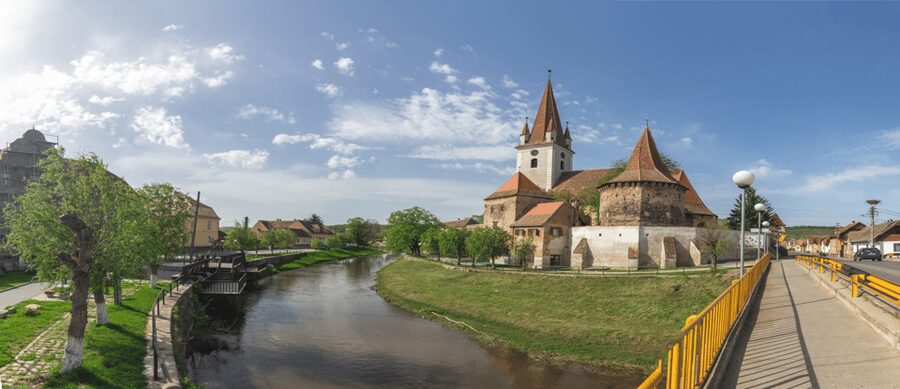
The star of this tour is the drive itself: the Transfăgărășan Road (also shown as DN7C) cuts through the Făgăraș Mountains, the highest range in the Carpathians. It’s a “now-famous, then-functional” kind of road—constructed in the 1970s as a strategic military route—so it has that purposeful, engineered feel.
Even if you’re not a road-drive person, you’ll get why locals and visitors talk about it. You’re on a highway designed to push through mountain terrain, which means you get repeated stretches of open visibility and sudden changes in weather and light.
Bâlea Waterfall and Bâlea Lake: your timed window for mountain air
A big chunk of the tour centers on the Bâlea area, scheduled for about 11:00–12:30. You’ll pass the Bâlea Waterfall area and then get free time at Bâlea Lake, which sits in an alpine-style setting with peaks all around.
This is where the half-day format helps. You don’t just get a quick glance from the bus. You get a window to stop, take photos, walk at your own speed, and soak in how high-mountain lakes feel when the air is crisp.
Practical note: because conditions can be wintry outside summer, I’d dress like you might step out into cold wind. A light layer is often not enough up here, even in the warmer months. If clouds roll in, the lake can go from postcard-bright to moody and gray fast—still beautiful, just different.
Cisnădie Fortified Church: Saxon defense, clock tower, and stone “fortitude”
Next you’ll head to Cisnădie Fortified Church, guided for about an hour. This is one of the classic sights for understanding Saxon heritage in Transylvania, because it’s not just a church—it’s a defensive structure.
Here’s what you’re looking for when you walk around:
- defensive towers and the fortified layout
- the clock tower that includes one of the early mechanical clocks in Transylvania (installed in the 14th century)
- the shift from religious building to protection for the community
The story helps your visit make sense. The church began in the 12th century as a Romanesque basilica, then later received fortifications in the 15th century when communities needed stronger protection. So as you move around, don’t just treat it like architecture—think like a medieval resident. This place wasn’t only for worship; it was part of daily survival.
Cisnădioara and the Michelsberg Fortress: a calmer hilltop with older Romanesque roots
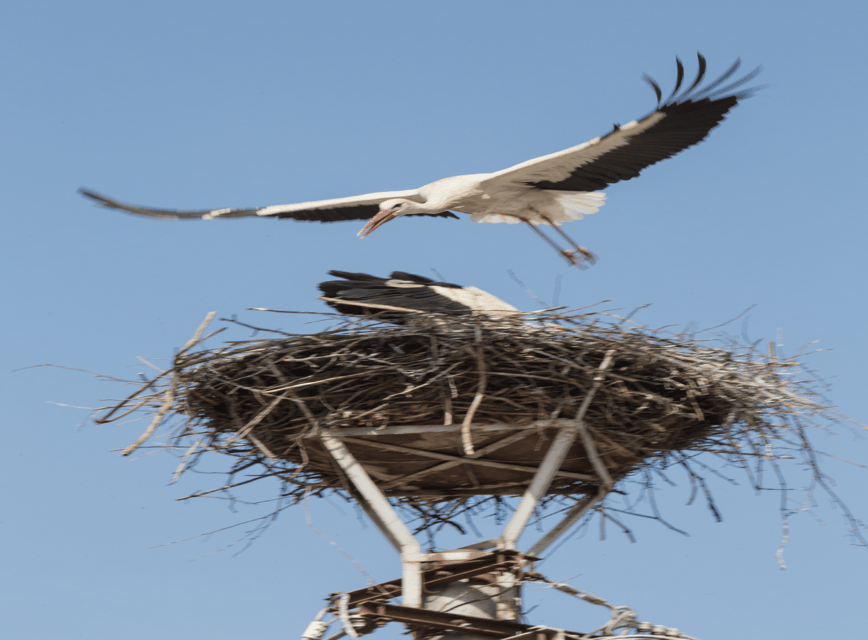
After Cisnădie, you’ll go to Cisnădioara Fortified Church for a shorter stop (about 30 minutes). You’ll see it as Michelsberg Fortress, and it earns its reputation as a quieter, more “you’re standing in the past” experience.
Cisnădioara is described as one of the oldest Romanesque-style churches in Transylvania, built in the 12th century. The church’s stone construction keeps a simple Romanesque feel—sturdy walls, a calm presence, and that hilltop placement that gives you commanding views over the surrounding area.
Because the time here is brief, your best move is to use the stop for two things:
1) take a slow perimeter walk to notice the structure’s defensive logic
2) pause for a view, even if you only have a minute or two
A well-run guide will point out what to look for quickly, so you don’t waste your limited time hunting on your own.
Saxon fortified churches: what you’re really learning in this short tour
The churches are the heart of the experience, but the real value is the explanation you’ll carry back to Sibiu. In this region, Saxon heritage shows up not only in buildings, but in the way communities designed daily life around risk.
You’ll likely connect these themes:
- religion + defense in one structure (not two separate worlds)
- how Romanesque churches could later be fortified to respond to threats
- why the Saxon story is tied to the concept of fortified villages, not just “old buildings”
In plain terms: the architecture teaches history without needing a lecture hall. You can see how a community would use height, walls, and tower forms to protect people during tense moments.
Timing and pacing: why the half-day format works (and where it can pinch)
This tour is built to fit a half-day without making you feel like you’re watching the countryside through glass. Departure is at 09:00 from Sala Thalia Hall parking. Then the day flows as a sequence of “drive + stop + guided time + quick return,” with the return back to Sibiu around 16:00.
The schedule gives you real value because it avoids the two common tour problems:
- too much driving with no meaningful stops
- too many stops with no time to look
Still, you should know where time can feel tight. Cisnădioara is only about 30 minutes, so it’s not a “wander and relax” stop. If you want to linger, prioritize Cisnădie and Bâlea first, then treat Cisnădioara as a focused hit.
Transportation, guide style, and what you’ll notice from the ride
You travel in a modern air-conditioned car or van, which matters on a long scenic route where weather can swing. The guide and driver are English-speaking, and the experience is set up for a private group. That usually means you can ask questions and get answers in context, not just a standard script.
From past guests, certain guide styles come up again and again: guides like Mihail/Mihai, Ilie, Alex, and Marius are praised for being friendly, flexible, and good at answering broader questions about Romanian life, not only monuments. One guest even highlighted explanations that connected history to everyday topics like environment and the wider Romanian economy. Another praised a more relaxed, humorous way of teaching while still keeping the drive safe and smooth.
That matters for you because the route isn’t just scenic. It’s a chance to understand why these villages and roads exist where they do.
Weather reality in June–October: plan for cold at Bâlea even when it’s warm below
This runs June through October, so it’s not strictly winter-tour territory. But the Făgăraș Mountains can still feel cold and wintry at altitude. One reason I’d pack layers is simple: even a short walk near an alpine lake can turn your body from comfortable to chilly fast.
What you can do with that: treat your expectations as flexible. If the views are crystal clear, you’ll get the classic mountain-lake photo look. If the weather turns, you’ll get a different atmosphere—still dramatic, just less “summer postcard.”
If you’re the type who hates weather uncertainty, consider that mountain roads are affected by conditions. The tour company schedules these days in advance, but nature always keeps the final word.
Price and value: is $88 per person fair for this mix?
At $88 per person for about 4 hours, you’re paying for three things at once: transportation, an English guide, and the structure that stitches together distant sights into one smooth half-day. Because the tour includes parking taxes and road taxes—and gives you a map with Romania—you aren’t left sorting out little logistical costs.
What’s not included is also important for budgeting:
- entrance fees (if any are charged)
- photo fees (if charged)
- food and drinks
So I think the value depends on how you travel. If you want to see Transfăgărășan Road and two fortified churches in one morning, having a guide and driver saves you time and decision stress. If you only want one church and a quick drive, you might prefer a shorter, cheaper option. But for a first visit to Sibiu County, this is a balanced way to get both scenery and heritage without eating up a full day.
Who should book this Sibiu half-day tour?
This fits best if you:
- have a short stay in Sibiu and want more than just the city sites
- like learning what you’re seeing, not only taking pictures
- want Saxon heritage explained through real buildings
- enjoy scenic drives and don’t mind mountain road conditions
It may be less ideal if you:
- need a lot of time at each stop (Cisnădioara is brief)
- strongly dislike cold or wind outdoors
- have very limited mobility (the data doesn’t list accessibility details, so you’ll want to ask questions before going)
Also, the tour is described as private group, with a minimum of 2 participants required for guaranteed departure. If you’re solo, you’ll want to contact the provider to confirm availability.
Should you book SB02: Half day Surroundings of Sibiu?
I’d book this if you want a smart half-day plan that gives you three “Romania-feels-right-now” moments: the Transfăgărășan drive, Bâlea Lake time, and two fortified churches that tell the Saxon story in a way you can see. The $88 price feels reasonable because it packages transport and guided interpretation for a tight schedule.
If you’re flexible about weather and you bring the right layers for altitude, this tour does what a good short excursion should: it gives you more understanding per hour, not just more driving.
FAQ
What time does the tour depart from Sibiu?
It departs at 09:00 from Sala Thalia Hall parking in Sibiu.
How long is the experience?
The duration is 4 hours.
Which days does it operate?
It runs Monday, Wednesday, Friday, and Saturday during June through October.
What are the main stops?
You’ll visit the Transfăgărășan Road with Bâlea Waterfall and Bâlea Lake time, then Cisnădie Fortified Church, and Cisnădioara Fortified Church (Michelsberg Fortress).
Is entrance fees included?
No. Entrance fees are not included (and photo fees are not listed as included either).
What do I need to bring?
Bring your passport or ID card.
Are there any restrictions on the tour?
Smoking is not allowed in the vehicle, and alcohol and drugs are not allowed.
Is it suitable for solo travelers?
Solo travelers are encouraged to contact for availability. The tour notes a minimum of 2 participants is required for guaranteed departure.