REVIEW · NEW DELHI
5-Day Golden Triangle Tour with Cultural Heritage-Taj & More
Book on Viator →Operated by Magic Carpet Tours · Bookable on Viator
Marble, forts, spices, and calm stops. This 5-day Golden Triangle route strings together major Mughal sights and Rajput power spots, with private A/C transport and a guide who can answer your questions. In the feedback, specific guide names like Ali, Aman, Raj, and Mehraj come up again and again for attention and good explanations.
I like the mix of big monuments with quieter stops like Gurudwara Bangla Sahib and the spice-soaked lanes of Khari Baoli. I also like that you get door-to-door pickup, light snacks and bottled water in the car, and tickets for many key sights. The main drawback: this is a lot of movement in five days, so you should be fine with long driving stretches between Delhi, Agra, and Jaipur.
Private, air-conditioned door-to-door transport that keeps the trip comfortable between stops
Guide-led visits that focus on meaning, not just photos
A real Delhi flavor mix: worship at Gurudwara Bangla Sahib and shopping at Khari Baoli
Agra to Jaipur momentum with Taj Mahal, Agra Fort, and Fatehpur Sikri built into the flow
Jaipur with contrasts: forts and observatory by day, Chokhi Dhani culture at night
In This Review
- Why this Golden Triangle feels different than a typical sweep of sights
- Price and value: what $325 gets you (and what it doesn’t)
- Day 1 in Delhi: Gurudwara peace, Khari Baoli spices, and Mughal-era gravitas
- Day 2 in Agra: Taj Mahal spotlight, Agra Fort power, and Fatehpur Sikri’s quiet scale
- Moving to Jaipur after Fatehpur Sikri: why the transition time helps
- Day 3 Jaipur: Jaigarh Fort for military architecture, Jal Mahal for stillness, Chokhi Dhani for culture
- Day 4 Jaipur: City Palace, Jantar Mantar, and Hawa Mahal’s window maze
- Day 5 wrap-up: back to Delhi or Jaipur Airport drop-off
- What you’ll like most if you choose this tour
- A few things to consider before you book
- Should you book this 5-day Golden Triangle with Magic Carpet Tours?
- FAQ
- How long is the tour?
- Where does the tour start and where does it end?
- Is pickup from my accommodation included?
- Is the transportation private and air-conditioned?
- Are meals and accommodation included?
- Are admission tickets included for the main sights?
- Is cancellation free if I change my mind?
Why this Golden Triangle feels different than a typical sweep of sights
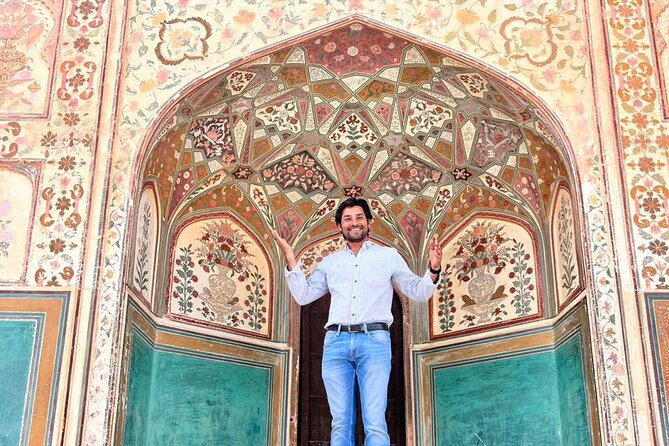
Golden Triangle tours can turn into a checklist sprint. This one is built more like a guided story: faith and daily life in Delhi, imperial marble and fortress walls in Agra, then Rajput architecture and science in Jaipur. You still hit the headline landmarks, but the order helps you make sense of the big themes.
What also helps is the way the day is organized around short site blocks. You’re not just stuck in one place for hours. Instead, you bounce between stop types—temples, markets, memorials, tombs—so your brain gets breaks from the same visual style.
If you’re the type who likes context (why a building looks like it does, what a place represents), the guide quality matters. The names that pop up most—Ali, Aman, Raj, and Mehraj—are repeatedly linked to patient answering and an engaging tone. That’s a strong signal that the experience depends on more than the monuments alone.
Price and value: what $325 gets you (and what it doesn’t)
At $325 per person for roughly five days, the price is fairly straightforward because a lot of the expensive moving parts are bundled. You’re getting a private tour with air-conditioned vehicle comfort, in-car bottled water plus light snacks, and the guide-led transport between Delhi and the Agra–Jaipur stretch.
The plan also includes all fees and taxes and a mobile ticket, which usually means fewer handoffs and less last-minute confusion when you’re in-country. Plus, there are group discounts, which can be useful if you’re traveling with friends or family.
But you should plan around what’s not included. Accommodation and meals are not included, so your lodging choice and your food budget will sit outside this tour price. Also, gratuities for guides and drivers aren’t listed as included, so set aside some extra cash if you want to be generous for good service.
If you compare this to piecing together separate tickets, private transfers, and a guide, the value is in reduced friction. You’re paying to spend more time looking and less time coordinating.
You can also read our reviews of more tours and experiences in New Delhi.



Day 1 in Delhi: Gurudwara peace, Khari Baoli spices, and Mughal-era gravitas
Delhi Day 1 is a smart warm-up because it mixes quiet worship, everyday commerce, and then big architectural statements. It’s the kind of day that helps you understand the city isn’t only monuments—it’s living.
Gurudwara Bangla Sahib (30 minutes, admission ticket included)
Start at Gurudwara Bangla Sahib, built in memory of Guru Har Krishan. Even with a short visit, this stop changes the tone. You’re in a space centered on compassion and service, and it makes the later history feel less like a museum display and more like something people still relate to today.
Khari Baoli (30 minutes, admission ticket included)
Then you hit Khari Baoli, described as Asia’s largest spice market. This is where you get a sensory crash course: saffron, cardamom, dried chilies, and that dense market-air you only get when people are actively buying and selling. It’s also a good “reset” before the more formal monuments.
India Gate (15 minutes, admission ticket included)
A quick stop at India Gate gives you a different kind of monument—war memorial energy instead of empire-palace grandeur. The short timing makes it easy to pass through without turning it into a long lecture.
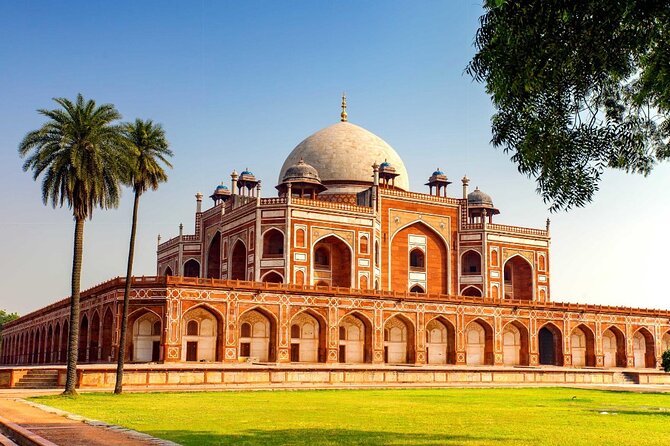
Humayun’s Tomb (1 hour, admission ticket included)
Next is Humayun’s Tomb, a UNESCO World Heritage site in the plan. This matters because it’s your first major Mughal-style anchor on the trip. The blend of Persian and Mughal architecture gives you something visual to hold onto later when you see other Mughal landmarks.
Lotus Temple (30 minutes, admission ticket included)
The Lotus Temple shifts the day again. With its flowerlike design and message of unity and peace, it adds a modern, faith-for-all stop that keeps the route from feeling one-note.
Agra arrival / time in Agra (about 4 hours, admission ticket free)
Day 1 ends with time in Agra. You don’t jump straight into the heaviest monument block on that day, which is actually helpful. You’ll have room to settle before the Taj Mahal and Agra Fort focus.
The main practical note for Day 1: wear comfortable shoes. Delhi’s mix of walking paths and market lanes will feel easier if your feet are ready.
Day 2 in Agra: Taj Mahal spotlight, Agra Fort power, and Fatehpur Sikri’s quiet scale
Agra is where the trip earns its nickname: marble, majesty, and stone that feels like it has stories baked into it.
Taj Mahal (2 hours, admission ticket included)
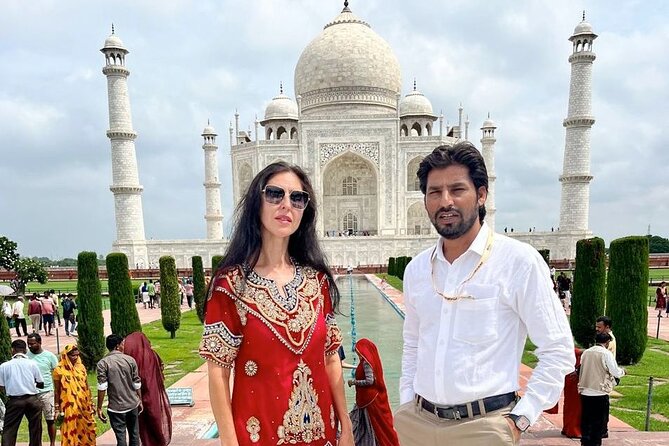
Taj Mahal is presented as a marble symphony of eternal love. You’ll get a full chunk of time here, which is important. With a landmark this famous, the danger is rushing through it like a drive-by. Two hours gives you room to look, pause, and notice how the white marble changes with light.
Agra Fort (1 hour, admission ticket included)
Then you switch from romantic marble to fortress logic at Agra Fort. It’s described as red sandstone and tied to Mughal strength and resilience. This is a good contrast because it shows how imperial power wasn’t only about monuments of devotion—it was also about walls, control, and survival.
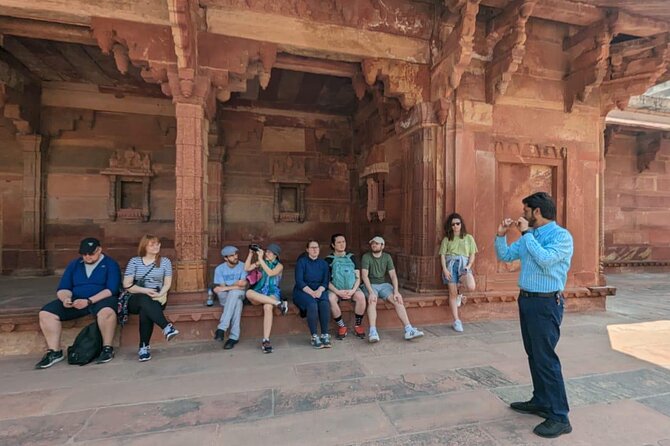
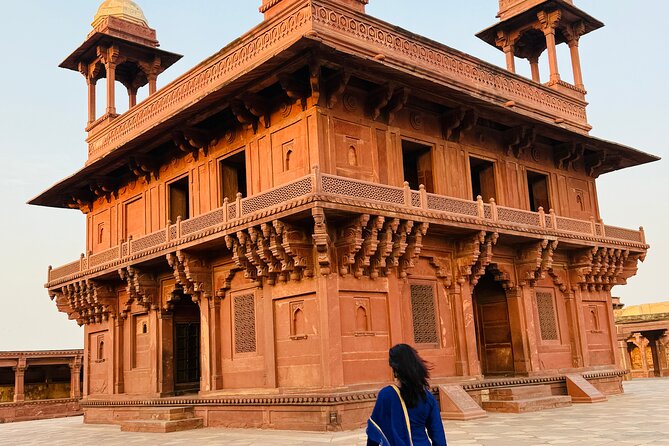
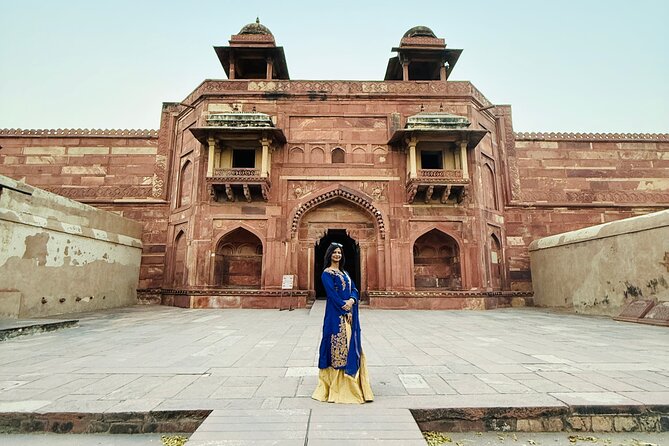
Fatehpur Sikri (2 hours, admission ticket free)
Finally, Fatehpur Sikri comes on Day 2 with its red sandstone “dream city” vibe shaped by Emperor Akbar. The description leans into courtyards and silent arches, which is exactly what you want from this kind of stop: space to feel scale and think about how rulers built for ceremony, administration, and belief all at once.
The key advantage of this sequencing: you’re not doing Taj Mahal in isolation. You see how Agra Fort frames Mughal authority, then Fatehpur Sikri expands the story into another kind of imperial vision.
Moving to Jaipur after Fatehpur Sikri: why the transition time helps
Jaipur is labeled as the Pink City, and that’s not just a color note. The route is built so you arrive with context: Mughal power, then Rajput identity, then the forts and palaces that followed.
Jaipur (about 4 hours, admission ticket free)
When you reach Jaipur, you get time to orient and start feeling the shift in style. Rajput grandeur is described through forts, ornate palaces, and Rajasthani cuisine aromas. Even if you don’t enter every building on day two, having a few hours in the city helps you make the most of the full Jaipur day on Day 4.
If your goal is photos, Jaipur will deliver. If your goal is understanding architecture, the transition matters because it prevents the city from feeling like a random pile of pink walls.
Day 3 Jaipur: Jaigarh Fort for military architecture, Jal Mahal for stillness, Chokhi Dhani for culture
Day 3 is where Jaipur stops being only monuments and becomes a full experience of contrasts.
Jaigarh Fort (2 hours, admission ticket included)
Jaigarh Fort sits atop the Cheel ka Teela (Hill of Eagles). It’s built by Maharaja Jai Singh II in 1726 and described as military architecture designed to safeguard the royal treasury. That detail is huge for how you should look at the fort. Think in terms of defense, logistics, and royal protection—not just pretty views.
Jal Mahal (15 minutes, admission ticket included)
Jal Mahal is floating in Man Sagar Lake. This is the quieter interlude. A short stop is exactly right here because the point isn’t to tour for hours—it’s to take in the watery atmosphere and the visual twist of a palace-like structure appearing to float.
Chokhi Dhani (3 hours, admission ticket included)
Then you move into Chokhi Dhani, presented as a living tapestry of Rajputana culture and rural charm. Expect folk dances, puppet shows, fire performances, and bazaar-style shops. It’s a different kind of “heritage” experience: less about architectural study and more about how culture looks and sounds when it’s performed.
Who Day 3 suits best:
If you like a blend—fort strategy by day and cultural performance at night—this is your day. It’s also a good option if you’re traveling with family members who want something more than stone.




Day 4 Jaipur: City Palace, Jantar Mantar, and Hawa Mahal’s window maze
Day 4 focuses on Jaipur’s big three: the royal seat (City Palace), the science stop (Jantar Mantar), and the iconic façade (Hawa Mahal). Together, they make the city feel like a system, not separate highlights.
City Palace (1 hour, admission ticket included)
City Palace rises from the early 18th century tied to Maharaja Sawai Jai Singh II’s vision. You get ornate halls and sprawling courtyards. Even with a one-hour visit, you can usually get a feel for how royal life functioned—public display, private rooms, and spaces built for ceremony.
Jantar Mantar (1 hour, admission ticket included)
Jantar Mantar is an 18th-century open-air observatory built by Maharaja Sawai Jai Singh II. The main draw is the astronomical focus. If you like the practical side of history—how rulers planned, measured, and built for the sky—this stop can feel surprisingly satisfying.
Hawa Mahal (45 minutes, admission ticket included)
Finally, Hawa Mahal—Palace of Wind—comes with a honeycomb façade and a thousand tiny windows. It was built in 1799 as an extension of the City Palace. This is the one you’ll want to photograph carefully, but also pause in front of and look at as design, not only decoration.
Day 4 pacing tip:
Bring a bit of patience. You’re switching between indoor-feeling palace spaces and then open-air structures and façades. Short visits work best if you don’t expect to absorb every detail. Instead, pick a few features to track: arches at the palace, open-air instruments at Jantar Mantar, and the window pattern at Hawa Mahal.
Day 5 wrap-up: back to Delhi or Jaipur Airport drop-off
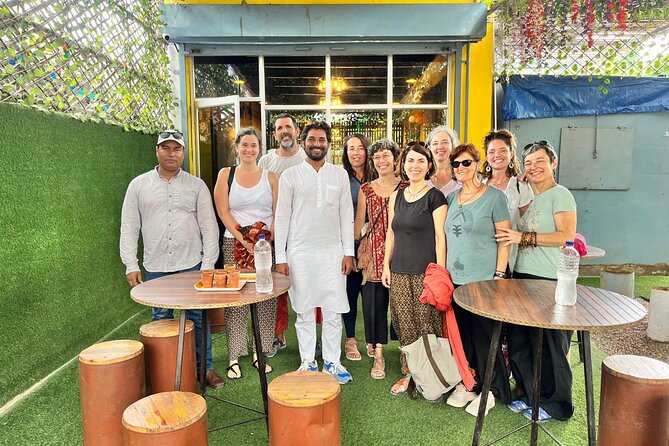
Day 5 is deliberately light: return to New Delhi or a convenient drop-off at Jaipur Airport. There’s no heavy sightseeing block planned, which is a good idea after four full days.
What you can do with this final half-day is simple: reset your energy, handle last-minute shopping, or just keep the day flexible. If you’ve been taking notes and comparing architectural styles, Day 5 is a good moment to mentally connect the dots.
What you’ll like most if you choose this tour
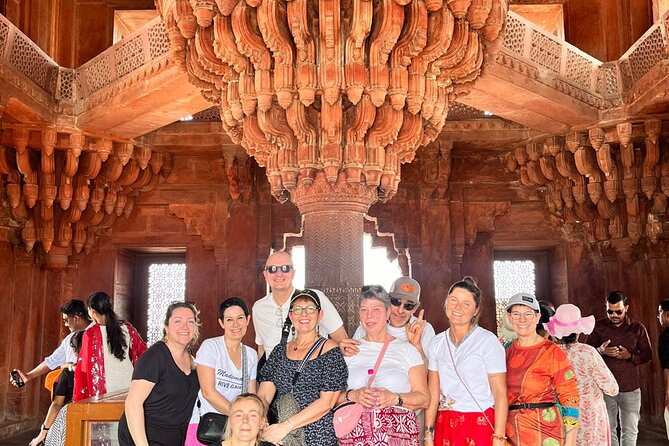
Based on the way this experience is described and the strong guide feedback attached to it, these are the areas to pay attention to.
Guides who answer your questions at your pace
People mention guides like Ali, Aman, Raj, and Mehraj for being attentive and patient. That’s exactly what you want on a fast route through several cities.
A comfort-first transport setup
An air-conditioned private vehicle with bottled water and light snacks can matter more than it sounds—especially on days when you’re shifting locations and the weather can be demanding.
A smart mix of sacred places and imperial monuments
You get Gurudwara Bangla Sahib and Lotus Temple in Delhi, then Mughal tombs and forts, then Rajput military and palace architecture in Jaipur. It’s not just sightseeing; it’s a cultural pattern.
Time at Fatehpur Sikri without turning it into a sprint
Two hours is enough to feel the scale of courtyards and arches rather than only touching the entry points.
A Jaipur day with both architecture and performance
Jaigarh Fort and Hawa Mahal give structure. Chokhi Dhani gives the lived-in feel—dances, puppet shows, fire performances—so the trip doesn’t end as just a camera workout.
A few things to consider before you book
This tour is well-built for people who want guided structure and less planning headache. But it’s not ideal for everyone.
If you dislike long driving days or you want free time to wander without a schedule, the five-day pace may feel tight. Also, since accommodation and meals aren’t included, you’ll want to line those up early so you’re not scrambling once you arrive.
Finally, the tour includes admission tickets for many major stops, but not all sites are marked the same way. You’ll still want to keep an eye on what’s included versus not included so you can budget calmly.
Should you book this 5-day Golden Triangle with Magic Carpet Tours?
I’d book it if you want a guided Golden Triangle with private A/C transport, door-to-door pickup, and a route that mixes Mughal and Rajput culture in a logical order. The strongest draw is the guide experience—names like Ali, Aman, Raj, and Mehraj are consistently praised for attention and patience.
I would skip it if you’re hoping for tons of unstructured downtime, or if you’re planning to rely on the tour price for everything (it doesn’t include lodging or meals). This is a great framework for your trip, not a full vacation package by itself.
FAQ
How long is the tour?
It runs for 5 days (approx.).
Where does the tour start and where does it end?
It starts in New Delhi, and on the last day you either return to Delhi or get a convenient drop-off at Jaipur Airport.
Is pickup from my accommodation included?
Yes, pickup is offered, including door-to-door service from your Delhi accommodation.
Is the transportation private and air-conditioned?
Yes. You’ll travel in a private, air-conditioned vehicle.
Are meals and accommodation included?
No. Accommodation and meals are not included in the tour price.
Are admission tickets included for the main sights?
Many stops list admission tickets as included, while some stops are marked as ticket-free. The plan specifically notes which sites include tickets.
Is cancellation free if I change my mind?
Yes, cancellation is free up to 24 hours in advance for a full refund. Within 24 hours, the amount paid isn’t refunded.