Herculaneum still looks like a town. This small-group, English-speaking visit brings Roman everyday life into focus—without the huge crowds you expect from Pompeii. I especially like the way you get inside the houses, workshops, and gardens so the city feels practical, not just impressive. One thing to plan for: you’re moving through real excavated spaces, so bring sturdy shoes and be ready for uneven ground and steps.
You’ll spend your time on some standout spots most people miss when they wander on their own. The tour leans on archaeological context, and I’ve seen guides like Luigi, Ornella, Riccardo, Arcangelo, Raffaele, and Corrado turn details into clear stories—doors, fresco colors, mosaics, and even what people talked about in baths. Still, the format is fast-paced; each stop is short, so if you want lots of quiet time in every room, you may feel slightly rushed.
Best value tip: budget for the park ticket on top of the tour price, and arrive early enough to check in correctly. The entrance fee at the Archaeological Park of Herculaneum is €16 per person, and the tour experience itself costs $34.84. With that in mind, the math tends to work best when you care about understanding what you’re seeing.
In This Review
- Key highlights you’ll feel right away
- Why Herculaneum feels different on your first steps
- The heart of the tour: Parco Acheologico di Ercolano streets and houses
- The decumanus maximus and the idea of Roman street life
- Ancient beach, sea-view terrace: the waterfront stops that make it real
- Deer House luxury: Casa dei Cervi and what wealth looks like
- The House of Wooden Partition: seeing how rooms were used
- Neptune and Amphitrite mosaics: Casa di Nettuno e Anfitrite
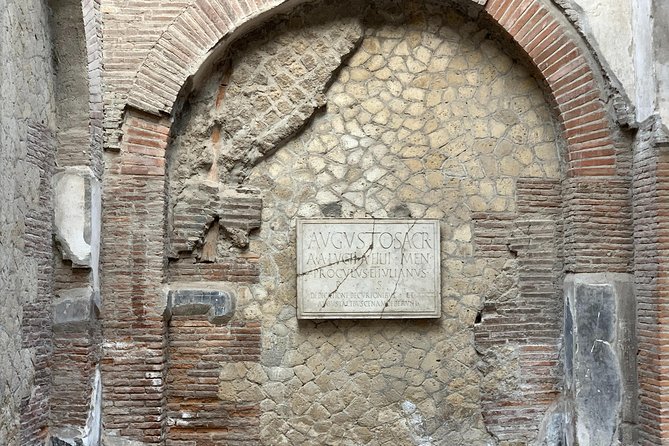
- Samnite House and the Augustales: age and sacred space
- Casa d’Argo and the peristyle story
- The Salone della Barca di Ercolano: the charred boat pavilion
- Price and tickets: the real cost and why it still makes sense
- Timing, comfort, and how to avoid the small headaches
- What kind of traveler should book this?
- Should you book Secret Herculaneum?
- FAQ
- How long is the Secret Herculaneum tour?
- What’s included in the tour price?
- How much is the entrance fee to the park?
- Where does the tour start?
- Is the tour offered in English?
- What’s the maximum group size?
- Is it suitable for wheelchair users?
- What if the weather is bad?
Key highlights you’ll feel right away
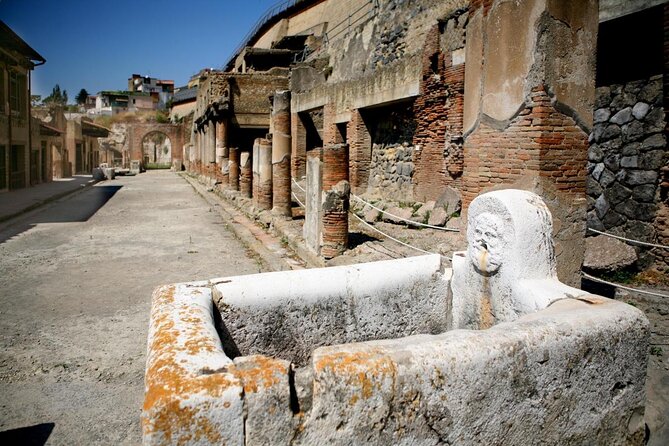
- Very well-preserved city blocks: streets and rooms that make Roman life easier to picture
- Small group size (max 10): more room for questions and slower explanation when needed
- Archaeologist-led insight: the tour ties objects and rooms to how people lived
- Big “wow” stops: the deer marble sculptures, Neptune mosaic, and the charred boat pavilion
- Compact walking route: easier to manage than Pompeii if your energy is limited
Why Herculaneum feels different on your first steps
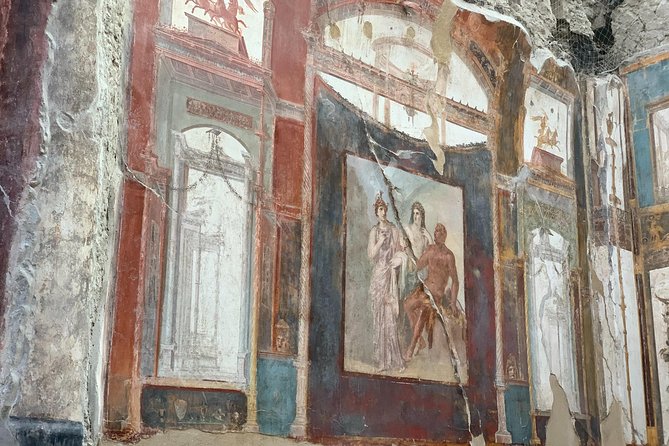
Herculaneum (Ercolano) is the rare Roman site where you don’t just see walls—you see rooms. The city was buried during the eruption of Mount Vesuvius in 79 AD, and the result is striking: you can still make out the layout of neighborhoods, doors, and domestic spaces, with fresco colors that often read as warm and alive.
If Pompeii is about scale, Herculaneum is about clarity. The site is smaller, so your guide can connect buildings to daily habits faster—baths, gym spaces, shops, and the homes of people with very different levels of wealth. It’s also a UNESCO site, but what matters on the ground is how manageable it feels. You’ll spend your energy looking at real details instead of covering miles just to reach the next viewpoint.
You can also read our reviews of more tours and experiences in Naples.


The heart of the tour: Parco Acheologico di Ercolano streets and houses
Your walk starts in the Parco Acheologico di Ercolano, where you’re guided through what makes this place so “complete.” One reason this tour works is that the pacing matches the excavation style: your guide points out streets, thresholds, and the logic of how rooms connect. That makes the site feel like a town you can navigate, not a museum maze.
At this first stage, focus on the domestic scenes. You’ll see homes with frescoed walls and spaces that show how people arranged daily life—sleeping areas, work areas, and rooms that communicate status. The streets are paved, and walking along them helps you understand how residents moved around the city. It’s the kind of visit where the details matter: doors and bedding spaces don’t just look ancient; they help you imagine routine.
A practical note: you’ll want to keep your eyes up as well as down. Herculaneum’s preserved features include things you can miss at ground level—decorative elements and room layout cues that a guide will explain. Guides like Luigi and Ornella were singled out for combining humor with archaeology, which is a big deal here because the material can otherwise feel dry.
The decumanus maximus and the idea of Roman street life
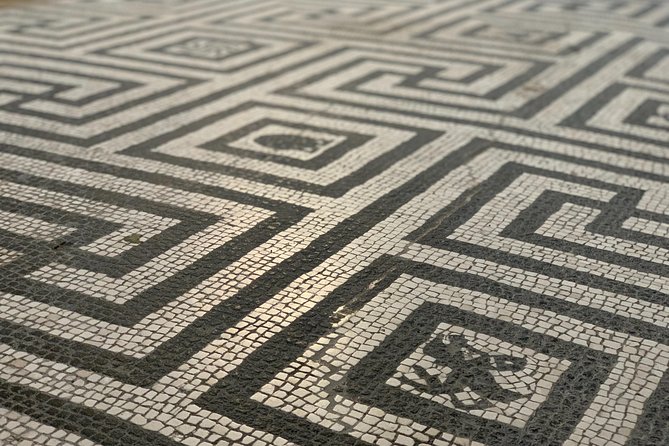
Roman cities have a main street system, and Herculaneum’s decumanus maximus is the one that shaped prestige. As you move along it, you’ll understand why certain homes sat on prime frontage. This isn’t just about where people lived; it’s about social signaling—wealth, status, and connections.
Even if you don’t know Roman urban design, the guide makes it visible. You’ll likely hear how the city’s street grid connects to civic life, and why this central road mattered. This is a good moment to slow down and look at the relationship between street width, entrances, and the rhythm of houses along the sides.
Ancient beach, sea-view terrace: the waterfront stops that make it real
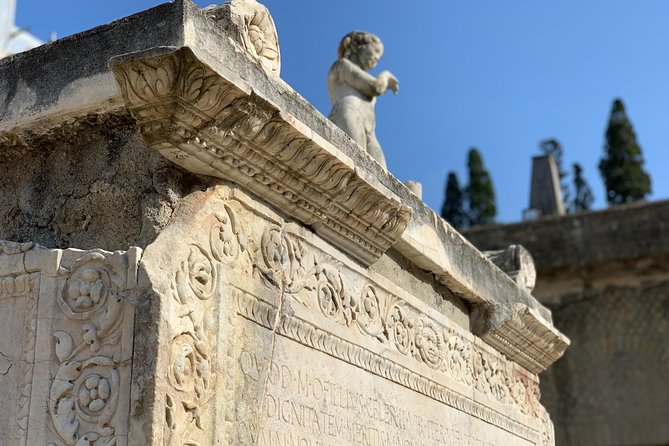
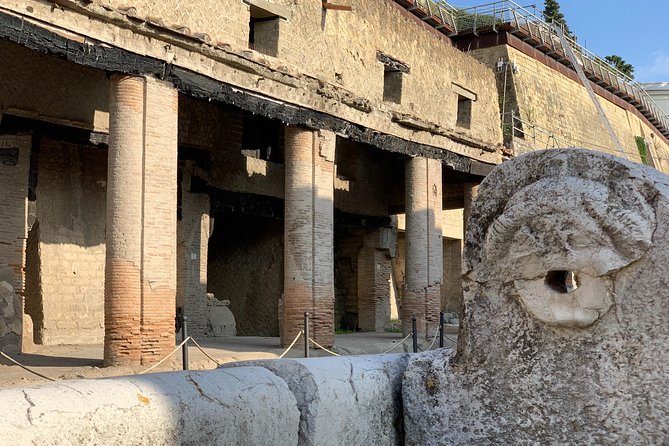
Next you shift to a different kind of preserved evidence: the relationship between the city and the sea. Herculaneum has what’s described as the ancient beach, the only waterfront of an almost entirely preserved Roman city. Standing near this zone helps you picture why trade, travel, and daily activity could connect to water so directly.
After that, don’t rush past the perspective stop. The terrace of Marco Nonio Balbo is a sea-overlooking place tied to one of Herculaneum’s most prestigious citizens and patrons. This is one of those stops where context matters more than the stones themselves. Your guide’s explanation makes it easier to imagine why a wealthy patron would want a public-facing view—status plus influence, with the sea in the background.
If you’re sensitive to sun and wind, plan for it here. Waterfront areas tend to be less sheltered, and since the tour lasts about two hours, you don’t have a lot of built-in breaks.
Deer House luxury: Casa dei Cervi and what wealth looks like
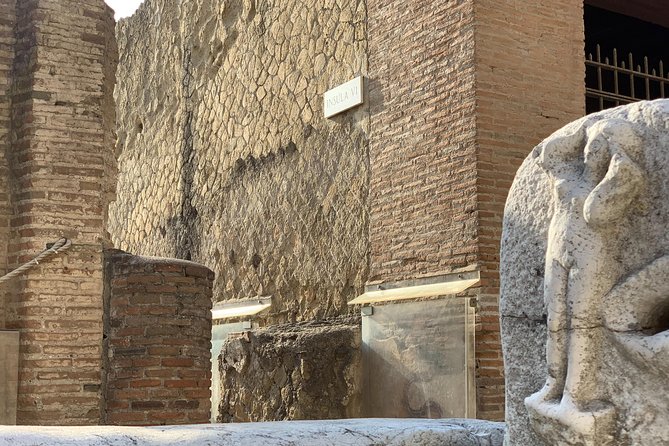
One of the standout stops is Casa dei Cervi—the House of Deer. It’s described as the richest and finest residence found within the excavation area, and the name comes from two marble groups depicting deer attacked by dogs.
This stop is powerful because it shows wealth in a readable way. It’s not just “pretty stuff”—it’s the kind of decoration that signals power, education, and taste. When your guide connects sculpture to household identity, the room stops feeling like an isolated artifact and starts feeling like a living space with a statement.
The drawback here is time. You only get a brief window at each main stop, so if you love slowing down for photos, keep your essentials ready. This is the part of the tour where it helps to listen first, then photograph after you understand what you’re looking at.

The House of Wooden Partition: seeing how rooms were used
The House of the Wooden Partition (Partem Domus lignea) is named for a folding wooden structure that separated parts of the house—between the splendid atrium and the tablinum, often understood as the homeowner’s study area.
This is one of the more interesting stops for people who like practical design. A lot of Roman sites show ruins; this one helps you visualize how space could change depending on visitors, privacy needs, or daily routine. The key is that the guide helps you move from “I see wood remnants” to “I understand the function.”
If you’re the type who enjoys architectural storytelling, don’t treat this as just another room. Pay attention to how entrances and sightlines would work, since that’s where the partition concept really clicks.
Neptune and Amphitrite mosaics: Casa di Nettuno e Anfitrite
Then comes Casa di Nettuno e Anfitrite, linked to a wealthy merchant. The highlight is the mosaic of Neptune and Amphitrite, showing how a merchant class might express identity through art tied to the sea and trade.
This is also where the tour’s best guides shine. The top-rated experience quality you’ll notice across names like Riccardo, Corrado, and Arcangelo is not just facts—it’s clarity. They help you connect the image to the setting, so the mosaic doesn’t feel random. It reads as deliberate.
One thing to keep in mind: mosaics can look very different depending on lighting and how close you can get. Since the tour is guided and short, you’ll benefit from positioning early and letting your guide direct your attention to the right details.
Samnite House and the Augustales: age and sacred space
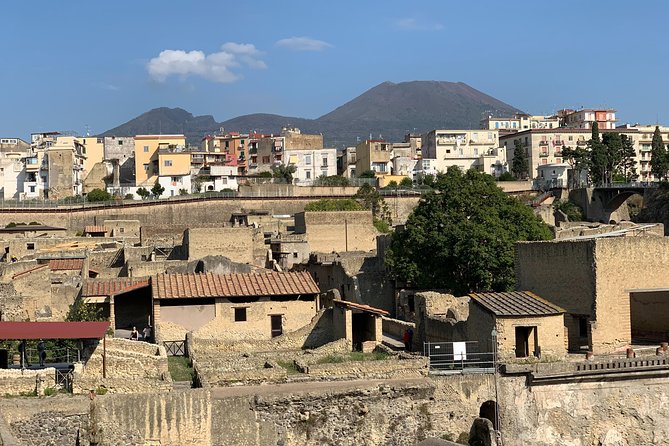
The Samnite House is described as one of the most popular archaeological remains on the site and among the oldest dwellings there. That age factor changes how you should look at it. Instead of asking, “How does it compare to other rooms?” ask, “What does this tell me about the city’s earlier phases?” Your guide should help you read that timeline through the structure and context.
After that, you’ll visit the College of the Augustales—specifically the sacellum of the Augustals. This was used for rites connected to the worship of emperors, tended by augus priests. It’s a quick stop, but it expands the tour beyond domestic life into civic religion.
This pairing—old homes plus emperor worship—helps you understand the full social picture. Roman life wasn’t only about family and work. It was also about public belief, status, and community rituals.
Casa d’Argo and the peristyle story
Casa d’Argo gets its name from a fresco that decorated the peristyle, depicting Argo Panoptes, the giant with a hundred eyes. Even if you don’t know the myth, your guide can frame it so it becomes more than a name. In a Roman house, mythology in a peristyle isn’t random decoration; it signals education and the homeowner’s worldview.
This stop is a good pause for the senses. Peristyles are architectural “breathing spaces,” and they help you notice how Romans used open-air courtyard design as part of daily living.
The Salone della Barca di Ercolano: the charred boat pavilion
If you want a single “anchor wow,” this is it: the boat pavilion (Salone della Barca di Ercolano). Here you see a charred boat preserved from the excavations in 1981, found along the beach of Herculaneum.
What makes this stop land is the contrast. You go from wealthy domestic art to the harsh reality of eruption aftermath. The guide’s explanation helps the boat story make sense in context—why it was there, what it represents, and how archaeologists turned disaster traces into evidence of daily life and water connections.
Bring patience for this room. Even with a small group, the site can feel tightly focused at the pavilion, and you’ll likely be listening in a set space.
Price and tickets: the real cost and why it still makes sense
The tour price is $34.84 per person, lasting around two hours with a certified guide and an archaeologist. Entrance to the park is not included: the Archaeological Park of Herculaneum ticket is €16 per person.
So your budget is really the tour fee plus the park entry. In return, you’re getting more than someone pointing at stones. You’re getting interpretation: what a room likely meant, why a mosaic or sculpture mattered, and how the city’s layout reflects status and routine.
This tends to be good value if:
- you want help spotting what to look for in houses and small details
- you prefer a guided pace over wandering alone
- you like archaeology but don’t want to feel lost
It may be less cost-effective if you already know the site well and you’re comfortable reading explanations without a guide. But most first-timers usually feel the guide is what makes the visit click.
Timing, comfort, and how to avoid the small headaches
The whole tour runs for about two hours and moves quickly between main points. That means your “comfort setup” matters. Wear sturdy walking shoes and be ready for steps and stairs. If you’re bringing a phone, bring a charged battery—photos are easy to want, especially in the houses.
Check in correctly at the Herculaneum Ticket Office (80056 Ercolano, Metropolitan City of Naples, Italy). One guest experience noted a frustrating wait when a few people didn’t check in the right way. With a small group, delays feel bigger.
Also, bring a small plan for listening. Some guides have been described as more soft-spoken than others, so if you’re hard of hearing, sit where you can hear best and don’t be shy about asking a question even if you have to lean in a touch.
Weather matters too. This experience requires good weather, so if rain is a possibility, plan to dress in layers and have a backup.
What kind of traveler should book this?
This tour is a strong fit if you want:
- A compact alternative to Pompeii
- Roman domestic life with explanations that connect objects to daily routine
- A small-group walk where the guide can answer questions
- High-impact stops like the Neptune mosaic and the charred boat pavilion
It may be a weaker fit if you need lots of free time in each room. Each main stop is brief, and the tour is designed for coverage rather than long lingering.
For families, it can work if everyone can handle walking and brief stops. For couples, it’s a great “one afternoon” choice because Herculaneum is manageable and the guide fills in the story fast.
Should you book Secret Herculaneum?
I think you should book if you like to understand what you’re seeing. Herculaneum is best when you can translate preserved spaces into real life—and that’s exactly what this tour is built to do. The small group size, the archaeology angle, and the tour’s focus on houses, mosaics, and major discovery spots (like the boat) make it feel worth the ticket.
Book it especially if you’re doing more than one classic site in the region. If Pompeii and big Roman landmarks are already on your radar, this becomes a smart “different lens” day: smaller scale, clearer connections, and a visit that doesn’t require you to walk for hours to get meaning.
If you hate guided tours and prefer total freedom, you might still enjoy the park on your own. But if you want the city to make sense fast, this is one of the better ways to spend your time at Ercolano.
FAQ
How long is the Secret Herculaneum tour?
It lasts about 2 hours (approx.).
What’s included in the tour price?
The price includes a certified guide and an archaeologist. It does not include the Archaeological Park of Herculaneum entrance fee.
How much is the entrance fee to the park?
The entrance fee to the Archaeological Park of Herculaneum is €16.00 per person and is not included.
Where does the tour start?
You meet at the Herculaneum Ticket Office in 80056 Ercolano, Metropolitan City of Naples, Italy. The tour ends back at the meeting point.
Is the tour offered in English?
Yes, it’s offered in English, and you’ll receive a mobile ticket.
What’s the maximum group size?
The tour has a maximum of 10 travelers.
Is it suitable for wheelchair users?
Wheelchair use must be reported 24 hours before the visit. Most travelers can participate.
What if the weather is bad?
This experience requires good weather. If it’s canceled due to poor weather, you’ll be offered a different date or a full refund.