Salem gets dark fast. This 2-hour walking tour tracks the stories behind the Witch Trials through real buildings, family ties, and Salem’s power struggles. You’ll get facts over folklore as you move from trial-era landmarks to later scandals and even a dash of pop culture.
I like that it’s built for an easy-to-follow small group (max 20), which helps you hear the guide and see the details at each stop. I also like the way the guide weaves in local context, including names and connections that make Salem feel less like a theme park and more like a place with long memories.
One thing to consider: this is a “hidden dark history” style walk, so you should be ready for heavy topics and a lot of serious context. It’s also a downtown walking route, so wear shoes you trust for uneven sidewalks and stops that happen on foot.
In This Review
- Key highlights you’ll care about
- Entering Salem’s story through real addresses
- The exact start and finish (and why it helps)
- Stop 1: 1816 municipal building and Salem’s early civic power
- Stop 2: the witch trials overview museum stop
- Stop 3: the Jonathan Corwin house and miscarriages of justice
- Stop 4: Nathaniel Ropes and Loyalist backlash after the trials
- Stop 5: Salem Athenaeum and Nathaniel Hawthorne’s library connection
- Stop 6: George Corwin’s land and the cruelty reputation
- Stop 7: the 1637 cemetery, Giles Corey connections, and ghost sightings
- Stop 8: a later home with its own secrets and scandal
- Stop 9: Salem Town vs. Salem Village and how rivalry fuels hysteria
- Stop 10: Hawthorne end-zone and a Bewitched filming link
- Price and logistics: what you’re really paying for
- What you’ll get from the guide (and why reviews keep praising it)
- Who should book this Salem dark-history tour
- Should you book? My take
- FAQ
- How much does the Secrets of Salem Hidden Dark History Tour cost?
- How long is the tour?
- Where do I meet, and where does the tour end?
- Is transportation included?
- Is the tour offered in English?
- How large is the group?
- What is the cancellation policy?
Key highlights you’ll care about
- Trial-era sites tied to named people: Judge Jonathan Corwin and the Corwin family connections show up repeatedly
- Small-group pacing: max 20 people, with enough time at each location to actually take it in
- A mix of scary and grounded: ghost stories sit next to explanations of mass hysteria and court mistakes
- Civic history, not just witchcraft: you’ll hit Salem’s early municipal and later civic power
- A closing pop-culture wink: a Bewitched filming connection adds contrast at the end
Entering Salem’s story through real addresses
This tour is priced at $32 per person for about 2 hours, which is a good deal when you want more than a quick drive-by. You’re not just hearing spooky soundbites. You’re walking a route that connects the places to the people, and it stays focused on Salem’s earliest years and the aftermath.
The key practical thing: you’re moving through downtown Salem, so plan to stay present. On tours like this, the details come from what you can see at each corner—brick, setbacks, building ages, and street-level context.
And yes, the tone is “dark history.” If you come for vibes only, you might miss the payoff. If you come to understand how fear spreads and why it stuck around, you’ll get a lot out of it.
You can also read our reviews of more tours and experiences in Salem.


The exact start and finish (and why it helps)
You meet at 210 Essex St, Salem, MA 01970 and end at Hawthorne Hotel, 18 Washington Square W, Salem, MA 01970. That start point puts you right where a lot of Salem’s visitor foot traffic begins, so it’s easy to get your bearings fast. The finish at the Hawthorne Hotel is handy because it’s a natural “hub” for regrouping after the walk.
Transportation isn’t included, so plan your own ride, parking, or walking connections. If you’re hopping between sites on the same day, having a clear end point helps you avoid that last-stretch scramble.
Also, because the group is capped at 20 travelers, you’ll typically get a more controlled pace than the big bus-style tours.
Stop 1: 1816 municipal building and Salem’s early civic power
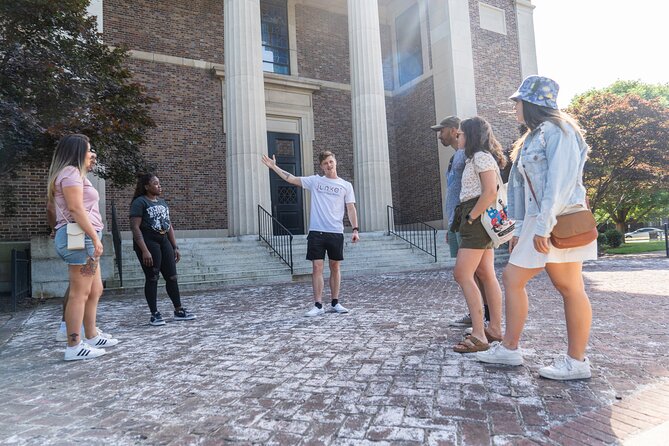
The first stop is the oldest original municipal building in Salem, built in 1816. It’s not a “witch trials house,” but it matters because it anchors the story in how Salem organized itself—who held authority, where civic life happened, and how that structure shaped later events.
What I like about starting here is that it gives you a base layer. Salem isn’t only the trials. It’s a community with institutions, rules, and rooms where decisions get made. That context helps when the tour moves into court-era stories.
A small consideration: this opening stop is history-heavy rather than spooky-heavy, which is fine if you like building context. If you want the eerie stuff right away, you may need a little patience for the tone shift.
Stop 2: the witch trials overview museum stop
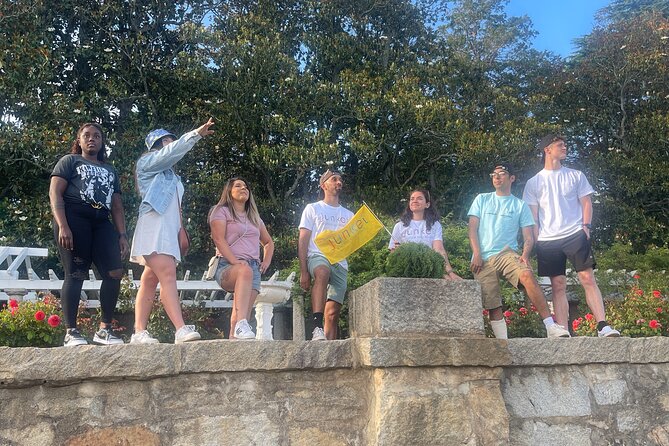
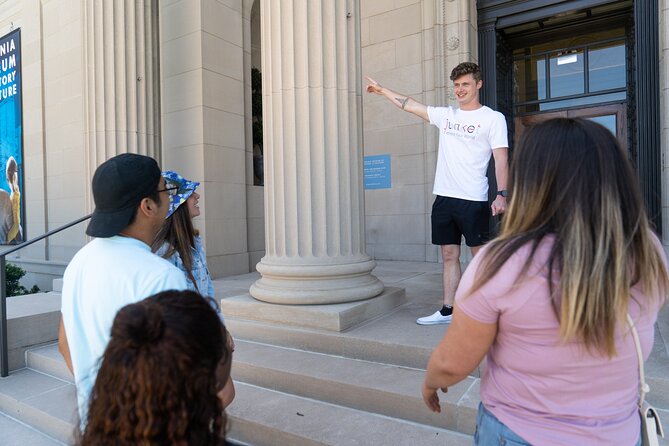
Next you’ll visit a museum stop that provides an overview of the Witch Trials of 1692. The tour frames the trials as one of the clearest examples of mass hysteria in the United States, and it focuses on facts you can carry with you as you see the related sites.
This stop is valuable because it prevents the rest of the walk from turning into a loose ghost tour. Instead, you get a grounding for why accusations happened, how fear spread, and why people believed what they were told.
If you’re sensitive to grim court outcomes, this is where the tone may feel most serious. It’s also a good place to mentally sort truth vs. rumor, because the tour later points out how justice went wrong.
Stop 3: the Jonathan Corwin house and miscarriages of justice
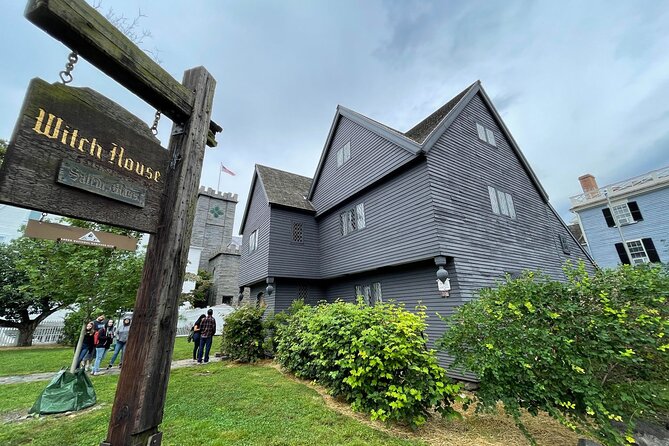
This is one of the tour’s most specific stops: a house dating back to the time of the trials that is described as the only one still standing in Salem with direct ties to the witch trials. Judge Jonathan Corwin—a judge during the trials—lived here.
The tour doesn’t treat him like a vague “villain in a story.” It ties the location to real power. From there, the guide explains little-known miscarriages of justice that occurred during the trials. That’s where the walk turns from background into something personal and uncomfortable.
Possible drawback: if you’re hoping for a lighter take, this stop can feel heavy. But if you want to understand what “hidden dark history” means in Salem’s case, this is a centerpiece.
Stop 4: Nathaniel Ropes and Loyalist backlash after the trials
A century after Salem’s founding, the tour moves to another house connected to Judge Nathanial Ropes (spelled as Nathanial Ropes in the description). The house was sold to him after the death of the original owner.
The story here centers on Ropes being a staunch British Loyalist and the backlash he faced from his town toward the end of his life. That’s a smart turn in the route because it shows Salem didn’t stop evolving after 1692. Power and loyalty issues continued to create real conflict.
If you like political history—who aligned with whom and what it cost you—this stop lands well. If you only want witch trials material, you might find it a little off from the main theme, but it’s still part of the larger Salem pattern: authority plus fear plus division.
Stop 5: Salem Athenaeum and Nathaniel Hawthorne’s library connection
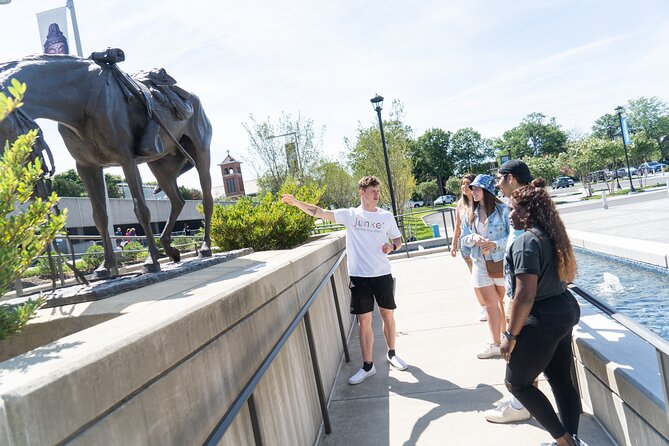
This stop connects Salem to literature and civic culture. The plot notes that two separate societies’ libraries were combined, and Nathaniel Hawthorne—author of The Scarlet Letter—was once head of the prestigious Salem Athenaeum in the 1800s.
Even if you’re not a Hawthorne superfan, this is useful. It reminds you that Salem’s “identity” kept changing long after the trials. The town that once fed accusations later nurtured major writers and institutions.
This stop also adds variety in tone. After court-era darkness, you’re reminded that Salem became a place that gathered ideas—people built rooms for reading and debate.
Stop 6: George Corwin’s land and the cruelty reputation
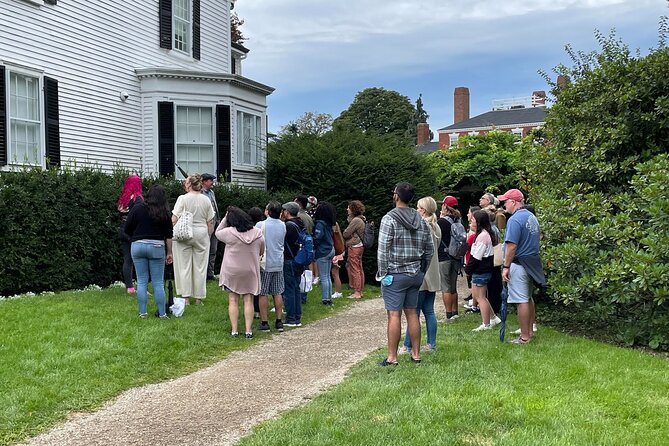
The tour then focuses on family connections. The plot where this home was constructed once belonged to George Corwin, described as the nephew of Judge Jonathan Corwin.
George Corwin is also described as Sheriff of Salem during the witch trials, and the tour says he was rumored to be overly cruel in actions toward those accused and convicted of witchcraft. That framing matters because it connects multiple roles—judge, sheriff, family—into a single local network.
What you’ll likely appreciate here is the “names chain.” The tour keeps returning to the Corwins, so you start seeing how authority wasn’t just an abstract system. It was people with relatives, reputations, and influence.
Stop 7: the 1637 cemetery, Giles Corey connections, and ghost sightings
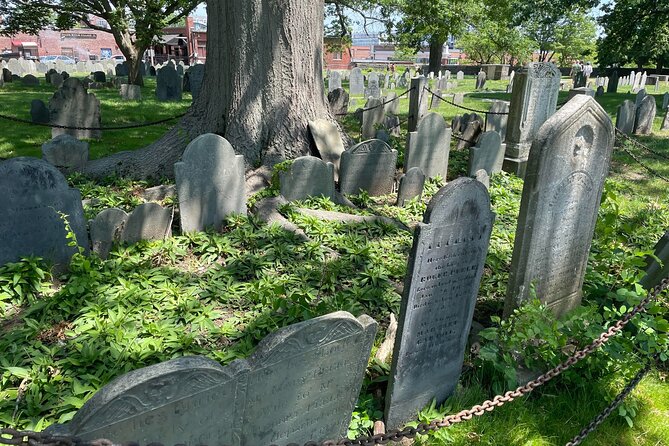
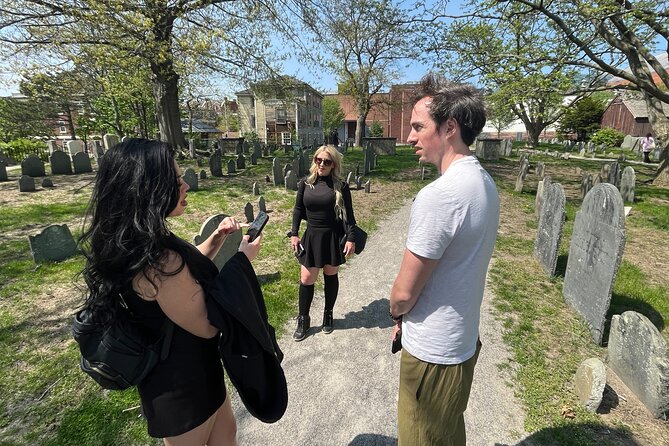
One of the most famous parts of Salem is its burial ground—and here you’ll visit a cemetery established in 1637, described as one of the oldest in the United States.
The tour includes the interment of Giles Corey’s second wife and Judge Jonathan Corey (the name appears as Jonathan Corey in the cemetery line) and it also introduces ghost stories: reports of people seeing Judge Corwin’s ghost wandering among the graves.
Even if you don’t fully buy ghosts, the storytelling has a purpose. It shows how Salem’s fear stories stayed alive in local memory long after the trial records were written.
A practical consideration: cemeteries are quiet and windy. Bring a layer if you’re walking in cooler months, and keep a respectful pace so the group doesn’t get stretched.
Stop 8: a later home with its own secrets and scandal
After the trial-linked sites, the tour shifts to another home described as constructed over a century after the witch trials and not directly linked to them. The selling point is that it still has enough secrets and scandal of its own.
This is a good move for readers who want more than one chapter. Salem’s dark side didn’t end in 1692, and the guide uses these later stories to show how scandal, reputation, and punishment can follow different forms over time.
If you’re expecting every stop to scream witch trials connections, this may feel like a breather. If you’re enjoying the broader “how Salem worked” theme, it will feel like a natural extension.
Stop 9: Salem Town vs. Salem Village and how rivalry fuels hysteria
This stop is where the tour explains the social fuel behind the hysteria. You’ll hear about the rivalry between Salem Town and Salem Village, and how that conflict may have laid groundwork for the fear that fueled the witch trials.
I like this angle because it doesn’t reduce 1692 to a single cause. It points to division—different communities, different power centers, different incentives—creating conditions where rumors could spread faster.
This also helps you connect Salem’s story to something modern readers recognize: social tension turns whispers into accusations when people want an easy explanation.
Stop 10: Hawthorne end-zone and a Bewitched filming link
To close out, you’ll hear a lighter cultural tie-in: an episode of the TV series Bewitched was filmed at a location named for Nathaniel Hawthorne in the 1970s.
It’s a clever ending beat. After a serious walk through fear, courts, family networks, and memory, you get a reminder that Salem keeps reinventing itself. The supernatural stays in the culture, even when the actual history is grim.
And because you end at the Hawthorne Hotel, this stop also functions as a natural “wrap-up” for your day.
Price and logistics: what you’re really paying for
At $32, you’re buying three things: a timed route, a guide who keeps the story grounded, and multiple stops clustered in one efficient morning or afternoon.
The tour includes a professional and courteous guide and describes the history as thoroughly researched and accurate. That matters. Salem has a lot of misinformation floating around, and a good guide keeps you from chasing ghost stories that drown out the real context.
Duration is listed as about 2 hours, and the group size maxes at 20. In a city with many overlapping walking tours, smaller groups often make the experience feel calmer and easier to follow.
One more practical point: the tour includes a mobile ticket, and confirmation comes within 48 hours (subject to availability). If your schedule is tight, booking in advance is smart; the tour averages 29 days booked ahead.
What you’ll get from the guide (and why reviews keep praising it)
The consistent theme from the guide-style across the tour is engagement. Guides such as Mason, Danielle, John, and Sam show up in the experience history, and the big compliment is how they keep the story moving with personal touches and humor.
You should expect more than dates and names. The guide adds local detail, helps you connect architecture and location to meaning, and helps you leave with Salem’s story in a form you can actually remember.
Another praised element: the tour often stays away from big crowd chaos. That’s a real quality-of-life factor. When a tour group gets swallowed by other groups, it becomes harder to hear, harder to see, and harder to feel like you’re with your guide instead of standing in a street lineup.
Who should book this Salem dark-history tour
Book this if you want:
- A fact-grounded witch trials story that still allows for spooky tradition
- A route that includes civic history, not only 1692 court drama
- A small group pace where the guide can explain rather than speed-run
- An ending with a pop-culture reference so the day doesn’t feel uniformly grim
You might skip or adjust expectations if:
- You want only light, ghost-themed entertainment with no heavier historical context
- You hate walking and want a car-based tour (transportation is not included)
Should you book? My take
I’d book this if you’re the type who likes your Salem with context. The route connects people, places, and conflict—then adds later scandals and a Bewitched filming nod so the story doesn’t freeze in one dark year.
If you’re on the fence, choose based on your tolerance for serious history and courtroom outcomes. For a $32, two-hour slot with a max 20-person group, it’s a strong value when you want the “why” behind the fear, not just the “what.”
FAQ
How much does the Secrets of Salem Hidden Dark History Tour cost?
It costs $32.00 per person.
How long is the tour?
The tour lasts about 2 hours.
Where do I meet, and where does the tour end?
You start at 210 Essex St, Salem, MA 01970 and end at the Hawthorne Hotel, 18 Washington Square W, Salem, MA 01970.
Is transportation included?
No. Transportation is not included.
Is the tour offered in English?
Yes, it is offered in English.
How large is the group?
The tour has a maximum of 20 travelers.
What is the cancellation policy?
You can cancel for a full refund if you cancel up to 24 hours in advance. If you cancel less than 24 hours before the start time, the amount paid is not refunded.
If you want, tell me what day and time you’re considering in Salem and I can help you plan what to do before and after this walk.