REVIEW · ROME
Private Tour of Colosseum & Ancient Rome Wonders
Book on Viator →Operated by Vatican Private Tour Guide · Bookable on Viator
Three ruins, one smart plan.
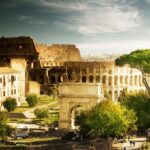
This private tour strings together the Colosseum, Roman Forum, and Palatine Hill in about three hours, with an art historian guide who uses visual aids to make the stones make sense. It’s built for real time in the sites, not just photo stops, and you get English guidance plus a mobile ticket for easier entry.
Two things I love: the skip-the-line style reservation and the way the guide makes each place click. On tours led by names like Nina, Faby, and Lia Caso, you’re guided with clear explanations, and the pacing stays steady enough that you don’t feel like you’re being herded.
One consideration: this is a walking, standing kind of tour. If your feet are delicate, plan for comfortable shoes and expect some stairs and uneven ground across all three stops.
In This Review
- Key highlights worth getting excited about
- The big win: a private Colosseum–Forum–Palatine route
- Entering The Colosseum without losing your day
- Roman Forum: the civic heart behind the postcard views
- Palatine Hill: myth, temples, and the Michelangelo square
- What the art historian guide adds (and how it shows up)
- Tickets, mobile entry, and timing you can count on
- Comfort prep: shoes, ID, and what to expect on your feet
- Price and value: is $359.68 per person a splurge or a smart buy?
- Who this private tour is best for
- Should you book this private Colosseum tour?
- FAQ
- How long is the private tour?
- What places are included in the tour?
- Is this tour private or shared?
- Is the tour offered in English?
- Are admission tickets included?
- Where does the tour start?
- Will there be a mobile ticket?
- What documents do I need for entry?
- Is food and drink included?
- Is the booking refundable if I cancel?
Key highlights worth getting excited about
- Colosseum + Forum + Palatine in one outing so you don’t waste a half-day piecing it together
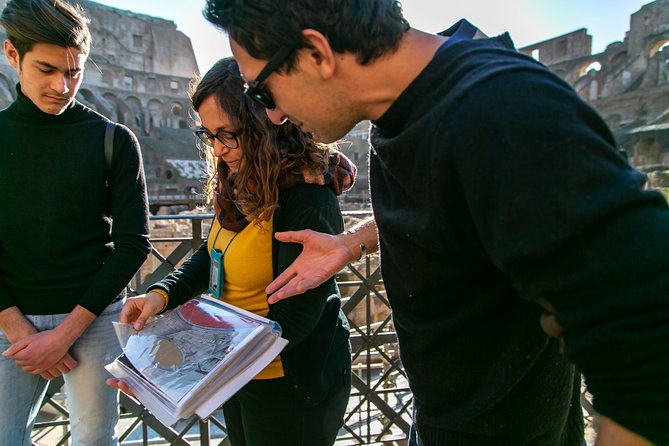
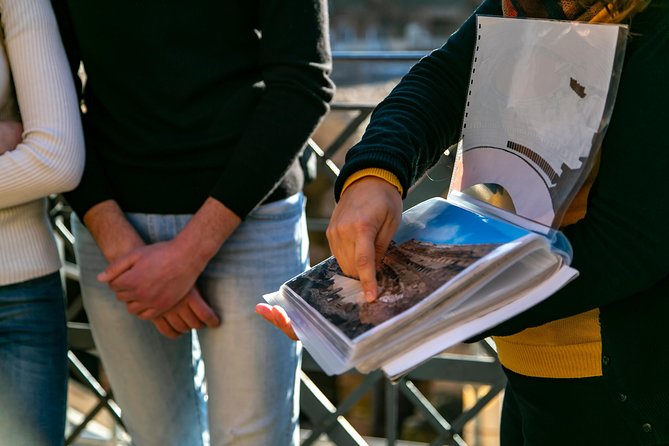
- Art historian storytelling with visual aids and graphic reconstructions to interpret what you’re seeing
- Admission and reservation fees are built in (Colosseum ticket and reservation fee are listed as included)
- Private tour pacing with only your group, plus guidance meant to keep you oriented
- Strong guide track record—people specifically mention guides like Nina, Faby, Raffa, Giada, Alba, Giovianni, Lucina, and Lia Caso
The big win: a private Colosseum–Forum–Palatine route
Rome has “must-see” ruins everywhere, but the trick is seeing them in the right order. This tour makes a clean arc through the Colosseum, then Rome’s civic center in the Roman Forum, and finally Palatine Hill—where the city’s power and myth-making lived. It’s a simple plan, but it works because each stop answers questions your brain will start asking right away.
What you get that self-guided wandering often lacks is a steady thread. Your guide isn’t just pointing at rocks. They’re giving context for how these places functioned: the Colosseum as a massive entertainment machine, the Forum as the stage for politics and law, and Palatine as the symbolic home turf of Rome’s elites and gods.
You also get private attention. That matters because the Colosseum and its neighbors can feel like controlled chaos. With only your group, you can ask questions when something doesn’t line up, and you’re not stuck waiting for a tour “pack” to catch up.
You can also read our reviews of more tours and experiences in Rome.
Entering The Colosseum without losing your day
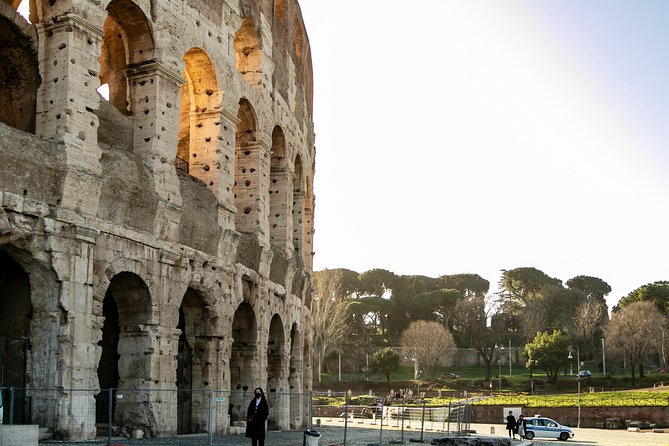
The Colosseum is enormous—too enormous for most people to fully process on a casual visit. This tour starts there, which helps because you’ll face the site while your energy is still high (and the crowds can be at their most manageable early on).
The key detail: you’re not just buying a ticket and hoping for the best. Entry is organized with a Colosseum admission ticket included, plus a reservation fee listed for the Colosseum entrance. That’s exactly the kind of planning you feel the moment you walk up—less time stuck in lines, more time looking closely at what’s in front of you.
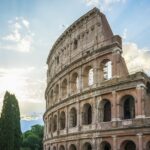
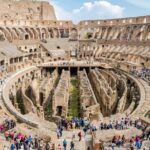
Inside, your guide will walk you through the Colosseum as Roman engineering at a huge scale. It’s described as having 80 entrances and seating for more than 50,000 spectators. That kind of number can sound abstract, so your guide’s job is to make it physical: where people moved, how the arena worked, and why the design mattered.
If you get a guide like Giovianni (mentioned for niche facts), you might also hear about gladiator life and the underground system of the arena. Not every guide will focus on the same angle, but the tour format is set up for “more than the basics,” especially with visual aids and graphic reconstructions.
Roman Forum: the civic heart behind the postcard views
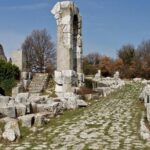
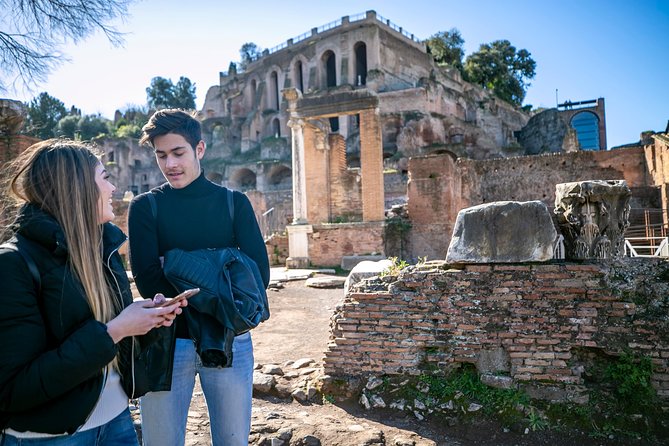
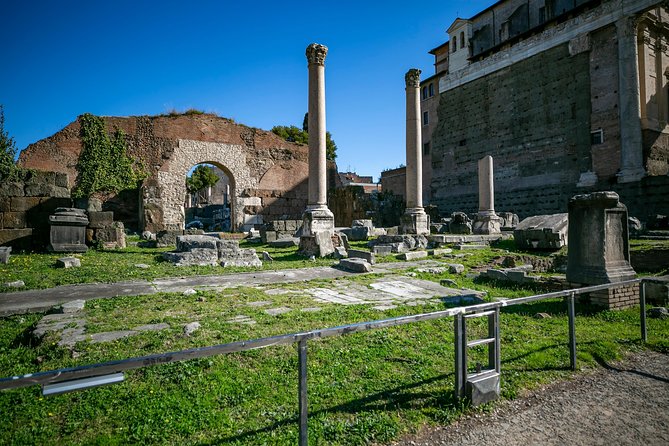
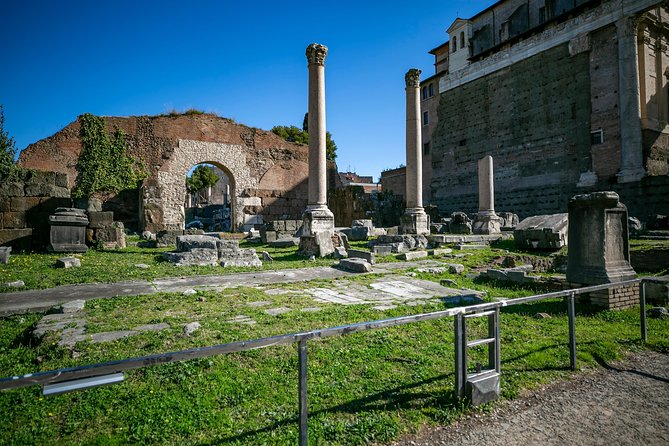
After the Colosseum, you step into the Roman Forum, and the vibe changes fast. The Colosseum screams spectacle; the Forum feels like the business end of a civilization. This is where you’ll see ruins spread around a central space—temples, senate-era buildings, arches, and monuments that were tied to power and public identity.
The Forum stops you’ll likely hear about include the Senate House ruins, the Temple of Vesta, the Temple of Saturn, and the Altar associated with Julius Caesar. You may also cover sites such as the Arch of Septimius Severus, the Temple of Gemini, the Basilica Emilia, and other major remnants in the area.
Here’s where a guided explanation pays off. On your own, it’s easy to see “columns and foundations.” With a guide, those shapes become a map of roles: who met where, what ceremonies mattered, and how religious and political life overlapped. Your guide’s art-historian approach is useful here because it tends to connect design with function—why a building looked the way it did, and what it was used for.
Also, staying only about an hour helps in a good way. The Forum is big and scattered, and if you don’t have a plan, it’s simple to lose time and focus. A guided route keeps you from wandering in circles while still leaving time to stop and look.
Palatine Hill: myth, temples, and the Michelangelo square
Palatine Hill is the final stop, and it’s a smart landing point. This is the place where temples of key Roman gods were once located, so even though much of what you see today is fragmentary, the site’s meaning is layered.
What makes Palatine especially fun on a guided tour is that you’re not only looking at ancient remains. You’re also seeing how later Rome reused and reframed the hill’s identity. One of the highlights here is the “stunning square designed by Michelangelo,” plus the Statue of Marcus Aurelius.
That mix—ancient sacred space plus later cultural touchpoints—can be hard to notice if you’re not primed for it. On this tour, your guide gives you context for why those later features matter and how they sit in the same landscape as the older temples.
Another practical benefit: ending at Palatine generally means you’ve already built context at the Colosseum and Forum. By the time you reach the hill, your brain can process Palatine as the “origin story” of elite Rome rather than just another pile of ruins.
What the art historian guide adds (and how it shows up)
A great guide can turn Rome into a puzzle you want to solve. An art historian guide does that especially well because they tend to focus on structure, symbolism, and storytelling through architecture—rather than only dates and names.
In this tour, the descriptions emphasize visual aids and graphic reconstructions, which is a big deal. When you’re staring at broken columns and layered foundations, it’s hard to picture what stood there. Reconstructions help you understand scale and layout without guessing.
You’ll also benefit from how the tour is paced. People have praised guides for keeping the tempo steady and clear—especially on days when crowds can force other tours into a sprint. That steady pacing is one reason the experience tends to feel worth the reservation: you’re paying for time where the guide can actually explain, not just escort you past things.
Some guides are also noted for speaking very clearly in English and for creating a “you-and-your-group” feel even in crowded spaces. Names that come up include Raffa, Nina, Giada, Alba, Lucina, and Lia Caso—each highlighted for strong storytelling and guide prep.
If you’re hoping to ask questions, this setup is ideal. You’re not racing to keep up with strangers, and you can steer the discussion toward what you care about: gladiators, politics, religion, or how the sites relate to each other.

Tickets, mobile entry, and timing you can count on
This is a short tour—about 3 hours—so timing is part of the value. You get a complete “big three” overview without losing a full morning or afternoon.
The tour includes a mobile ticket, which helps in two ways. First, you don’t have to juggle paper. Second, it supports a smoother entry experience when you’re dealing with security and lines.
Admission is clearly part of the deal. The included list explicitly calls out the Colosseum admission ticket and Colosseum entrance reservation fee. The schedule itself also labels admission ticket included at each stop, so the intent is that your entry is handled as part of the tour package rather than you doing a separate booking.
Meeting point is Piazza del Colosseo, 23, 00184 Roma RM, Italy, and the tour ends back at the same spot. That’s a small detail, but it matters for planning: you can structure the rest of your day around a known return point.
One more practical tip: this tour is often booked in advance (on average about 55 days). If your dates are fixed, book earlier rather than later, because the best time slots at major sites don’t stick around forever.
Comfort prep: shoes, ID, and what to expect on your feet
Wear comfortable shoes. That’s not just generic advice—this route involves multiple big sites close together, and you’ll spend time walking between entrances and stopping in areas that can be uneven.
You also need ID. Each traveler must present a valid ID card or document that matches the name used during booking for successful entry. Rome is good at rules like this, so double-check your booking name and bring the right document.
Food and drinks aren’t included. That matters because three hours can still stretch across a midday when you’ll want water and a snack. If you have dietary needs or you don’t travel well on an empty stomach, plan a stop before or after.
Private transportation isn’t included either. The tour starts and ends at the Colosseum area, so you’ll want to plan your arrival and departure like a normal neighborhood walk-and-metro day.
Price and value: is $359.68 per person a splurge or a smart buy?
At $359.68 per person, this isn’t a budget tour. The value question is really about what you’re avoiding and what you’re getting instead.
Avoided hassles:
- wasted time in the wrong lines or slow entry moments
- the “tour fatigue” that happens when you’re trying to interpret the Colosseum, Forum, and Palatine without a plan
What you’re paying for:
- a local guide plus a professional art historian guide
- included admission for the Colosseum and the guided coverage across the other two major sites
- a reservation fee tied to Colosseum entry
- private pacing so you can actually take in explanations instead of getting rushed
If you’re the type who hates skipping details, this can feel like a bargain. If you’re traveling with others and you’ll appreciate having a trained person connect the dots, your money buys convenience plus meaning.
If you’re mostly interested in quick photos and you’re comfortable reading guideboards and maps, then self-guided might be enough. But if you want the ruins to feel organized and explained, the guide time is where the price becomes easier to justify.
One hint: the tour lists group discounts. If you’re traveling in a small group, ask about the discount structure when you book, since that can change the math fast.
Who this private tour is best for
This works especially well if you:
- want the big three ancient Rome sites in one outing without planning every ticket
- like structured storytelling and explanations, not just viewing monuments
- prefer the comfort of a steady guide pace in crowded areas
- appreciate art-and-architecture context, including reconstructions and visual interpretation
It’s also a good fit for couples and small families who don’t want to join a larger group where you’re constantly trying to regroup.
If you travel with limited mobility, the data only says “most travelers can participate,” and it doesn’t spell out accessibility features. Because the tour involves walking and uneven ruins, you’ll want to be honest about your comfort level before committing.
Should you book this private Colosseum tour?
Yes, I’d book it if your goal is to understand what you’re seeing—not just check boxes. The mix of sites in one route, the included entry elements for the Colosseum, and the art historian approach with visual aids make it one of those Rome experiences where the time saved actually turns into better memories.
Skip it only if you’re doing a fast pass, hate guided pacing, or want to spend your day reading on your own. Otherwise, grab comfortable shoes, bring your ID, and aim to give your guide your attention. When the stones start talking, you’ll feel the value quickly.
FAQ
How long is the private tour?
It runs for about 3 hours.
What places are included in the tour?
You visit the Colosseum, the Roman Forum, and Palatine Hill.
Is this tour private or shared?
It’s a private tour/activity, so only your group participates.
Is the tour offered in English?
Yes, it’s offered in English.
Are admission tickets included?
Colosseum admission is included, and the tour schedule also lists admission tickets for the other two stops as part of the experience.
Where does the tour start?
The meeting point is Piazza del Colosseo, 23, 00184 Roma RM, Italy.
Will there be a mobile ticket?
Yes, a mobile ticket is included.
What documents do I need for entry?
You must present a valid ID card or document that matches the name provided at booking.
Is food and drink included?
No. Food and drinks are not included.
Is the booking refundable if I cancel?
No. This experience is non-refundable and cannot be changed for any reason.