REVIEW · LAGOS
Slave Trade Tour: Badagry Black Heritage Adventure
Book on Viator →Operated by Samap Travels & Tours LTD · Bookable on Viator
Badagry makes history impossible to ignore. This Lagos tour follows a 400-year thread of the transatlantic slave trade, with stops at the Mobee Slave Relics Museum and the Point of No Return on Gberefu Island. Expect a structured route, guided explanations, and quiet time to take it in.
I love how the experience is built around a private guide and a clear sequence: the baracoon museum, the objects tied to confinement, and then the final beach route used to send people toward the ships. You’ll also get a lagoon boat ride, plus a pause at the attenuation well before you stand where people were processed for departure.
One drawback to plan for: the schedule depends on good weather, and the subject matter is heavy. Come with respect, and give yourself a little breathing room afterward.
In This Review
- Key highlights you’ll feel right away
- A Lagos to Badagry route that fits into one long morning
- Price and value: what $250 buys you
- Stop 1: the William Seriki Abass slave museum and the baracoon rooms
- Stop 2: Mobee slave relics, chains, mouth guards, and locks
- Stop 3: the Badagry building (1845) and Samuel Ajayi Crowther
- Stop 4: Gberefu Island, the attenuation well, and the Point of No Return
- How a private guide keeps the timeline from feeling scattered
- Practical tips for comfort, respect, and photos
- Should you book the Badagry Black Heritage Adventure?
- FAQ
- How long is the Slave Trade Tour: Badagry Black Heritage Adventure?
- What does the tour cost?
- Is pickup included?
- Is this a private tour?
- Are admission tickets included?
- What hours does the tour operate?
- Does the tour run in all weather?
- What is the cancellation policy?
Key highlights you’ll feel right away
- A private tour for just your group keeps the pace personal and the questions welcome
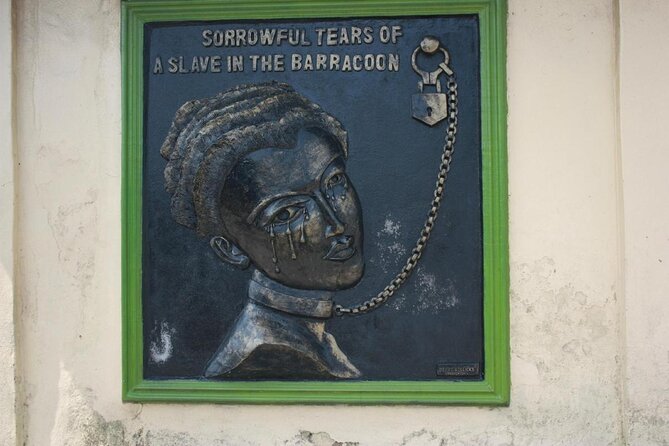
- William Seriki Abass Slave Museum shows the cramped rooms where people were held before shipment
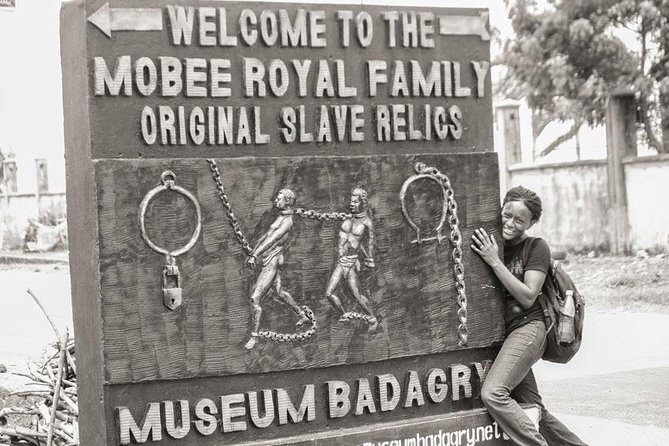
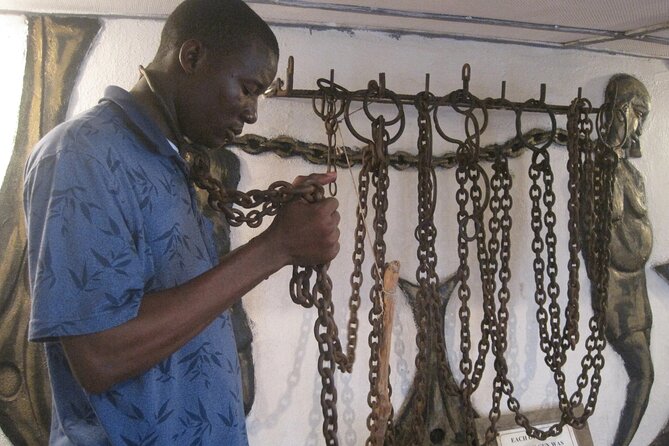
- Mobee Slave Relics Museum presents physical reminders like chains, mouth guards, and locks
- Badagry Building (1845) connects missionary activity with Yoruba Bible translation by Samuel Ajayi Crowther
- Gberefu Island boat ride to the Point of No Return includes a stop at the attenuation well
A Lagos to Badagry route that fits into one long morning
This is a half-day tour out of Lagos that runs about 6 to 7 hours. It starts from the morning window listed by the operator (8:00 AM to 2:00 PM, Monday through Sunday), so it fits well if you want your day to still feel like a day.
What makes this route work is the order. You begin with places tied to confinement and local names from the slave era, then you move through artifacts and later into the missionary-era building connected to language and translation. Finally, the tour ends at the point tied to the last stage of the journey—where the route to the ships is remembered.
Also, the tour includes pickup, so you’re not piecing together local transport while trying to keep your head straight. And because this is described as a private activity, the focus stays on your group rather than waiting for a bigger crowd.
Price and value: what $250 buys you
The price is $250 per person, with group discounts available. If you’re traveling with people you trust (family, friends, or a small group), that can turn this into a more reasonable day of learning than it looks at first glance.
Here’s the value math that matters: admission tickets are included for each major stop, and you’re also getting the boat ride portion for the final segment. That means you’re paying for the guided flow of several locations in one day, not just being dropped at a single site.
Booking pattern can matter for timing. On average, this is booked about 30 days in advance, so if you’re aiming for a specific date, I’d plan earlier rather than later—especially because good weather is required for the experience to run.
The tour also uses a mobile ticket, which is convenient. You won’t be hunting for paper confirmations at the last minute.
Stop 1: the William Seriki Abass slave museum and the baracoon rooms
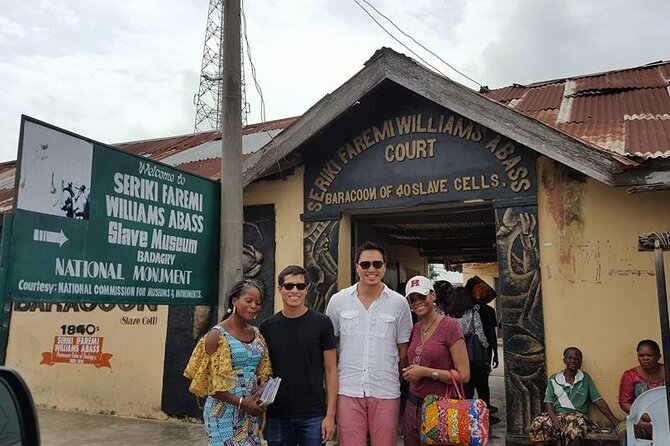
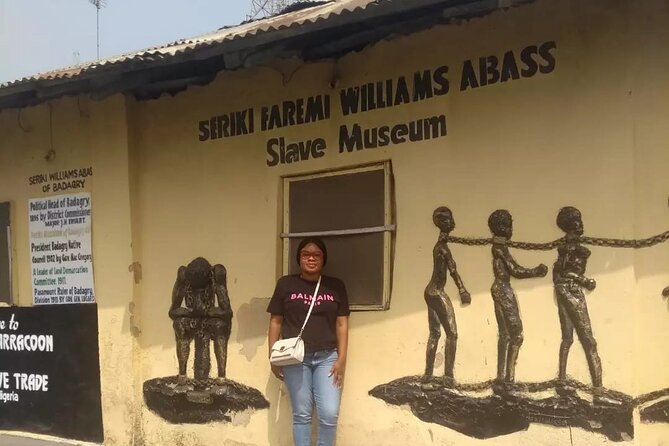
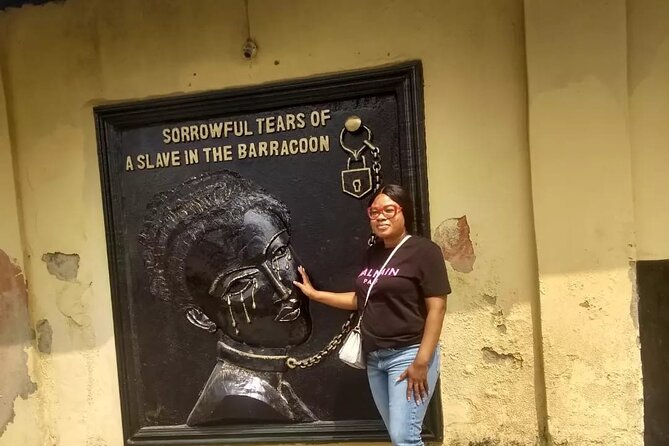
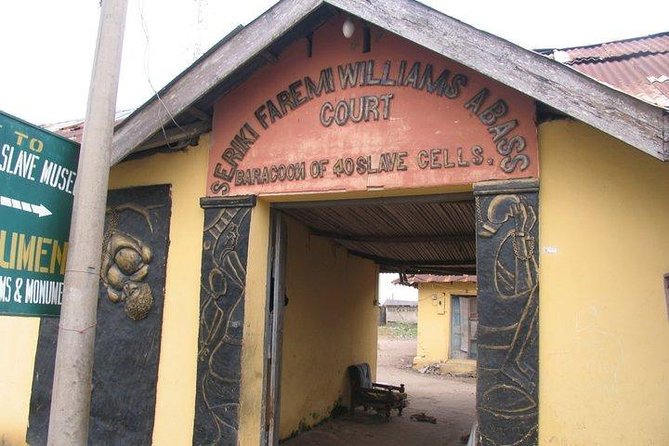
Your first stop is the Seriki Faremi Williams Abass Slave Museum in Badagry. This is where the tour sets its emotional baseline: you’re shown a former baracoon-style space tied to the holding of people before they were shipped out across the ocean.
What stands out here is the scale of confinement described for the space—small rooms where a hundred people were kept. That detail matters because it shifts the conversation from distant history to the physical reality of overcrowding and control.
You’ll also see relics from the slave era and visit the resting place of Williams Seriki Abass, described as one of the key players during that period. There’s a strong sense here of names and place—Badagry isn’t just a “location,” it’s presented as a connected human story.
The tour includes about 1 hour for this first stop. That’s enough time to take notes, ask questions, and not feel like you’re rushing through something you’ll carry with you later.
Stop 2: Mobee slave relics, chains, mouth guards, and locks
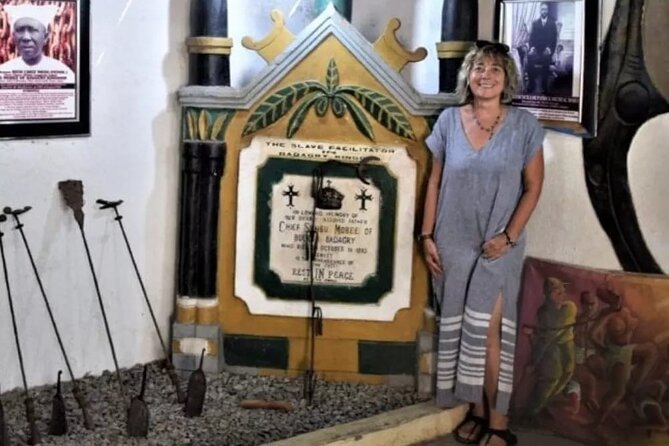
Next comes the Mobee Slave Relics Museum, described as holding artifacts such as chains, mouth guards, locks, and other items connected to how people were restrained. You’re not just looking at souvenirs or staged displays here. The objects are the evidence of a system designed to limit movement, voice, and dignity.
You’ll also be shown relics and wreckage of items used at the time. That phrase—wreckage—can be jarring, but it’s often the point. History isn’t clean. It leaves traces.
This stop also lasts about 1 hour. If you’re the type who processes by looking slowly, use that time. If you need a mental break, take it now rather than waiting for the final beach.
Practical note: artifacts tours like this can involve standing close to display areas. Comfortable shoes help more than you’d think, especially if the day turns warm or humid.
Stop 3: the Badagry building (1845) and Samuel Ajayi Crowther
After the relic-focused stops, the tour shifts gears to the Badagry Building, described as the first storey building in Nigeria built by missionaries in 1845. You’ll learn about missionary activities in Nigeria, which is an important reminder that the slave trade era involved more than one kind of power and influence.
One detail I found especially meaningful is the connection to translation: the bible was first translated from English into a Nigerian local language, Yoruba, by the late Samuel Ajayi Crowther. That adds a different lens to the day. It doesn’t erase the cruelty of the slave trade, but it helps you see how language, religion, and colonial-era contact also played out locally.
This stop is also allocated about 1 hour. The pace can feel like a change of mood compared with the museum objects. Still, it’s a valuable pivot, because it gives you a fuller picture of how 19th-century forces interacted with communities.
Stop 4: Gberefu Island, the attenuation well, and the Point of No Return
The final stop is the hardest to talk about and one of the most important to understand. You cross a lagoon by boat to Gberefu Island, then walk to the sandy beach associated with the Point of No Return.
This is where the tour explains the route used to send enslaved people to ships bound for foreign countries. The “Point of No Return” part is not just a name—it’s the idea that, for many, there was no turning back once the route began.
Before reaching the beach, there’s a stop at the attenuation well. The tour describes that people were made to drink magical waters intended to make them forget who they are. Whether you interpret that literally or as a cultural mechanism used for control, it hits a nerve: identity was treated as something that could be managed.
At the beachfront, you make a brief stop to rest and reflect. That time is small, but it’s purposeful. I’d treat it like part of the tour, not a pause you can skip. You’ll get more from the day if you allow a quiet moment before moving on.
This portion also takes about 1 hour, including the boat ride time. Weather matters here. If the lagoon crossing can’t happen safely, the experience may be rescheduled.
How a private guide keeps the timeline from feeling scattered
A big reason this tour gets such strong satisfaction is the private format. You’re not squeezed into a rigid group pace, and you’re not left to figure out why one stop leads to the next.
In practice, a private guide can do two crucial things for this kind of subject. First, they can connect the dots between locations—why a museum, why a building, why the final beach. Second, they can respond to your questions in the moment, rather than packing your curiosity into the last ten minutes.
That matters because slave trade history can feel overwhelming. The tour’s structured sequence helps you build a mental timeline instead of collecting random facts. And because you’re spending several hours together, the guide also has time to slow down when the topic needs careful pacing.
The operator is Samap Travels & Tours LTD, and the booking information notes that service animals are allowed. If that’s relevant for you, you can plan without surprises.
Practical tips for comfort, respect, and photos
You don’t need fancy gear for this tour, but you do need practical comfort. Wear closed-toe shoes with grip. Even if the day stays dry, museum floors and walking areas can be uneven. For the boat segment, plan for sun, wind, and the feel of being close to water.
Because this experience requires good weather, bring a small rain layer or umbrella plan even if the forecast looks fine. If the tour needs to shift for poor weather, you’ll be glad you’re prepared.
On the respect side, follow your guide’s cues for how and when to observe. When you’re surrounded by items tied to restraint and loss, it helps to treat photography as optional rather than expected. If you do take photos, keep it quiet and brief. Save your real attention for the explanations and the moments to reflect.
Finally, expect the day to change your mood. Give yourself a buffer for dinner plans afterward. This is the kind of experience where “what time is it?” can feel less important than “what did I just learn?”
Should you book the Badagry Black Heritage Adventure?
If your goal is a guided, structured experience centered on Badagry’s slave-era sites—and you want time to reflect rather than rush—you should strongly consider booking. The combination of baracoon rooms, Mobee relics, the 1845 missionary building tied to Samuel Ajayi Crowther, and the final boat ride to the Point of No Return gives you both physical context and cultural context.
It’s also a good fit if you’re traveling in a way that benefits from privacy. A private format makes it easier to keep questions flowing and to move at a respectful pace. The price looks steep at first glance, but admissions and the boat component being included helps justify the total.
If you know you struggle with emotionally heavy material, plan your day carefully. Don’t stack this with anything that requires high energy afterward. And because good weather is needed for the island crossing, pick your date with a little flexibility.
If that sounds like your kind of meaningful trip, this one can be a powerful stop on a Lagos itinerary.
FAQ
How long is the Slave Trade Tour: Badagry Black Heritage Adventure?
The tour runs about 6 to 7 hours.
What does the tour cost?
It costs $250.00 per person.
Is pickup included?
Yes, pickup is offered.
Is this a private tour?
Yes. Only your group participates.
Are admission tickets included?
Yes. Admission tickets are included for each stop listed in the itinerary.
What hours does the tour operate?
The listed hours are 8:00 AM to 2:00 PM, Monday through Sunday.
Does the tour run in all weather?
The experience requires good weather. If it’s canceled due to poor weather, you’ll be offered a different date or a full refund.
What is the cancellation policy?
Free cancellation is available. You can cancel up to 24 hours in advance for a full refund. Within 24 hours, the amount paid is not refunded.