REVIEW · KARACHI
Southern Pakistan Tour:UNESCO World Heritage Trail
Book on Viator →Operated by Rocket Tourism · Bookable on Viator
Sufi shrines and UNESCO cities, all in one route. This southern Pakistan tour stitches together Karachi, Thatta, Mohenjo-daro, the Cholistan Desert, Multan, and Lahore into a story you can actually follow, not just a checklist of stops. Two things I really like: you get a strong guiding hand from Fahd (professional, patient, and willing to explain the why behind the stones), and you’ll see monuments with very different styles—Indus Valley planning, Mughal tilework, and desert fort engineering—without feeling lost.
You also like the way the itinerary balances big-ticket sites with smaller moments: the Makli Necropolis runs long and atmospheric, but you won’t slog through it alone—there’s even a golf-cart ride through the grounds. One drawback to plan for: it’s a packed 10 days with long stretches of driving, it depends on good weather, and lunch and dinner aren’t included, so you’ll want to budget for those meals.
In This Review
- Quick highlights you shouldn’t miss
- Karachi to Thatta: palace charm, shrine spirituality, and Mughal tilework
- A practical tip for this section
- Chaukhandi Tombs and Makli Necropolis: carving details you’ll remember
- Why Makli fits this tour’s theme
- Sehwan Sharif and Bhit Shah: the sound of Sindh Sufism
- The one thing to watch for
- Mohenjo-daro and Kot Diji: Indus planning made real
- A reality check for your comfort
- Cholistan Desert and Derawar Fort: desert geometry at full scale
- What I’d plan for here
- Multan shrines and the road toward Lahore: mirror-work, tilework, and devotion
- Lahore UNESCO circuit: Badshahi, Wazir Khan, and Lahore Fort’s Mughal evolution
- The Lahore “street layer”
- Wagah Border and Lahore Museum: the story’s modern edge
- Value and price: is $2,850 per person worth it?
- Should you book this Southern Pakistan UNESCO World Heritage trail?
- FAQ
- How much does the Southern Pakistan UNESCO World Heritage Trail cost?
- How long is the tour, and where does it start and end?
- Is pickup included?
- What meals are included?
- What’s included in the price?
- Are tickets included for the major sites?
- Is this a private tour?
- Is the tour suitable for most travelers?
- What’s the cancellation policy?
- Why does the tour say it requires good weather?
Quick highlights you shouldn’t miss
- Fahd as your guide: clear context, steady pace, and a calm problem-solver attitude
- UNESCO anchors: Mohenjo-daro, Lahore’s Mughal heritage, and Bibi Jawindi at Uch Sharif
- Sindh’s Sufi devotion: daily shrine culture like Sehwan Sharif’s dhamaal (after sunset)
- Cholistan Fort power: Derawar Fort’s 40 bastions visible from far out in the desert
- Makli Necropolis by golf cart: helps you cover a huge funerary site without exhaustion
- Private, tailored experience: just your group, with customization built into the plan
Karachi to Thatta: palace charm, shrine spirituality, and Mughal tilework
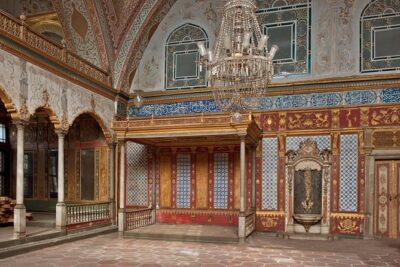
Your trip begins in Karachi, and it starts with a palette cleanser from the start-your-day travel grind. The Mohatta Palace Museum sits in Clifton, built in 1927 on a style inspired by traditional stone palaces in Rajasthan. Expect a mix of pink Jodhpur stone and local ghizri stone, then move from European-era museum calm straight into centuries of Sufi devotion.
Next comes the Abdullah Shah Ghazi Shrine in Clifton. He’s described as an eighth-century Muslim mystic and Sufi. Even with modifications over time, the shrine stays one of Karachi’s best-known landmarks. What I like about opening here is that you get grounded in how people actually live the spiritual side of Pakistan—not only as heritage, but as something that still draws daily attention.
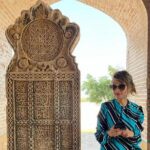
Then you shift toward Thatta, where the buildings feel like they’ve been designed to look good in bright daylight and story time. The big moment is the Shah Jahan Mosque. Built in Shah Jahan’s era, it’s noted for elaborate blue tilework and a huge courtyard that feels more Central Asian and Persian than you might expect. If you’ve seen other Mughal architecture, you’ll recognize the family style—but this one carries its own regional flavor, shaped by the emperor’s earlier travels.
You can also read our reviews of more tours and experiences in Karachi.
A practical tip for this section
Carry something light for shade. You’ll be outside for stretches at multiple stops, and the tour’s pace can make heat sneak up on you.
Chaukhandi Tombs and Makli Necropolis: carving details you’ll remember
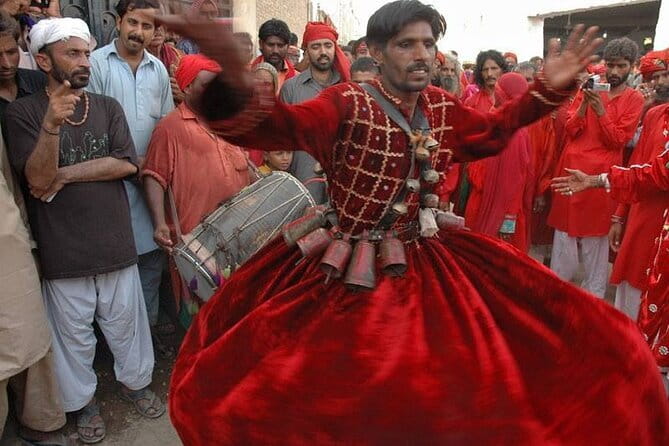
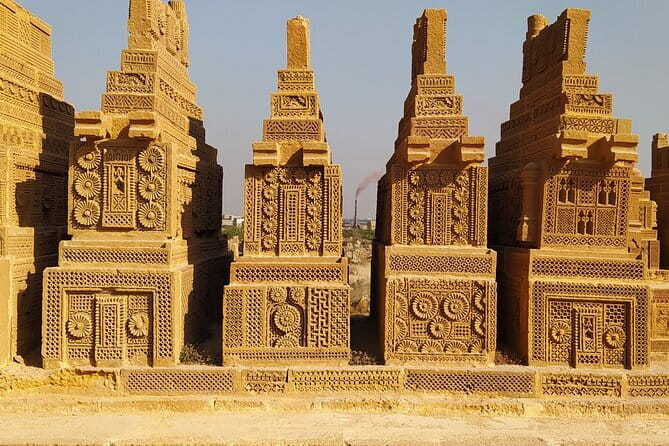
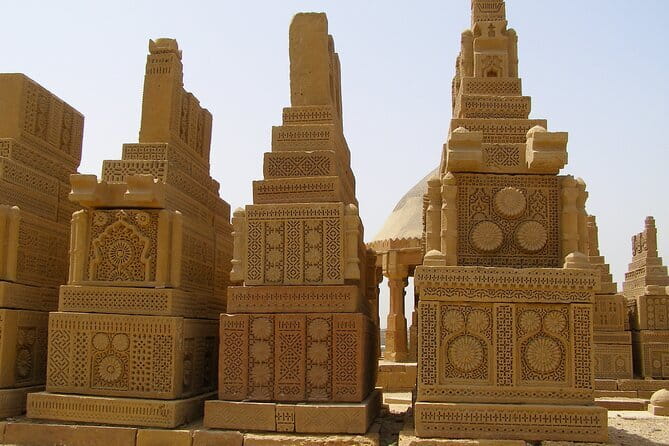
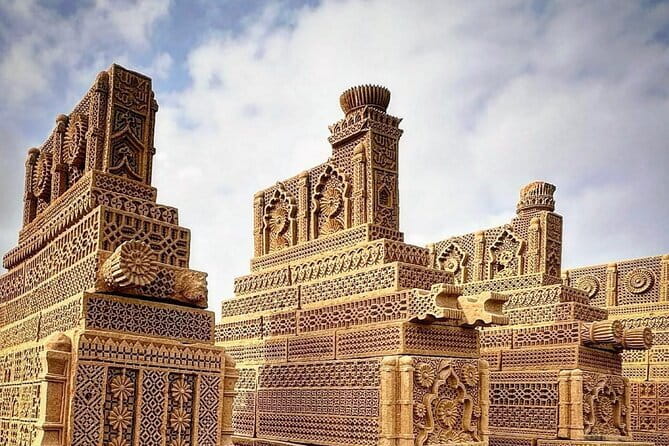
This part of the journey feels like Pakistan’s funerary art at its most expressive. Chaukhandi Tombs (about 29 kilometers northeast of Karachi) date more than 300 years back and are famous for elaborately carved stone. The term chaukhandi literally means four-sided, and it fits what you’ll see: tombs with strong geometry and careful decoration.
What makes this stop valuable is the local focus. The tombs are associated with tribes such as Baloch, Jam, and Jokhis. And yes, they’re on the UNESCO tentative list since 1993, so you’re not just looking at pretty stone—you’re seeing a site recognized as culturally important.
Then you move to Makli Necropolis, a UNESCO World Heritage Site since 1981. Makli is enormous. The necropolis spreads across a diamond-shaped enclosure and then thins toward the surroundings. It began as a cemetery in the 15th century, and under the Samma Dynasty (1335–1520) it became a favored resting place not only for kings, but also commoners and saints.
Here’s the real “how you’ll experience it” detail: you travel through the grounds by golf cart, which matters. Makli can be visually overwhelming if you’re tired, and getting tired is the fastest way to miss the carvings and inscriptions. With the cart support and a focused guide, you can slow down, pick out styles, and actually compare the “old part” tombs connected to the Samma period with the later Persian, Afghan, and Mughal presence in the newer sections.
Why Makli fits this tour’s theme
This tour isn’t only about rulers and wars. Makli shows faith and social structure—who mattered, how communities expressed status, and how architecture carries memory forward.
Sehwan Sharif and Bhit Shah: the sound of Sindh Sufism
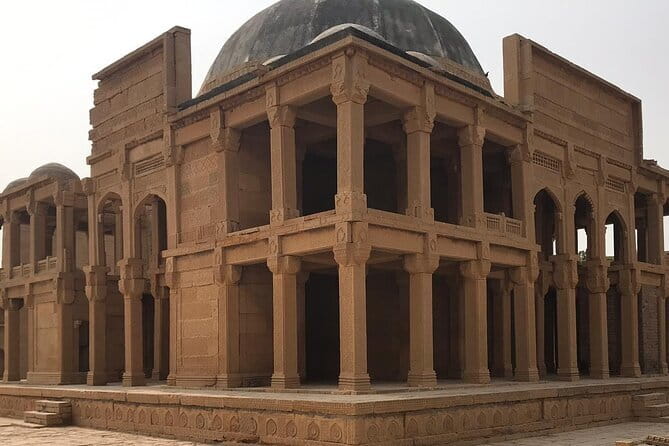
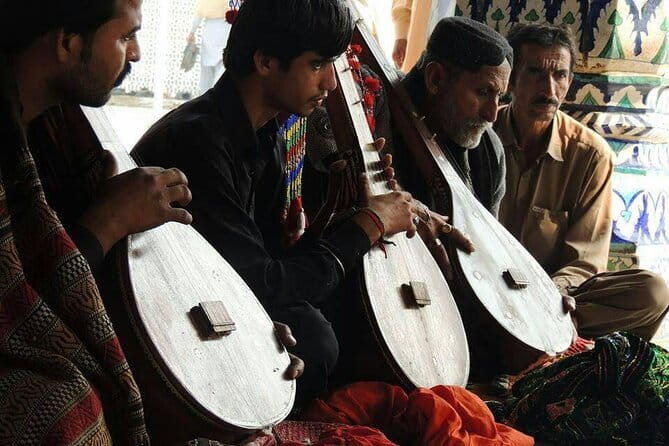
From stone tombs you jump to living spiritual life. Lal Shahbaz Qalandar Shrine in Sehwan Sharif is dedicated to the 13th-century Sufi saint, philosopher, and poet. The shrine is known for its dhamaal—meditative dancing ceremony—held daily after sunset for one hour.
If you’re the type who likes architecture but also wants atmosphere, this is one of the most memorable parts of the entire route. The point isn’t turning it into a performance for tourists; it’s understanding how belief shows up in daily rhythms. Timing matters here too—since dhamaal is after sunset, you’ll likely shift your evening plans around it.
Next is Shah Abdul Latif Bhittai at Bhit Shah, a smaller town near Hala (about 200 kilometers from Karachi). This complex stands out for Sindhi tile work: blue and white floral themes, with traditional Iranian qashani tiles in shades like blue and turquoise. His poetry is central—Bhittai is known for the collection Shah Jo Risalo—and that poetry ties the shrine to an identity that feels both literary and spiritual.
The one thing to watch for
These shrines can feel busy depending on the time of day and local schedule. Keep expectations flexible and let the guide’s timing help you avoid the biggest crowds.
Mohenjo-daro and Kot Diji: Indus planning made real
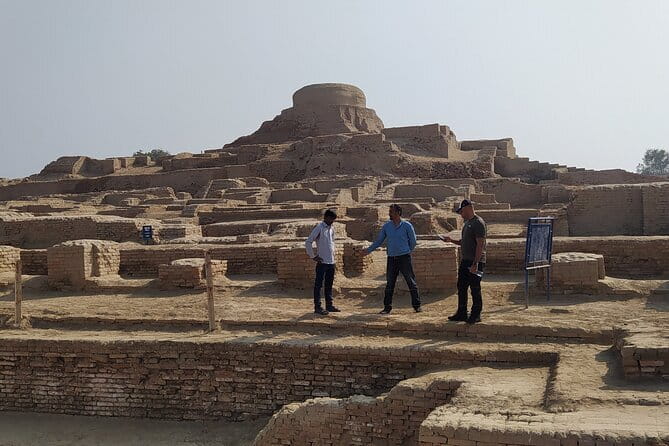
Day four is where the tour turns from medieval and Mughal art into something much older. Mohenjo-daro (UNESCO World Heritage) is described as the largest settlement of the Indus Valley civilization, and it’s still startling to see how organized the city looks. You’ll encounter three main areas: rich colony, artisan colony, and soldiers’ colony. Houses reportedly had double stories, and each had its own water well, kitchen area, and wash room.
Street design is also part of the story. You’ll hear about streets lined with burners at night, a sewerage system running through streets and canals, and covered drainage infrastructure. There’s even mention of a dust bin at the corner of each street. Whether every detail matches your imagination or not, the overall point lands fast: this wasn’t a random settlement.
A highlight is the Great Bath, fed by the nearby Indus River for travelers and the public. It’s the kind of structure that makes you stop and think about how communal life worked—ritual, water, gatherings, all tied to the same space.
Right next door is the Archaeological Museum Mohenjo-daro, about a five-minute walk from the ruins. Built in the 1960s, it houses artifacts recovered during excavation: pottery, jewelry, toys, ivory, and more. If you’re worried the ruins alone might feel distant, the museum helps you “translate” what you see outside.
Then comes Kot Diji Fort. Built atop a limestone ridge at the edge of the desert, you get irrigated fields on the other side fed by Indus tributaries. That contrast—fortress stone above, farmland below—makes the fort feel like a control point over a living system.
The fort dates to the Talpur period, built by the first Talpur Mir between 1785 and 1795, and it was divided among different Talpur factions. It’s a good end-of-day stop because the size and positioning are easy to grasp from a distance.
A reality check for your comfort
This day can be long on the mind, even if you aren’t walking forever. Indus sites reward attention. If you need breaks, ask your guide to pause at the spots that matter most to you.
Cholistan Desert and Derawar Fort: desert geometry at full scale
The Cholistan Desert stretch is the tour’s shift into big sky country. You’ll come to Derawar Fort near Bahawalpur, a large square fortress with 40 bastions visible from far away. That visibility is part of why this fort is so dramatic: you don’t just reach it, you recognize it.
The fort’s story stretches back into early medieval time, described as built in the 9th century AD by Rai Jajja Bhatti as tribute to Rawal Deoraj Bhatti. Later, Nawabs of Bahawalpur took it over in the 18th century from the Shahotra tribe, with renovations under Abbasi rulers. There’s also a specific note that in 1747 the fort slipped from Abbasi control, and Nawab Mubarak Khan took the stronghold back in 1804. Even if you don’t memorize dates, this layered history makes the fort feel like it changed hands for a reason: it mattered.
One of the more curious details is about catapult shells found near a decaying wall in the fort debris, described as about 1,000 years old. It adds weight to the defensive design and makes the space feel used, not staged.
Near the fort is the Abbasi Jamia Masjid Qila Derawar, standing in the desert plain. The mosque is described as built on the design of the Moti Masjid at Delhi’s Red Fort. That link gives you a useful comparison point: architectural ideas traveled across empires.
Then your route includes Tomb of Bibi Jawindi at Uch Sharif, listed as UNESCO World Heritage as one of the five monuments in Uch Sharif. The tomb is said to date to the 15th century and is linked to Jahaniyan Jahangasht as a great-granddaughter. One striking note: the tombs were washed by the shifting river. That tells you this site isn’t static in the way some heritage spots feel—it’s tied to geography that kept changing.
What I’d plan for here
This is where weather matters most. The tour notes that it requires good weather, and in desert regions you’ll feel that quickly. If skies turn rough, expect the plan to adapt.
Multan shrines and the road toward Lahore: mirror-work, tilework, and devotion
By the time you reach Multan, the tour starts to feel like a focused study of South Asian shrine architecture. In Multan you visit the Tomb of Shah Rukn-e-Alam (also described as the mausoleum of Sheikh Rukn-ud-Din Abul Fateh). The shrine is described as an early example of Tughluq architecture and one of the most impressive shrines in the Indian subcontinent.
You then visit Shah Shams Sabzwari Tabrez, associated with the Persian poet Shams-i Tabrizi, described as a spiritual instructor of Rumi in Konya (present-day Turkey). That connection matters because it makes the shrine part of a wider cultural map, not a local-only story.
Next is the Shrine of Shah Yusuf Gardezi, notable for interior mirror-work (ayina kari) and a tiled, flat-roof tomb dating from 1152. If you’re the kind of traveler who notices craft techniques, mirror-work can be an energy shift. It doesn’t just look decorative—it changes how light moves inside a sacred space.
As you head toward Lahore, you’re moving from “old-world devotion” into “old-world city life,” where monuments are only part of the experience.
You’ll also pause for food culture along the way at Lahore’s food street near Fort Road. The tour describes the street as famous for sub-continent dishes. It’s one of those planned breaks that keeps the long heritage days from turning into museum fatigue.
Lahore UNESCO circuit: Badshahi, Wazir Khan, and Lahore Fort’s Mughal evolution
Lahore is where the tour lands with full Mughal weight. First, Badshahi Mosque, built during Emperor Aurangzeb’s rule (1658 to 1707). It’s on a UNESCO tentative list and is described as the largest on the Indian subcontinent. Even when you don’t know the finer points, you’ll feel the scale quickly.
Then comes Lahore Fort, described as the only place in Pakistan representing different phases of Mughal architecture. It gained prominence under Emperor Akbar, and later rulers—Jahangir, Shah Jahan, and Aurangzeb—added new structures. That timeline makes the fort a living reference library. You’re not just seeing Mughal style; you’re seeing how it shifted over time.
Next is Masjid Wazir Khan, begun in 1634 under the governor of Punjab, Hakim Shaikh Ilm-ud-din Ansari. This mosque is a good match for travelers who like the details: the tour frames it as part of the Shah Jahan era world.
The Lahore “street layer”
After monuments, you’ll spend time at Anarkali Bazaar. It’s a shopping stop, and I like it for a simple reason: you get to mix heritage with daily commerce. It keeps the tour from feeling like you only moved between gates and courtyards.
Wagah Border and Lahore Museum: the story’s modern edge
The day includes the Wagah Border ceremony, the famous daily beating retreat event. It’s described as one of the most witnessed military ceremonies, drawing crowds from both sides of the border, started in 1959. The ceremony is included for about three hours, so it’s not a quick glance—it’s built into the rhythm of the day.
Finally, the tour gives you a cultural anchor beyond architecture. Lahore Museum is described as the largest museum in Pakistan, founded in 1864 by the British, and built in 1894 in Mughal style on the Mall. It houses artifacts from across regions including Burma, Bhutan, Nepal, Tibet, Central Asia, the Middle East, and Africa.
There’s a specific focus too: it holds the largest collection of Gandhara Buddhist artifacts, with the other major collection noted as being in the Peshawar Museum. If your brain tends to connect ideas across time, this is a good finish. It helps you see how this part of South Asia held multiple cultural currents, not only Islamic architecture.
Then on day ten, you return to Lahore for airport transfer after breakfast.
Value and price: is $2,850 per person worth it?
At $2,850 per person for about 10 days, the value depends on what you hate doing while traveling. This tour bundles private transportation, breakfast, accommodation, and all fees and taxes. It also includes admissions for key sites where indicated, plus it’s run as a private activity where only your group participates.
What that means for you: you’re paying for fewer unknowns. You’re not coordinating drives between distant cities, chasing tickets, or building a day-by-day route from scratch.
The trade-off is you’re buying density. With lunch and dinner not included, you’ll still spend money on meals. And because it’s a multi-region route, expect long hours between stops. If you like slow travel with lots of free time, you might find the pace intense.
Should you book this Southern Pakistan UNESCO World Heritage trail?
If you want a guided heritage route from Karachi to Lahore that covers UNESCO sites plus Sufi shrine culture, I think this is a strong fit. The biggest selling point is the combination of scale and sense—Indus Valley planning at Mohenjo-daro, funerary art at Makli, desert power at Derawar, and Mughal monuments in Lahore—held together by a guide like Fahd who explains context and keeps the days running smoothly.
I’d only think twice if you’re easily tired by long drives or if you prefer more downtime than active sightseeing. Also remember the tour explicitly requires good weather, and a desert segment is involved, so you’ll want to plan around season and conditions.
FAQ
How much does the Southern Pakistan UNESCO World Heritage Trail cost?
The price is $2,850.00 per person.
How long is the tour, and where does it start and end?
It runs for about 10 days. It starts in Karachi and ends in Lahore, with transfer to Lahore airport for the return journey.
Is pickup included?
Pickup is offered.
What meals are included?
Breakfast is included. Lunch and dinner are not included.
What’s included in the price?
The package includes private transportation, breakfast, accommodation, and all fees and taxes.
Are tickets included for the major sites?
Admission tickets are included for some stops (marked as included), and several stops are marked as free. The tour also covers all fees and taxes.
Is this a private tour?
Yes. It’s a private tour/activity, and only your group will participate.
Is the tour suitable for most travelers?
The tour states that most travelers can participate.
What’s the cancellation policy?
Free cancellation is available up to 24 hours in advance of the experience for a full refund.
Why does the tour say it requires good weather?
The tour notes that it requires good weather, and if it’s canceled due to poor weather you’ll be offered a different date or a full refund.