REVIEW · KARACHI
UNESCO World Heritage Tour Near Karachi
Book on Viator →Operated by Rocket Tourism · Bookable on Viator
Three UNESCO sites in one Karachi morning. This private tour is built for an easy, no-stress day: you get a driver, a guide, and a plan that covers Makli Necropolis, the Chaukhandi Tombs, and the Shah Jahan Mosque without you juggling transport or tickets. It’s also timed well for photos and walking, so you can actually take in the architecture and the graves instead of rushing through like it’s an escape room.
I love the simple pacing of a private tour. You’ll spend the long stretch at Makli (about 3 hours) and then slow down for the Chaukhandi Tombs (about 1 hour) and the Shah Jahan Mosque (about 1 hour), which feels realistic. The other big win is the human context your guide brings—people here aren’t just names on stone, and a guide like Fahad (praised for being friendly and informative) can turn the carvings and inscriptions into something you can picture. One consideration: no lunch is included, so plan food and water, and remember the day depends on good weather.
In This Review
- Key highlights you’ll actually care about
- A one-day UNESCO plan that avoids the usual Karachi chaos
- Price and value: what $150 covers (and what it doesn’t)
- How the private timing works across the three UNESCO sites
- Stop 1: Makli Necropolis and the architecture of memory
- Stop 2: Chaukhandi Tombs and the signature Sindh stone-carving style
- Stop 3: Shah Jahan Mosque (Jamia Masjid of Thatta) and Mughal-era symmetry
- The guide factor: how Fahad-level storytelling improves the visit
- Getting there smoothly: pickup, private transport, and your time on-site
- What to bring for a hot, early heritage day
- Small risk to keep in mind: last-minute changes can happen
- Should you book this UNESCO World Heritage Tour Near Karachi?
Key highlights you’ll actually care about
- Three UNESCO stops in one day without complicated backtracking
- Makli Necropolis (about 3 hours) lets you see it beyond a quick photo stop
- Chaukhandi Tombs’ carved stone style is typical of Sindh
- Shah Jahan Mosque (about 1 hour) gives you a focused Mughal-era centerpiece
- Entrance fees + air-conditioned private transport keep the day smooth
A one-day UNESCO plan that avoids the usual Karachi chaos
If you’re basing yourself in Karachi and want UNESCO-level sights without turning your trip into logistics homework, this tour is hard to beat. You’re looking at 7 hours total with a 7:00 am start, plus pickup offered from Karachi or the airport. That matters, because the real challenge near big heritage sites is often getting there and coordinating everything once you arrive.
This is also a private setup. That means you’re not squeezed into a strict group rhythm, and you can take your time at the spots that catch your eye—especially if photography is part of why you came. The day runs with a guide and driver taking care of logistics, and you’re covered for admission fees too, so you’re not hunting for ticket booths mid-day.
The other reason I like this format is that it’s structured like a heritage day, not a checklist. Makli is given enough time to breathe. Then you move to Chaukhandi for a shorter dose of carved tomb architecture. Finally you finish at the Shah Jahan Mosque for a clear architectural payoff.
Price and value: what $150 covers (and what it doesn’t)
At $150 per person, the value comes from the “bundle” effect. You’re getting an air-conditioned vehicle, private transportation, admission tickets, and the guided itinerary for the day. For many visitors, the expensive part of heritage travel isn’t just entry fees—it’s time, transport cost, and the headache of planning.
What’s not included is just as important: lunch (and no breakfast or dinner). That’s the one part you’ll need to handle yourself based on your taste and where you’re staying. So when you budget, don’t only think about the tour price. Add money for a meal and keep snacks in mind, especially since you’ll start early and spend hours outdoors and walking.
One more practical thought: the experience requires good weather. If weather turns, the tour can be canceled and you’ll be offered another date or a full refund. That’s not a small detail—heritage sites like Makli and Chaukhandi reward being outside, not stuck under cover.
How the private timing works across the three UNESCO sites
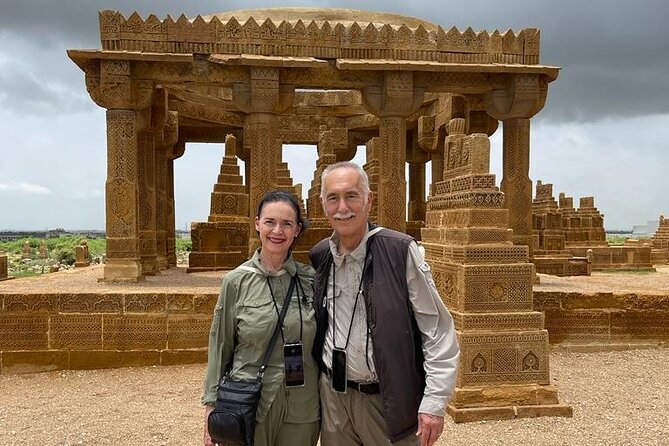
The schedule is simple, and that’s a compliment. You start at 7:00 am, then you visit:
- Makli Necropolis for about 3 hours
- Chaukhandi Tombs for about 1 hour
- Shah Jahan Mosque for about 1 hour
That distribution is smart. Makli Necropolis is the biggest draw, and it’s also where you’ll want time to wander. Chaukhandi is intense in a different way—more about stone carving detail and tomb forms—so an hour can be enough if your goal is focused viewing and photos. The Shah Jahan Mosque rounds out the story with 17th-century Mughal architecture and a clear “finish line” for the day.
Also, you’re not just driving between random points. The guide keeps the day coherent so you can connect what you see: funerary art, regional tomb styles, and then the mosque’s architectural role in the region’s urban and religious history.
Stop 1: Makli Necropolis and the architecture of memory
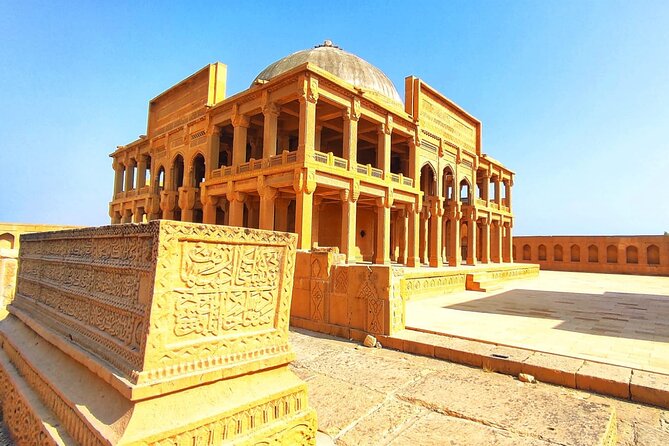
Makli Necropolis is the kind of site where you immediately feel scale. It was designated a UNESCO World Heritage Site in 1981, and the name itself has a story—Makli literally means little Makkah, a label reportedly given by an ecstatic Hajj pilgrim. Even if you don’t catch every detail immediately, that phrase gives you a clue about how the place has been perceived: not just as a burial ground, but as a powerful destination tied to faith and remembrance.
This stop gets about 3 hours. That’s the right amount of time for a few reasons. First, funerary sites take longer to process than museums. The carvings, forms, and layout are meant to be read slowly. Second, you’ll likely want to take photos from multiple angles because the stonework interacts with light. Cameras are ready here, and Makli is one of those places where your photos improve the longer you stay.
A potential drawback: with three hours, you’ll feel the day’s physical side if you’re not used to walking and standing outdoors. Wear comfortable shoes and expect to take breaks. This isn’t a quick roadside stop. It’s a place that earns your patience.
Stop 2: Chaukhandi Tombs and the signature Sindh stone-carving style
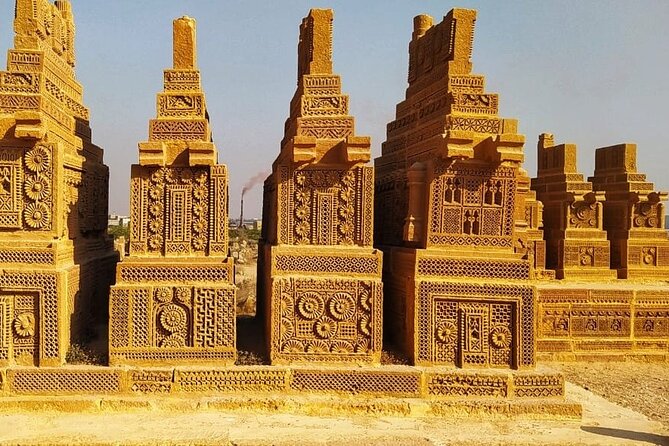
After Makli, the Chaukhandi Tombs feel like a shift in texture. These tombs are known for elaborate stone carving and for a grave architecture style typical of Sindh. UNESCO heritage sites are often about “importance” more than “beauty,” but Chaukhandi is one of those places where beauty shows up in craftsmanship you can see with your eyes.
You’ll spend about 1 hour here, which works if you keep your focus. Look at the forms and the carving patterns rather than trying to absorb everything at once. This is especially satisfying if you like architectural details—corners, edges, and repeating motifs. Even simple comparisons help: you’ll start noticing how the tombs express identity through stonework rather than only through location.
There’s also a practical photography angle. Because you’re spending a shorter time here, you can turn it into a “shooting session” without feeling like you’re rushing. Bring something with good grip for your phone or camera gear if it’s bright, and keep an eye on dust or glare.
Stop 3: Shah Jahan Mosque (Jamia Masjid of Thatta) and Mughal-era symmetry
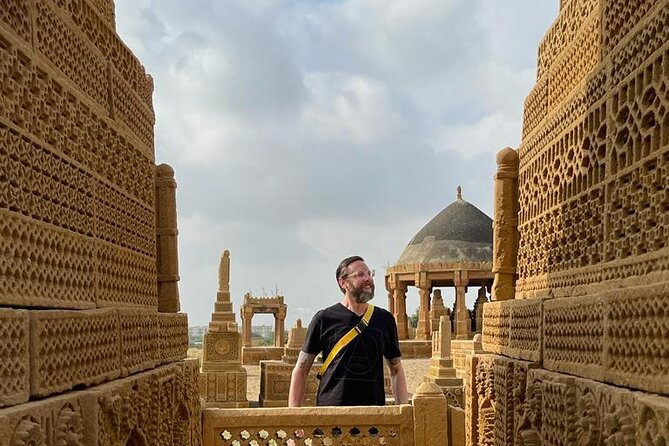
Your final stop is the Shah Jahan Mosque, also known as the Jamia Masjid of Thatta. It’s a 17th-century building and serves as the central mosque for the city of Thatta. Built during the reign of the Mughal emperor Shah Jahan, it brings a different kind of visual order compared with tomb architecture.
You’ll have about 1 hour here. That’s plenty for a first-time visit if you want to appreciate the structure and then move on. Mosques are best when you slow down: look at proportions, entrances, and how the building frames space. If you come expecting pure spectacle, you might miss what makes it compelling—its role as a centerpiece for a community and its Mughal design language.
The other reason this is a good way to end: it’s a “reset” for the senses. After two heritage stops focused on burial art, finishing at a functioning religious landmark gives your day a logical emotional arc.
The guide factor: how Fahad-level storytelling improves the visit
The biggest reason this kind of tour works is the guide. The itinerary isn’t just moving you from point A to point B. The point is learning the history of the people who are buried here and understanding how the sites fit together.
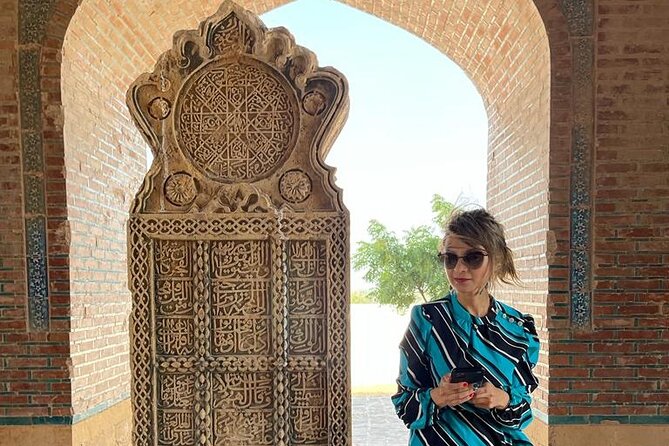
One guide named Fahad gets specific praise for being friendly and informative during the Chaukhandi Tombs and Makli and then the Shah Jahan Mosque. That’s the sort of difference you’ll feel. Without context, tomb sites can blend into patterns. With the right explanations, you start noticing what the carvings and inscriptions are doing—why something is shaped a certain way, and what that suggests about the community’s values.
Tip for you: if you have questions, ask them early. The best guide moments tend to happen when you’re already looking at the site and can point to what you’re seeing.
Getting there smoothly: pickup, private transport, and your time on-site
This tour is designed around round-trip transport from Karachi or the airport, plus a private driver in an air-conditioned vehicle. For a day that’s about walking and looking at stone, the comfort of the ride matters more than you might think. You’ll arrive less worn out, and you’ll get to spend your energy on the heritage sites.
You also get a mobile ticket, which reduces friction on arrival. That’s not flashy, but it makes the morning calmer. You won’t have to hunt for printed paperwork when you’re already trying to figure out traffic and timing.
One more practical point: the sites are spread enough that you’ll want to keep your schedule tight. This tour does that for you. The day feels like a single coherent route rather than a grab-bag of destinations.
What to bring for a hot, early heritage day
Because the schedule starts at 7:00 am and includes multiple outdoor viewing periods, prepare for a long stretch under the sky. I suggest you pack like this:
- Comfortable walking shoes (stone sites mean uneven ground)
- Water and a snack since lunch isn’t included
- A light layer for sun or early morning breeze
- A camera setup you can handle quickly when the light hits the carvings
And if you’re sensitive to heat or want maximum comfort, plan your meal for after the tour. You’ll likely be hungry and your brain will be full of details.
Small risk to keep in mind: last-minute changes can happen
Nothing is perfect. There’s at least one cautionary experience in the feedback that mentions a guide being unable to come and an alternate plan being arranged. That doesn’t mean this happens often, but it’s smart to use good habits.
For you: keep your contact info handy, confirm pickup details when you receive your confirmation, and have a simple plan if something shifts. Tours run smoothly most of the time, but travel still lives in the real world—traffic, weather, and staffing can all affect timing.
Should you book this UNESCO World Heritage Tour Near Karachi?
I’d book it if you want a focused, value-driven UNESCO day that covers three major sites near Karachi without turning your schedule into a maze. The standout strengths are the private format, the time allocation (especially the generous 3 hours at Makli), and the fact that admission fees are included along with air-conditioned transport. If you like architecture, stone carving, and funerary art—with a guide who can connect it to the people and beliefs behind it—this is a strong match.
Skip or reconsider if you’re expecting the tour to include meals, or if you hate outdoor walking and standing for long stretches. Also, because the experience depends on good weather, be flexible if rain or poor conditions show up.
If you want a clean answer: book it for a classic UNESCO sampler day—then plan your own meal afterward and bring shoes that can take stone underfoot.