REVIEW · TANGIER
Tangier Jewish heritage tour
Book on Viator →Operated by Yalla tours tangier · Bookable on Viator
Tangier can feel like a crossroads, and this private Jewish heritage tour gives you the story in the right order. I like the way it mixes big viewpoints (Cap Spartel) with real stop-time in the medina. I also like the focus on how Moroccan Jewish life fits alongside Islam, with guides such as Abdel and Mohamed El Ouardi using clear, human context instead of just dates and stones. One thing to consider: the walking and sightseeing stops are short (often 10–15 minutes), so you’ll want to ask questions and move fast if you’re the type who likes to linger.
The value is strongest if you want a private, English-speaking guide and comfortable transport from the port area into the old town. You’ll get coffee or tea, plus admissions included at a couple of key photo and orientation stops. The only drawback is time: with just 4 to 5 hours, it’s more “guided highlights” than a deep, slow day.
In This Review
- Key things to know before you go
- Tangier Jewish heritage tour in 4–5 hours: what the pacing really means
- From Tangier port to Cap Spartel: quick orientation with real sea views
- Place du Grand 9 Avril 1947: a tidy gateway into the old town
- The American landmark tied to 1823: why this detour matters
- Moshe Nahon Synagogue: the heritage stop that’s actually calm
- Petit Socco: finishing in the social heart of the old town
- Coffee, comfort, and private guidance: what’s included (and why it matters)
- Price and value: is $117.46 per person fair?
- Who should book this Tangier Jewish heritage tour?
- Should you book it?
- FAQ
- What is the duration of the Tangier Jewish heritage tour?
- Where does the tour start?
- Is pickup offered?
- Does the tour include tickets for the stops?
- What is included in the price besides transportation and guide?
- What is not included?
- What is the cancellation policy?
Key things to know before you go
- Private guide + car from the Tangier port area for an easier start than figuring out routes yourself
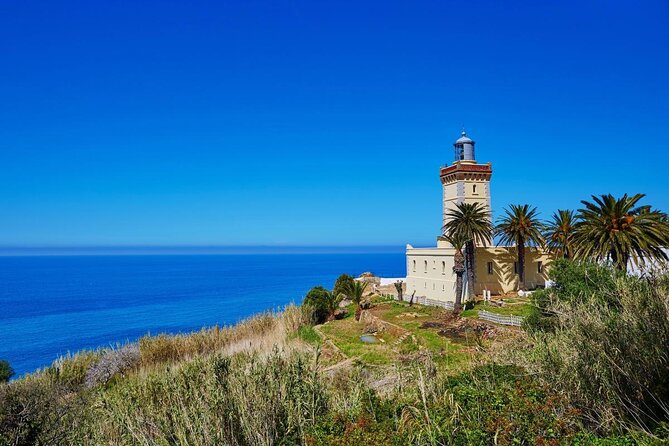
- Cap Spartel stop where the Atlantic meets the Mediterranean, with admission included
- Moshe Nahon Synagogue visit (admission free) for direct Jewish heritage context in Tangier
- Place du Grand 9 Avril 1947 as a clean entry point toward the old town
- Petit Socco time in the old town’s social heart, not just a quick photo
- A focused theme: how Jewish and Islamic communities have shared Tangier over time
Tangier Jewish heritage tour in 4–5 hours: what the pacing really means
This tour is built for people who have limited time in Tangier but still want something meaningful. The structure is short hops: a couple of scenic/photo-and-orientation stops, then two older-town experiences that tie directly into Jewish heritage—especially the synagogue visit.
You’ll start at the Port of Tangier city, meet your guide and driver, then roll out in an air-conditioned vehicle. That matters because Tangier can be a bit of a scramble when you’re moving between zones. Here, you get help with the transitions, so you don’t lose your energy to logistics.
Also, this isn’t a “museum all day” plan. It’s more like a guided walk-through of key places where you can see and understand the layering of Tangier. If you love asking questions, this format works well. If you need long free time at every stop, you may feel a little rushed.
You can also read our reviews of more tours and experiences in Tangier.


From Tangier port to Cap Spartel: quick orientation with real sea views
After you arrive at the Tangier medina port area, your English-speaking guide and driver meet you and take you through ville nouvelle (the newer town) and a residential stretch before heading to the northern edge: Cap Spartel.
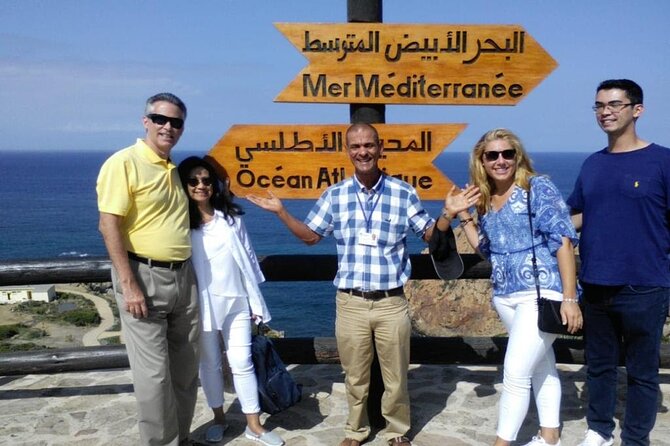
Why I like this setup: Cap Spartel is the kind of place where you get your bearings instantly. Standing at the point where the Atlantic and the Mediterranean meet gives you a sense of why Tangier historically mattered as a gateway between worlds. It’s not just pretty. It’s explanatory.
You’ll have about 10 minutes here, and admission is included. That’s enough time for a first view, a few photos, and a quick explanation from your guide. The main drawback is that it’s not long enough for a slow, sit-and-watch vibe. If you want more time for scenery, plan to ask your guide for an extra minute or two near the viewpoint (within what the schedule allows).
Practical tip: dress for wind. The coast can feel cooler than the city, even when the streets are warm.
Place du Grand 9 Avril 1947: a tidy gateway into the old town
Next comes a short stop at Place du Grand 9 Avril 1947, described as the main entrance to the old town. You’ll spend about 5 minutes here, with admission included.
This brief stop is useful because it sets the mental map. Instead of jumping straight into lanes and turns, you get a “here’s where you are” moment. Tangier’s old town can be compact and confusing fast. Even with a private guide, having a quick orientation point helps you understand what comes next.
The time is short—so don’t treat it like a destination. Treat it like the front door. If you want to make the most of it, ask one simple question:
- What should I notice as we start moving through the medina?
Your guide will likely point out direction, building cues, and how the heritage theme connects to the streets ahead.
The American landmark tied to 1823: why this detour matters

There’s a stop described as an American landmark abroad, connected to the first American MBC dating back to 1823. The exact stop name isn’t spelled out in the details you provided, but the key idea is clear: it’s a historical anchor showing how Tangier has long attracted international religious and cultural ties.
I appreciate moments like this because they prevent the day from feeling one-note. Tangier’s Jewish heritage doesn’t exist in a vacuum—it developed in a city that has hosted many communities and outsiders over time. A stop tied to 1823 gives you that wider frame without eating up hours.
This part is likely quick (the plan doesn’t give a long time block here), so your best move is to listen closely to the guide’s explanation and then ask a question about why that American connection sits where it does relative to the local community life.
If you’re expecting a full deep dive into American-Tangier religious history, you might be a little disappointed. But as a “why Tangier was always a crossroads” moment, it fits the tour’s pacing well.
Moshe Nahon Synagogue: the heritage stop that’s actually calm
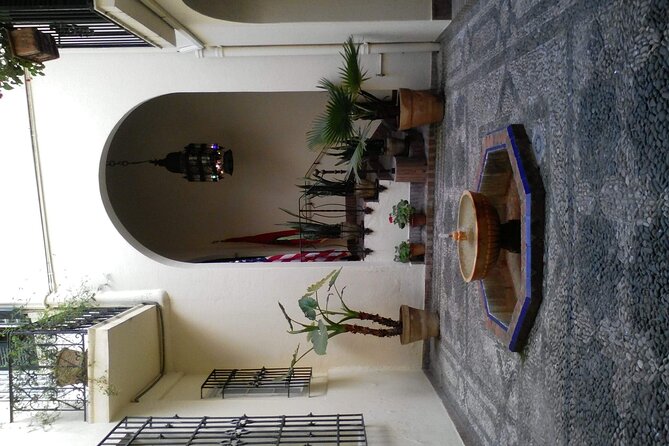
The heart of the tour for many people is the visit to Moshe Nahon Synagogue, one of the most beautiful synagogues in Morocco. You’ll have about 15 minutes, and admission is free.
Fifteen minutes isn’t long, but a synagogue visit is different from a street-market stroll. You don’t just “see” it—you absorb the atmosphere, the design, and what your guide explains. This is where the theme you came for becomes tangible.
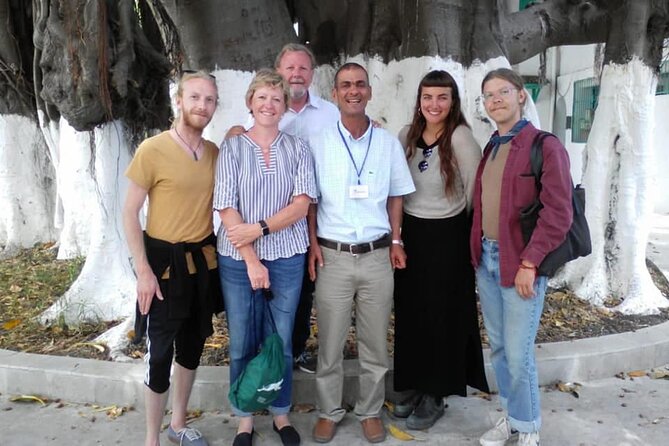
One of the best parts of this tour is the way your guide can connect dots between communities. A guide like Mohamed El Ouardi is specifically noted for helping guests understand the relationship between the Jewish community and the Islamic community in Morocco. That kind of framing matters here because it changes your visit from decorative sightseeing into lived context.
What to do to get more out of it:
- Pay attention to what your guide points out first (often architecture details, placement, or how the building functions).
- Don’t be shy about asking what’s unique to Tangier’s Jewish story compared with other Moroccan cities.
Possible drawback: because admission is free and the stop is time-limited, you may feel like you’re being guided through quickly. If you’re someone who reads every label and wants quiet time, just plan to use those 15 minutes intentionally—ask one or two questions early so you’re not rushing at the end.
Petit Socco: finishing in the social heart of the old town
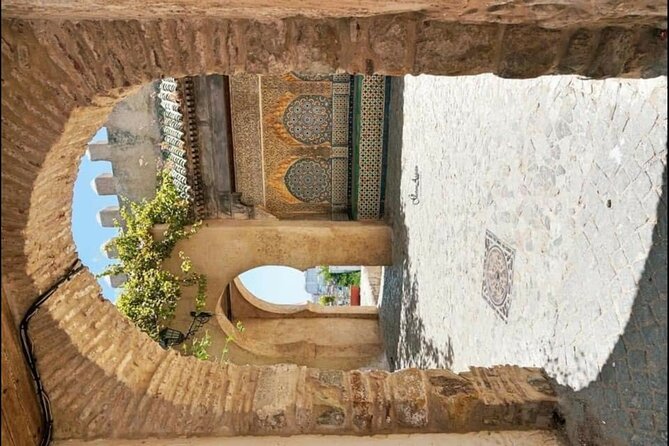
After the synagogue, you move to Petit Socco, described as the main heart of the old town. You’ll get about 15 minutes there, and the plan states admission is free.
This stop is smart because it shifts you from a house of worship setting into a street-level, human space. Petit Socco is the kind of place where you can feel the daily rhythm around you—people moving, conversation, small storefront energy. It also helps you understand how heritage isn’t only about buildings. It’s about the lived neighborhood around them.
Even if you don’t buy anything, you’ll likely find the area useful as a last impression. After a day shaped by guided explanations, Petit Socco lets your brain “land” in the real atmosphere of the medina.
Practical tip: if you want photos, keep your camera ready but be respectful. Some areas can feel intimate. Use your guide to judge where it’s appropriate.
Coffee, comfort, and private guidance: what’s included (and why it matters)

This tour includes:
- Air-conditioned vehicle
- Private transportation
- Licensed private guide
- Coffee and/or tea
And you’ll also get pickup offered and a mobile ticket, which reduces friction when you’re arriving at a busy port.
Here’s how those inclusions translate into value for you:
- Air-conditioned transport is a big deal in Morocco, especially when you’re bouncing between zones in a short window.
- A licensed private guide saves you time and confusion, which is exactly what you want when you only have 4–5 hours.
- Coffee or tea is a small thing, but it helps make the day feel like a real experience rather than a checklist.
The admissions side is also mixed in a helpful way:
- Cap Spartel: admission ticket included (about 10 minutes)
- Place du Grand 9 Avril 1947: admission ticket included (about 5 minutes)
- Moshe Nahon Synagogue: admission free (about 15 minutes)
- Petit Socco: free
So you’re not paying extra “everywhere” for entry. Just remember that the details you provided also list “all fees and taxes” as not included. In practice, that usually means you should be ready for small extras depending on the day and how your plan gets implemented. The core experience is still well covered by what’s listed as included.
Price and value: is $117.46 per person fair?
The price is $117.46 per person, and it’s often booked about 249 days in advance. That long booking window hints at steady demand, especially for visitors who plan port days and short Tangier stops early.
Is $117.46 worth it? For the right traveler, yes—because you’re buying three things at once:
- Private guide time
- Private air-conditioned transport
- Entry coverage at a couple of key stops, plus the synagogue visit being free
If you were to replicate this on your own—getting transport, arranging a guide, and building a tight heritage route—you’d likely spend comparable money anyway, often with more hassle. The private part matters most. When a guide can explain the Jewish heritage context and the Jewish–Islam relationship clearly, you’re not just “visiting places.” You’re understanding them.
Where it may not be worth it: if you’re traveling with multiple people and you want a longer, slower medina day, you might prefer a bigger half-day or full-day program with more time inside each stop. Here, the schedule is tight, so you’re paying for focus, not extended wandering.
My advice: if your goal is to hit the key sites with a guide and leave Tangier feeling informed, this price is in line with that goal.
Who should book this Tangier Jewish heritage tour?
This tour is a great match if you:
- Want a private experience instead of group trekking in the medina
- Prefer a short, guided route that still touches the main heritage markers
- Care about how Jewish and Islamic history connects in Morocco
- Have limited time and want a structured plan you can trust
It may be less ideal if you:
- Need lots of free time for browsing on your own
- Want a long synagogue visit or a slow, reading-heavy experience
- Are hoping for a full-day deep history course with minimal driving
It also works well for people who don’t want to plan transportation through multiple city zones. The combination of pickup, English-speaking guide, and car helps you stay in “tour mode” instead of “navigation mode.”
Should you book it?
Yes—if you want Tangier Jewish heritage delivered in a focused, well-paced private format. I’d book it when you value context as much as scenery, especially the chance to visit Moshe Nahon Synagogue and understand the broader relationship between communities in Morocco.
Before you hit confirm, do one quick self-check: are you okay with shorter stop times (10–15 minutes) as long as your guide keeps things clear and you get time to ask questions? If yes, you’ll likely walk away with sharper understanding and a clean sense of Tangier’s heritage in just half a day.
FAQ
What is the duration of the Tangier Jewish heritage tour?
It runs for about 4 to 5 hours.
Where does the tour start?
The start point is the Port of Tangier city.
Is pickup offered?
Yes, pickup is offered.
Does the tour include tickets for the stops?
Admission ticket details vary by stop. Cap Spartel and Place du Grand 9 Avril 1947 include admission tickets. Moshe Nahon Synagogue and Petit Socco are listed as free.
What is included in the price besides transportation and guide?
The tour includes an air-conditioned vehicle, private transportation, a licensed private guide, and coffee and/or tea.
What is not included?
Lunch, camel ride on the beach, and all fees and taxes are not included.
What is the cancellation policy?
Free cancellation is allowed. You can cancel up to 24 hours in advance for a full refund. Canceling less than 24 hours before the start time does not receive a refund.